
Sweden Reveals How Biometric Border Checks Are Changing European Travel

Published
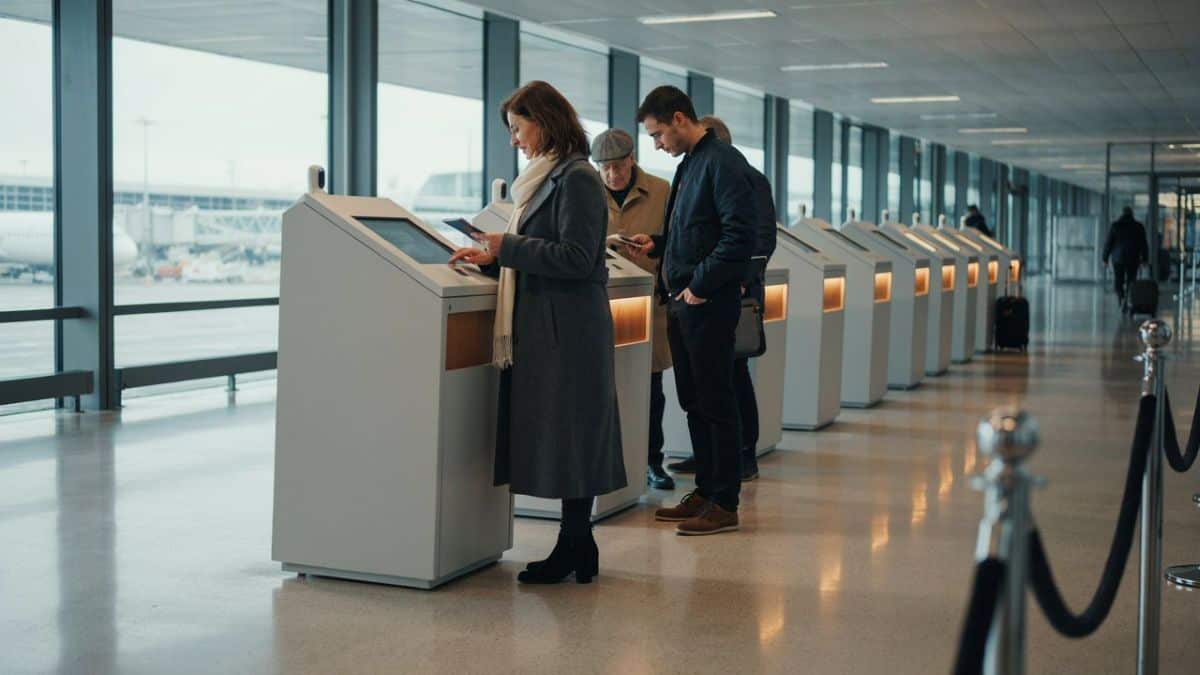
How Sweden reflects on the changes brought by biometric checks to European travel? Indeed, the Entry/Exit System has now become a new reality in Schengen Area. Starting from 10 April 2026, most of non-EU citizens get their biometric data captured when entering or exiting. It does not deprive travellers of visa-free travel, but makes them undergo an additional procedure at the border. In other words, it requires some preparation and planning in advance. Thus, it is clear how the Swedish location within Europe can show us what happens now in terms of shared mobility, digital controls, and tourism.
Why Europe’s passport power means more than a ranking
Passport rankings often compare how many destinations a person can enter without arranging a visa in advance. That can be useful, but it does not tell the whole story. It does not explain how long a visitor may stay, what activities they may undertake, or whether they need to complete other checks before travelling.
Europe adds another layer. Citizens of the European Union can travel across the 27 EU member states, as well as Iceland, Liechtenstein, Norway and Switzerland, using a valid passport or national identity card. This right gives many Europeans the option to move around the region without applying for a visitor visa at each destination.
That freedom is different from a short-stay visa waiver. It also does not mean that every European country follows the same rules. Ireland is outside the Schengen area, for example, while Norway and Switzerland belong to Schengen but are not EU members.
Advertisement
Advertisement
The central question should be simple: what does travel access mean when a traveller actually sets out?
Sweden shows how the same journey can mean different things
Sweden makes a strong European example because its rules show the difference between regional travel rights and visitor access.
Advertisement
Advertisement
A Swedish citizen can use EU travel rights to move around the EU and several associated countries with a valid passport or national identity card. A Malaysian citizen, by contrast, can visit Sweden for a short stay of up to 90 days without first obtaining a visa.
Both travellers may be able to visit Sweden. But the rules behind that access are not identical. Malaysians visiting Sweden must follow the common Schengen short-stay limit of 90 days in any 180-day period. Moving to another Schengen country does not reset that allowance.
Advertisement
Advertisement
This is a useful way to explain passport power without relying on unsupported comparisons. A traveller’s nationality matters, but so do the region’s shared rules, the length of the trip and the purpose of the visit.
Visa-free access does not mean a traveller skips border checks
The most important practical change for many non-European visitors is Europe’s Entry/Exit System, known as EES.
The system became fully operational at external Schengen borders on 10 April 2026. It records the travel-document details, entry and exit information, and biometric data of covered non-EU travellers making short stays. This includes a facial image and fingerprints.
That means a visa waiver and a border check are two separate matters. A Malaysian traveller may not need a visa for a short visit to Sweden, but may still be required to register through EES when entering the Schengen area.
Advertisement
Advertisement
The system does not apply to everyone. EU citizens and nationals of Iceland, Liechtenstein, Norway and Switzerland are not registered. Some non-EU residents and long-stay visa holders are also exempt. Travellers should check the rules that apply to their own status before departure.
For tourism businesses, this change matters because entry preparation now includes more than checking whether a visa is needed. Visitors may also need to allow time for new border procedures.
ETIAS has not started, despite the earlier launch plan
Another European border system is drawing attention: the European Travel Information and Authorisation System, or ETIAS.
ETIAS will apply to eligible visa-exempt visitors travelling to 30 European countries for short stays. It is a pre-travel authorisation, so it works differently from EES. As of 1 October 2026, ETIAS is not yet in operation and is not accepting applications. The EU plans to announce the start date several months before launch.
Earlier guidance referred to a planned start in the final quarter of 2026. However, travellers should follow the current status rather than treat that earlier target as confirmation that the system has launched.
This makes ETIAS a useful reporting point, provided the timing is handled carefully. The article can explain what travellers may need to do in the future, while making clear that applications are not currently being accepted.
Advertisement
Advertisement
Readers should also be wary of websites that claim to sell an ETIAS authorisation before the official system is live.
The UK adds another digital step to a European itinerary
A trip that combines continental Europe with the United Kingdom involves another set of rules.
The UK began enforcing its Electronic Travel Authorisation requirement for eligible non-visa visitors on 25 February 2026. Many European nationals need an ETA before travelling to the UK. Malaysian nationals are also eligible to apply. The current application fee is £20.
The ETA is linked to the traveller’s passport. It permits travel for an eligible visit, but it does not guarantee entry. Travellers must still meet the UK’s entry requirements.
This creates a clear practical contrast. A Malaysian visitor may be able to enter Sweden without a visa for a short stay, yet still need an ETA to visit the UK. A European passport can ease many journeys, but it does not remove every requirement outside the EU and Schengen area.
For families, each eligible traveller, including a child, needs an ETA. The cost and application process should therefore be part of trip planning.
Advertisement
Advertisement
Schengen is a border-free area, but temporary checks can return
Schengen allows travellers to move between participating countries without routine checks at internal borders. However, member states can temporarily restore checks when they consider them necessary for public order or internal security.
During autumn 2026, temporary controls affect several countries. Sweden’s notified period runs from 12 May to 11 November. Germany’s runs from 16 September 2026 to 15 March 2027. France’s current period runs until 31 October, while Denmark’s runs until 11 November. The scope varies by country and border.
These measures do not mean that Schengen has ended. They do mean that travellers should not assume every land, air or sea crossing will be free of checks.
Visitors should carry valid travel documents and check current guidance before travelling between destinations. The controls are temporary and country-specific. They do not mean that Europe has closed its borders.
This distinction helps keep a complex subject clear for readers. Regional mobility remains valuable, but it operates alongside security measures and changing border conditions.
Europe’s tourism growth is real, but it is not shared equally
The latest comparable European Union figures show a rise in tourism accommodation nights during the first half of 2026. There were 1.321 billion nights, up 1.7% from the same period in 2025. Foreign visitors accounted for 48.9% of the total.
Advertisement
Advertisement
The increase was stronger among foreign visitors. Their nights rose by 2.5%, compared with a 0.9% increase in nights spent by domestic visitors. But the figures also show that several destinations moved in the opposite direction.
| EU country or measure | Change in accommodation nights, first half of 2026 |
|---|---|
| EU total | +1.7% |
| Ireland | +14.6% |
| Malta | +9.9% |
| Slovakia | +5.9% |
| Cyprus | −7.7% |
| Romania | −6.7% |
Nine EU countries recorded a fall in accommodation nights. These figures measure nights in tourist accommodation. They do not count unique travellers, passport access or total visitor spending.
This is the clearest way to connect passport access to the tourism boom claim. Europe’s tourism sector is growing overall, but performance differs sharply between countries. The figures do not show that passport strength caused the increase.
Malta, Ireland and Slovakia offer useful growth comparisons
Ireland, Malta and Slovakia recorded the strongest increases in accommodation nights among EU countries during the first half of 2026. Their results offer a way to make the report more specific.
Malta stands out for its reliance on visitors from outside the country. Foreign guests accounted for 95.2% of accommodation nights there during the period. Cyprus and Luxembourg also recorded high foreign shares. Germany, Poland and Romania had much lower shares, at below a quarter.
This difference points to distinct tourism profiles. Some destinations depend heavily on international visitors. Others draw a larger share of nights from domestic travellers.
Advertisement
Advertisement
The figures do not identify why individual countries grew or declined. They do, however, support questions about air connections, accommodation capacity, seasonality and the markets each destination serves.
Those questions create a stronger article than a broad claim that access alone is driving a Europe-wide boom.
Romania and Bulgaria show why access and tourism results need separate analysis
Romania and Bulgaria became full members of the Schengen area on 1 January 2025, when checks on people at their internal land borders with other Schengen countries were lifted.
That change is relevant to tourism because it removed a layer of routine border control for journeys across those internal land borders. It can be discussed as an improvement in regional mobility.
But access and tourism performance should be reported separately. Romania recorded a 6.7% decline in accommodation nights during the first half of 2026. This does not prove that Schengen membership failed to help tourism. It shows only that easier movement did not guarantee an increase in accommodation nights during that period.
A follow-up report could examine transport links, visitor spending, length of stay and trips that combine Romania with neighbouring destinations. These measures would give a fuller picture of whether expanded travel access is supporting tourism businesses.
Advertisement
Advertisement
Europe is also trying to make visa-required travel more predictable
Passport access is only one part of Europe’s visitor policy. Many travellers still need a visa to visit the Schengen area.
EU and Schengen-associated consulates received more than 12 million short-stay visa applications in 2025. China, Türkiye, India, Russia and Morocco were the leading applicant countries. More than 10 million visas were issued.
Application levels remained below the 17 million recorded in 2019. This offers useful context: demand has risen, but the latest figures do not show a return to the pre-pandemic level.
In January 2026, the European Commission adopted the EU’s first Visa Strategy. It sets out plans to strengthen security while making legitimate travel easier and more predictable. Measures include longer-validity, multiple-entry visas for trusted travellers.
These are policy plans. They should not be presented as benefits already received by every traveller.
Sweden’s China visa waiver shows passport rules can change both ways
The Sweden case offers one final international angle. Swedish citizens holding ordinary passports can enter China without a visa for qualifying visits of up to 30 days. The measure covers tourism and several other purposes and runs until 31 December 2026.
Advertisement
Advertisement
This illustrates how a passport’s practical value can change when another government adjusts its entry rules. It also shows why each claim needs a date, destination and permitted purpose.
The waiver works in the direction of Swedish citizens travelling to China. It does not prove that more Chinese visitors are travelling to Sweden, nor does it establish growth in Swedish tourism.
That distinction helps keep the article accurate. A visa waiver can create an opportunity for travel, while visitor numbers and tourism revenue require separate evidence.
What travellers should check before booking
The 2026 travel picture is manageable when visitors check the right details early.
Travellers should confirm whether their nationality requires a visa, whether a short-stay limit applies, whether EES registration covers them and whether an ETA is needed for a UK leg. They should also check passport validity and carry the right documents throughout the journey.
For travellers considering ETIAS, the system is not yet operational and is not taking applications. They should check for official updates and avoid paying unofficial sites that imply applications are already open.
Advertisement
Advertisement
A multi-country itinerary may cross several legal systems. The United Kingdom and Ireland, for example, do not follow the same short-stay arrangements as Schengen countries.
Europe’s travel story is changing beyond the passport rankings
Sweden exemplifies how biometric border checks have transformed European mobility while Europe navigates between open movement and digital restrictions. EU nationals can move freely through many border posts with fewer border controls. Malaysians may be able to visit Sweden without obtaining a visa for brief periods of time. Non-EU nationals could be subjected to biometric registration at the external borders of the Schengen area, while British travelers might need an ETA. Tourism presents a contrasting picture; there has been an increase in stayovers in some destinations but a decrease in other destinations in 2026. It is clear that passport freedom does not account for tourism trends in Europe.
Advertisement
