
Philippines e-Visa System in Qatar Goes Fully Digital, Opening a Faster Route for Eligible Travellers

Published
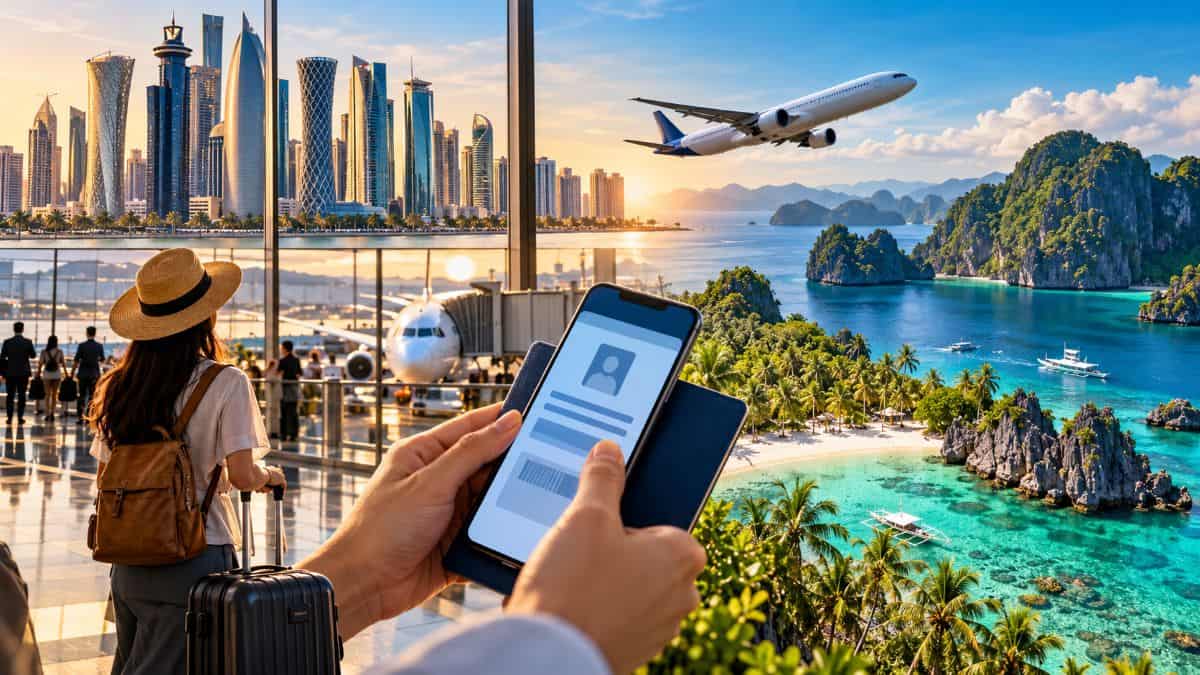
The Philippines e-Visa system in Qatar is now fully operational, creating a digital route for eligible Qatar residents seeking temporary visit visas. The Philippine Embassy in Doha confirmed full implementation from 5 October 2026, allowing qualifying applicants to submit their applications online. Approved visas can be accessed remotely through a computer, laptop or mobile device. Travellers can present either a digital or printed copy when entering the Philippines. The new arrangement also removes the requirement for a physical visa sticker in the passport. However, travellers must still complete the Philippines’ e-Travel registration within 72 hours before arrival. The development strengthens digital travel access while preserving existing immigration requirements.
Qatar Travellers Enter a New Digital Visa Era
The move marks an important change in how eligible travellers based in Qatar can prepare for a Philippine holiday. The traditional dependence on physical visa documentation is giving way to a process built around electronic applications and digital issuance.
Under the new arrangement, applicants can submit their information online through the Philippine e-Visa platform. Once the embassy approves the application, the visa becomes available electronically. Travellers can then store the document on their devices or carry a printed version.
The change is particularly relevant for Qatar’s international resident population. Doha functions as a major aviation and business hub, with residents regularly travelling across Asia for leisure, family visits and business.
Advertisement
Advertisement
Yet the new facility should not be mistaken for a blanket visa waiver. Eligibility remains dependent on nationality, passport status and the purpose of travel. Qatar residency alone does not automatically establish eligibility for a Philippine e-Visa.
| New Arrangement | What It Means for Travellers |
|---|---|
| Full implementation | Effective from 5 October 2026 |
| Application | Online |
| Visa issuance | Electronic |
| Passport sticker | No longer required |
| Visa access | Computer, laptop or mobile device |
| Presentation | Digital or printed copy |
| Main use | Eligible temporary visits |
| e-Travel | Separate registration remains mandatory |
| Registration window | Within 72 hours before arrival |
| Visa conversion | Not permitted |
| Extension | Authorised stay cannot be extended under the new system |
| Study and employment | Appropriate regular visa required |
The practical advantage is therefore clear. Travellers can complete an important part of the process remotely without relying on a physical visa sticker.
Advertisement
Advertisement
The 72-Hour Rule Travellers Must Remember
The most important operational detail comes after visa approval. Travellers must complete the Philippine government’s separate e-Travel registration within 72 hours before arrival.
The timing matters because applicants should not complete the registration before receiving their e-Visa. The two procedures serve different purposes and should be treated as separate stages of the journey.
The e-Travel system functions as a digital passenger declaration platform. It supports border control, health surveillance and tourism-related economic analysis. The system is web-based and can be accessed using a smartphone, tablet, laptop or computer.
The registration itself is free of charge. Travellers should therefore be cautious of websites requesting payment for basic e-Travel registration.
| Travel Stage | What To Do | Timing |
|---|---|---|
| Visa eligibility | Confirm whether a visa is required | Before booking or applying |
| e-Visa application | Submit required information online | Before travel |
| Visa approval | Download and retain the approved document | Before departure |
| e-Travel registration | Complete the digital declaration | Within 72 hours before arrival |
| Boarding | Keep travel documents accessible | Before flight |
| Arrival | Present passport and required documents | At Philippine border control |
The simplest approach is to save the approved e-Visa and e-Travel confirmation in more than one place. Travellers can retain digital copies on their phones while carrying printed documents as a backup.
The official e-Travel system also generates a QR code following successful registration. Travellers should keep that information accessible before reaching the airport.
Advertisement
Advertisement
Visa Rules Still Depend on Travel Purpose
The digital system does not eliminate the distinction between tourism, business, study and employment.
The Philippines’ temporary visitor framework covers several legitimate short-term purposes. These include tourism, leisure, business visits, medical treatment, conferences and certain other temporary activities.
For tourism and leisure, applicants can be asked to demonstrate their travel arrangements and financial capacity. Evidence may include return or onward tickets, accommodation details, employment documentation, financial records and an itinerary.
The official requirements also state that passports should generally remain valid for at least six months beyond the intended period of stay. Applicants may also need to provide evidence establishing their bona fide status as visitors.
This makes document preparation important despite the digital application process. Moving the application online does not mean that immigration authorities have removed documentary scrutiny.
Travellers planning to work or study in the Philippines face a different situation. They should obtain the appropriate visa rather than attempting to use a temporary visitor route.
Advertisement
Advertisement
| Travel Purpose | General Direction |
|---|---|
| Holiday | Temporary visitor or tourism category, where applicable |
| Visiting family | Temporary visitor category, where applicable |
| Short business visit | Relevant temporary business category |
| Medical treatment | Appropriate temporary medical category |
| Study | Student-related visa route |
| Employment | Appropriate employment visa route |
| Long-term residence | Relevant immigration category |
| Journalism or specialised activity | Specific visa category may apply |
The distinction protects travellers from one of the most common problems with simplified visa systems. Digital processing changes how an application is submitted, not the legal purpose for which the traveller can enter.
An E-Visa Does Not Guarantee Entry
Travellers should also understand the difference between holding a visa and being admitted into a country.
An approved Philippine e-Visa permits the traveller to seek entry under the relevant conditions. It does not automatically guarantee admission at the border.
Immigration officials retain authority to assess travellers when they arrive. They can review passports, travel documents and other relevant information before determining admission.
That makes consistency particularly important. Information provided during the visa application should match the traveller’s actual circumstances.
A traveller entering for tourism should therefore be prepared to demonstrate a genuine temporary travel purpose. Accommodation, onward travel and financial documentation can remain useful even after the electronic visa has been approved.
Advertisement
Advertisement
This is especially important for first-time visitors who may assume that digital approval eliminates border checks. It does not.
Why the Philippines Is Making This Move Now
The e-Visa expansion comes as the Philippines is seeking stronger international tourism performance and greater economic value from visitors.
The country recorded 5.94 million international tourist arrivals in 2025, according to Bureau of Immigration figures cited by the Philippine government. When returning Overseas Filipinos were added, total foreign visitor arrivals reached approximately 6.48 million.
International visitor spending also reached an estimated ₱694 billion in 2025. These figures demonstrate why governments increasingly treat visa convenience as part of tourism competitiveness.
The Philippines also entered 2026 with positive visitor momentum. Between 1 January and 16 June 2026, the country recorded 2.96 million visitor arrivals, up 6.16% from the corresponding period a year earlier.
The tourism sector has broader economic significance. Tourism contributed 8.1% of the Philippine economy in 2025, generating approximately ₱2.27 trillion in Tourism Direct Gross Value Added. The sector also supported around 7.70 million jobs nationwide.
Advertisement
Advertisement
These numbers explain why improvements in the visitor journey matter. Even small reductions in administrative friction can become meaningful when applied across thousands of international travellers.
Qatar Could Strengthen Gulf Visitor Access
Qatar offers the Philippines a strategically useful market because of its role as a major international aviation hub.
Doha connects travellers across the Gulf, South Asia, Southeast Asia, Europe and Africa. Its large expatriate population also creates a broad potential market for short-haul and medium-haul leisure travel.
For Philippine tourism operators, the opportunity extends beyond Qatar nationals. The market includes eligible foreign residents who live and work in Qatar and may consider Southeast Asian destinations during annual leave.
A simpler visa journey can therefore support the broader travel ecosystem. Airlines, hotels, destination-management companies and tour operators can potentially benefit when travellers face fewer administrative barriers.
The effect is unlikely to come from visa digitalisation alone. Air connectivity, fares, destination marketing, accommodation capacity and traveller confidence will remain equally important.
Advertisement
Advertisement
However, visa convenience can influence the first stage of destination choice. When two destinations offer comparable experiences, a simpler entry process can become a competitive advantage.
Digitalisation Is Reshaping Border Travel
The Philippines is not treating digitalisation as a standalone visa project.
The country’s immigration authorities have been modernising border systems to improve speed, security and convenience. Philippine international ports recorded 15.61 million passenger arrivals during 2025, including approximately 6.70 million foreign nationals.
The scale of that passenger movement demonstrates why paper-heavy processes are increasingly difficult to manage efficiently.
Digital visas, online passenger declarations and automated border systems can reduce administrative pressure while creating more structured traveller data.
For tourism authorities, such systems can also improve understanding of visitor flows. Better data can support infrastructure planning, destination investment and market-specific tourism strategies.
Advertisement
Advertisement
The Philippines has consequently been moving towards a model in which digital convenience and border management operate together.
The Qatar rollout fits that wider direction.
E-Visa And E-Travel Are Not the Same
Travellers should remember one simple rule: an e-Visa is not the same as e-Travel.
The e-Visa concerns the traveller’s visa application and permission to seek entry under the applicable category. The e-Travel system is a separate digital declaration platform used for passenger and border information.
The e-Travel registration must be completed during the permitted 72-hour period. Travellers should not attempt to substitute one document for the other.
The registration is also free. The government specifically warns travellers about fraudulent websites that request payment.
Advertisement
Advertisement
This distinction is particularly valuable for Qatar-based visitors booking trips independently. Online travel searches can produce unofficial websites that appear authoritative but may charge unnecessary fees.
Travellers should use the Philippine government’s official platforms whenever they submit sensitive passport or travel information.
What Travellers Should Prepare Before Departure
The new digital system should make preparation easier, but travellers still need to organise their documents carefully.
A passport should meet the required validity standard. The approved e-Visa should remain accessible, while supporting evidence such as accommodation and onward travel should also be readily available.
Travellers should then complete e-Travel registration only within the required window. Completing it too early can create unnecessary complications because the registration is linked to the traveller’s specific journey.
A useful preparation sequence is therefore straightforward.
Advertisement
Advertisement
First, confirm visa eligibility based on nationality and travel purpose. Next, complete the e-Visa application and wait for the official decision. After approval, save the e-Visa securely and complete e-Travel within 72 hours before arrival.
The process is digital, but prudent travellers should still maintain a paper backup. A printed visa can provide reassurance if a phone battery, connectivity problem or device issue occurs during the journey.
A More Accessible Philippines for Gulf Travellers
The full implementation of the digital visa process gives eligible Qatar-based travellers a more convenient route to the Philippines.
Its significance extends beyond eliminating the passport sticker. The development reflects a wider transformation in how countries manage international tourism, from physical paperwork towards integrated digital travel systems.
For the Philippines, the timing is strategically important. International tourism is generating billions of pesos in visitor spending and supporting millions of jobs. At the same time, the country is seeking stronger connectivity and more diversified international markets.
For travellers, the immediate benefit is simpler administration. Yet the essential rules remain unchanged: check eligibility, provide accurate documentation, obtain the correct visa and complete e-Travel at the right time.
Advertisement
Advertisement
The new system should make Philippine travel more accessible from Qatar without weakening immigration controls. For the tourism industry, it offers another piece of the infrastructure needed to compete for increasingly digital-first international travellers.
Advertisement
