
Europe’s Cultural Cities Challenge Seasonal Tourism Slumps as UK Flights Expand to Nuremberg and Beyond for 2026 Winter Festivals

Published
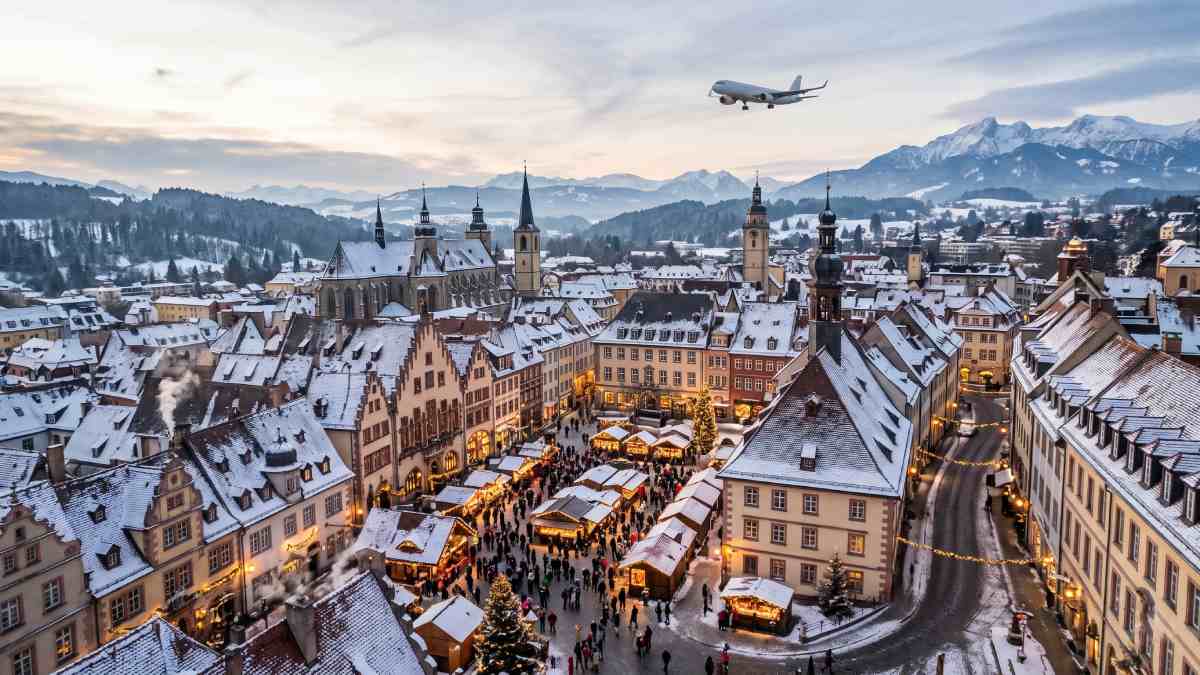
There is a paradigm shift in the structure of European commercial aviation as airlines move away from capacity cutbacks due to defensive reasons during winter months and instead capitalize on regional heritage tourism. Traditionally, the immediate cessation of holiday traffic at the onset of the shoulder month of November meant that airlines had to withdraw their narrowbody fleets leading to decreased operational margins. Currently, there are point-to-point service extensions that connect departure points in regional airports with smaller cultural destinations across Europe. The flights are scheduled according to local celebrations and cultural events.
A revolution is taking place in the world of commercial air travel where the defensive winter scheduling of airlines is replaced by their desire to capitalize on Europe’s most lucrative cultures. In the past, airlines used to cut down capacity through November in order to safeguard their bottom line as tourists dried up following the peak of summer. Today, however, this shoulder period – one of low demand – is being turned into a profitable period through the significant expansion of regional flights in Europe. This is achieved by linking the smaller regional airports to exciting destinations such as Nuremberg, Kraków, Tromsø, and Tirana where strong cultural demand can be met by the airlines.
The Seasonal Asymmetry of European Aviation and the November Demand Cliff
European commercial aviation has long been challenged by extreme operational asymmetry dictated by leisure travel seasonality. Data compiled by the European Union’s statistical office, Eurostat, reveals that passenger accommodations across member states experience a massive concentration during peak summer months, whereas November sits at the lowest trough of annual leisure mobility.
For low-cost carriers (LCCs) and regional airlines operating high-density narrow-body aircraft—such as the Airbus A320 and Boeing 737 families—aircraft utilisation and revenue per available seat kilometre are severely impacted by this seasonal drop. Fixed leasing, debt service, fleet depreciation, and base workforce expenses remain static irrespective of month-to-month ticket volume. While a proportional rise in corporate business travel is experienced in November, these journeys are heavily concentrated along traditional primary hub corridors linking major financial centres. Secondary city pairs and regional airports, lacking massive corporate travel flows, are faced with reduced frequencies or total seasonal suspension unless alternative travel motivations are established.
Advertisement
Advertisement
To counter post-autumn revenue dips, winter scheduling has been re-engineered by network planners. Rather than parking aircraft or cutting routes, European regional flight expansions tailored specifically around late-autumn cultural calendars are being pursued by airlines. By scheduling point-to-point operations around established living heritage events, shoulder-period scheduling is being turned into an active asset management strategy.
Strategic Architecture of European Regional Flight Expansions
UK departure airports are directly linked with culturally distinctive European destinations through strategic expansions across European regional aviation in late October and November. This operational deployment represents a departure from traditional leisure route structures, which historically channelled off-peak capacity toward Mediterranean beach destinations or traditional ski hubs.
Advertisement
Advertisement
Instead, dedicated cultural transit corridors are being created that align regional UK departure bases—including London Gatwick, Manchester, Glasgow, Edinburgh, and Birmingham—with secondary cultural destinations such as Nuremberg, Kraków, Tromsø, and Tirana. Historic urban centres, distinctive culinary customs, and established folkloric celebrations that remain active regardless of autumnal weather patterns are offered by these destinations.
Major transit choke points like London Heathrow, Frankfurt, and Paris Charles de Gaulle are bypassed by connecting non-primary origin airports to secondary European destinations. Total journey times are lowered, transit costs are cut, and baggage-handling transfer risks are eliminated through direct point-to-point services, making feasible long-weekend trips accessible for regional travellers. Carrier yield management techniques centred on specific cultural milestones are enabled by this approach, allowing short-break leisure demand to be captured outside peak holiday cycles.
Yield Management Dynamics: Offsetting Shoulder-Season Deficits
In low-cost aviation, seat load factors are balanced against average fare yields through yield management systems. Base airfares have traditionally been lowered during the November shoulder season to stimulate discretionary travel; however, sustainable unit revenue cannot be generated by reduced fares alone without underlying travel intent.
By aligning network capacity with fixed cultural dates, high-yield booking peaks are generated within an otherwise flat shoulder period. Experiential travel demand is capitalised upon through schedule structures built around late October and November. Shorter booking horizons and lower price sensitivity are exhibited by travellers booking trips for specific cultural occasions—such as St. Martin’s Day processions or St. Andrew’s Eve folklore—compared to general summer holidaymakers.
This dynamic is further leveraged through bundled ancillary services, including seat selection, cabin baggage allowances, priority boarding, and curated hotel partnerships. Consequently, healthy yield curves can be preserved during targeted event weekends, ensuring that overall flight cycle profitability matches early autumn and late winter trading periods.
Tourism De-concentration and Congestion Mitigation
Geographic over-concentration has been created by the continued growth of European city tourism, placing severe strain on primary capitals. Regional tourism data confirms that international visitor nights are heavily clustered in select metropolitan areas, creating infrastructure bottlenecks and public pushback against visitor congestion.
Advertisement
Advertisement
Tourism de-concentration has therefore been identified as a key policy priority by European tourism authorities and intergovernmental bodies like UN Tourism. This objective is actively supported by decentralised air corridors, which channel travel demand directly to secondary cities and rural peripheries:
- Scottish travellers are channelled directly to Tromsø, bypassing domestic rail and air transfers through Oslo Airport.
- Direct access to Northern Bavaria is provided by flights into Nuremberg, relieving passenger congestion at Munich Airport.
- Inbound cultural tourism is distributed directly across the Lesser Poland Voivodeship (Małopolska) by services into Kraków, rather than through Warsaw.
- Summer beach reliance is balanced by expanding services into Tirana, encouraging off-season urban, culinary, and historic heritage travel in Albania’s capital.
Strain on high-density European capitals is relieved while tourism revenues are distributed directly to regional heritage economies through this geographic redistribution of visitor footfall.
Deep-Dive Route Matrix: Connecting Regional Gateways to Cultural Epicentres
| Route Corridor | Operating Carrier | Winter Frequency | Direct Flight Time | Core Cultural and Heritage Vectors | Official Destination Tourism Metric |
| London Gatwick (LGW) / Manchester (MAN) – Nuremberg (NUE) | easyJet | 2x – 4x weekly | 1h 45m – 1h 50m | St. Martin’s Day (Martinsumzug), Christkindlesmarkt Opening | Over 2 million annual visitors at Nuremberg Christkindlesmarkt |
| Glasgow (GLA) – Kraków (KRK) | Ryanair / Jet2 | 2x weekly | 2h 30m | Andrzejki Divination Traditions, Kraków Szopki Assembly | 1.7 million foreign guests in Małopolska accommodations (GUS) |
| Edinburgh (EDI) – Tromsø (TOS) | easyJet | 2x weekly (Mon/Thu) | 2h 55m | Polar Night (Mørketid) Inception, Sámi Storytelling | Significant growth in Troms commercial overnights (SSB) |
| Birmingham (BHX) – Tirana (TIA) | Ryanair UK | 2x weekly (Wed/Sun) | 3h 05m | Albanian Independence Day, White Night (Nata e Bardhë) | Multi-million foreign arrivals and airport traffic expansion (INSTAT) |
London Gatwick and Manchester to Nuremberg: Franconian Traditions and Advent Commerce
Regional airport connectivity between the UK and Northern Bavaria is expanded through direct air services operated from London Gatwick and Manchester to Nuremberg Airport (NUE). Nuremberg functions as the primary commercial and transport hub for Franconia, a region known for its concentration of historic architecture, artisanal crafts, and culinary traditions. Early-winter leisure demand is captured by direct low-cost UK links rather than relying strictly on outbound summer traffic or industrial exhibitions.
November travel to Nuremberg is driven by two key heritage traditions:
- St. Martin’s Day (Martinsumzug, 11 November): A traditional festival featuring lantern processions through Nuremberg’s medieval Altstadt, folk choral performances, and communal dining centred on Martinsgans (roast goose served with red cabbage and potato dumplings). Early-November business is brought to historic taverns and family-owned establishments by this event.
- Nuremberg Christkindlesmarkt Opening (Late November): Dating to the mid-16th century, this historic market is attended by millions of global visitors across its run. Regional accommodation demand is generated by the ceremonial opening led by the Christkind from the balcony of the Church of Our Lady (Frauenkirche). Opening weekend celebrations can be attended by UK travellers prior to the peak December holiday rush via direct point-to-point flights from Manchester and London Gatwick.
Direct access to Franconian heritage is provided by these routes while offering a viable alternative to larger hub airports like Frankfurt and Munich.
Glasgow to Kraków: Folk Divination, Guild Artisanship, and Central European Heritage
Both diaspora travellers and short-break heritage visitors are served by direct air links between Glasgow Airport (GLA) and Kraków John Paul II International Airport (KRK). It has been noted by the Central Statistical Office of Poland (Główny Urząd Statystyczny – GUS) that Poland’s highest volume of foreign tourist stays is consistently recorded in the Lesser Poland Voivodeship (Małopolska), where sustained interest is driven by cultural destinations like Kraków.
Advertisement
Advertisement
Two prominent seasonal traditions are featured in Kraków’s cultural schedule in late November:
- St. Andrew’s Eve (Andrzejki, 29 to 30 November): A night of living folkloric divination and social gatherings preceding the Christian Advent season. Central to the celebration is lanie wosku—the practice of pouring hot beeswax through the handle of an antique key into cold water, casting shadows on walls to divine fortunes. Andrzejki banquets featuring traditional Lesser Poland gastronomy, acoustic folk music, and poetry recitals are hosted across Kraków’s historic Old Town (Stare Miasto) and the Kazimierz district.
- Artisanal Construction of Kraków Szopki: The final assembly phase for local artisans crafting elaborate Kraków nativity scenes (Szopki Krakowskie) takes place in November. Inscribed on the UNESCO Representative List of the Intangible Cultural Heritage of Humanity in 2018, multi-tiered architectural models combining elements of Kraków’s landmark monuments are produced. Workshop open days and pre-exhibition showcases lead directly into the historic public competition held annually in the Main Market Square on the first Thursday of December.
Scottish travellers are directly connected to Kraków’s historic core via non-stop flights from Glasgow, supporting independent boutique hotels and cultural establishments during the late-autumn shoulder window.
Edinburgh to Tromsø: The High North Passage, Polar Night Inception, and Indigenous Culture
Direct connectivity between Scotland and Arctic Norway has been established by easyJet through the introduction of direct flights between Edinburgh Airport (EDI) and Tromsø Airport, Langnes (TOS). Previously, indirect transfers through Oslo or London were required, resulting in extended transit journeys. Practical short-break Arctic travel is now facilitated by this direct link.
Data from Statistics Norway (Statistisk sentralbyrå – SSB) indicates that commercial guest overnights in Troms county have expanded significantly, with winter seasonal growth being driven largely by international visitors. It was highlighted by senior advisers at Statistics Norway that national foreign overnights have reached record volumes, with winter operations being reinforced by global tourism flows.
Tromsø’s late-autumn cultural appeal is anchored by seasonal transitions and northern traditions:
- The Arrival of the Polar Night (Mørketid): In late November, the sun drops below the horizon, beginning two months of continuous winter twilight. Cultural events, including light installations across the harbour and classical choral concerts in the Arctic Cathedral (Ishavskatedralen), are staged around this astronomical transition. The twilight conditions (blåtimen) and clear skies provide an ideal setting for early-season Northern Lights viewing.
- Sámi Heritage and Storytelling: The start of the winter cultural season for indigenous Sámi communities in Troms occurs in November. Travellers are invited to engage with traditional reindeer herding practices, attend fireside storytelling sessions inside traditional lávvu tents, and experience joik vocal performances. Ethnographic learning and traditional handicrafts (duodji) are emphasised during early-winter visits ahead of mid-winter snow sports.
Direct access to northern cultural experiences is provided by these flights, extending tourism expenditure well beyond the summer and late-winter ski seasons.
Advertisement
Advertisement
Birmingham to Tirana: Balkan Connectivity, Sovereignty Celebrations, and White Night
The introduction of direct services between Birmingham Airport (BHX) and Tirana International Airport Nënë Tereza (TIA) forms part of a wider fleet deployment by Ryanair to expand connectivity from the West Midlands. Boeing 737-800 aircraft are utilized on this route to connect the region directly to the Albanian capital.
It was stated by Matt Hazelwood, Chief Commercial Officer at Birmingham Airport, that a strong vote of confidence in both the airport and the wider region was represented by this network expansion, with greater choice and connectivity delivered in response to regional demand. It was similarly confirmed by Dara Brady, Chief Marketing Officer at Ryanair, that passenger traffic and local employment are directly supported by basing additional aircraft at regional stations.
Substantial growth in international tourist arrivals and passenger traffic through Rinas Airport has been recorded by Albania’s national statistical agency, INSTAT. Furthermore, it was reported by the International Monetary Fund (IMF) that broader national economic output and employment have been continuously bolstered by tourism activities.
While Albania’s tourism has historically centered on coastal summer destinations, Tirana’s urban and civic heritage is highlighted by late-autumn flight links:
- Albanian Flag and Independence Day (28 November): Commemorating the 1912 declaration of national sovereignty, civic parades, historical exhibitions, and traditional folk dances (Valle) are held in Skanderbeg Square. Regional diaspora communities and international visitors are drawn to culinary showcases featuring regional specialities such as Tavë Kosi and local wines.
- White Night (Nata e Bardhë, 29 November): Immediately following Independence Day, a 24-hour civic and cultural festival is hosted by the municipality of Tirana. Major public institutions—including the National History Museum, Bunk’Art underground heritage complexes, and the National Gallery of Arts—are opened to the public free of charge alongside outdoor musical performances and artisan markets.
Affordable off-season cultural city-break travel is established through direct air access from Birmingham.
The Rise of Micro-Heritage Travel and Cultural Tourism Consumption
A broader structural shift in European visitor behaviour is reflected in the expansion of autumn regional routes: the rise of micro-heritage travel. Unlike extended summer vacations focused on rest and leisure, immersive, time-sensitive cultural engagements are prioritised by short-break travellers.
Advertisement
Advertisement
Short trips lasting only a few overnight stays are distributed much more evenly across the calendar year than extended holidays, according to Eurostat travel pattern analyses. Rather than general sightseeing, travel during shoulder months is motivated by specific seasonal programming, authentic dining experiences, and living traditions.
Regional businesses benefit considerably from this short-stay travel model. Expenditure is directed by off-season visitors toward local dining, independent retail, and municipal cultural sites rather than all-inclusive holiday packages. Financial leakage is minimized, and small and medium-sized enterprises (SMEs) dedicated to preserving regional heritage assets are sustained.
Economic Implications and Seasonal Employment Extension
A significant economic vulnerability across seasonal hospitality economies is reliance on peak summer revenues. In highly seasonal destinations, contracts are frequently terminated at the end of October, resulting in winter unemployment spikes and regional labour instability.
A seasonal employment extension of several weeks is provided to regional hospitality workforces through the activation of direct flights across late October and November. Operations are maintained by regional hotels, eateries, and tour operators into early winter, smoothing cash-flow cycles ahead of the primary Christmas trading period:
- In Nuremberg, employment is maintained by independent hoteliers between autumn industrial trade fairs and the opening of Advent markets.
- In Kraków, staff retention across historic city-centre establishments is supported by demand surrounding Andrzejki and Szopki events.
- In Tromsø, the seasonal gap between summer cruise traffic and peak mid-winter aurora tourism is bridged by early Polar Night bookings.
- In Tirana, urban retail and hospitality positions are sustained outside the summer coastal season by late-November independence celebrations.
Staff retention is reinforced, spring onboarding costs are lowered, and more stable year-round employment is created in regional tourism communities by extending operational seasons.
Regulatory Frameworks, Airport Tariffs, and Regional Aviation Policy
The role of regional airport policies and commercial landing incentive schemes is highlighted by the establishment of off-peak cultural air routes. Under European Union airport slot regulations, primary hub airports require airlines to maintain historical slot-use thresholds to preserve landing rights. In contrast, commercial freedom is exercised by secondary regional airports—often designated as non-coordinated or schedules-facilitated facilities—to design targeted off-peak fee structures.
Advertisement
Advertisement
Targeted incentives are often deployed by regional airport operators to encourage winter route operations:
- Discounted Aeronautical Tariffs: Tiered rebates on passenger landing and departure fees are offered for flights operated during the winter schedule.
- Route Marketing Support: Destination cultural assets are promoted directly within outbound UK regional markets through co-funded marketing initiatives.
- Winter Operational Support: Reductions in aircraft parking and ground-handling charges are granted to offset cold-weather operating costs, particularly at northern destinations like Tromsø.
At the international regulatory level, route expansions into the Western Balkans have been facilitated by the European Common Aviation Area (ECAA) agreement. New air services to Albania are permitted to launch without restrictive bilateral air service constraints, allowing airline capacity to be adjusted dynamically around major cultural event periods.
Future Outlook: Fleet Technology, Emissions Compliance, and Long-Term Viability
The long-term viability of shoulder-season regional routes depends on balancing profitability with environmental regulations. The economics of off-peak operations have been enhanced by the deployment of fuel-efficient narrow-body aircraft, such as the Airbus A320neo, A321neo, and Boeing 737 MAX families. Considerably lower fuel burn and reduced noise profiles are delivered compared to previous-generation fleets, reducing unit operating costs on thinner secondary routes.
However, stricter environmental compliance requirements are being faced by European carriers under the European Union’s Fit for 55 package and the ReFuelEU Aviation mandate. Increased operating costs across intra-European networks are expected to result from mandatory sustainable aviation fuel (SAF) blending quotas and the progressive phase-out of free EU Emissions Trading System (ETS) allowances.
High load factors must be maintained and tangible local economic benefits must be demonstrated by carriers and destination management organisations (DMOs) to keep these routes viable. By providing reliable access to cultural events, point-to-point flight corridors can preserve winter operational viability while supporting local heritage economies across Europe.
Traditional seasonal demand curves are actively being flattened by low-cost carriers through the establishment of direct links between regional departure hubs and heritage centres in Germany, Poland, Norway, and Albania. Narrow-body fleet utilization is sustained and visitor expenditure is channelled directly into local communities by monetising regional festivals, civic anniversaries, and living folklore.
Advertisement
Advertisement
Conclusion
Winter flying is proven to be viable through the expansion of regional flight routes to depend upon the engagement of culture rather than on climate. Through the match of capacity and living heritage and municipal celebrations, flights continue to be used and hospitality employment continues to be available throughout Europe’s off season.
Advertisement
