
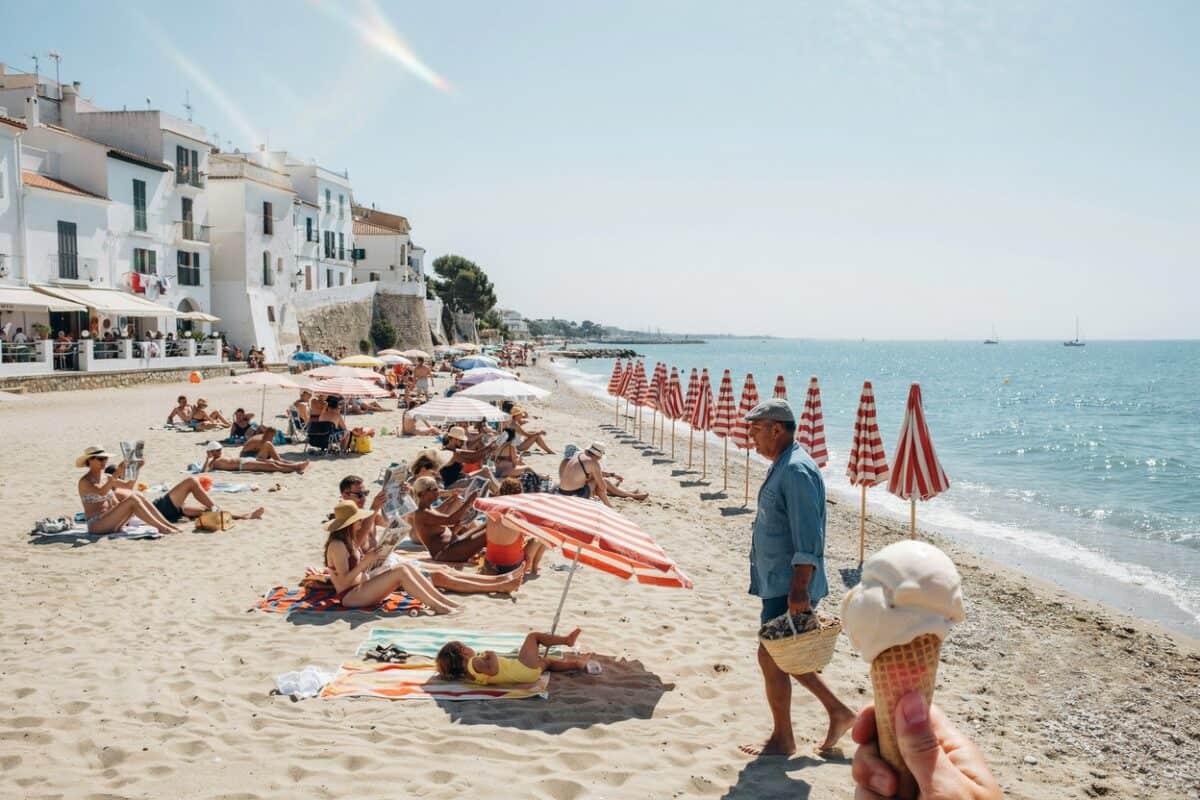
Image generated with Ai
Walking along the sun-drenched paths of Ibiza, the electric energy of the Mediterranean usually casts an effortless spell over every traveler. Yet beneath the glittering surface of world-famous beach clubs and luxury superyachts, a profound local fatigue has reached a boiling point. More than a hundred determined residents, spearheaded by the grassroots Ibiza Youth Association (Associació de Joves d’Eivissa), marched directly onto the pristine sands of Cala Saladeta, near San Antonio, to execute a powerful civilian occupation. Spreading their beach towels across the coveted cove, demonstrators raised bold Catalan banners bearing striking messages declaring that wherever one looks, it is entirely saturated by tourists. Organizers stressed that the community gathering was designed to reclaim public spaces that locals feel are slipping permanently out of reach.
The friction point on the island extends far beyond crowded coastlines, reaching deep into the socio-economic survival of year-round residents. Community leaders noted that the explosion of short-term holiday rentals and luxury real estate developments has triggered an unprecedented housing emergency. Essential service personnel—including the very hospitality workers, drivers, and restaurant staff required to keep the island’s multi-billion-dollar tourism engine functioning—are increasingly priced out of permanent tenancy, with extreme cases forcing individuals to sleep inside their personal vehicles. Furthermore, families find themselves competing directly with lucrative holiday apps and speculative investors who buy up residential stock, converting permanent homes into high-yield seasonal commodities. This dynamic hollows out historic neighborhoods, leaving local schools, community centers, and traditional markets struggling to maintain viable year-round populations.
Advertisement
Furthermore, local infrastructure systems, including municipal water supplies, waste management, and coastal roadways, face severe strain during peak July and August cycles. According to regional administrative portals like the Balearic Islands Agency for Tourism (AETIB) and sustainable policy frameworks overseen via illesbalears.travel, managing visitor capacities and enforcing a sustainable tourism tax remain critical priorities to balance economic activity with ecological preservation. Protesters emphasized that their movement is not an attack on individual holidaymakers, but rather a structural rejection of a hyper-commercialized model that risks turning their native home into an unsustainable theme park. Local governance bodies are continuously pressured to implement tighter caps on rental licenses, vehicle influxes, and mega-yacht moorings to protect the fragile subterranean water tables that struggle to replenish themselves under extreme summer extraction rates.
Navigating the Balearic Islands responsibly requires adapting to new regulatory frameworks designed to protect local ecosystems and residential well-being. Visitors can minimize their personal footprint by implementing several practical strategies during their stay to ensure harmony between travelers and hosts.
Advertisement
Book stays exclusively through licensed hotels, rural guesthouses, or legally certified local properties rather than unregulated holiday apartments that deplete residential housing stocks. By selecting establishments that comply with regional labor laws and environmental standards, travelers directly support the formal local economy while bypassing shadow-market rentals that drive up housing costs for local families.
Plan journeys during the shoulder seasons of spring and autumn to experience milder weather, reduced crowding, and lessened infrastructural strain. Visiting outside of July and August helps distribute tourism revenue evenly throughout the calendar year, relieving immense pressure on local water grids, public transport, and waste facilities while offering a much more authentic and relaxed cultural experience.
Respect public consumption laws, local quiet hours, and environmental protections regarding coastal waste and fragile marine habitats. Travelers must remain mindful of sensitive natural areas, staying strictly on designated footpaths, avoiding single-use plastics on pristine beaches like Cala Saladeta, and honoring the daily rhythms of residential neighborhoods that require peace and quiet.
Support alternative inland villages and lesser-known historical quarters across Ibiza and neighboring Mallorca to distribute economic benefits evenly. Exploring off-the-beaten-path municipalities allows tourists to discover rich local heritage, authentic gastronomy, and artisan crafts while relieving the severe saturation plaguing famous coastal icons and beauty spots.
Advertisement
Advertisement
As the sun sets over the rugged cliffs of San Antonio, the echoes of the Cala Saladeta demonstration linger as a reminder that paradise requires active stewardship. Whether you are charting an upcoming Mediterranean escape or reevaluating your travel habits, balancing wanderlust with deep respect for local communities ensures these islands remain vibrant for generations to come.
Advertisement
Tags: balearic islands, Ibiza, San Antonio, spain
Advertisement
Advertisement













Friday, September 4, 2026

Friday, September 4, 2026

Friday, September 4, 2026

Friday, September 4, 2026

Thursday, September 3, 2026

Wednesday, September 2, 2026

Friday, September 4, 2026



