
Japan Investment Surge Powers Thailand EEC as a New Business Travel and MICE Hotspot

Published
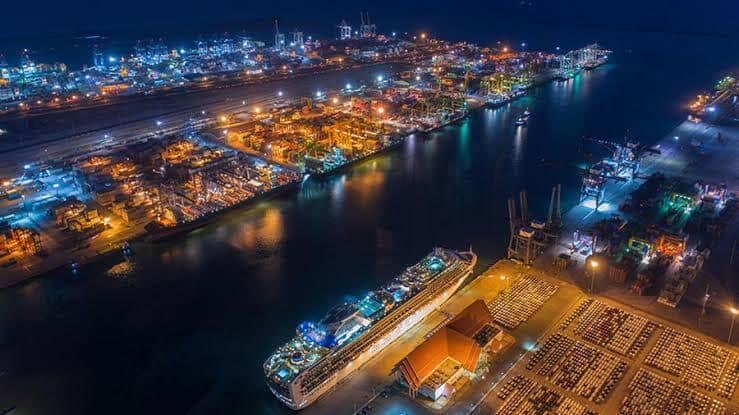
Japan’s increased funding on Thailand’s Eastern Economic Corridor will stimulate not just business travel and the MICE sector on Chonburi, Rayong, and Chachoengsao, but also sustained corporate travel, meetings, and supplier visits. It is expected by the second half of 2026 that 87 Japanese businesses will have been approved in accordance with the Thai Foreign Business Act, at a total investment of about 44.662 billion baht. In the same period, the EEC attracted 199 foreign businesses. Although foreign investment stimulates local business, the investment also allows Thailand to focus less on low-end tourism and more on higher spending MICE and corporate travel.
Japan Investment Adds a New Travel Dimension to Thailand’s Eastern Economic Corridor
Thailand’s Eastern Economic Corridor has long been designed as more than an industrial zone. It covers Chonburi, Rayong and Chachoengsao, combining manufacturing, logistics, technology, aviation, tourism and urban development within one strategic economic region.
The latest investment data give that model fresh relevance for travel. Thailand’s Public Relations Department, citing the Department of Business Development under the Ministry of Commerce, reported that 640 foreign businesses were approved to invest in Thailand during January-June 2026. Their combined investment reached 187.614 billion baht, up 68% year on year.
Japan stood out by investment value. Japanese investors accounted for 87 approved foreign businesses and 44.662 billion baht of investment under this particular Foreign Business Act measure. China recorded more approved businesses, but Japanese capital was higher than the values reported for China, the United States, Singapore and Hong Kong individually.
Advertisement
Advertisement
This matters to tourism because foreign investment does not move alone. New facilities require management visits, supplier meetings, engineering teams, inspections, technical training, corporate gatherings and regional conferences.
That creates a potential bridge between Japan investment Thailand and the country’s established tourism economy. The effect is especially relevant in the EEC, where major industrial centres sit close to Pattaya, coastal resorts, convention facilities and transport infrastructure.
Advertisement
Advertisement
Thailand EEC Captures a Large Share of Foreign Business Activity
The same official H1 2026 data show why the EEC deserves attention.
The Eastern Economic Corridor received 199 foreign investors during the first six months of 2026 under the Foreign Business Act framework. That represented 31% of foreign investors covered by the dataset and was 26% higher than in the same period of 2025.
Advertisement
Advertisement
That concentration strengthens the link between investment and travel.
Corporate activity creates demand at several levels. Senior executives may travel for negotiations. Engineers can visit plants. Procurement teams may inspect suppliers. International companies can hold training sessions, product launches or regional meetings.
Those movements are different from leisure tourism. They can be repeated throughout the year and are less dependent on traditional holiday seasons.
This is where the Thailand EEC story becomes relevant to hotels, airlines and convention operators. A stronger concentration of corporate activity can create a wider pool of potential business travellers even when investment itself is industrial rather than tourism-specific.
Advertisement
Advertisement
The EEC Was Built as an Integrated Economic Region
Thailand’s EEC policy covers a much wider economic structure than manufacturing alone.
Official EEC planning identifies target clusters in advanced automotive production, digital industries, smart electronics, health and medical services, aviation, logistics, bioeconomy activities and high-value tourism. The EEC also includes specific investment-promotion zones and infrastructure programmes.
The region therefore brings industries that naturally generate international movement into the same geography as established tourism destinations.
Chonburi is particularly important. It includes Pattaya, one of Thailand’s best-known visitor destinations, while also hosting major industrial and logistics activity.
Rayong combines industrial estates, energy and manufacturing with coastal tourism and island access.
Chachoengsao forms another part of the industrial and transport network linking eastern Thailand with Bangkok.
Advertisement
Advertisement
That mixture makes the region unusual. A traveller can arrive for a plant visit or meeting yet stay within a destination already equipped with hotels, restaurants and leisure experiences.
Japan’s Investment Relationship with Thailand Has Deep Industrial Roots
Japan is not a new investor in Thailand.
Japanese companies have spent decades building production networks across the country, particularly in automotive manufacturing, electronics, machinery and components. Thailand’s Board of Investment has repeatedly identified Japanese businesses as important participants in these sectors.
In 2023, Japanese investors filed 264 BOI applications worth more than 79 billion baht, representing a 60% increase from the previous year. BOI has also said it wants Japanese companies to expand into electric vehicles, semiconductors, smart electronics, digital industries, bio-industries, research centres and regional headquarters.
That history matters because new investment often builds on existing supplier relationships.
Instead of one isolated project producing one business trip, a large industrial network can generate recurring flows of staff, customers, suppliers and specialists between Japan and Thailand.
Advertisement
Advertisement
For the hospitality sector, recurring corporate movement can be particularly valuable because it may support weekday stays, longer visits and repeat bookings.
Thailand’s Broader Investment Boom Strengthens the Business Travel Case

Japanese investment sits inside a much larger increase in Thailand’s investment pipeline.
The Board of Investment reported that total investment applications reached approximately 1.47 trillion baht across 1,299 projects during H1 2026, up 37% from a year earlier. Digital infrastructure and artificial intelligence data centres accounted for a major share of that value.
These figures should not be confused with the Foreign Business Act numbers.
The 187.614-billion-baht figure measures approved foreign business activity under the Foreign Business Act framework. The BOI’s 1.47-trillion-baht figure covers domestic and foreign investment applications submitted through the investment-promotion system.
Both datasets, however, point in the same broad direction: Thailand is attracting substantial new capital.
Advertisement
Advertisement
That matters for travel because advanced industries require highly mobile specialists. Technology facilities also bring consultants, construction teams, cybersecurity professionals, technicians, financial advisers and international management personnel.
EEC Infrastructure Is Being Built Around Investment and Connectivity
Transport will determine how much of this economic activity becomes practical travel demand.
The Eastern Economic Corridor Office has been advancing several major infrastructure projects, including U-Tapao Airport and Eastern Aviation City, rail development, transit-oriented development and the proposed EEC Capital City.
U-Tapao is strategically important because it sits closer to Pattaya and Rayong than Bangkok’s main airports.
The long-term official vision is to integrate airport infrastructure, railway development and new business areas so workers, investors and visitors can move more efficiently through eastern Thailand.
EEC officials have also described plans for a new business and liveable smart-city centre in Chonburi. The planned development is designed to accommodate approximately 1.34 trillion baht of investment and create at least 200,000 direct jobs, according to the EEC Office.
Advertisement
Advertisement
Those are development targets rather than completed economic outcomes.
For tourism, their importance lies in the concentration of future workplaces, business services and transport infrastructure near existing visitor destinations.
Pattaya Already Gives the EEC a Ready-Made Hospitality Platform
Many emerging business zones have to build their tourism infrastructure almost from zero.
The EEC does not.
Pattaya already offers a large accommodation market, restaurants, entertainment, beaches and event venues. It therefore gives Chonburi a tourism base that can also serve corporate travellers.
Thailand demonstrated that capacity during Thailand Travel Mart Plus 2026, held from 10 to 12 June at the NICE Pattaya Convention and Exhibition Center in Chonburi.
Advertisement
Advertisement
The Tourism Authority of Thailand said the event produced more than 15,000 business appointments. TAT expected it to generate more than 5.08 billion baht in tourism revenue, 12.9% more than the previous year.
The event was tourism-focused rather than an industrial investment conference.
However, its scale shows that Pattaya can host large B2B gatherings alongside its leisure market.
This gives the EEC a practical advantage as corporate activity expands nearby.
Thailand MICE Strategy Can Gain From Corporate Investment
The Thailand MICE industry covers meetings, incentive travel, conventions and exhibitions.
Thailand Convention and Exhibition Bureau maintains official statistics covering international meetings, incentives, conventions, exhibitions and mega-events. Its datasets track visitor numbers, spending and quarterly performance, showing that business events are treated as a distinct economic segment rather than simply an extension of leisure tourism.
Advertisement
Advertisement
Investment growth can support that segment indirectly.
Companies entering Thailand may need supplier conferences, internal meetings, product demonstrations, training events and industry exhibitions.
Manufacturing clusters can also create specialist business events around automotive technology, electronics, digital services, logistics and clean energy.
The EEC is particularly suited to such events because participants can combine meetings with site inspections.
This makes the corridor different from a conventional city-only convention destination.
Business Travellers Can Support Hotels Beyond Peak Leisure Periods
Hotels are among the businesses most directly positioned to benefit from a stronger corporate travel base.
Advertisement
Advertisement
Leisure demand can fluctuate with holidays, weather and school calendars. Corporate activity can operate on different schedules.
Factory inspections happen when projects require them. Board meetings happen throughout the year. Technical teams may stay several nights. Training programmes can create group bookings.
That does not mean every new Japanese investment will generate significant hotel demand.
There is no official forecast showing how many additional hotel nights Japanese investment will produce in the EEC.
However, the existing concentration of investment, hospitality capacity and business-event infrastructure provides a credible basis for viewing corporate travel as an increasingly important supporting market.
Hotels in Pattaya, Rayong and nearby industrial areas may therefore have reasons to pay closer attention to corporate accounts, long-stay guests and meetings rather than depending entirely on holidays.
Advertisement
Advertisement
Airlines and Airports Gain From Repeated Corporate Mobility
A stronger business relationship between Japan and eastern Thailand also has implications for aviation.
Japan is already a major commercial partner for Thailand, while Bangkok remains the primary international aviation gateway for most travellers.
Corporate travel linked to the EEC can create demand for reliable schedules rather than simply the cheapest fares.
Business visitors often place greater value on convenient departure times, fast ground transfers and schedule flexibility.
U-Tapao’s future role is therefore important.
The EEC Office identifies U-Tapao Airport and Eastern Aviation City as one of the corridor’s major infrastructure programmes. The project sits within a wider strategy to improve transport and logistics links across eastern Thailand.
Advertisement
Advertisement
Official plans should not be interpreted as proof that new Japan-U-Tapao routes will be launched.
No such route should be assumed without airline or airport confirmation.
The stronger conclusion is simpler: better eastern transport infrastructure can make the region easier to access for both investors and visitors.
Thailand’s Tourism Economy Gives Corporate Travel a Large Support Network
Thailand enters this investment cycle with one of Asia’s largest tourism economies.
TAT reported that the country welcomed 32.97 million international visitors in 2025. Domestic travellers made about 202 million trips, while combined tourism activity generated approximately 2.7 trillion baht.
That existing demand supports a large hospitality ecosystem.
Advertisement
Advertisement
In the first quarter of 2026, Thailand received 9.31 million international arrivals. TAT said China, Malaysia, Russia, India and South Korea were the largest markets, while Japan remained among the long-haul and higher-value markets supporting a more diversified visitor mix.
By 2 June 2026, arrivals had exceeded 14 million, generating around 679 billion baht in tourism revenue.
TAT has moved towards a Value over Volume strategy, placing greater emphasis on visitor value, resilience and higher-quality travel rather than arrivals alone.
Corporate and MICE travellers fit naturally into that wider value-based discussion, although TAT has not stated that Japanese EEC investment will directly produce a specific tourism revenue increase.
Tourism Policy Is Moving Towards Higher-Value Demand
Thailand’s 2026 tourism strategy provides important context.
Under the Thailand Tourism Next direction, TAT is targeting stronger value creation through wellness, events, creative travel, private aviation, cruise tourism, digital services and sustainable visitor spending.
Advertisement
Advertisement
That strategy is not specifically an EEC MICE programme.
However, it supports the broader policy environment in which business events can operate.
Corporate visitors often combine professional travel with dining, entertainment, wellness or short leisure extensions.
For Pattaya and the eastern provinces, this creates scope for a visitor to attend a meeting during the week and add a leisure stay before returning home.
That pattern is commonly described in the industry as blended business and leisure travel, but official data do not yet quantify how large that segment is specifically within the EEC.
Investment Can Spread Spending Beyond Factories
The economic effects of foreign investment extend beyond the site receiving the capital.
Advertisement
Advertisement
Businesses need transport. Visiting staff need accommodation. Meetings need venues. Employees need restaurants and services.
International executives may use airport transfers, hotels, conference facilities and local dining.
Large corporate events can also bring spending to event production companies, caterers, interpreters and transport operators.
This does not mean tourism revenue should be counted as part of the investment totals.
They are different economic measures.
The more useful observation is that foreign investment and business travel can occupy the same local economy.
Advertisement
Advertisement
That creates opportunities for SMEs outside the industrial supply chain.
Local Businesses Could Gain From a Wider Visitor Mix
Tourism businesses in eastern Thailand traditionally serve several markets.
Pattaya receives international leisure visitors. Rayong attracts domestic tourism and business travel connected with industry. The region also accommodates expatriate workers and corporate visitors.
A stronger investment cycle can make this visitor mix more diverse.
Restaurants may serve corporate groups. Hotels may develop meeting packages. Transport companies may handle plant transfers. Event organisers may build industrial conference programmes.
Tour operators can also design short experiences for travellers who have limited free time around work commitments.
Advertisement
Advertisement
The strongest commercial opportunity may therefore come from connecting existing tourism services with new corporate needs rather than building entirely new visitor products.
Official H1 2026 investment data
Japan-Linked Corporate Travel Could Support Repeat Demand
Japan’s significance is not limited to the amount of capital invested.
Its established business network in Thailand increases the possibility of recurring corporate movement.
A company that has operated in Thailand for years may have regular management rotations, audits, supplier inspections and technical support requirements.
New investment can deepen those connections.
BOI has specifically encouraged Japanese companies to consider Thailand for research and development centres and regional headquarters, alongside advanced manufacturing.
Advertisement
Advertisement
Regional headquarters are especially relevant to business travel because they can bring executives and employees from several countries into one location.
Again, no official agency has published a specific forecast for resulting MICE arrivals in the EEC.
The direction of investment nevertheless makes business mobility an important trend to watch.
Visa Rules Are Changing and Corporate Travellers Need to Check Carefully
Entry policy is another important part of the business-travel picture.
As of 4 September 2026, Thailand is preparing to revise its visa-exemption and Visa-on-Arrival arrangements.
The Ministry of Foreign Affairs says the revised framework will take effect from 15 September 2026. It follows a Cabinet decision to withdraw the previous 60-day exemption arrangement for 93 countries and replace it with revised visa-exemption categories.
Advertisement
Advertisement
Travellers should not assume that a rule used on a previous trip will still apply after that date.
This is particularly important for business visitors because entry permission and permission to work are not the same thing.
Thailand’s official e-Visa portal separately lists visa categories for tourism and MICE, employment and business, investors, executives and other purposes.
Visitors travelling for meetings should therefore confirm their correct immigration category before departure.
Government Infrastructure Plans Point to Long-Term EEC Growth
The EEC Office continues to frame infrastructure as central to its investment strategy.
Current plans include rail links, development around transport stations, U-Tapao Airport, Eastern Aviation City and EEC Capital City.
Advertisement
Advertisement
These projects are intended to support investment and urban development over several years.
Their tourism importance depends on execution.
Better links between airports, business areas, Pattaya and Rayong would make multi-stop corporate travel easier.
Improved transport can also make it more practical for meeting delegates to stay in tourism centres while visiting industrial sites.
That is one reason the EEC has potential as a hybrid business and leisure destination rather than simply an industrial corridor.
What the Numbers Say About the Opportunity
| Official indicator | Latest figure | Why it matters |
|---|---|---|
| Foreign businesses approved in Thailand, H1 2026 | 640 | Shows strong international commercial activity |
| Foreign-business investment, H1 2026 | 187.614 billion baht | Up 68% year on year |
| Japanese approved foreign businesses | 87 | Demonstrates Japan’s continued corporate presence |
| Japanese investment under this measure | 44.662 billion baht | Largest investment value among the five listed leading markets |
| Foreign investors entering the EEC | 199 | Equal to 31% of foreign investors in the dataset |
| EEC investor growth | 26% year on year | Shows rising concentration of foreign activity |
| BOI investment applications, H1 2026 | 1.47 trillion baht | Wider indicator of Thailand’s investment pipeline |
| Thailand international arrivals, 2025 | 32.97 million | Shows scale of existing visitor economy |
| Tourism revenue, 2025 | About 2.7 trillion baht | Demonstrates tourism’s wider economic importance |
| TTM+ 2026 business appointments in Pattaya | 15,000+ | Shows Chonburi’s ability to host major B2B activity |
| Expected TTM+ 2026 tourism revenue | Over 5.08 billion baht | Illustrates economic value attached to major trade events |
Sources: Thailand Public Relations Department and Department of Business Development; Thailand Board of Investment; Tourism Authority of Thailand; Eastern Economic Corridor Office.
Official EEC infrastructure update
Advertisement
Advertisement
What Airlines Hotels and Event Companies Should Watch
The strongest signal is convergence.
Investment is growing. Eastern Thailand is receiving a substantial share of foreign business activity. Pattaya already hosts international trade events. Infrastructure plans continue around U-Tapao and the wider corridor.
For airlines, the issue is whether recurring corporate traffic becomes large enough to support stronger schedules and premium demand.
For hotels, the opportunity lies in corporate contracts, meetings, weekday occupancy and longer stays.
For MICE organisers, the corridor offers something unusual: convention facilities close to major industrial clusters.
For tour operators, business travellers can create demand for compact experiences that fit around meetings.
Advertisement
Advertisement
For local businesses, corporate travel can widen spending beyond traditional resort visitors.
None of these outcomes has been guaranteed by the government.
They are commercial opportunities created by the interaction of investment, infrastructure and an already mature tourism economy.
Thailand EEC Business Travel Has Strong Foundations but Needs Delivery
The Thailand EEC has several advantages that many emerging business districts lack.
It already has multinational factories. It has proximity to Bangkok. It contains large industrial clusters. It sits beside Pattaya’s hospitality sector. It has official plans for aviation, rail and smart-city development.
The missing link is how quickly those elements become easier to connect.
Advertisement
Advertisement
Transport projects must progress.
Business events must continue to attract international participants.
Hotels and local tourism companies must adapt products for travellers who visit primarily for work.
Official policy provides the framework.
Private-sector execution will determine how much investment activity is converted into actual visitor spending.
Future Outlook Remains Tied to Official EEC and Tourism Plans
Thailand’s official direction is clear.
Advertisement
Advertisement
The government wants the EEC to attract advanced industries while building transport, aviation, digital and urban infrastructure around them. The tourism authorities are simultaneously moving towards higher-value travel and stronger events.
The EEC Office’s plans for U-Tapao, rail connectivity and EEC Capital City remain central to that long-term model.
TAT’s tourism strategy continues to prioritise revenue quality, sustainable growth and stronger visitor experiences.
Neither agency has published an official target saying that the EEC will become Southeast Asia’s largest MICE hub.
That distinction matters.
What the official evidence does show is a powerful combination of foreign investment, Japanese corporate activity, business infrastructure and a large established visitor economy.
Advertisement
Advertisement
That gives eastern Thailand a credible platform from which its business-travel role can grow.
Traveller FAQ
Do Japanese business travellers need a visa to visit Thailand in September 2026?
Thailand is changing its visa-exemption framework from 15 September 2026. Travellers should check the Ministry of Foreign Affairs guidance for their passport and travel date before departure because rules used on previous visits may no longer apply. Business visitors should also confirm whether their planned activity requires a specific business or work authorisation.
Which places are included in Thailand’s Eastern Economic Corridor?
The official EEC covers Chachoengsao, Chonburi and Rayong. Chonburi includes Pattaya, while Rayong is a major industrial and coastal province. The corridor also contains major transport, aviation, industrial and future urban-development projects.
Can business travellers currently fly directly into the EEC instead of Bangkok?
U-Tapao Airport serves eastern Thailand, but travellers should check current airline schedules before booking because routes change. Most international visitors still have extensive access through Bangkok’s principal airports, with onward road transfers to Chonburi and Rayong. Future EEC plans place U-Tapao and Eastern Aviation City at the centre of improved regional connectivity.
Conclusion
While Thailand’s Eastern Economic Corridor benefits from growing Japanese business travel and MICE investment, the availability of verifiable market fundamentals drives the potential, not hype. According to official data for 2026, Japanese investments are growing along with foreign investment in the EEC and the Thai government’s focus on improving the quality of tourism and business events and on transportation. Both Chonburi and Rayong are already part of an established visitor economy, and planned improvements to access and investment should positively affect these provinces and others. Opportunities for airlines, hotels, venues and local businesses are providing frequent, high quality services that meet corporate travel needs while Thailand Province of Thailand’s strategy is to appealing to high-value travelers to support a resilient economy.Official TAT 2026 tourism strategy
Advertisement
