
UAE & Dubai Flight Status: Global Airline Suspensions & Travel Updates

Published
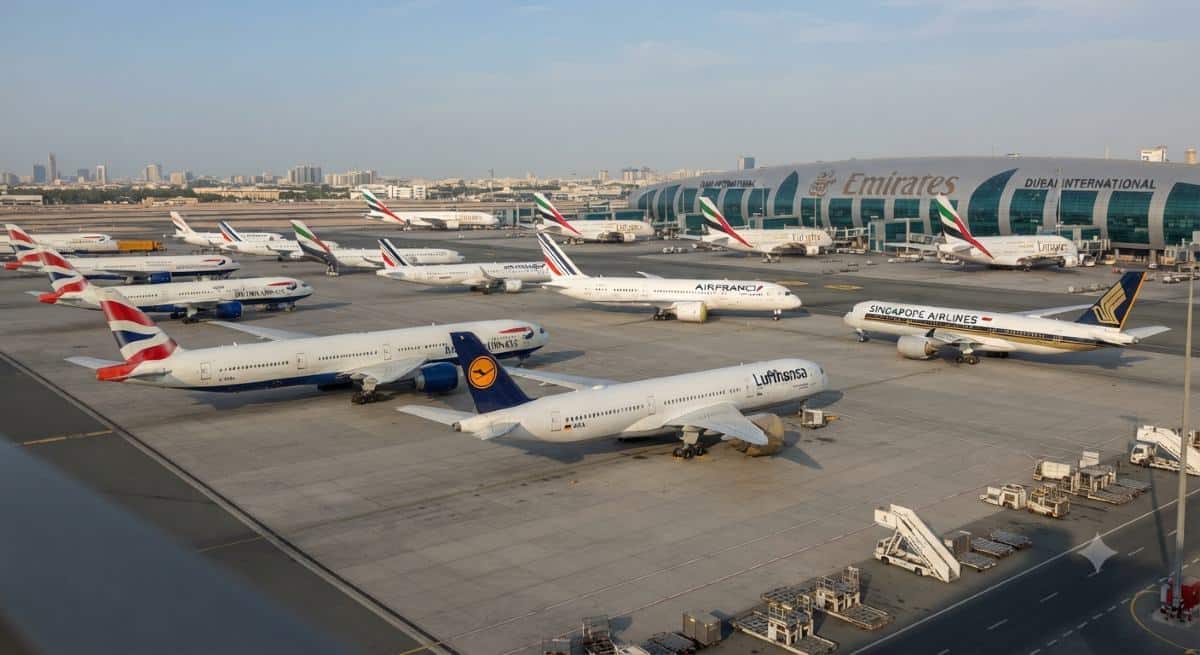
Image generated with Ai
The aviation sector across the Middle East has encountered substantial operational adjustments as persistent geopolitical tensions and complex regional airspace restrictions continue to evolve. Numerous international airlines have been forced to continuously re-evaluate their flight networks, leading to extended suspensions and modified routing protocols. Airspace integrity over portions of the Arabian Gulf, alongside territories associated with ongoing regional friction, has prompted carriers to reroute or ground services to protect aircraft safety. Governing bodies and airline safety committees maintain a continuous vigil, updating schedules in real time as conditions shift.
Impact on Travellers
Passengers intending to journey through the region have faced widespread disruptions, ranging from sudden schedule alterations to long-term cancellations. Major carriers have urged stranded or booked flyers to refrain from visiting airports unless they possess verified and confirmed reservations on operating services. While several airlines provide flexible options—including free rebooking, ticket rerouting, and full refunds—the fluidity of the situation often leaves schedules vulnerable to sudden modifications. Travelers are consistently advised to monitor direct airline channels and travel alerts carefully before attempting any journeys.
Advertisement
Advertisement
Industry Insights
Aviation analysts observe that the cascading effect of regional airspace avoidance has forced global carriers to consume additional fuel and lengthen flight durations on alternative corridors. Strategic decisions by prominent operators highlight a cautious approach, wherein passenger safety is prioritized above maintaining standard route capacities. Regional powerhouses like Emirates have navigated the landscape by selectively operating reduced frequencies, whereas international partners such as British Airways, Air Canada, and Lufthansa have prolonged suspensions well into late autumn and early 2027, reflecting profound caution within the commercial aviation industry.
Practical Information
Affected passengers are encouraged to utilize online booking management tools provided by their respective airlines to process refunds or secure alternative travel dates. Flexibility policies implemented by several carriers allow ticket holders to modify travel arrangements without incurring traditional penalties, provided specific purchase windows and fare classes are met. Travelers currently situated within affected areas are strongly instructed to coordinate exclusively with confirmed operators and avoid arriving at terminals without verified documentation of an active departure.
Advertisement
Advertisement
Comparison with Previous Policies or Developments
In contrast to earlier, short-term rolling suspensions that anticipated rapid stabilization within weeks, current operational strategies exhibit a much longer horizon of caution. Previous phases of regional volatility often resulted in temporary diversions or brief groundings lasting only days. However, the latest decisions by global carriers to extend cancellations through late 2026 and early 2027 indicate a structural shift in risk management, marking a departure from previous reactive measures toward prolonged strategic avoidance of restricted airspace zones.
Advertisement
