
Greece and More Attract Global Travellers as Royal Caribbean and Others Expand Europe Cruises

Published
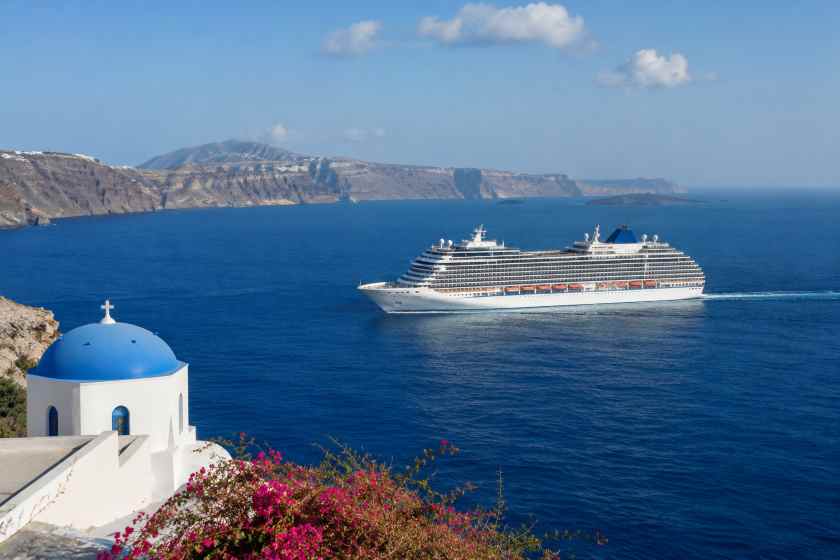
Image generated with Ai
Greece and more European destinations attract global travellers as Royal Caribbean and others expand Europe cruises for 2027. From Greece’s beautiful islands to Italy’s historic ports and Norway’s spectacular fjords, Europe cruises offer diverse experiences for every traveller. Moreover, Royal Caribbean and other cruise lines bring exciting itineraries, cultural discoveries and scenic coastal journeys into focus. As Greece and more destinations welcome cruise enthusiasts, travellers can explore ancient landmarks, vibrant cities and picturesque waterfronts. Travel And Tour World invites readers to discover how Europe cruises are shaping holiday possibilities for 2027. Read the full story to explore destinations, cruise options and travel opportunities.
Europe Cruises 2027: Six Cruise Lines Bringing Mediterranean Islands, Nordic Fjords, Baltic Capitals and Hidden Ports Into Focus
Europe’s cruise market enters 2027 with a broad mix of ocean voyages, from Mediterranean island-hopping to Northern European fjords and Baltic capitals. The latest programmes show that travellers can choose between large-ship resort experiences, destination-focused itineraries and smaller luxury voyages.
Advertisement
Advertisement
The original Cruise Passenger guide identifies operators including Viking, Uniworld, Scenic, Princess and others as important options for European cruising in 2027.
For this extension, six additional cruise lines are examined: Royal Caribbean, Celebrity Cruises, MSC Cruises, Norwegian Cruise Line, Seabourn and Azamara.
Advertisement
Advertisement
An important statistical point should be made before comparing them. Cruise lines generally do not publish five-year passenger-arrival figures by individual European itinerary or ship. Therefore, it would be misleading to assign national visitor numbers to individual cruise companies.
The tables below instead use the most comparable official industry and government statistics, including European cruise-source passengers, maritime-port passengers and tourism accommodation data. This provides a factual picture of the market without inventing cruise-line visitor figures.
Advertisement
Advertisement
Europe cruise market: the numbers travellers should know
The European cruise market has recovered substantially since the pandemic period. CLIA data show that European source markets generated 1.75 million cruise passengers in 2021, rising to 5.73 million in 2022, 8.21 million in 2023, 8.44 million in 2024 and 8.88 million in 2025.
That means 2025 was approximately five times the 2021 European source-passenger level. However, these are European residents taking ocean cruises worldwide, not the number of tourists visiting European cruise ports.
Advertisement
Advertisement
European cruise-source passengers, 2021–2025
| Year | European cruise passengers | Change from previous year | Average cruise duration | Average passenger age |
|---|---|---|---|---|
| 2021 | 1.75 million | — | — | — |
| 2022 | 5.73 million | +227.4% | 8.6 days | 48.5 |
| 2023 | 8.21 million | +43.3% | 8.8 days | 48.0 |
| 2024 | 8.44 million | +2.8% | 8.9 days | 47.9 |
| 2025 | 8.88 million | +5.3% | 8.7 days | 48.3 |
The 2021 figure reflects the exceptional pandemic-recovery period, so comparisons with later years require caution. CLIA reports that European cruise passengers averaged 8.7 days in 2025.
European maritime tourism shows the scale of the destination market
Government statistics provide another useful measurement.
Eurostat reports that EU ports handled 267.9 million maritime passengers in 2021, followed by 348.6 million in 2022, 395.3 million in 2023 and 417.8 million in 2024.
These figures cover maritime passenger transport broadly and should not be treated as cruise passengers alone.
Advertisement
Advertisement
EU maritime passengers through ports
| Year | Passengers through EU ports | Annual movement | Context |
|---|---|---|---|
| 2021 | 267.9 million | — | Recovery period |
| 2022 | 348.6 million | +30.1% | Strong post-pandemic recovery |
| 2023 | 395.3 million | +13.4% | Continued recovery |
| 2024 | 417.8 million | +5.7% | Almost back to 2019 level |
Eurostat says 2024 passenger traffic was only 0.1% below 2019, demonstrating how significant European maritime travel has become again.
Mediterranean gateways remain crucial for 2027
Italy and Greece are especially important for cruise travellers.
In 2024, Italian ports recorded approximately 93.5 million maritime passengers, while Greece recorded 81.1 million. Denmark followed with about 41.3 million. Spain handled around 35.8 million, while Croatia recorded approximately 35 million.
Major European maritime markets
| Country | 2023 passengers | 2024 passengers | 2024 share or position |
|---|---|---|---|
| Italy | 83.9m | 93.5m | 22.4% |
| Greece | 75.2m | 81.1m | 19.4% |
| Denmark | 41.2m | 41.2m | 9.9% |
| Spain | 31.9m | 35.6m | Major Mediterranean market |
| Croatia | 34.0m | 34.8m | Major Adriatic market |
| Germany | 28.6m | 28.6m | Major Northern European market |
| Sweden | 24.9m | 25.0m | Major Baltic market |
| France | 22.5m | 23.8m | Major Western European market |
| Malta | 15.0m | 15.0m | Important Mediterranean gateway |
| Finland | 14.3m | 14.5m | Important Baltic gateway |
These statistics encompass maritime passenger transport rather than cruise-only traffic, but they demonstrate the depth of the port network that 2027 cruise itineraries can use.
1. Royal Caribbean: large-ship Europe with Greek islands, Italy and Northern Europe
Royal Caribbean provides a particularly broad choice for travellers who want to combine major European destinations with a large resort-style ship experience. Its published 2027 European programme includes Greek Isles, Italy and Croatia, Spain and Morocco, Western Mediterranean, Norwegian Fjords, Spain and Portugal and Northern European routes. The company’s 2027 listings show ships including Odyssey of the Seas, Explorer of the Seas, Mariner of the Seas, Freedom of the Seas, Brilliance of the Seas and Legend of the Seas operating European itineraries. A seven-night Greek Isles sailing from Rome can include Santorini, Kusadasi, Mykonos and Naples before returning to Civitavecchia. Another seven-night itinerary travels from Ravenna towards Dubrovnik, Kotor, Corfu, Sicily and the Amalfi Coast before reaching Rome. Travellers interested in Western Europe can select routes from Barcelona covering Palma de Mallorca, Provence, La Spezia, Rome and Naples. Northern Europe is represented by Southampton-based Norwegian Fjords voyages visiting Stavanger, Bergen and Kristiansand. The key reason to consider Royal Caribbean is itinerary variety combined with the facilities of its larger ships. This can work particularly well for families and multigenerational groups that want European sightseeing during the day but extensive onboard entertainment between ports. Travellers should compare departure ports carefully because the same cruise line can provide very different European experiences from Barcelona, Rome, Ravenna and Southampton. For a first European cruise, a seven-night Mediterranean itinerary can provide a compact introduction. Travellers with more time can instead consider longer voyages linking Spain, Portugal, France, Italy or the Greek islands. The 2027 programme also includes shorter European sailings, making the network suitable for travellers who want to add a cruise to a wider European holiday rather than spend their entire vacation at sea.
Why consider it: Large-ship facilities, broad itinerary selection, family appeal and combinations of iconic Mediterranean and Northern European ports.
Advertisement
Advertisement
Travel plan example:
Barcelona → Palma de Mallorca → Provence → La Spezia → Rome → Naples → Barcelona.
2. Celebrity Cruises: European itineraries built around longer destination experiences
Celebrity Cruises brings a more destination-focused approach across its 2027 European programme. Its official Mediterranean programme lists seven ships operating in the region, including Celebrity Ascent, Celebrity Apex, Celebrity Constellation, Celebrity Infinity, Celebrity Xcel, Celebrity Eclipse and Celebrity Equinox. The destination portfolio includes Palma de Mallorca, Florence, Corfu, Portofino, Valletta, Tangier, Split and Provence. Celebrity also lists departure points including Rome, Ravenna, Barcelona, Athens and Lisbon. The 2027 programme includes itineraries with overnight stays in cities such as Athens, Copenhagen, Florence, Istanbul, Lisbon, Madeira and Thessaloniki. For Northern European travellers, Celebrity Apex offers a particularly detailed programme. A 14-day Best of Scandinavia itinerary includes Copenhagen, Helsinki, Tallinn, Stockholm, Visby, Aarhus, Oslo and Kristiansand before returning to Southampton. Seven-day Norwegian Fjords sailings visit Haugesund, Ålesund, Flåm and Bergen. A longer Norwegian Fjords and Arctic Circle itinerary adds Lerwick, Trondheim, Tromsø, Honningsvåg, Molde, Olden and Flåm. The line also offers a 14-day Mediterranean, Italy and Spain journey featuring Gibraltar, Cagliari, Rome, La Spezia, Cannes, Barcelona and Cádiz. Another 11-day itinerary combines Portugal, the Canary Islands and Spain, linking Porto, Lisbon, Gran Canaria, Tenerife, Madeira and Vigo. This makes Celebrity particularly interesting for travellers who want more than a conventional seven-night Mediterranean loop. Its overnight calls can create additional opportunities for evening dining, cultural activities and independent exploration. Travellers choosing Celebrity should pay attention to the itinerary rather than simply the ship. The 2027 programme ranges from Mediterranean culture to Scandinavian capitals and Arctic scenery, creating substantially different holiday experiences.
Why consider it: Overnight calls, Scandinavian capitals, Arctic Circle routes and extensive Mediterranean coverage.
Travel plan example:
Southampton → Copenhagen → Helsinki → Tallinn → Stockholm → Visby → Aarhus → Oslo → Kristiansand → Southampton.
3. MSC Cruises: extensive Mediterranean coverage from Spain to Greece and the Adriatic
MSC Cruises has an especially wide Mediterranean footprint, making it a practical option for travellers who want several countries during one European holiday. Its published 2027 summer programme includes voyages ranging from three to 14 nights. Destinations include Rome, Naples, Florence, Barcelona, Valencia, Rhodes, Corfu, Santorini, Mykonos, Syros, Kefalonia, Athens, Istanbul, Split and Dubrovnik. MSC also identifies Western Mediterranean itineraries connecting Spain, Portugal, France, Italy, Malta and Tunisia. Eastern routes can combine Italy, Greece, Croatia, Montenegro, Slovenia, Albania and Turkey. This extensive geographical coverage makes MSC useful for travellers who want to tailor their European cruise according to region. A Western Mediterranean holiday could focus on Barcelona, Valencia, Marseille and Italian ports. An Eastern Mediterranean journey could instead concentrate on Greek islands and Adriatic destinations. The company’s published destination list includes ports such as Koper, Kotor, Dubrovnik, Split, Zadar, Piraeus, Santorini, Rhodes and Istanbul. Travellers interested in history can build shore days around Rome, Athens and Olympia. Beach-focused holidays can emphasise Greek islands, Croatia and the Balearics. Food travellers can move between Italian, French, Spanish and Greek culinary regions within one itinerary. MSC also highlights its Mediterranean cruises as suitable for families, couples and groups, giving the programme broad appeal. For 2027, the line’s three-to-14-night range also makes it possible to add a cruise to a longer European land holiday. Travellers should compare embarkation cities carefully because Barcelona, Rome, Athens and other ports can produce very different combinations of destinations. Those flying internationally should also examine airport connections and allow sufficient time before embarkation.
Why consider it: Exceptionally broad Mediterranean geography, multiple embarkation ports and short-to-long cruise options.
Advertisement
Advertisement
Travel plan example:
Barcelona → Mediterranean France → Italian Riviera → Rome → Naples → Sicily → Malta.
4. Norwegian Cruise Line: port-intensive voyages across the Mediterranean, Baltic and Iceland
Norwegian Cruise Line has designed a particularly varied European programme for 2027. Norwegian Viva will operate Western Mediterranean and Greek Isles itineraries from Istanbul, Barcelona, Rome and Ravenna, while Norwegian Prima returns to Northern Europe for Iceland and Norway voyages. The company says many of its 2027 European voyages spend more than 90% of itinerary time in port, with an average stay of almost 11 hours. Selected cities also receive overnight calls. This matters for travellers who prioritise sightseeing over extended days at sea. Norwegian Prima’s Northern European voyages connect Reykjavik and Southampton and can include Icelandic ports, Ålesund, Hellesylt, Flåm, Amsterdam and Bruges. Norwegian Viva provides a contrasting Mediterranean experience, with routes connecting major Italian, Spanish, Greek and Turkish destinations. Norwegian Sun adds seven-day Mediterranean itineraries with no sea days between ports during selected 2027 departures. Norwegian Jewel returns to Europe for a full season and operates Baltic voyages between Copenhagen and Helsinki, including Klaipeda, Riga and Gdynia. The Baltic programme is useful for travellers interested in architecture, museums and northern European culture. Iceland and Norway itineraries are more suitable for travellers seeking landscapes, waterfalls and fjord scenery. NCL’s European deployment therefore allows tourists to choose between high-port-density Mediterranean holidays and dramatic Northern European routes. Travellers should look at the number of overnight calls and late departures when comparing itineraries. A late departure from Santorini, Dubrovnik or Ibiza can provide additional evening time beyond the standard daytime port visit. This is particularly useful for tourists wanting more independent exploration.
Why consider it: High port time, overnight calls, Iceland and Norway routes, plus extensive Mediterranean and Baltic coverage.
Travel plan example:
Reykjavik → Isafjordur → Akureyri → Ålesund → Hellesylt → Flåm → Amsterdam → Bruges → Southampton.
5. Seabourn: small-ship access to boutique Mediterranean and Northern European ports
Seabourn takes a substantially different approach, focusing on smaller ships and destination-intensive luxury cruising. Its 2027 Mediterranean programme includes 127 departures, 77 ports, 17 countries and 22 unique itineraries. Seabourn says its 2027 Mediterranean programme runs from April through November and provides access to more than 60 UNESCO World Heritage Sites. The itineraries range from seven to 14 days and include locations such as Croatia, Slovenia, Montenegro, France, Italy, Tunisia, Monaco and Spain. One seven-day itinerary travels roundtrip from Dubrovnik through Slovenia, Croatia and Montenegro. Another 16-day journey connects France, Italy, Tunisia, Monaco and Spain. A special 2027 solar-eclipse voyage travels from Barcelona towards Dubrovnik around the August 2 eclipse. Northern Europe is handled by Seabourn Quest, which has 10 departures covering 60 destinations in 19 countries. Its programme includes Norway, Iceland, the British Isles and Baltic ports. The line also highlights small-ship ports that larger vessels cannot always reach. This creates a different proposition for travellers who prioritise smaller destinations, extended exploration and a quieter onboard atmosphere. Its Northern European itineraries can appeal to travellers seeking fjords and remote landscapes, while its Mediterranean programme provides access to the Dalmatian Coast and boutique harbours. The 2027 schedule is also notable for combining destination access with special experiences such as culinary market visits and watersports opportunities. Travellers considering Seabourn should therefore compare port selection rather than simply counting countries. A smaller number of carefully selected ports can produce a very different trip from a high-capacity itinerary visiting many major cities.
Why consider it: Small-ship access, boutique ports, luxury positioning, UNESCO destinations and highly detailed Mediterranean exploration.
Advertisement
Advertisement
Travel plan example:
Dubrovnik → Croatian coast → Slovenia → Montenegro → Adriatic return to Dubrovnik.
6. Azamara: destination immersion through longer stays and smaller-scale cruising
Azamara is another option for travellers who prefer destination time rather than conventional large-ship cruising. Its published 2027 European programme includes an 11-night Scotland Intensive itinerary covering Edinburgh, Aberdeen and Glasgow. Another 14-night Northern Europe and Baltic itinerary aboard Azamara Quest travels from London towards Copenhagen and includes major cultural centres such as Berlin and Stockholm. The line’s European programme is particularly useful for travellers who want to combine smaller ports with extended time ashore. The Scotland itinerary, for example, provides a focused approach to one country rather than rapidly crossing several national borders. The Baltic voyage offers another style, linking London, Berlin and Stockholm while moving through Northern European waters. Azamara also has a 2027 loyalty sailing aboard Azamara Journey through Greece, Cyprus and Turkey from November 10 to November 21. The combination of Greece, Cyprus and Turkey makes that voyage particularly relevant to travellers interested in Eastern Mediterranean culture during the late-season period. Azamara’s smaller-scale approach can also make it appealing for tourists looking for destination immersion rather than resort-style cruising. Travellers should examine the number of nights and port timings carefully because the value of these itineraries is closely connected to time ashore. For Scotland, visitors can plan around castles, historic cities, whisky experiences and landscapes. On Baltic routes, museums, architecture and city-centre exploration can become the central focus. For Eastern Mediterranean travel, travellers can combine ancient heritage with coastal experiences across Greece, Cyprus and Turkey. This makes Azamara particularly relevant for experienced cruise travellers who want to structure a European holiday around destinations rather than onboard entertainment.
Why consider it: Destination-focused itineraries, smaller-scale cruising, Scotland-intensive travel and Northern European city exploration.
Travel plan example:
London → Northern European ports → Berlin region → Baltic Sea → Stockholm → Copenhagen.
Five-year tourism comparison: Europe’s wider travel environment
Cruise passengers should also consider the wider tourism environment because many travellers add hotel nights before or after their sailing.
Eurostat reports that EU tourism accommodation recorded approximately 1.8 billion nights in 2021, around 2.7 billion in 2022, 2.9 billion in 2023 and approximately 3.0 billion in 2024.
Advertisement
Advertisement
EU tourism accommodation comparison
| Year | EU tourism nights | Broad travel context |
|---|---|---|
| 2021 | ~1.8 billion | Recovery from pandemic disruption |
| 2022 | ~2.7 billion | Strong international and domestic recovery |
| 2023 | ~2.9 billion | Surpassed 2019 level |
| 2024 | ~3.0 billion | Record annual level |
| 2025 | Latest datasets vary by release | Full-year comparisons should use final Eurostat datasets |
In 2024, international guests accounted for approximately 48.1% of EU accommodation nights, while domestic guests represented 51.9%. North American travellers accounted for 7.5% of international accommodation nights, while Asia represented 4.9%.
This matters for international cruise travellers because a European cruise can be combined with hotel stays and independent sightseeing before embarkation or after disembarkation.
Which European destinations are especially important for 2027 cruise planning?
Italy
Italy recorded 93.5 million maritime passengers in 2024, the highest figure among EU countries. Major cruise gateways and destinations include Rome through Civitavecchia, Naples, Genoa, La Spezia, Venice-area ports and Sicily.
Greece
Greece recorded 81.1 million maritime passengers in 2024, placing it second among EU countries. Athens, Santorini, Mykonos, Corfu, Rhodes and Katakolon are particularly relevant to cruise travellers.
Spain
Spain handled approximately 35.6 million maritime passengers in 2024. Barcelona, Palma de Mallorca, Málaga, Cádiz, Valencia and Ibiza are important cruise-related destinations.
Croatia
Croatia recorded approximately 34.8 million maritime passengers in 2024, highlighting the importance of its Adriatic network. Dubrovnik, Split and Zadar feature repeatedly in 2027 cruise programmes.
Advertisement
Advertisement
Norway
Norway recorded about 5.5 million maritime passengers in 2024 in Eurostat’s wider maritime statistics. Its cruise appeal comes from fjords, coastal scenery and Northern European landscapes rather than Mediterranean-style beach tourism.
Six cruise lines at a glance
| Cruise line | 2027 European focus | Example destinations | Typical traveller interest | Distinctive feature |
|---|---|---|---|---|
| Royal Caribbean | Mediterranean, Greek Isles, Northern Europe | Santorini, Mykonos, Dubrovnik, Kotor, Bergen | Families, groups, first-time cruisers | Large-ship resort experience |
| Celebrity Cruises | Mediterranean, Scandinavia, Arctic | Athens, Florence, Copenhagen, Tromsø, Barcelona | Culture and destination-focused travel | Overnight and longer itineraries |
| MSC Cruises | Western and Eastern Mediterranean | Rome, Barcelona, Santorini, Dubrovnik, Istanbul | Families, couples, regional exploration | Very broad Mediterranean network |
| Norwegian Cruise Line | Mediterranean, Iceland, Norway, Baltic | Reykjavik, Flåm, Dubrovnik, Riga, Santorini | Port-intensive sightseeing | Long port stays and overnight calls |
| Seabourn | Mediterranean and Northern Europe | Dubrovnik, Monaco, Norway, Iceland, Baltic | Luxury and smaller ports | Small-ship destination access |
| Azamara | Scotland, Baltic, Mediterranean | Edinburgh, Berlin, Stockholm, Greece, Cyprus | Destination immersion | Smaller-scale, longer destination focus |
What the 2027 numbers mean for travellers
The statistics show that Europe is not one single cruise market. The Mediterranean remains a major part of European cruising, while Northern Europe, the Baltic and smaller regional itineraries add substantially different experiences.
CLIA recorded 3.75 million European cruise passengers choosing Mediterranean destinations and approximately 1.9 million choosing Northern Europe in its published European market analysis.
The 2027 programmes demonstrate how cruise lines are responding with increasingly varied itineraries. Large ships provide extensive onboard facilities and numerous departure choices. Smaller ships concentrate on ports that can offer a more intimate destination experience.
For travellers, the practical decision is therefore less about finding one universally suitable cruise line and more about matching the itinerary to the holiday they want.
A traveller interested in Greek islands might prioritise Athens, Santorini, Mykonos and the Adriatic. A Nordic-focused traveller may prefer Norway, Iceland, Scandinavia or the Baltic. Those seeking food and heritage can construct journeys around Italy, France and Spain.
Advertisement
Advertisement
The best planning approach is to examine departure city, cruise length, port duration, overnight calls, season, destination mix and pre-cruise accommodation requirements before making a booking.
2027 European cruise planning checklist
| Planning factor | What travellers should check |
|---|---|
| Departure port | Barcelona, Rome, Athens, Ravenna, Southampton, Copenhagen and others |
| Cruise duration | Short 3–7 night trips through extended 14+ night voyages |
| Destination type | Mediterranean, Baltic, Nordic, British Isles or Arctic |
| Port time | Standard calls versus late departures and overnight stays |
| Season | Spring, summer, autumn or winter |
| Weather | Mediterranean heat versus Nordic cooler conditions |
| Shore excursions | UNESCO sites, beaches, food, museums, nature or cities |
| Pre-cruise stay | Allow extra nights for international flights and sightseeing |
| Post-cruise stay | Useful when disembarking in major European cities |
| Airport access | Compare international flight connections with embarkation ports |
| Visa rules | Check official requirements for every country on the itinerary |
| Travel insurance | Confirm cruise, medical and disruption coverage |
| Sustainability rules | Check current port and local environmental requirements |
Final traveller perspective
Europe cruises 2027 provide a much wider travel canvas than a conventional Mediterranean holiday. The programmes span ancient cities, Greek islands, Adriatic ports, Scandinavian capitals, Icelandic landscapes and Norwegian fjords.
Royal Caribbean and MSC offer extensive mainstream networks. Celebrity adds longer destination-focused programmes, while Norwegian Cruise Line emphasises port time. Seabourn focuses on small-ship luxury and boutique ports, while Azamara concentrates strongly on destination immersion.
The wider statistics reinforce the importance of Europe as a maritime tourism region. EU ports handled 417.8 million maritime passengers in 2024, while European source markets generated 8.88 million ocean-cruise passengers in 2025.
For global travellers planning 2027, the most useful strategy is to choose the route first and the ship second. A carefully selected itinerary can turn a cruise into a multi-country European journey while reducing the need to repeatedly pack, unpack and change hotels.
The 2027 schedules show that travellers can now shape that journey around exactly what they want to experience: Mediterranean heritage, Nordic scenery, Baltic culture, Greek islands, Adriatic coastlines or slower exploration of smaller European ports.
Conclusion
Greece and more European destinations are creating exciting possibilities for global travellers planning their next cruise holiday. Royal Caribbean and others are expanding Europe cruises across the Mediterranean, Adriatic, Northern Europe and beyond. From Greek islands and Italian cities to Norwegian fjords and Baltic capitals, the 2027 season offers varied ways to experience Europe. For travellers, the choice goes beyond selecting a cruise ship. It means finding the right destinations, itinerary length, port experiences and travel season. Travel And Tour World highlights these evolving Europe cruises to help travellers plan informed and memorable journeys across the continent in 2027.
Advertisement
