
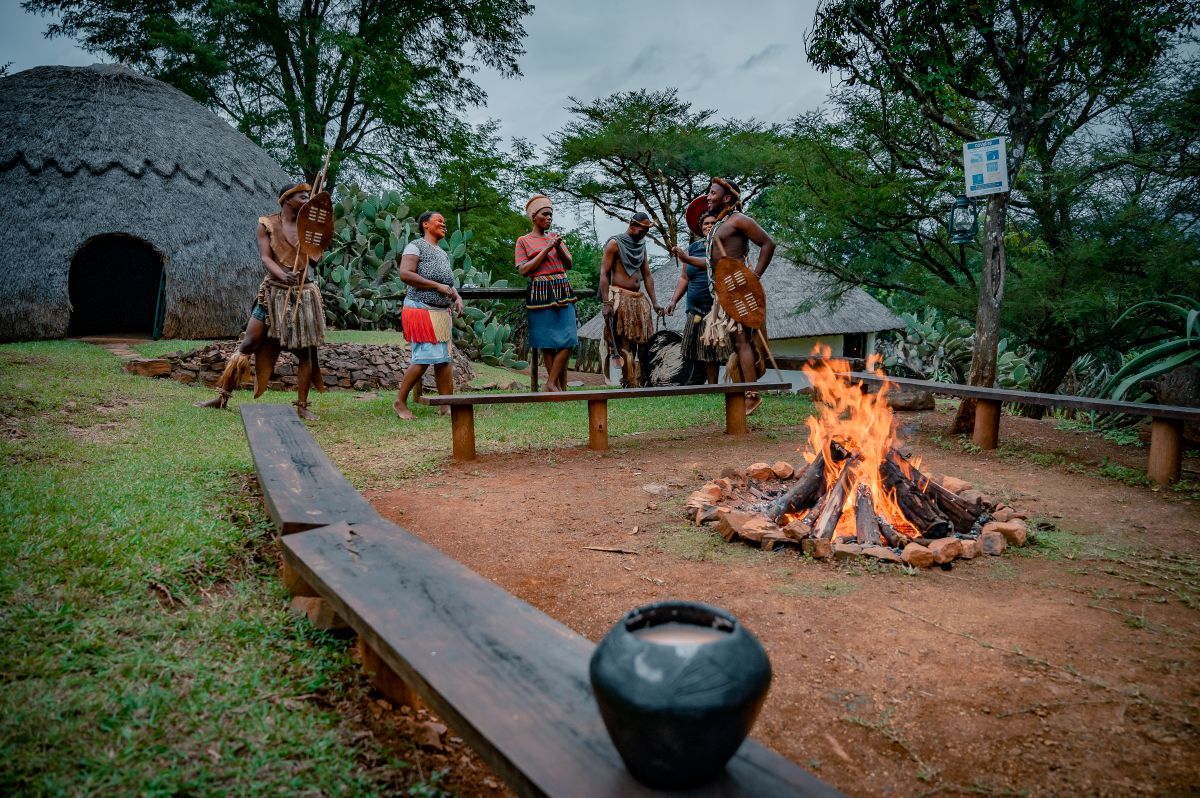
South Africa welcomed about 5.6 million international tourists for the first half of 2026, continuing its post-pandemic recovery with a 12% stronger growth rate compared to the same period last year. The domestic market is growing the fastest, with the Southern African Development Community (SADC) leading the overnight tourism visits. Meanwhile, South Africa’s long-haul markets continue to grow, with demand for accommodation increasing. This is a positive sign for the hospitality sector, and along with the new digital immigration system, may continue to grow South Africa’s tourism market. With the lifting of travel bans, an improving economy, and a rapidly changing visa system, travelers will see South Africa as a place that is easier to travel to with more accommodations and even better tourism.
The headline figure masks an important shift in South Africa’s visitor economy. Regional African travel is providing the largest volume of tourism, while overseas markets are steadily rebuilding their contribution.
Advertisement
Stats SA recorded 823,365 overnight tourists in June 2026. That represented a 9.8% increase from June 2025, despite a 4.5% monthly decline from May. Same-day visitors moved in the opposite direction, falling 12.5% year on year to 232,711.
SADC visitors accounted for 668,770 overnight tourists in June. That equalled roughly 81.2% of the monthly tourist total. Overseas visitors contributed 141,796, while 12,007 came from other African countries.
Advertisement
Advertisement
| June 2026 tourism indicator | Volume | Share / change |
|---|---|---|
| Overnight tourists | 823,365 | +9.8% year on year |
| Same-day visitors | 232,711 | -12.5% year on year |
| SADC tourists | 668,770 | 81.2% of tourists |
| Overseas tourists | 141,796 | 17.2% of tourists |
| Other African tourists | 12,007 | 1.5% of tourists |
| Unspecified residence | 792 | 0.1% |
The regional concentration matters for travel businesses. Shorter journeys can respond quickly to income growth, border conditions and transport availability. They also create repeat travel patterns that support hotels, restaurants, retailers and attractions beyond traditional holiday corridors.
Mozambique, Zimbabwe and Lesotho remain particularly important regional markets. Their proximity gives South Africa a substantial advantage when travellers compare travel costs and journey times.
The data also confirms that air travel is not the only growth channel. In June, 637,752 tourists entered by road. Another 184,147 arrived by air, while 1,466 travelled by sea.
The latest performance builds on an exceptional 2025. South Africa welcomed 10.48 million international arrivals during 2025, an annual record and a 17.6% increase over 2024.
The Department of Tourism has linked the performance to coordinated public-private action and its Tourism Growth Partnership Plan. The government has also identified easier access, air connectivity and destination marketing as central growth levers.
The 2025 composition is particularly revealing. About 7.2 million arrivals were African land arrivals, while around 3 million arrived by air. African land arrivals increased 20% year on year, while air arrivals grew 13.6%.Tourism measure 2024 2025 Latest 2026 position International arrivals About 8.9m 10.48m 5.6m through June Annual growth — +17.6% +12% through June African land arrivals, 2025 — 7.2m Regional demand remains dominant Air arrivals, 2025 — About 3m Air connectivity remains strategic June overnight tourists 750,177 823,365 in 2026 comparison +9.8% year on year
The comparison suggests that South Africa is not relying on one recovery channel. Regional road traffic provides scale, while aviation is rebuilding long-haul reach.
That balance is valuable for tourism resilience. A destination dependent entirely on intercontinental air traffic faces greater exposure to airfare shocks, capacity reductions and geopolitical disruption.
Visitor growth is now feeding through into accommodation activity, although the effect remains measured rather than spectacular.
Stats SA reported a 1.0% year-on-year increase in total tourist accommodation income in June 2026. Income from accommodation itself rose 2.4%, supported by a 2.6% increase in stay-unit nights sold. However, average income per stay-unit night slipped 0.2%.
The second-quarter picture was stronger. Accommodation income climbed 3.6% year on year between April and June.Accommodation indicator June 2026 / Q2 2026 result Total accommodation industry income +1.0% year on year Accommodation income +2.4% year on year Stay-unit nights sold +2.6% year on year Average income per stay-unit night -0.2% year on year Q2 accommodation income +3.6% year on year ‘Other’ accommodation income +8.6% in June Hotel income contribution in Q2 +2.1%
Hotels recorded a 2.1% increase in accommodation income during the second quarter. Other accommodation businesses performed even more strongly, rising 7.0% during the quarter.
This distinction is important for the travel trade. Rising room-night demand does not automatically mean sharply higher pricing. The June data shows businesses selling more nights while average income per stay-unit night edged lower.
For consumers, that can create an unusually favourable combination. Demand is strengthening without a corresponding surge in average accommodation income.
Tourism growth is also coinciding with a major overhaul of South Africa’s immigration system.
The Electronic Travel Authorisation, or ETA, has moved from pilot stage towards broader implementation. In May, Home Affairs Minister Leon Schreiber said qualifying tourists could receive digital visa outcomes within 24 hours. The government also planned wider expansion of the system.
By August 2026, the government had formally announced the launch of the ETA as a cornerstone of its digital immigration programme. The system combines biometric verification, machine learning and the upgraded Electronic Movement Control System.
The reform has particular significance for markets such as India and China. South Africa introduced the Trusted Tour Operator Scheme to simplify group visa applications from those markets. The first phase involved approved operators handling digital applications for individuals and groups.
The tourism department has estimated that the ETA could eventually add up to one million international arrivals annually and support between 80,000 and 100,000 tourism jobs.
For travellers, however, the critical point is simple: digital processing does not mean every nationality can enter visa-free.
South Africa still requires visitors from non-exempt countries to secure an appropriate visa before travel. Visas are not issued at ports of entry, and airlines can deny boarding without the required documentation.
The country’s strong road-based regional market cannot substitute entirely for international aviation. Long-haul visitors generally spend longer in destination and can support higher-value tourism segments.
That makes route development crucial. The tourism department reported new or expanded connectivity involving Johannesburg–Perth and Cape Town–Mauritius, alongside planned connectivity between Johannesburg and Madrid.
The strategy is particularly relevant as South Africa seeks stronger European, Asian and North American demand. A larger route network reduces friction at the planning stage.
It can also improve the economics of multi-city itineraries. Travellers can combine Cape Town, Johannesburg, Kruger National Park and regional destinations more efficiently.
For airlines, meanwhile, stronger inbound tourism creates additional demand outside traditional peak periods. That can help improve route economics when passenger flows become more evenly distributed.
For leisure travellers, the latest data points towards a destination operating at a substantially stronger level than during the pandemic recovery years.
The biggest practical change is not simply visitor volume. It is the combination of growing regional demand, recovering long-haul markets and improving immigration technology.
Travellers should nevertheless distinguish between tourism growth and travel costs. More visitors can increase demand for popular hotels and attractions. Yet June accommodation figures show that average income per stay-unit night fell slightly.
The strongest opportunities may therefore sit outside the busiest corridors. South Africa has been pushing domestic and international travellers towards a broader tourism offering, including provincial destinations and smaller businesses.
September’s Tourism Month campaign places particular emphasis on Limpopo and digital discovery. The policy direction seeks to spread tourism expenditure beyond established gateways and iconic attractions.Traveller consideration What the latest data suggests Regional road trips Remain a major tourism engine Long-haul holidays Overseas recovery is continuing Hotel demand Room-night sales are increasing Accommodation prices Average income per stay-unit night slightly declined in June Visa processing Digital systems are expanding Entry requirements Visa-required travellers still need approval before travel Regional diversification Government is promoting destinations beyond established hubs
South Africa’s tourism strategy increasingly treats visitor growth as an economic development instrument.
The government’s Tourism Growth Partnership Plan targets 45.1 million domestic trips, one million direct tourism jobs and 1.5 million indirect and induced jobs. It also places ease of access at the centre of the strategy.
That approach reflects tourism’s unusually broad economic footprint. A visitor does not spend only on a hotel room. Spending can reach airlines, airports, taxis, restaurants, guides, retailers, attractions and local producers.
The accommodation figures illustrate this multiplier effect in a measurable way. More nights sold increase demand across several service categories, even when average room income remains restrained.
The strategy also explains the government’s interest in MICE tourism. In March 2026, Home Affairs introduced the Meetings, Exhibitions, Events and Tourism Scheme, designed to process high-volume group visa applications connected with major international events.
For business travel, this could prove significant. Conferences and sporting events often create concentrated demand across hotels, transport and venues.
The strongest interpretation of the latest figures is not that South Africa has simply recovered. Instead, the country is developing two complementary tourism engines.
The first is regional Africa. SADC markets provide volume, geographical proximity and strong road connectivity. The second is overseas tourism, where aviation, visa reform and destination marketing can deliver longer-stay international demand.
That structure gives the market greater depth. It also creates different opportunities for tourism businesses.
Regional travellers can support weekend, family, shopping and cross-border leisure demand. Overseas visitors are more relevant to safari, wine, luxury, adventure and extended multi-destination itineraries.
The challenge will be converting rising arrivals into higher visitor value. More passengers alone do not guarantee stronger profitability.
The accommodation figures already demonstrate the distinction. Stay-unit nights increased 2.6%, while average income per night declined 0.2% in June.
Therefore, the next phase will depend on yield, length of stay, geographic dispersion and visitor spending.
The latest growth arrives as global tourism becomes increasingly competitive. Destinations are competing not merely for arrivals, but for air capacity, investment, skilled workers and traveller spending.
South Africa therefore cannot rely on its natural attractions alone. Its wildlife, coastline, wine regions, cities and cultural assets remain powerful advantages. Yet access, processing speed and service quality increasingly determine whether those advantages convert into bookings.
The government’s recent reforms suggest that policymakers understand this equation. The ETA targets immigration friction. Air-access initiatives address physical connectivity. Tourism growth partnerships focus on supply and demand.
The record 2025 performance gives the strategy credibility. The 5.6 million visitors recorded through June 2026 now provide evidence that momentum has carried into another year.
For the travel industry, the next test is therefore more demanding. South Africa must turn high arrival volumes into stronger regional development, sustained hotel demand and higher visitor expenditure.
2026 begins with South Africa looking strong on the international front. With almost 5.6 million visitors already this year, South Africa has the opportunity to repeat its great success of last year with an estimated 10.48 million visitors. Obstacles still continue on the African Continent, but the outside demand is slowly returning. Even with this strong outside demand, South African rooms continue to keep their prices low. As passport and visa reforms begin, South Africa can expect their major markets to begin moving again. Although air links are very important in bringing visitors from distant countries, South Africa has the opportunity to branch out from the traditional, short-stay tourism. If reforms can keep pace with the introduction of new air links and services, South Africa can expect longer stays from more dispersed tourists.
South Africa recorded about 5.6 million international tourist arrivals during the first six months of 2026. The figure keeps the country’s tourism recovery above pre-pandemic levels.
SADC markets are the principal growth engine, particularly visitors from Mozambique, Zimbabwe and Lesotho. Overseas tourism is also recovering as international air connectivity improves.
South Africa recorded 823,365 overnight tourists in June 2026. SADC visitors represented about 81.2% of the total, demonstrating the importance of regional travel.
Within the SADC region, Mozambique, Zimbabwe and Lesotho were among the largest contributors in June. Their geographical proximity supports substantial cross-border road travel.
Yes. Tourism has moved beyond the pandemic-era recovery phase. South Africa welcomed a record 10.48 million international arrivals in 2025, while 2026 has maintained strong momentum.
Yes, although growth remains measured. Accommodation income increased 3.6% year on year in the second quarter of 2026, while stay-unit nights sold rose 2.6% in June.
Yes. South Africa is expanding its Electronic Travel Authorisation (ETA) system as part of its immigration modernisation programme. The initiative is intended to make visitor processing faster and more efficient.
Advertisement
Tags: African Tourism, sadc tourism, south africa tourism, South Africa travel, tourism arrivals 2026
Advertisement
Advertisement












Saturday, September 5, 2026

Saturday, September 5, 2026

Saturday, September 5, 2026

Saturday, September 5, 2026

Saturday, September 5, 2026
Saturday, September 5, 2026

Saturday, September 5, 2026

Saturday, September 5, 2026



