
Morocco Tourism Hits 19.8 Million Visitors as Marrakech, Agadir and Tangier Power a New Travel Era

Published
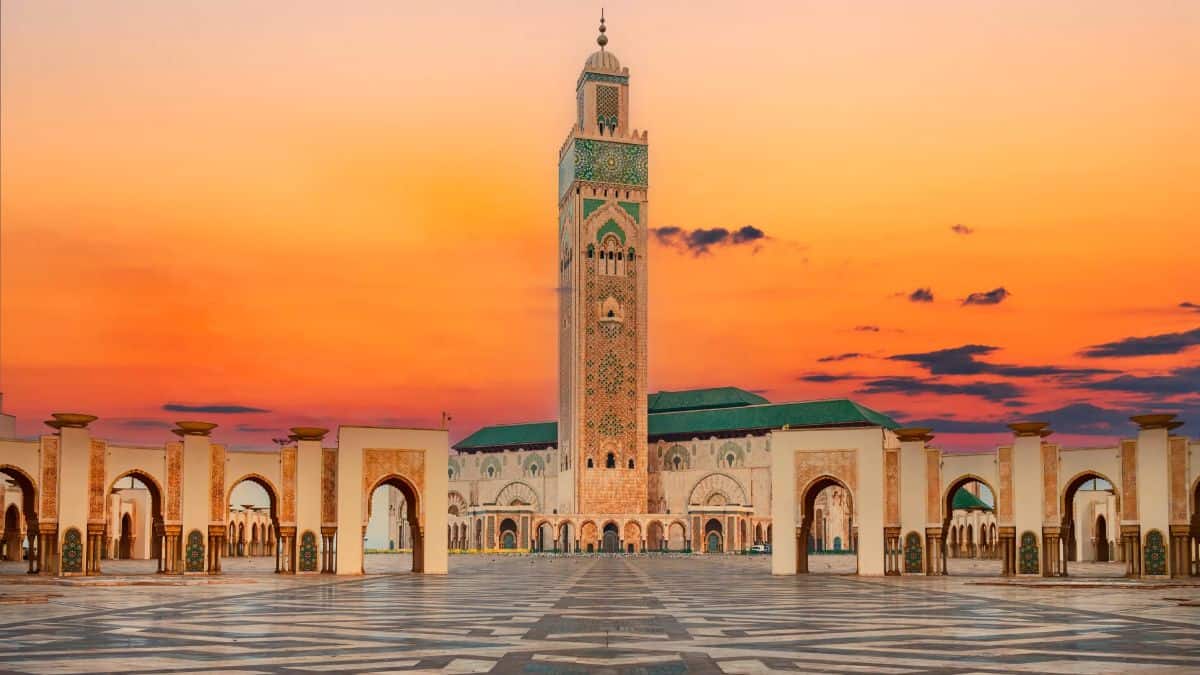
Morocco is entering a new phase of tourism growth after welcoming 19.8 million visitors in 2025, a 14% increase over 2024. Tourism receipts reached a record MAD 138 billion, while classified accommodation generated 43.4 million overnight stays, up 9%. The momentum has continued into 2026, with 4.3 million tourists recorded during the first quarter and travel receipts reaching MAD 31 billion. The country’s appeal now extends well beyond Marrakech, as Agadir, Rabat, Tangier, Fès and Casablanca develop distinct tourism roles. At the same time, stronger European air connectivity is making Morocco increasingly viable for short breaks, coastal holidays and multi-city itineraries.
Morocco’s Tourism Engine Is Changing Shape
The scale of Morocco’s latest tourism performance reveals a structural shift rather than a single-season spike. The country added 2.4 million visitors in 2025, taking arrivals 53% above the 2019 level. France, Spain, the United Kingdom, Belgium and Italy all recorded double-digit growth, reinforcing Europe’s importance to Moroccan tourism.
Tourism receipts are rising even faster than visitor numbers. The MAD 138 billion recorded in 2025 represented a 21% increase from 2024 and 75% growth compared with 2019. That divergence matters because it suggests Morocco is generating greater economic value from a rapidly expanding visitor base.
| Morocco Tourism Indicator | Latest Figure | Change |
|---|---|---|
| Tourist arrivals, 2025 | 19.8 million | +14% |
| Tourism receipts, 2025 | MAD 138 billion | +21% |
| Classified accommodation nights, 2025 | 43.4 million | +9% |
| Arrivals compared with 2019 | 19.8 million | +53% |
| First-quarter 2026 arrivals | 4.3 million | +7% |
| First-quarter 2026 travel receipts | MAD 31 billion | +24% |
The country’s tourism economy has also gained greater economic weight. Morocco’s 2024 Tourism Satellite Account found that tourism-related GDP was 38.4% higher than in 2019. Its contribution to national GDP increased from 6.8% to 7.3%, underlining the sector’s widening economic footprint.
Advertisement
Advertisement
Marrakech Still Leads But No Longer Stands Alone
Marrakech remains the country’s most powerful leisure magnet, but the wider destination map is becoming more differentiated. The city’s appeal combines medinas, gastronomy, luxury accommodation, wellness, events and access to the Atlas Mountains and desert landscapes.
Accommodation statistics underline that dominance. Marrakech and Agadir together accounted for more than half of Morocco’s classified accommodation nights in 2024. Marrakech also recorded a 12.7% increase in overnight stays that year, while Agadir posted an even stronger 17.8% increase.
Advertisement
Advertisement
That distinction is important for travellers. Marrakech can function as a compact cultural city break, while Agadir offers a more conventional resort proposition. Combining both creates a markedly different holiday from visiting either destination alone.
Agadir Adds A Powerful Coastal Counterweight
Agadir is becoming increasingly important to Morocco’s tourism diversification because its proposition is less dependent on heritage sightseeing. Its broad beaches, resort infrastructure, mild climate and access to southern Morocco give it a different role within the national tourism portfolio.
Advertisement
Advertisement
The airport’s expansion provides another indication of the destination’s trajectory. Morocco’s airport authority plans to increase Agadir Al Massira’s capacity to 4.4 million passengers annually, compared with 1.4 million after its immediate improvements. The project includes a 45,000-square-metre terminal extension and expanded aircraft parking infrastructure.
For travellers, that investment could eventually translate into more route options and greater seasonal resilience. It also creates scope for Agadir to capture visitors who might otherwise concentrate their entire Moroccan holiday around Marrakech.
Rabat And Tangier Broaden The City-Break Map
Rabat is emerging as another important alternative for travellers seeking a shorter urban stay. Its airport handled more than two million passengers in 2025, representing 26% growth from the previous year.
Its connectivity story is particularly notable. Rabat-Salé has developed links with European cities including Paris, Madrid, Brussels, Barcelona, Rome, London, Geneva and several French regional centres. This gives travellers more possibilities for direct city breaks without automatically routing through Casablanca or Marrakech.
Advertisement
Advertisement
Tangier provides a different proposition again. Its position in northern Morocco gives travellers access to Mediterranean landscapes, historic quarters and proximity to southern Europe. Airport traffic rose 17% in 2025, indicating that demand is spreading beyond Morocco’s traditional tourism gateways.
| Destination | Distinct Travel Proposition | Latest Relevant Indicator |
|---|---|---|
| Marrakech | Heritage, luxury, gastronomy, leisure | 10m airport passengers in 2025 |
| Agadir | Beach, resorts, winter-sun tourism | Airport capacity planned at 4.4m |
| Casablanca | Gateway, business, urban travel | 11m+ airport passengers in 2025 |
| Rabat | Capital, heritage, short breaks | Airport traffic +26% in 2025 |
| Tangier | Mediterranean, northern Morocco | Airport traffic +17% in 2025 |
| Fès | Heritage, culture, immersive stays | Regional overnight stays around 1.5m in 2024 |
Europe’s Proximity Becomes A Commercial Advantage
Morocco’s geography gives it an unusual position in international leisure travel. It offers a distinctly North African cultural environment while remaining within relatively short flying distance of several major European markets.
The source-market data strengthens that argument. Arrivals from Italy increased 21% in 2025, followed by the UK at 18%, Spain at 12%, France at 11% and Belgium at 10%.
Air connectivity is becoming the mechanism that converts geographical proximity into actual travel demand. Morocco’s airport network handled a record year in 2025, with Casablanca surpassing 11 million passengers and Marrakech reaching 10 million.
The country’s five largest airports accounted for nearly 90% of national airport traffic. Casablanca represented 32%, Marrakech 28% and Agadir 10%, while Rabat and Tangier recorded particularly strong annual growth.
This matters for European travellers because accessibility increasingly determines whether a destination works as a two- or three-night break. Morocco can now support several distinct entry points rather than forcing every itinerary through one gateway.
Advertisement
Advertisement
The Multi-City Holiday Is Morocco’s Untapped Strength
The country’s greatest strategic advantage may therefore lie in combining destinations rather than promoting them separately. A traveller could begin with Marrakech’s historic core, continue towards Essaouira’s Atlantic atmosphere, move south to Agadir and finish with a longer coastal stay.
Another itinerary could pair Casablanca with Rabat before moving north towards Tangier. Fès can add a deeper heritage dimension, while mountain and desert experiences provide a contrasting landscape beyond the major urban centres.
This matters because longer itineraries distribute visitor spending geographically. Morocco’s tourism roadmap explicitly seeks stronger territorial development, rather than concentrating the economic benefits of tourism in a handful of established destinations.
The numbers already show movement in that direction. In 2024, overnight stays increased 18% in Al Haouz, 17.8% in Agadir, 12.7% in Marrakech and Casablanca, 8.6% in Tangier and 6.1% in Rabat.
Hotels Are Being Pushed Beyond Room Numbers
Morocco’s accommodation expansion is increasingly focused on the quality of the visitor experience. Classified establishments recorded 43.4 million overnight stays in 2025, compared with 28.7 million in 2024.
The government has also introduced a more demanding hotel classification system. From May 2026, 2,500 classified establishments are being assessed through mystery visits, with the process covering the complete customer journey.
Advertisement
Advertisement
The assessment can examine reservations, arrival procedures, cleanliness, dining, room service, facilities, check-in, check-out and the broader stay experience. This marks a significant change from a system centred mainly on physical infrastructure.
For travellers, the change could provide a more useful interpretation of hotel categories. A star classification increasingly needs to reflect service delivery rather than simply the presence of facilities.
Airports Are Becoming Tourism Infrastructure
Morocco’s airport strategy is now closely intertwined with its tourism ambitions. In 2025, Casablanca exceeded 11 million passengers, Marrakech reached 10 million and Rabat crossed two million.
The figures demonstrate both strength and concentration. Casablanca and Marrakech alone accounted for around 60% of national airport traffic, creating enormous capacity at the two principal gateways but also highlighting the importance of developing secondary entry points.
Agadir’s planned expansion illustrates the next stage. Its capacity programme is designed to accommodate 4.4 million passengers annually, supporting the coastal destination’s growing role.
Morocco has also strengthened summer 2026 air capacity. Contracted capacity reached 7.74 million seats, up 13% year on year, with 52 new international routes launched during the first half of 2026.
Advertisement
Advertisement
The 2030 Target Changes The Long-Term Equation
Morocco is targeting 26 million tourists by 2030, but the significance of that ambition extends beyond the FIFA World Cup. The country’s tourism roadmap was designed around stronger connectivity, accommodation, entertainment, investment, skills and territorial development.
The original 2023-2026 roadmap targeted 17.5 million tourists by 2026. Morocco reached 19.8 million in 2025, meaning that interim target has already been surpassed.
The 2030 target therefore represents a substantial further expansion rather than merely a recovery objective. The challenge will be ensuring that infrastructure, service standards and destination capacity expand alongside demand.
For travellers, the outcome could be a broader Moroccan tourism map. More direct routes, additional hotel capacity and stronger secondary destinations could reduce pressure on established gateways while making less-frequented regions easier to reach.
What The Numbers Mean For Travellers
The current data point towards a destination that can support several different travel patterns. Short-break visitors can focus on Marrakech or Rabat, while longer holidays can combine heritage cities with Atlantic or Mediterranean coastlines.
Seasonality also becomes important. Travellers seeking beaches have different priorities from visitors pursuing architecture, gastronomy or desert experiences. Morocco’s geographic variety allows visitors to select the region according to the experience they want rather than simply following the country’s most famous city.
Advertisement
Advertisement
| Traveller Profile | Suitable Moroccan Combination | Key Advantage |
|---|---|---|
| Short city break | Marrakech or Rabat | Concentrated cultural experience |
| Beach holiday | Agadir and Atlantic coast | Resort infrastructure |
| Heritage trip | Fès, Marrakech and Rabat | Historic urban environments |
| Multi-city journey | Casablanca, Rabat and Tangier | Strong transport connections |
| Culture plus coast | Marrakech, Essaouira and Agadir | Contrasting experiences |
| Longer immersive trip | Fès, Marrakech, mountains and coast | Greater geographic variety |
Morocco’s Next Chapter Looks More Diverse
The most significant change is not simply that Morocco is receiving more visitors. It is that the country’s tourism architecture is becoming more sophisticated, with different cities increasingly serving different travel purposes.
The 2025 figures provide the clearest evidence yet. Nearly 20 million visitors, MAD 138 billion in receipts and 43.4 million classified accommodation nights indicate a destination operating at a substantially larger scale.
The early 2026 figures show that momentum has not disappeared. Arrivals rose 7% through the first quarter, while travel receipts climbed 24%, suggesting that value growth remains particularly important.
For travellers, Morocco’s appeal may ultimately rest on this combination of accessibility and variety. A single country can offer an ancient medina, a cosmopolitan city, an Atlantic beach, a Mediterranean escape and a desert landscape within one itinerary. As airports expand and secondary destinations gain visibility, that breadth could become the country’s defining tourism proposition through 2030 and beyond.
Advertisement
