
Barcelona And More Cities Drive Europe’s Heritage Hotel Boom as Rural Estates Attract Luxury Capital

Published
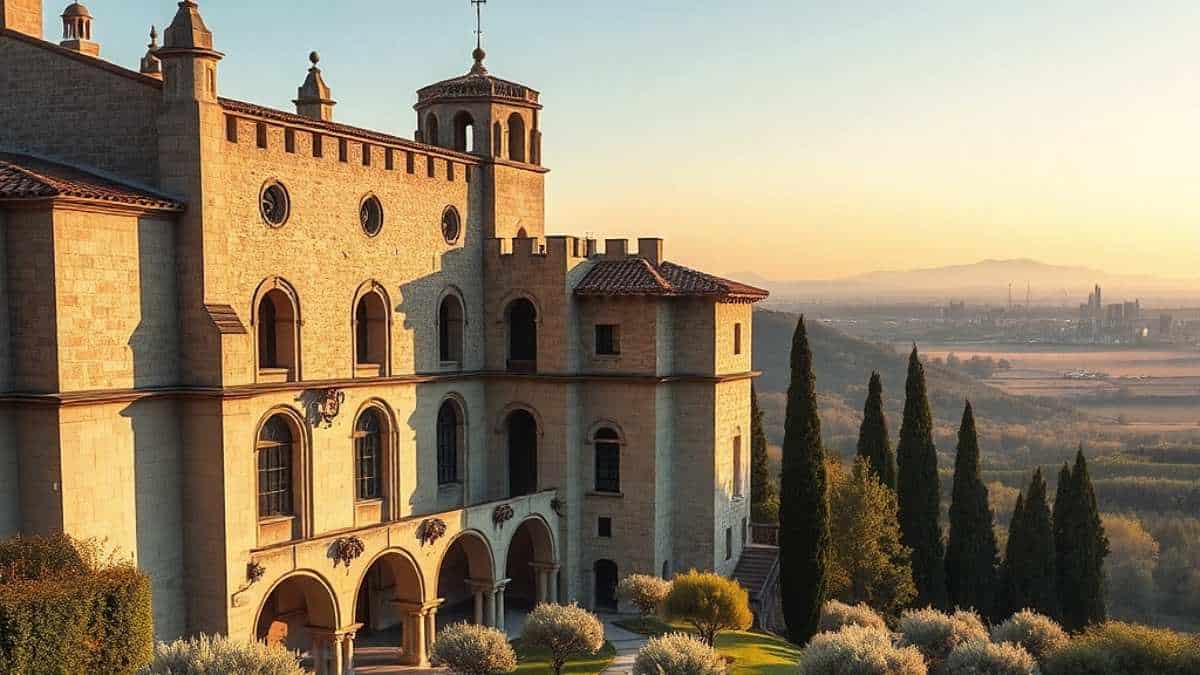
A seismic shift in capital allocation is changing the European hospitality industry as real estate institutional funds move away from overcrowded gateway cities to rural areas. With hostile moratoriums imposed by municipalities on hotel projects in urban areas, along with strict caps on short-term rentals in Barcelona, Florence, and Lisbon, private equity groups are allocating billions of dollars to rural regions. The historic heritage restoration revolution is converting centuries-old monasteries, hidden medieval castles, and prestigious vineyards into ultra-low density and super high value luxury hideaways. With the replacement of urban high cost and low margin projects with architectural restorations of high barrier to entry, real estate arbitrage has never been so effective.
The Regulatory Squeeze in European Urban Gateways
Metropolitan gateway markets across Southern and Western Europe have reached a regulatory tipping point. Driven by escalating resident friction, severe housing affordability crises, and the erosion of civic infrastructure under the weight of mass tourism, municipal governments have erected strict legislative barriers against hotel expansion. These urban policy interventions have transformed the economics of metropolitan hospitality development from a predictable growth play into an administrative and legal gauntlet.
Advertisement
Advertisement
In Barcelona, municipal authorities established a sweeping precedent through the Pla Especial Urbanístic d’Allotjaments Turístics (PEUAT), an urban zoning mechanism designed to curtail visitor accommodations. PEUAT segmented the Catalan capital into strict regulatory zones: Zone 1, encompassing the historic Ciutat Vella and adjacent high-pressure districts, instituted a policy of natural reduction where no new hotel licences are granted even upon the closure of an existing establishment. In Zone 2, new licences remain frozen under strict zero-growth mandates, and early provisions penalised full renovations by requiring owners to forfeit up to 20% of their total room inventory. Because municipal authorities have signalled that commercial visitor beds will not expand, operating licences have become scarce intangible assets, often representing 15% to 35% of an urban hotel’s total enterprise value.
| Stage | Market / Region | Key Characteristics | Investment / Financial Metrics |
|---|---|---|---|
| Urban Gateway Hotel Markets | Barcelona, Florence and other major urban gateways | Strict municipal moratoriums and zoning bans, including Barcelona PEUAT and Florence UNESCO rental caps | Severe supply compression; licence scarcity premiums of 15%–35% of enterprise value; yields compressed to 3.50%–4.50% |
| Institutional Capital Reallocation | Shift from major urban markets toward secondary and regional heritage destinations | Institutional capital redirected toward markets with greater conversion opportunities and less supply restriction | Focus on acquiring and repositioning heritage assets outside constrained gateway cities |
| Secondary & Regional Heritage Conversion Nodes | Spain: Castile-León, Asturias; Italy: Umbria, Tuscany; Portugal & France | Heritage properties positioned for hospitality conversion and destination-led investment | Opportunities created through adaptive reuse and regional tourism demand |
| Operational Execution & Value Capture | Medieval monasteries, châteaux and conventual estates | Adaptive reuse of heritage properties, typically 20–90 keys | Significant capex of €800,000–€1.5 million+ per key for seismic retrofits, MEP micro-trenching and restoration |
| Subsidies & Support | Spain, Italy, Portugal and France | Public funding and tourism-development programmes support heritage conversion | EU NextGen / PNRR, Portugal Revive and France Destination Plan |
| Revenue & Yield Potential | Converted heritage hotels and luxury destination properties | Premium accommodation combined with wine, wellness and branded residences | ADR of €800–€2,500+; yield on cost of 6.50%–8.50%, representing a 300–400 bps spread over metropolitan cap rates |
A parallel dynamic has gripped Italy’s primary art cities. In Florence, the municipal council enacted a decisive ban on new short-term residential tourist leases across the UNESCO World Heritage historic core, a policy repeatedly upheld by regional administrative courts seeking to protect the city’s residential fabric. Coupled with strict Italian preservation laws that restrict the spatial reconfiguration of historic Renaissance palazzi, the scope for scaling commercial hospitality in downtown Florence has narrowed substantially. In Venice, authorities have layered daily day-tripper entry fees onto stringent preservation edicts that prohibit the conversion of canal-front residential architecture into commercial lodging, seeking to stabilise a lagoon environment under immense ecological and demographic stress.
Advertisement
Advertisement
Portugal and France have enacted equally stringent measures. In Lisbon and Porto, municipal master plans have suspended new short-term rental registrations across historic central parishes, while simultaneously limiting permits for large-scale hotel developments to ease housing displacement. In Paris, the municipal council has capped private holiday rentals at strict annual limits, enforced commercial property change-of-use compensation laws, and imposed zoning restrictions that make central hotel conversions cost-prohibitive. As municipal constraints compress urban development pipelines, institutional capital has faced declining returns, motivating fund managers to seek alternative avenues for deployment.
| Municipal Gateway | Regulatory Planning Mechanism | Primary Restrictions Imposed | Direct Valuation and Market Impact |
| Barcelona, Spain | PEUAT (Special Tourist Accommodation Plan) | Zero new hotel licences in Zones 1 and 2; strict containment in outer zones. | Licences command 15%–35% of enterprise value; high urban barriers. |
| Florence, Italy | UNESCO Core Municipal Decrees & Court Rulings | Ban on new short-term rentals in UNESCO historic centre; freeze on large hotel permits. | Constrained central supply; historic conversion redirected to countryside. |
| Venice, Italy | Lagoon Conservation Decrees & Day-Tripper Levies | Limits on large cruise docking; strict bans on palazzi hotel expansions. | High operational costs; luxury capital pivots to private lagoon islands. |
| Lisbon, Portugal | Municipal Master Plan & AL Containment Zones | Moratorium on new short-term rentals in historic quarters; selective zoning caps. | Capital deployed to regional estates through national incentive schemes. |
| Paris, France | Commercial Compensation Rules & Rental Caps | Strict 120-day residential rental caps; commercial conversion penalties. | Focus shifts to destination estates in the Loire Valley and Provence. |
Institutional Underwriting: Yield Arbitrage and Capital Allocations
The redirection of institutional capital toward historic countryside assets is rooted in financial fundamentals. Prime urban luxury hotels across gateway capitals trade at compressed yields, with capitalization rates hovering between 3.50% and 4.50%. These low yields reflect intense competition among institutional buyers and sovereign funds for rare metropolitan trophy assets. However, in an era of sustained borrowing costs, this compressed yield profile offers thin risk-adjusted spreads over sovereign debt, making core metropolitan assets vulnerable to capital value corrections.
Advertisement
Advertisement
In contrast, historic adaptive reuse projects across secondary regional destinations offer an attractive yield arbitrage. Institutional investors targeting the conversion of medieval abbeys, rural monasteries, and aristocratic country seats underwrite stabilized yield-on-cost metrics between 6.50% and 8.50%. This creates a 300-to-400-basis-point premium over metropolitan acquisitions. The yield spread reflects the operational complexity and extended gestation timelines inherent to monumental renovations, rewarding patient capital with higher operating cash flows and strong competitive defensibility once operational.
| Metric | Metropolitan Gateway Luxury Assets | Regional Heritage Conversion Sanctuaries |
|---|---|---|
| Cap Rates / Target Yield-on-Cost | 3.50%–4.50% cap rates | 6.50%–8.50% target yield-on-cost |
| Net Operating Spreads | Compressed, 50–150 bps over sovereign yields | Higher operating potential through diversified revenue streams |
| Yield Arbitrage Spread | Limited relative to urban benchmarks | +300 to +400 bps over urban benchmarks |
| Supply Elasticity | Artificially frozen by municipal moratoriums | Constrained by heritage regulations and limited suitable assets |
| Underwriting Profile | Lower capex intensity but compressed yields | Higher capex per key, supported by non-dilutive public co-financing |
| Barriers to Entry | Regulatory restrictions and bureaucratic licence freezes | Monument listing laws, artisan scarcity and planning moats |
This financial model is supported by distinct capital stacking strategies. Rather than relying entirely on conventional short-term commercial debt, sponsors assemble flexible capital stacks comprising private equity debt funds, specialized family offices, and European Union transition grants. In Italy, the Piano Nazionale di Ripresa e Resilienza (PNRR) has deployed €1.02 billion under Mission 1, Component 3 (Attrattività dei Borghi), providing direct non-repayable capital grants to regenerate historic settlements and abandoned rural architectural complexes.
In Portugal, the state-backed Programa Revive provides long-term concessions, often extending up to 50 years, for vacant national convents and fortresses, allowing private sponsors to amortize conversion expenditures under favourable public leasing frameworks. In France, the national Plan Destination France leverages state funds through the Banque des Territoires to support sustainable hospitality across provincial heritage sites.
| Financial and Performance Metric | Prime Metropolitan Hotel Asset | Regional Heritage Conversion Sanctuary | Underwriting Variance and Strategic Rationale |
| Exit Capitalisation Rate | 3.50% – 4.50% | 5.50% – 6.75% | Rural conversions trade at higher exit yields, leaving room for value creation. |
| Stabilised Yield-on-Cost | 4.75% – 5.50% | 6.50% – 8.50% | 300–400 bps spread compensates for extended approvals and complex works. |
| Target Levered IRR | 10.0% – 13.0% | 16.0% – 22.0% | Premium returns driven by ancillary spending, events, and residential sales. |
| Average Capex Per Key | €400,000 – €750,000 | €800,000 – €1,500,000+ | Monumental masonry, seismic retrofits, and bespoke artisan restoration. |
| Inventory Scale | 120 – 350+ keys | 20 – 90 keys | Low inventory creates exclusivity, driving pricing power. |
| Average Daily Rate (ADR) | €450 – €950 | €800 – €2,500+ | High-net-worth travellers pay a premium for heritage authenticity and seclusion. |
| Ancillary Revenue Contribution | 20% – 30% | 40% – 55% | Revenue supplemented by estate viticulture, wellness, and culinary experiences. |
Engineering Historic Assets: Capex, Seismic Retrofits, and Planning Compliance
Transforming centuries-old monumental structures into luxury hospitality destinations requires navigating complex planning approvals and specialized engineering challenges. Unlike ground-up construction, where building methods are standardised, historic adaptive reuse requires bespoke solutions tailored to listed structures. Consequently, the cost per key for heritage transformations routinely reaches €800,000 to €1,500,000 or more, requiring comprehensive structural and architectural due diligence.
| Intervention Area | Engineering / Conservation Measures | Primary Purpose |
|---|---|---|
| Seismic Retrofitting | Basal carbon-fibre anchoring; hydraulic-lime injections | Strengthen historic structures while preserving original architectural elements |
| MEP & HVAC Integration | Micro-trenched floor chases; subterranean plant rooms | Integrate modern mechanical, electrical and HVAC systems with minimal visual impact |
| Envelope Conservation | Breathable aerogel insulative plasters; restored timber joinery | Improve thermal performance while maintaining historic building fabric |
| Archaeological Stewardship | Stratigraphic excavation; in-situ foundation display | Protect archaeological evidence and incorporate discoveries into the guest experience |
The engineering phase must resolve several critical technical hurdles:
- Structural Stabilisation and Seismic Upgrading: Monastic and defensive stone architecture across Southern Europe was often constructed without reinforced lateral ties, making it vulnerable to seismic stress. In Italy and the Iberian Peninsula, regional heritage authorities mandate that seismic retrofits remain completely invisible. Engineers utilize carbon-fibre rod stitching, stainless-steel tie rods concealed within floor cavities, and low-pressure injections of natural hydraulic lime grout to stabilize multi-leaf masonry without altering historic facades.
- MEP and HVAC Integration Within Solid Masonry: Historic stone monuments feature thick bearing walls that cannot be channelled without compromising structural integrity or damaging historic frescoes. Mechanical engineers address this by running micro-trenched utility corridors beneath reclaimed stone flagstones, installing four-pipe hydronic fan-coil units behind custom joinery, and routing ventilation through dormant flue networks or disused service shafts. Plant infrastructure is frequently moved underground to eliminate acoustic and visual pollution across historic cloisters.
- Envelope Efficiency and Breathability: Standard exterior thermal insulation methods cannot be applied to protected ashlar limestone, granite, or brick exteriors. Historic building envelopes require vapour-permeable insulation systems, such as internal hemp-lime plasters, aerogel composites, and custom-milled double-glazed timber windows that replicate original profiles while satisfying modern acoustic and thermal codes.
- Archaeological Discoveries and Regulatory Oversight: Conversions of Grade-listed properties are subject to strict scrutiny from conservation agencies, including Italy’s Soprintendenze Archeologia, Belle Arti e Paesaggio, Spain’s Comisiones Provinciales de Patrimonio Histórico, and France’s Architectes des Bâtiments de France. Developers must accommodate archaeological evaluations throughout construction. Encountering Roman, Moorish, or medieval sub-structures can pause work for months, requiring adaptable engineering designs that can integrate excavated ruins into the guest experience.
Revenue Dynamics in Low-Density Luxury Hospitality
The economic model of heritage conversions rests on intentional scarcity. While metropolitan hotels rely on high room volumes to cover overhead costs, regional heritage properties prioritize low-density operations. By limiting key counts to between 20 and 90 rooms, these properties cultivate an atmosphere of privacy, discretion, and exclusivity that commands exceptional pricing power.
Advertisement
Advertisement
This low-density structure drives premium Average Daily Rate (ADR) and Revenue Per Available Room (RevPAR premiums) performance. High-net-worth leisure travellers, corporate retreat organizers, and private buy-out clients pay substantial premiums for private historic settings. During peak operational seasons, baseline rooms at restored monasteries and castles command rates between €800 and €2,500 per night, with premier multi-room suites and standalone villas achieving €5,000 to €15,000 per night.
| Operational Metric | Low-Density Operational Model |
|---|---|
| Inventory | 20–90 keys |
| Pricing Power | €800–€2,500+ standard ADR; €5,000–€15,000 estate suites |
| Occupancy Focus | Calibrated at 55%–70% to preserve intimacy and high service ratios |
| Revenue Distribution | High non-room spend through spa, viticulture, private dining and buyouts |
Furthermore, the revenue profile of these destination estates is supported by diverse non-room spending. Unlike urban hotel guests who dine and explore outside the hotel, guests at rural retreats spend a larger share of wallet on property. Integrated Michelin-starred dining in historic refectories, subterranean wine tastings, bespoke wellness therapies, and private estate tours often account for 40% to 55% of gross revenues.
Additionally, introducing branded residential villas within broader estate grounds—such as restored farmhouses or newly built rustic pavilions—provides upfront capital recycling. These residences leverage the hospitality operator’s brand, concierge services, and rental management programmes, commanding price premiums of 30% to 45% over unbranded rural real estate and accelerating project payback periods.
Regional Investment Spotlight: Italy
Italy’s countryside hosts some of Europe’s most ambitious monastic and aristocratic adaptive reuse developments. Backed by private equity capital and international luxury brands, these transformations convert neglected national monuments into high-yielding hospitality assets.
| Location | Heritage Property / Conversion | Historical Character | Key Conversion / Investment Details |
|---|---|---|---|
| Umbria | Six Senses Antognolla | 12th-century Castello di Antognolla, located on a site associated with a 10th-century Benedictine monastery | Planned development includes 71 rooms and suites, 79 residences, wellness facilities, golf and cultural amenities; reported investment figures vary by project source. |
| Amalfi Coast | Monastero Santa Rosa | 17th-century Dominican monastery in Conca dei Marini | Converted into an intimate luxury hotel with 20 rooms and suites, preserving historic monastery architecture alongside modern hospitality facilities. |
| Venice Lagoon | San Clemente Palace | Historic island complex with a Romanesque church dating to 1131 and longstanding monastic heritage | Developed as an island luxury resort combining preserved heritage, gardens, accommodation, wellness and resort facilities near Venice. |
Umbria and Tuscany: Castello di Antognolla
In Umbria, the Six Senses Antognolla project demonstrates the scale of institutional capital entering rural Italy. The project centres on a 12th-century castle and a 500-hectare historic estate near Perugia. Following its initial $55 million acquisition, the developer committed approximately $145 million in construction capex to transform the castle and adjacent borgo into a luxury resort featuring 71 guest suites and 79 branded residential villas, operated by Six Senses.
The architectural program balances heritage conservation with modern resort amenities. Under the supervision of regional heritage authorities, the main castle keep and historic chapel have undergone seismic reinforcement, structural stone consolidation, and timber preservation. The estate incorporates a championship 18-hole golf course designed by Robert Trent Jones Jr., extensive organic equestrian trails, working olive groves, and a subterranean wellness sanctuary. The project’s hybrid business model leverages branded residential sales to de-risk construction capex, while positioning Umbria as an ultra-luxury alternative to saturated Tuscan enclaves.
Advertisement
Advertisement
Amalfi Coast: Monastero Santa Rosa
Perched on the cliffs of Conca dei Marini between Amalfi and Positano, Monastero Santa Rosa Hotel & Spa illustrates the commercial viability of low-density historic preservation. Originally built in the 17th century as a Dominican convent, the limestone complex stood vacant before being acquired by American investor Bianca Sharma in 1999. Over a ten-year restoration, the structure was converted into an exclusive 20-suite boutique retreat.
The architectural program transformed former nun dormitories into 20 sea-facing suites, retaining vaulted ceilings, original wooden structural beams, and antique furnishings sourced from regional auctions. The monastery’s vaulted cellars and apothecaries were converted into a 750-square-foot thermal spa suite, featuring stone saunas, herbal steam rooms, and treatment areas utilizing botanicals inspired by the historic convent pharmacy.
The grounds feature terraced gardens that step down to an outdoor heated infinity pool engineered into the limestone cliff. With a Michelin-starred dining programme in its historic refectory and high staff-to-guest ratios, Monastero Santa Rosa commands high seasonal ADRs while avoiding the congestion that affects surrounding coastal hubs.
Venice Lagoon: San Clemente Palace Kempinski
Located on a private six-to-seven-hectare island in the Venetian Lagoon, the San Clemente Palace Kempinski illustrates how heritage assets can provide an alternative to mainland urban regulatory freezes. The island was settled in 1131, initially hosting a pilgrim hospice and church, and subsequently served as a monastery for Lateran and Camaldolese monks. In the 19th century, the site was adapted into a hospital facility, which operated until its closure in 1992.
Following a comprehensive restoration, the island reopened as a private luxury retreat, later joining the Kempinski portfolio under the ownership of Permak Investments. The 190-room resort operates an exclusive private boat shuttle to Piazza San Marco, offering guests quick access to central Venice while maintaining the privacy of an island sanctuary. The property preserves its Romanesque church, historic cloistered courtyards, and mature gardens, providing a retreat insulated from central Venice’s zoning restrictions and day-tripper crowds.
Regional Investment Spotlight: Spain
In Spain, regional heritage conversions are supported by both private development funds and established state-backed hospitality initiatives.
Advertisement
Advertisement
| Location | Heritage Property | Historical Character | Conversion / Operational Highlights |
|---|---|---|---|
| Valladolid | Abadía Retuerta Le Domaine | 12th-century Romanesque abbey | 30 keys comprising 27 rooms and 3 suites; integrated winery and vineyard estate with historic winemaking traditions and gravity-based processes. |
| Asturias | Parador de Corias | Historic monastery incorporating archaeological remains of an 11th-century foundation church | 86 rooms; restored monastery complex with spa, relaxation areas, meeting facilities and preserved archaeological elements. |
Castile-León: Abadía Retuerta Le Domaine
Situated in Sardón de Duero, Abadía Retuerta Le Domaine illustrates how corporate capital can balance monumental preservation with commercial agriculture. The site centres on the Abbey of Santa María de Retuerta, established in 1146 by the Premonstratensian Order. A rare survivor of Napoleonic secularisation, the Romanesque and Baroque monastic complex was acquired alongside its agricultural grounds by the healthcare corporation Novartis.
Novartis engaged Swiss-Italian architect Marco Serra to oversee the restoration, completing the hotel conversion in 2012. Serra preserved the original monastic floor plans, converting former monk cells into 30 luxury rooms and suites with views across the estate vineyards. The monks’ refectory was adapted into Refectorio, a Michelin-starred restaurant that retains its 17th-century Last Supper fresco.
The former stables (Caballerizas) were converted into a subterranean spa and wellness centre, with all modern MEP systems integrated beneath historic masonry without altering listed facades. The estate supports an on-site, gravity-fed winery that processes fruit from 54 individual vineyard parcels across 350 planted acres, pairing luxury hospitality with estate viticulture.
Asturias: Parador Monasterio de Corias
In northern Spain’s mountainous Asturias region, the Parador Monasterio de Corias in Cangas del Narcea demonstrates state-directed heritage regeneration. Founded in the 11th century as a Benedictine monastery, the monumental property—often called the “Asturian Escorial” due to its scale—underwent an extensive public restoration led by architect José María Pérez “Peridis”.
The resulting 86-room hotel incorporates an archaeological museum in its basement that showcases excavated Romanesque foundations discovered during construction. The complex includes modern spa facilities beneath stone vaults, landscaped central cloisters, and dining venues in the monastic refectory celebrating regional gastronomy and Cangas wine. The property acts as an economic anchor for the Narcea Valley, supporting local tourism and supply chains while conserving a protected national monument.
Regional Investment Spotlight: Portugal and France
In Portugal and France, public policies actively support the private rehabilitation of historic estates, offering structured frameworks that attract international investment.
Advertisement
Advertisement
| Location | Heritage Property | Historical Character | Conversion / Operational Highlights |
|---|---|---|---|
| Alentejo, Portugal | Convento do Espinheiro | 15th-century former convent | 92 rooms and 10 suites; restored historic complex combining preserved convent architecture with modern hotel facilities. |
| Douro Valley, Portugal | Six Senses Douro Valley | 19th-century noble manor estate | Luxury wine-country retreat with 71 guest accommodations; sensitively refurbished to retain traditional architectural elements while integrating contemporary facilities. |
| Loire Valley, France | Relais de Chambord | Boutique property on a historic royal estate | Contemporary boutique hotel designed by Jean-Michel Wilmotte, positioned within the heritage landscape surrounding the Château de Chambord. |
| Provence, France | Abbaye de Sainte Croix | Historic 12th-century Cistercian abbey | Heritage retreat conversion preserving the abbey setting and historic architectural character while operating as a luxury hospitality property. |
Portugal: Alentejo and the Douro Valley
Portugal has systematically expanded its heritage hospitality footprint through the national Programa Revive, a coordinated initiative between Turismo de Portugal and heritage ministries to tender vacant state-owned historic real estate for private development.
Outside the historic walls of Évora, the Convento do Espinheiro Historic Hotel & Spa (operating under Marriott’s Luxury Collection) illustrates the viability of conventual conversion. Originally built in the 15th century and long frequented by Portuguese monarchs, the convent was restored into a 92-room luxury hotel. The design incorporates the property’s original gilded church, Renaissance cloisters, and azulejo tilework, set within eight hectares of gardens and olive groves.
In the Douro wine country near Lamego, the Six Senses Douro Valley occupies an adapted 19th-century manor house set on a terrace overlooking the river. Comprising 60 guest rooms, suites, and private villas, the estate combines historic Portuguese architecture with modern eco-design. The resort features a 2,200-square-metre spa, working organic gardens, an interactive wine library, and river access, generating strong ADRs and driving international luxury tourism into northern Portugal.
France: Loire Valley and Provence
France manages historic development through strict oversight from the Architectes des Bâtiments de France (ABF) and support from the Plan Destination France, ensuring that commercial initiatives align with preservation standards.
Within the UNESCO-protected Loire Valley, the Relais de Chambord occupies an estate parcel directly facing the royal Château de Chambord within the 5,440-hectare Domaine National de Chambord. Restructured by architect Jean-Michel Wilmotte and operated by Marugal, the former 17th-century coaching inn was converted into an intimate 55-room boutique hotel.
Wilmotte used a palette of slate, natural wood, and minimalist furnishings that complement the neighbouring Renaissance palace. The property features private river-facing dining, wellness saunas, and troglodytic spa chambers, returning operational royalties to support the maintenance of the public Chambord estate.
Advertisement
Advertisement
In Provence, historic abbeys have similarly adapted to high-end hospitality. The Abbaye de Sainte Croix in Salon-de-Provence, a 12th-century Cistercian abbey, operates as an intimate retreat under the Relais & Châteaux flag. The conversion preserves original Romanesque barrel-vaulted stone ceilings across its 25 guest accommodations and dining rooms, surrounded by terraced olive groves that overlook the Provencal countryside.
| Benchmark Property | Jurisdiction / Submarket | Historical Typology | Operating Flag / Ownership | Scale | Key Architectural / Engineering Feature |
| Six Senses Antognolla | Umbria, Italy | 12th-Century Castle & Borgo | Six Senses / Mohamed Alabbar | 71 rooms + 79 villas | Seismic reinforcement; Robert Trent Jones Jr. golf. |
| Monastero Santa Rosa | Amalfi Coast, Italy | 17th-Century Convent | Independent / Bianca Sharma | 20 suites | Cliffside heated infinity pool; thermal vault spa. |
| San Clemente Palace | Venice Lagoon, Italy | 12th-Century Monastery / Island | Kempinski / Permak Group | 190 rooms | Private lagoon island; Romanesque church restoration. |
| Abadía Retuerta | Valladolid, Spain | 12th-Century Abbey | Independent (LHW) / Novartis | 30 keys | Marco Serra restoration; gravity-fed winery. |
| Parador de Corias | Asturias, Spain | 11th-Century Monastery | Paradores (State SOE) | 86 keys | “Asturian Escorial”; Romanesque church excavation. |
| Convento do Espinheiro | Alentejo, Portugal | 15th-Century Convent | Luxury Collection / Private Equity | 92 keys | Manueline cloisters; 8-hectare estate olive groves. |
| Six Senses Douro | Douro Valley, Portugal | 19th-Century Wine Manor | Six Senses / Institutional Fund | 60 keys | Riverfront wine library; 2,200 m² holistic spa. |
| Relais de Chambord | Loire Valley, France | 17th-Century Outpost | Marugal / Domaine de Chambord | 55 keys | Jean-Michel Wilmotte design; parkland views. |
| Abbaye de Sainte Croix | Provence, France | 12th-Century Cistercian Abbey | Relais & Châteaux / Private Office | 25 keys | Barrel-vaulted dormitories; Provencal olive terraces. |
Operational ESG and Regenerative Estate Systems
Institutional capital targeting historic estates is increasingly driven by environmental, social, and corporate governance (ESG) considerations. Converted historic rural estates offer an operational model where sustainability is built directly into estate land management, yielding measurable ecological and social metrics.
| Area | Regenerative Estate Architecture | Key Measures / Outcomes |
|---|---|---|
| Ecological Stewardship | Polyculture viticulture, rewilding and Natura 2000 ecological corridors | Integrates agricultural production with biodiversity restoration, habitat connectivity and climate resilience. |
| Closed-Loop Resource Systems | On-site composting, greywater purification and geothermal heating | Reduces resource waste through circular water, energy and nutrient systems, improving overall resource efficiency. |
| Socioeconomic Integration | Rural year-round employment and traditional craft-guild patronage | Connects estate operations with local livelihoods, skills, supply chains and rural economic development. |
Environmental Regeneration and Agricultural Integration
Unlike dense urban hotels that operate within municipal utility grids, rural heritage conversions typically include substantial agricultural and forest acreage. Leading operators integrate sustainable agricultural practices directly into their business models:
- Biodiverse Polyculture and Soil Management: Estates such as Abadía Retuerta and Castello di Antognolla incorporate commercial viticulture and agriculture into property operations. Retuerta’s 700-hectare estate balances 200 hectares of organic vineyards with native pine woodlands that produce commercial pine nuts and support on-site beekeeping. These wooded areas provide natural protective buffers against crop pests, eliminating synthetic pesticides.
- Rewilding and Carbon Sequestration: At estates such as the Domaine de Chambord, which encompasses Europe’s largest enclosed forested park at over 5,400 hectares, hospitality operations exist within broader Natura 2000 biodiversity corridors. These surrounding woodlands act as substantial carbon sinks that help offset the resort’s operational footprint.
- Circular Resource Systems: Restored estates frequently deploy closed-loop resource management. Kitchen operations send organic waste to dedicated composting facilities that nourish heirloom gardens, while on-site reed-bed greywater treatment plants process water for grounds irrigation and vineyard maintenance.
Socioeconomic Multipliers and Rural Preservation
The economic benefits of heritage conversions extend directly into regional communities, offering counterweights to rural depopulation:
- Skilled Year-Round Employment: Traditional coastal and ski resorts often rely on seasonal, temporary workforces. In contrast, luxury heritage retreats maintain extended 10-to-12-month operating calendars driven by viticulture, wellness programmes, and corporate gatherings. The high-touch nature of low-density luxury requires staffing ratios of 1.5 to 2.5 personnel per key, creating permanent employment in culinary arts, wellness therapies, and estate management.
- Patronage of Heritage Restoration Crafts: Project construction and ongoing maintenance sustain traditional craft trades, creating steady demand for master stonemasons, lime-plaster artisans, wrought-iron workers, and timber framers. These specialized restoration guilds pass skills down to younger apprentices, ensuring the continuity of traditional building crafts.
- Short Local Supply Chains: Converted retreats consistently prioritize hyper-local sourcing. Estates establish direct procurement relationships with local cheesemakers, organic farmers, ceramicists, and winemakers, retaining visitor spending within local regional economies rather than centralizing it in metropolitan distribution networks.
Institutional Risk Matrix and Strategic Horizon
While the investment fundamentals of heritage adaptive reuse are compelling, institutional capital must navigate specific development, legal, and operational risks:
| Risk Factor | Key Risk | Mitigation / Financial Requirement |
|---|---|---|
| Risk Factor 1: Entitlement and Planning Latency | Complex planning approvals, heritage permissions and regulatory processes can extend pre-development timelines. | 36–72-month pre-development horizon should be incorporated into project planning and capital deployment schedules. Heritage projects can face additional approval and restoration constraints. |
| Risk Factor 2: Unforeseen Structural Conditions | Hidden structural defects, deteriorated materials and unexpected conditions within historic buildings can increase restoration costs. | 15%–25% contingency reserves should be considered for unforeseen structural and conservation requirements. |
| Risk Factor 3: Environmental and Wildfire Exposure | Rural and heritage estates may face wildfire and other environmental hazards that can threaten buildings, landscapes and operations. | Perimeter defensibility investments, fire-risk planning, detection and suppression measures are required to strengthen site resilience. |
- Entitlement and Planning Latency: Navigating municipal zoning, regional environmental regulations, and national heritage preservation frameworks requires patient execution. Securing planning approvals for Grade-listed monuments can extend pre-development timelines to three to six years. Institutional sponsors mitigate this timeline risk by using phased joint ventures with experienced local development partners who possess regional regulatory relationships.
- Unforeseen Structural and Subsurface Defects: Working with historic architecture introduces physical unknowns. Subsurface excavations may reveal unrecorded structural flaws, degraded foundational footings, or protected archaeological remains that require unexpected structural redesigns. Consequently, underwriters must maintain construction contingency reserves of 15% to 25%—substantially higher than the 5% to 8% buffers typical of standard new-build construction.
- Climate Resilience and Wildfire Mitigation: Rural Mediterranean estates face increasing physical climate risks, including regional drought, shifting crop dynamics, and seasonal wildfire exposure. Risk mitigation strategies require upfront investments in defensible landscape perimeters, dedicated subterranean water storage reservoirs, comprehensive firebreak maintenance, and auxiliary on-site power microgrids.
As gateway metropolitan centres in Western and Southern Europe maintain stringent hotel caps and short-term rental limits, the institutional appeal of historic countryside assets is projected to grow. Well-capitalised private equity funds, sovereign wealth allocators, and family offices will continue deploying capital into rare historic estates. By transforming vulnerable monasteries, neglected palacios, and historic rural landmarks into ultra-luxury retreats, these conversions preserve historic architecture while delivering long-term risk-adjusted returns for institutional investors.
Advertisement
Advertisement
Conclusion
There is a lasting shift in the hospitality landscape of Europe with the metropolitan regulatory logjam leading to the channelling of institutional money into regional havens. The execution of preservation strategies, seismic modifications, and bespoke artisan restoration takes money, but the resultant properties present the greatest commercial resilience and margin and have a longer lifespan than ever. Through converting fragile monasteries, forgotten palacios, and rural estates into exclusive boutique properties, the private equity firms and sovereign wealth funds have unlocked an impressive value-creation model. Ultimately, the heritage conversion trend presents a lasting institutional model with historic cultural preservation, rural economic regeneration, and high-end hospitality coalescing into commercial value.
heritage retreats
Advertisement
