
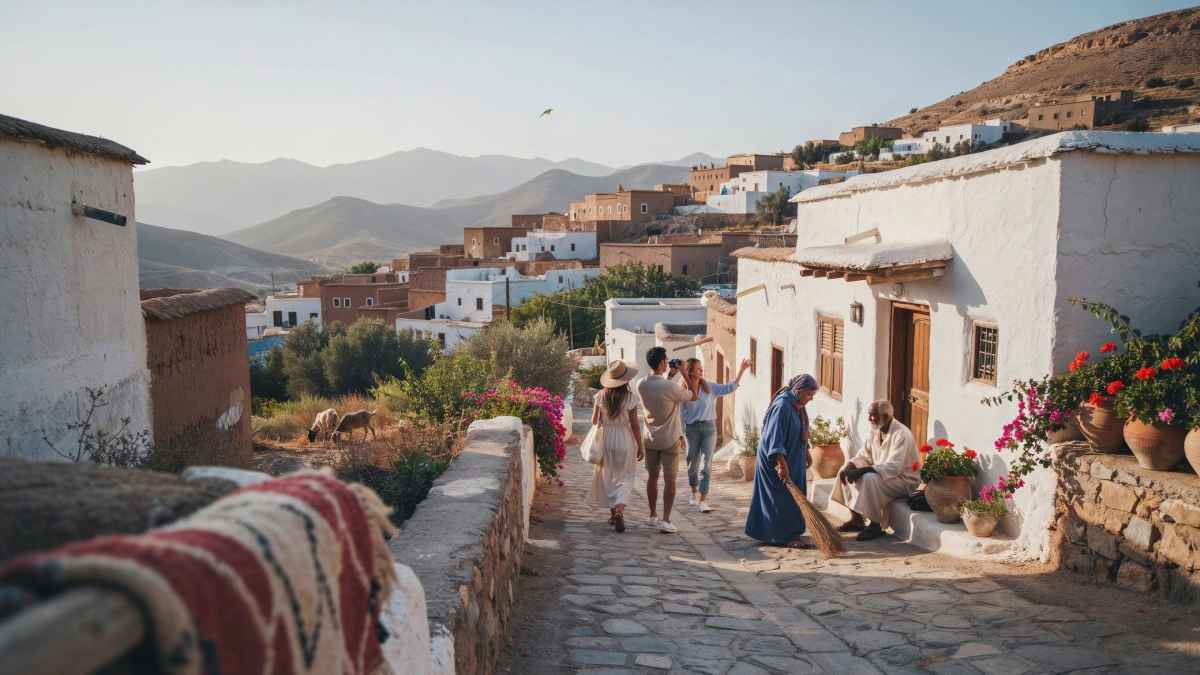
Image generated with Ai
This involves the implementation of a development programme worth $18.8 million that will see the integration of 16 rural heritage villages into the tourism industry of Morocco. The programme will involve the development of new bases for tourists other than the existing tourist spots such as Marrakech and Fes, and ensuring that tourism expenditure is directed to places that are rarely visited. In this regard, the development programme will focus on those rural villages that have cultural heritage, traditional crafts and local food that can attract tourism.
The 16 participating villages are spread across different landscapes and cultural areas, giving travellers opportunities to explore parts of Morocco beyond its internationally recognised cities. Among the locations being highlighted is Ain Leuh, situated in the Middle Atlas region and surrounded by cedar forests and mountain landscapes.
Its rural setting provides a base for visitors seeking nature-focused experiences and access to the wider Middle Atlas. Jajouka, meanwhile, is being positioned around its distinctive music heritage.
The village has long been associated with traditional Moroccan musical culture, giving the destination potential for cultural tourism built around local heritage and community participation. On the Atlantic coast, Imi Ouaddar offers a different tourism proposition, combining a coastal setting with opportunities to develop community-based experiences away from Morocco’s busiest resort destinations. Together, the villages give the programme a geographically diverse tourism portfolio spanning mountain, cultural and coastal experiences.
Advertisement
A key component of the investment is the introduction of regulated eco-lodges. These properties are intended to increase accommodation capacity in areas where limited lodging options can restrict overnight tourism. For travellers, additional rural accommodation can make it easier to spend longer in smaller destinations rather than visiting them only as day trips from major cities or established resorts. The eco-lodge model also connects accommodation development with the wider sustainability objectives of the programme. By establishing regulated tourism facilities, the initiative provides a structured framework for welcoming visitors while supporting the character of rural settlements.
Traditional crafts form another part of the rural tourism strategy. Craft cooperatives can create opportunities for visitors to discover locally produced goods and learn more about regional techniques and cultural traditions. This creates a direct connection between tourism and local production. Instead of concentrating visitor expenditure in major urban centres, the programme seeks to create additional channels for tourism spending within participating villages. For international travellers, craft experiences can also add a cultural dimension to rural itineraries, particularly when combined with visits to heritage sites, local markets and community-run activities.
Advertisement
Advertisement
The programme’s culinary trails are designed to strengthen another major part of Morocco’s tourism offering: food. Regionally curated routes can introduce travellers to local dishes, ingredients and preparation methods while encouraging movement between rural communities. Culinary tourism can also support restaurants, producers, farmers and other businesses connected to the local food economy. By linking food experiences with accommodation and cultural attractions, the initiative can help transform individual villages into more complete travel destinations rather than isolated stops.
The rural programme is part of the ongoing development in Morocco, whereby it is developing its tourism facilities and also increasing the number of destinations that it is promoting to tourists from abroad. The current popular destinations include Marrakech and Fes, as these are cities that offer travellers historical architecture, cultural experience, and the necessary tourism facilities. However, the introduction of the rural programme introduces another element to Morocco’s tourism infrastructure whereby there is a chance for tourists to venture into other places like the mountains, coasts, and rural settings. With an investment worth $18.8 million, the program is going to concentrate on increasing tourism participation in Morocco’s lesser-known locations until 2026, when 16 heritage villages will have been developed.
Advertisement
Advertisement
Advertisement













Saturday, September 5, 2026

Friday, September 4, 2026

Saturday, September 5, 2026

Saturday, September 5, 2026

Saturday, September 5, 2026

Thursday, September 3, 2026

Saturday, September 5, 2026

Saturday, September 5, 2026


