
Air India Boeing 787 Diverted to Jaipur, as Squawk 7500 Hijack Alert Disrupts Frankfurt–Delhi Flight

Updated
Published
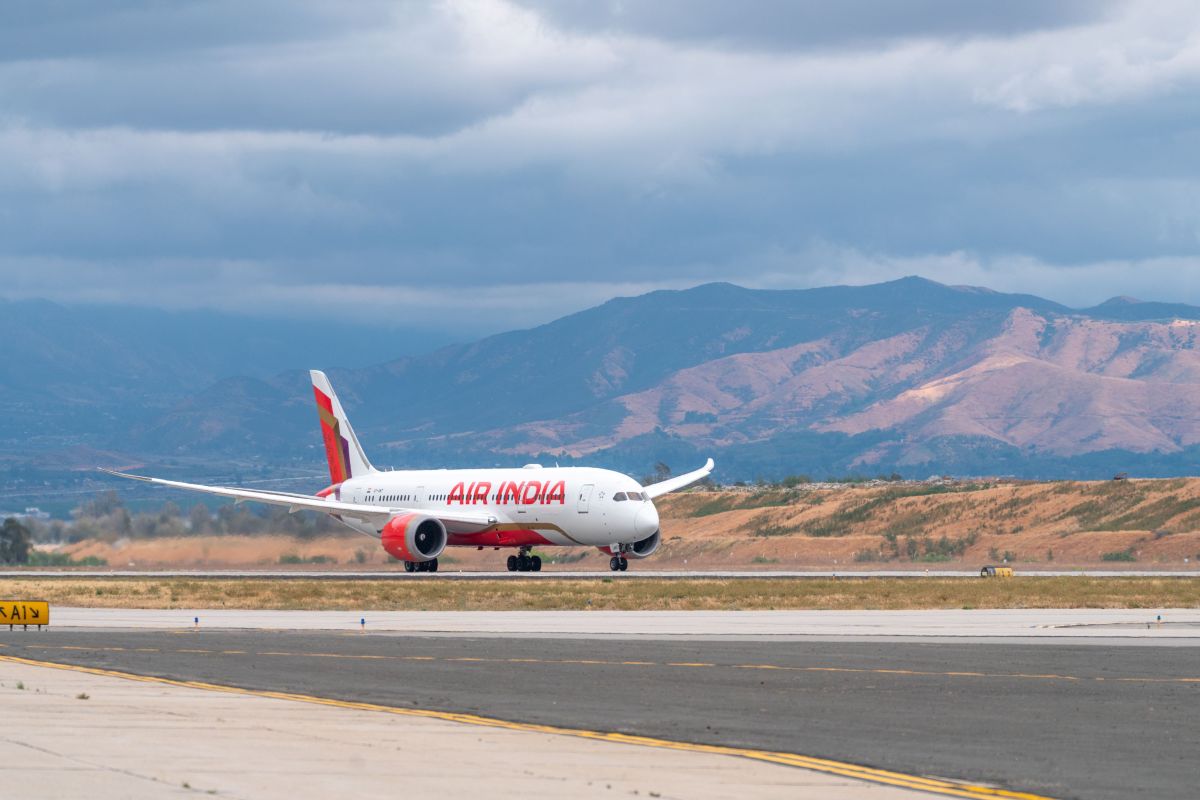
Air India Flight AI2030, travelling from Frankfurt to Delhi, diverted to Jaipur International Airport on 14 October 2026 after a security alert prompted an emergency response. The Boeing 787-9 Dreamliner landed safely at 9.35 am local time, and authorities confirmed that all 306 passengers disembarked safely. The aircraft reportedly transmitted Squawk 7500, an internationally recognised transponder code associated with hijacking or unlawful interference. Consequently, air traffic control directed the aircraft to Jaipur, where security teams moved it to an isolation bay for inspections. Authorities also examined passengers and baggage as part of precautionary screening. However, the cause of the alert remained unconfirmed, with aviation investigators examining reports of a possible accidental activation.
What Happened on the Frankfurt–Delhi Flight
The diversion interrupted a long-haul international journey that was scheduled to terminate at Delhi’s Indira Gandhi International Airport. Instead, the aircraft landed in Jaipur, Rajasthan, after the reported transponder alert prompted an immediate security response. The incident placed flight safety, emergency coordination and passenger welfare at the centre of the operation.
According to reports published on Wednesday, the aircraft carried 306 passengers. Jaipur airport authorities moved it to a designated isolation bay after landing, allowing security personnel to conduct inspections away from routine passenger operations. Teams also screened passengers and their baggage before authorities considered onward travel arrangements.
The safe landing and disembarkation represent the confirmed positive outcome reported so far. However, the precise circumstances behind the alert remain unresolved. Investigators must establish whether the transmission resulted from an inadvertent selection, an operational issue or another cause.
Advertisement
Advertisement
The distinction matters for travellers and the aviation industry. A diversion following a security alert does not, by itself, establish that a hijacking occurred or that a bomb was present. It demonstrates that the flight’s circumstances warranted precautionary action while authorities assessed the available information.
Why Squawk 7500 Triggers an Immediate Response
Aircraft transponders transmit information that helps air traffic controllers identify and track aircraft. Pilots can also select specific codes to communicate particular emergency situations through the air traffic control system.
Advertisement
Advertisement
Squawk 7500 signals unlawful interference with an aircraft, including a suspected hijacking. The International Civil Aviation Organization (ICAO) recognises the code within international aviation procedures. Consequently, its appearance can prompt controllers to follow established security protocols and assess the aircraft’s circumstances.
Three internationally recognised emergency codes serve distinct purposes. Understanding these differences helps travellers interpret aviation reports without confusing a security alert with a confirmed incident.
| Transponder code | Recognised meaning | Operational significance |
|---|---|---|
| 7500 | Unlawful interference | Signals a suspected hijacking or related security threat |
| 7600 | Radio communication failure | Indicates difficulty communicating with air traffic control |
| 7700 | General emergency | Signals an emergency requiring appropriate assistance |
These codes communicate different situations rather than interchangeable levels of danger. Their use enables controllers to recognise the nature of a reported problem and respond accordingly.
However, a transponder code does not independently establish the underlying facts. Investigators must assess communications, operational records and other relevant evidence before determining what happened. In AI2030’s case, the reported possibility of an accidental alert remains an unconfirmed explanation.
Conflicting Reports Complicate the Investigation
Initial coverage presented differing accounts of the circumstances surrounding the diversion. Some reports referred to a bomb threat, while another account described the incident as a hijacking rumour rather than a confirmed bomb threat. These descriptions should not be treated as equivalent findings.
Preliminary reporting also raised the possibility that the hijack alert had been activated inadvertently. Nevertheless, authorities had not publicly established the cause when the initial reports appeared. The available information therefore does not support a definitive claim that the crew made an error or that a genuine hijacking attempt occurred.
Advertisement
Advertisement
The Directorate General of Civil Aviation (DGCA) was reported to be examining the incident. Its investigation is expected to clarify the circumstances surrounding the transponder transmission and the resulting diversion.
For aviation reporting, this distinction is essential. A reported threat, an emergency response and a confirmed security breach are three different things. Responsible coverage must preserve those distinctions until investigators establish the facts.
The incident also highlights a broader operational challenge. Aviation authorities must respond promptly to credible warning signals without waiting for every detail to become available. At the same time, investigators must determine whether the initial alert accurately reflected the situation onboard.
Security Checks Follow Safe Landing
Following the aircraft’s arrival in Jaipur at 9.35 am local time, security personnel moved it to an isolation bay. Authorities then began examining the aircraft as part of the precautionary response.
Reports identified local police, airport security personnel and the Anti-Terrorism Squad among the teams involved. Passenger screening and baggage checks formed part of the operation. The National Security Guard was also reportedly placed on standby in New Delhi.
The deployment of security personnel does not establish that authorities discovered a weapon, explosive device or evidence of unlawful interference. Instead, it reflects the need to investigate a reported threat before deciding whether normal operations can resume.
Advertisement
Advertisement
All 306 passengers were reported safe after disembarkation. Authorities were expected to arrange onward travel in accordance with the circumstances and applicable procedures.
However, the available reports did not establish a confirmed departure time from Jaipur, the aircraft’s subsequent operational status or the final outcome of the security inspections. Travellers should therefore distinguish the confirmed safe landing from any unverified claims about the investigation’s eventual findings.
How the Diversion Affects International Travellers
For passengers travelling between Europe and India, an unscheduled diversion can disrupt connecting flights, hotel reservations, airport transfers and onward rail journeys. The extent of the disruption depends on how quickly the airline completes security procedures and arranges the next stage of the journey.
Passengers booked on connecting services from Delhi may face missed departures if their arrival time changes substantially. Travellers with separate tickets could face additional complications because their onward airline may not automatically rebook them. Meanwhile, relatives waiting at Delhi airport may need to adjust pickup arrangements.
The incident does not establish that other flights at Delhi or Jaipur experienced widespread disruption. Nor does it confirm any broader suspension of international services. Travellers should avoid assuming that a single aircraft diversion necessarily affects an entire airport’s operations.
The following table outlines the principal travel implications and the steps passengers can take.
Advertisement
Advertisement
| Potential impact | What travellers should do |
|---|---|
| Delayed arrival in Delhi | Check revised arrival information before travelling to the airport |
| Missed connecting flight | Contact the airline operating the onward service immediately |
| Hotel or transfer changes | Inform the accommodation provider or transfer operator about the delay |
| Checked baggage uncertainty | Ask airline staff whether baggage will remain on the aircraft or require separate handling |
| Unclear onward arrangements from Jaipur | Follow airline instructions and retain all travel documents |
| Additional expenses | Keep receipts and written communications for any eligible claim |
These measures are particularly useful for passengers with tight connections or international itineraries involving separate bookings. However, rebooking, accommodation and compensation depend on the applicable fare conditions, airline arrangements and relevant passenger-rights rules. Travellers should obtain confirmation directly from the responsible carrier rather than rely on assumptions.
Why Jaipur Became the Diversion Airport
Jaipur International Airport serves Rajasthan’s capital and provides an alternative arrival point for aircraft diverted from their planned destinations. Its published aeronautical information identifies the airport as VIJP, while official airport information places it approximately 12 kilometres south-east of Jaipur Railway Station.
However, the precise reasons for selecting Jaipur over other airports have not been established in the available reports. Factors such as air traffic control instructions, operational suitability, security arrangements and the circumstances of an incident can influence diversion decisions. It would therefore be speculative to attribute the choice to any single factor.
The airport’s location also has practical implications for passengers awaiting onward travel. Anyone required to remain in Jaipur should confirm transport arrangements with the airline before making independent bookings. The airport’s proximity to the city does not guarantee immediate access to replacement flights or ground transport during a security operation.
For airlines, diversions require coordination between flight crews, air traffic controllers, airport operators and security agencies. The receiving airport must also manage the aircraft’s arrival while maintaining appropriate separation from routine passenger operations.
What Aviation Safety Procedures Require
International aviation procedures distinguish unlawful interference from general emergencies and communication failures. ICAO guidance identifies Squawk 7500 as the code associated with unlawful interference, while its procedures describe how crews should use the code in such circumstances.
Advertisement
Advertisement
This framework helps explain why controllers cannot simply disregard an alert because its cause remains uncertain. The immediate priority is to assess the situation and respond appropriately. Investigators can subsequently examine whether the alert reflected a genuine threat, an inadvertent selection or another circumstance.
In India, the Directorate General of Civil Aviation serves as the national civil aviation regulator. Its responsibilities include aviation safety oversight and the administration of relevant regulatory requirements. The DGCA’s official website provides access to aviation regulations and regulatory information.
The investigation into AI2030 should establish the sequence of events and clarify the basis for the diversion. Any definitive explanation should follow verified findings rather than preliminary speculation.
| Investigative question | Why it matters |
|---|---|
| Why did the aircraft transmit Squawk 7500? | Establishes the circumstances behind the security alert |
| What communications took place with air traffic control? | Helps reconstruct the operational response |
| What did aircraft and baggage inspections establish? | Clarifies whether security teams identified a threat |
| Was the alert accidental or deliberate? | Determines the nature of the incident |
| What corrective action, if any, is required? | Helps identify lessons for aviation operations |
These are areas requiring clarification, not findings already established by the investigation. No verified final determination was available in the initial reporting.
What Airlines Should Communicate to Passengers
The incident reinforces the importance of timely, consistent passenger communication during irregular operations. Travellers need clear information about safety, baggage, onward transport and revised departure times. They also need to know whether they should remain at the airport or follow alternative arrangements.
Airlines can reduce uncertainty by issuing verified updates through their websites, mobile applications, airport staff and customer support channels. They should distinguish confirmed developments from arrangements that remain provisional. This is especially important when early reports contain conflicting descriptions of a security alert.
Advertisement
Advertisement
For passengers affected by AI2030, the most useful starting point is Air India’s official Flight Status service. The service allows users to check available flight information using a flight number, booking reference or route details. Its published availability window covers two days before and after the current date.
Travellers should also retain booking confirmations and boarding documents until their journeys are complete. If the airline changes their arrangements, written confirmation can help resolve questions about missed connections, refunds or additional expenses.
What Travellers Should Watch Next
The immediate priority is to establish the cause of the reported alert and clarify when the aircraft can return to normal operations. Authorities must also determine whether any further security measures or operational changes are necessary. Until those details emerge, the safe arrival of all 306 passengers remains the clearest confirmed outcome.
For international travellers, the practical response is straightforward. Check flight information directly with the airline, allow flexibility for connecting journeys and avoid treating preliminary reports as final findings. Air India Flight AI2030’s diversion highlights how quickly a security alert can change an international itinerary, even when the aircraft lands safely. The investigation’s findings will determine whether the episode resulted from an inadvertent alert or another cause. Further verified information will be important for passengers, airline operators and the wider aviation sector.
Advertisement
