
Greece Unites with Turkey and Cyprus as Powerful Thunderstorms Threaten Tourists and Ferries

Published
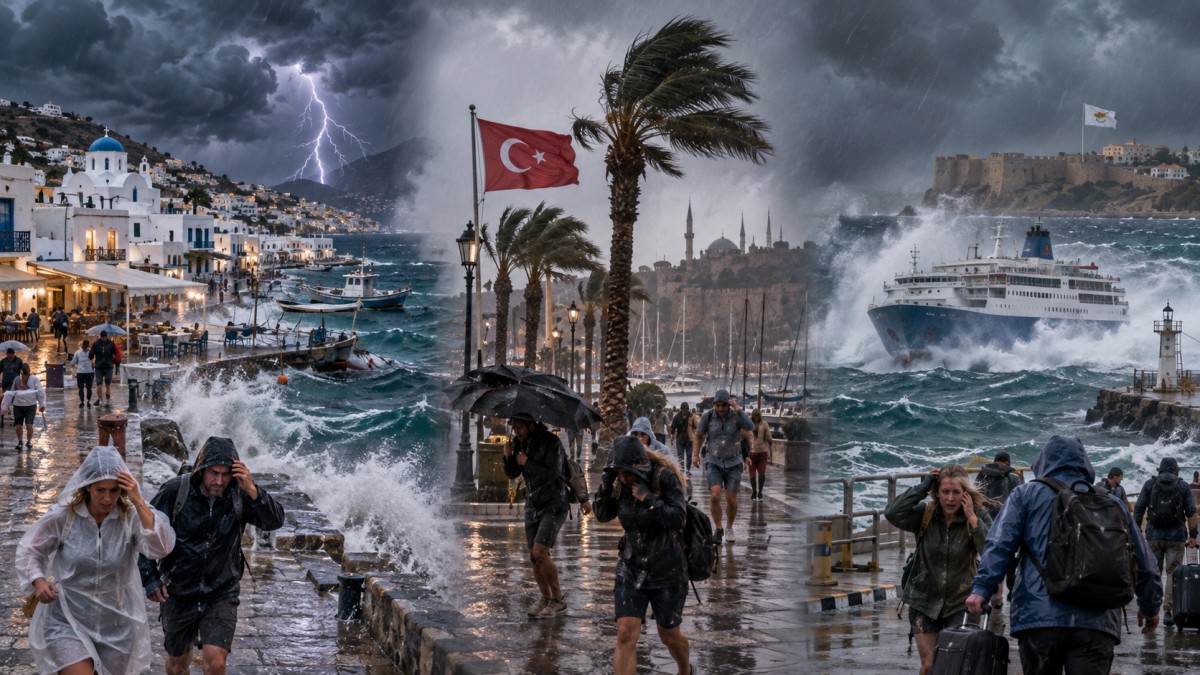
Greece and Turkey are battling extreme weather as heavy rain, severe thunderstorms, and gale-force winds on Aegean Sea threaten famous tourist spots with flight and ferry delays and disruption of vacation plans. Evia island of Greece is under red alert due to weather, while Athens and nearby cities prepare for heavy rains and possible flood. Western Turkey is also affected by heavy rain and dangerous winds in the Istanbul region and along the coast. Tourists who plan on traveling to these places should pay attention to the latest weather forecasts, keep track of flight schedules, and check ticket refund policies in case of cancellations.
Greece Issues Red Weather Warning as Evia Faces Dangerous Rainfall
Greece’s Ministry of Climate Crisis and Civil Protection confirmed that severe thunderstorms, intense rainfall and possible hailstorms would affect much of the country on 13 and 14 October. Evia faces the highest warning level, with its red alert continuing until late afternoon on Wednesday. The Greek National Meteorological Service expects prolonged and intense conditions, making the island particularly vulnerable.
The warning creates uncertainty for tourists visiting Evia’s beaches, coastal villages and countryside. Visitors should avoid unnecessary journeys during intense rainfall, particularly near rivers and flood-prone roads. Although the alert signals dangerous conditions, it does not automatically mean accommodation providers, attractions or transport operators have closed. Travellers should seek direct confirmation before changing bookings or attempting journeys during the storm.
Athens and Popular Greek Islands Enter the Severe Weather Danger Zone
Athens and the surrounding Attica region were placed under orange warnings alongside the north-eastern Peloponnese and parts of the Cyclades. Other affected destinations include the Sporades, Halkidiki, the Dodecanese and sections of Crete. The official forecast identified Chania and Rethymno among the Cretan areas facing significant rainfall, while conditions vary across individual destinations.
Advertisement
Advertisement
For holidaymakers, the weather could interrupt outdoor sightseeing, road transfers, guided excursions and coastal activities. Visitors exploring Athens should consider adjusting walking tours if thunderstorms develop. Island travellers should check local conditions rather than assuming every destination faces identical risks. Greece’s orange warnings cover different periods, so individual forecasts remain essential when planning airport transfers, boat trips and scheduled activities.
Powerful Aegean Winds Raise Concerns Over Ferry Travel and Island Connections
Greece’s national weather bulletin predicts north-easterly winds reaching force eight to nine on the Beaufort scale, with temporary local peaks of force ten. The strongest winds are expected across the northern and central Aegean between Tuesday evening and late Wednesday night. These conditions pose particular challenges for maritime transport and passengers travelling between mainland ports and island destinations.
Advertisement
Advertisement
Strong winds can prevent ferries from departing safely, particularly when maritime authorities impose sailing restrictions. Travellers with Aegean ferry tickets should contact their operator before leaving their accommodation. Passengers should also protect onward flight connections by allowing additional time. The weather warning establishes a credible risk of disruption, but does not itself confirm that specific ferry services have been cancelled.
Turkey Warns Istanbul and Marmara Travellers of Flooding and Thunderstorms
Turkey’s General Directorate of Meteorology has issued warnings covering Istanbul, Bursa, Yalova, Kocaeli and Sakarya. Istanbul could receive 21–50 millimetres of rainfall, with 51–75 millimetres possible in western parts of its European side. Yalova, Kocaeli and Sakarya face locally heavier downpours, reaching 51–100 millimetres within 12 hours in some areas.
Advertisement
Advertisement
The rainfall warning runs from 14 October at 06:00 until 15 October at 23:59, local time. Officials identify flooding, lightning, landslides and transport disruption as possible consequences. Tourists visiting Istanbul’s historic districts, shopping centres and waterfront attractions should monitor conditions carefully. Those travelling towards Bursa or neighbouring destinations should check road accessibility before departing and avoid flooded streets.
Turkish Coastal Storms Threaten Travel Across the Northern Aegean
Turkey’s meteorological authority also warns of powerful northerly winds affecting Istanbul, Tekirdağ, Edirne, Çanakkale, Balıkesir and other provinces. Gusts could reach 50–70 kilometres per hour, locally approaching 80 kilometres per hour. A separate marine warning forecasts storms across the northern Aegean, with winds locally reaching 90 kilometres per hour before conditions begin improving on Thursday.
For tourists exploring Türkiye’s western coastline, strong winds introduce additional uncertainty around boat excursions, ferry journeys and waterfront activities. Weather-related restrictions could affect travel even where rainfall remains limited. Passengers should follow official maritime announcements and their operators’ instructions. The storm forecast does not establish a blanket cancellation across Turkish coastal services, so checking each booking remains essential before departure.
Flight Cancellation Rights Could Protect Travellers Facing Weather Disruption
Travellers flying from Greece benefit from European air passenger protections when qualifying flights experience cancellations or significant delays. According to the Hellenic Civil Aviation Authority, passengers whose flights are cancelled can generally choose reimbursement or alternative transport to their destination. Airlines must also provide applicable assistance, including refreshments and accommodation when necessary, under the relevant passenger rights framework.
Advertisement
Advertisement
Severe weather can count as an extraordinary circumstance, meaning airlines may not owe standard financial compensation when they establish the legal exemption. However, that does not automatically remove passengers’ rights to care, refunds or rerouting. Travellers departing from Türkiye should check whether EU rules cover their particular flight, as protection depends on the route and operating airline.
Ferry Ticket Refunds Offer Important Protection for Greek Island Holidays
Greece’s Ministry of Maritime Affairs and Insular Policy explains that passengers affected by an official sailing prohibition caused by adverse weather can modify their ferry tickets or cancel them and obtain the applicable fare refund. Passengers may also remain aboard in certain circumstances when the captain considers conditions safe. These protections matter particularly for visitors arranging multi-island holidays.
Tourists should distinguish an operator’s confirmed sailing prohibition from their own decision not to travel. Different cancellation rules may apply when a passenger voluntarily abandons a journey. Visitors should retain booking confirmations, request written information about cancellations and contact the ferry company or authorised ticket seller promptly. Travellers must also check separate hotel and excursion cancellation policies.
Essential Safety Advice for Visitors Travelling Through Greece and Turkey
Greek Civil Protection advises individuals against crossing rivers, travelling on flooded roads and places that can be struck by lightning. Travellers should go to a safe place during hail storms and avoid non-essential journeys close to the coast. Greece uses 112 as a free emergency number for its people. The Greek emergency alert system even delivers messages to phones that meet the requirements. Tourists should prepare for unpredictable weather by memorizing their destination, keeping their phones charged and checking weather reports regularly. According to the Foreign, Commonwealth & Development Office in the UK, everyone should listen to the local authorities during bad weather. In Turkey, heavy rains can prevent people from using the road or bridges.
Advertisement
