
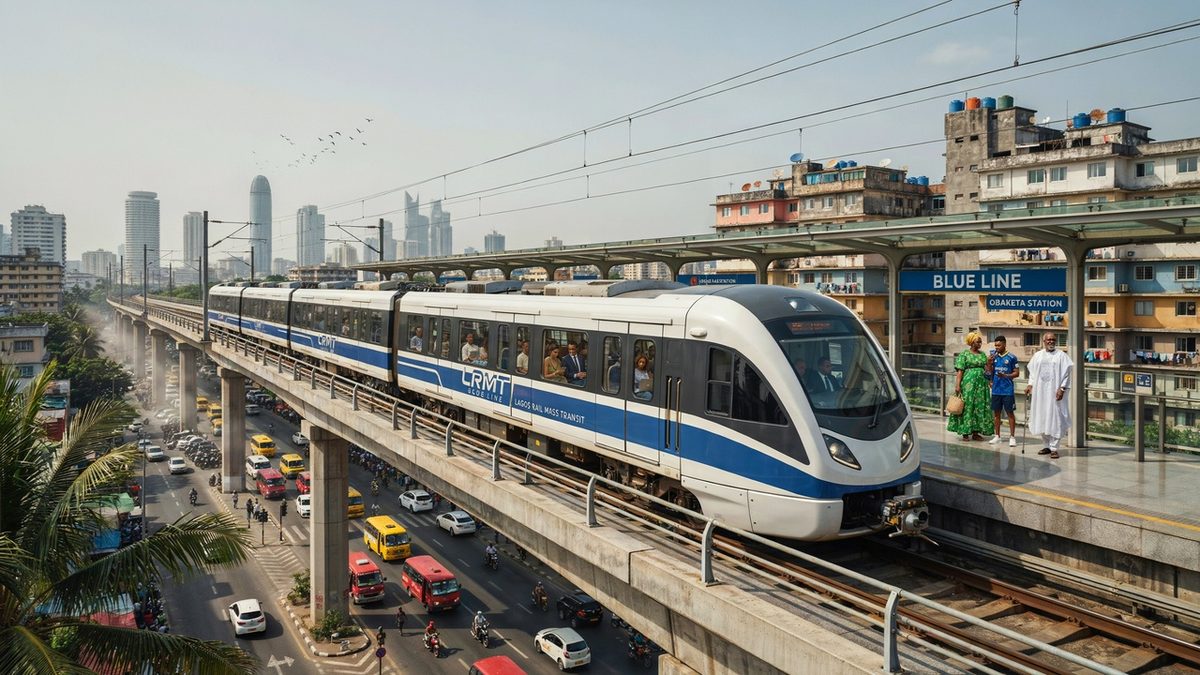
Image generated with Ai
There are few cities in Africa that can boast of such an incredible transformation of their transport system. Lagos has been witnessing one of the greatest transformations of transport system through the rail revolution in Africa. In Lagos, there is a development of modern rail links which will contribute greatly to reducing road traffic in Lagos – Nigeria’s largest city.
Expansion of Blue Line and Red Line has resulted in changing commuting options for the citizens of Lagos, while future developments will contribute greatly to the formation of transport system in Lagos. The rail transport system is becoming increasingly essential for the residents, businessmen, and tourists who require reliable transport means in order to travel around the city.
Advertisement
Tourists who come to Lagos can get acquainted with the new rail network that is developing in the city instead of conventional road transport system.
For decades, Lagos has depended heavily on road-based transport, including buses, taxis and private vehicles. Rapid population growth and increasing economic activity have created major pressure on the city’s transport infrastructure.
Advertisement
The Lagos Rail Mass Transit project was developed to provide a high-capacity alternative by connecting major population and commercial areas through dedicated rail corridors.
The Blue Line became the first major milestone in this transformation, followed by the Red Line, creating a foundation for a larger metropolitan rail system.
The expansion represents a shift from traditional road dependency towards a more integrated urban transport model.
Transport plays a major role in how visitors experience large cities. In Lagos, where road congestion can significantly affect travel times, reliable rail services provide a valuable alternative.
Advertisement
Advertisement
The rail network is particularly important for tourists, business travellers and international visitors who need efficient connections between hotels, commercial areas and attractions.
As Lagos continues developing as a major African business and tourism destination, improved public transport could become an important part of the visitor experience.
The Blue Line is one of the most visible achievements of Lagos’ rail transformation.
The electric rapid transit corridor connects Marina with Mile 2 and forms part of a planned wider route extending towards Okokomaiko. The line is designed to provide faster movement across one of Lagos’ busiest travel corridors.
Passenger adoption has continued to increase as more commuters use rail as an alternative to road transport. Reports from Lagos authorities indicate that Blue Line ridership has grown significantly since operations began, with millions of passengers using the service.
| Category | Details |
|---|---|
| Transport system | Lagos Rail Mass Transit |
| Line | Blue Line |
| Route | Marina to Mile 2 |
| Transport type | Electric rapid transit |
| Current role | East-west urban connection |
| Future expansion | Extension towards Okokomaiko |
The Blue Line has demonstrated the potential of rail to become a central part of Lagos’ future mobility system.
The Red Line represents another major step in improving transport access across the city.
The corridor connects Agbado and Oyingbo, creating a north-south rail connection that serves areas with significant commuter demand.
The project uses parts of existing railway corridors while adding new infrastructure designed for urban passenger movement.
| Category | Details |
|---|---|
| Line | Red Line |
| Route | Agbado to Oyingbo |
| Purpose | North-south urban connection |
| Operator | Lagos Rail Mass Transit |
| Future development | Extension towards Marina |
Additional rolling stock is being introduced to strengthen service capacity and improve passenger experience.
The expansion is expected to provide more travel options for commuters who previously depended mainly on road-based transport.
The Lagos rail system is still developing, meaning travellers should understand that not every planned route is operational yet.
Visitors should check current service information before planning journeys and allow flexibility when combining rail travel with other transport options.
The network is expanding gradually, with future lines expected to increase coverage across the metropolitan area.
Lagos’ rail vision extends beyond the existing Blue and Red Lines. Authorities are working towards a broader transport system designed to support the city’s long-term growth.
The revised transport master plan includes additional rail corridors, expanding the planned network from earlier proposals.
| Future Line | Planned Route | Purpose |
|---|---|---|
| Green Line | Marina to Lekki Free Trade Zone | Connect eastern growth areas |
| Blue Line Phase II | Mile 2 to Okokomaiko | Extend existing electric rail corridor |
| Red Line expansion | Oyingbo towards Marina | Improve central connectivity |
The Green Line is planned as a major corridor connecting Marina with Victoria Island, Lekki, Ajah and the Lekki Free Trade Zone.
These projects aim to create a more connected metropolitan transport system.
A modern transport network does more than move passengers. It supports economic activity by improving access to workplaces, commercial districts, entertainment areas and tourism locations.
For Lagos, rail development is closely linked with the city’s ambitions to become a more competitive global destination.
A more efficient transport system can influence how visitors experience Lagos and how businesses operate within the city.
The development of Lagos Rail Mass Transit reflects a wider trend among major African cities investing in modern public transport.
As urban populations grow, cities are increasingly turning to rail systems to improve mobility and reduce dependence on congested roads.
Lagos’ approach demonstrates how large metropolitan areas can use transport infrastructure to support economic growth, tourism development and improved quality of life.
The Lagos Rail Mass Transit system is a metropolitan rail network designed to improve transport connectivity across Lagos.
The Blue Line and Red Line are the main operational corridors of the network.
It provides visitors with an alternative to road transport, making movement across Lagos more predictable.
No. The network is being developed in phases, with additional lines and extensions planned.
Yes. Visitors can use available rail services as part of their travel plans within Lagos.
The rail revolution in Lagos signifies a big step towards how one of the biggest cities in Africa has approached mobility. With the introduction of the Blue and Red Lines, future expansions are set to create a transport system that will be able to cater to the increasing needs of the city.
Travelers in Lagos can now experience the ease of mobility in Lagos through its rail system. As future projects continue to be developed, Lagos can look forward to more developments in its rail system.
Advertisement
Advertisement
Advertisement













Saturday, September 5, 2026

Friday, September 4, 2026

Saturday, September 5, 2026

Saturday, September 5, 2026
Saturday, September 5, 2026

Thursday, September 3, 2026

Saturday, September 5, 2026

Saturday, September 5, 2026


