
Vancouver International Airport Adds 9 Weekly YVR-China Flights as Canada-China Travel Accelerates

Published
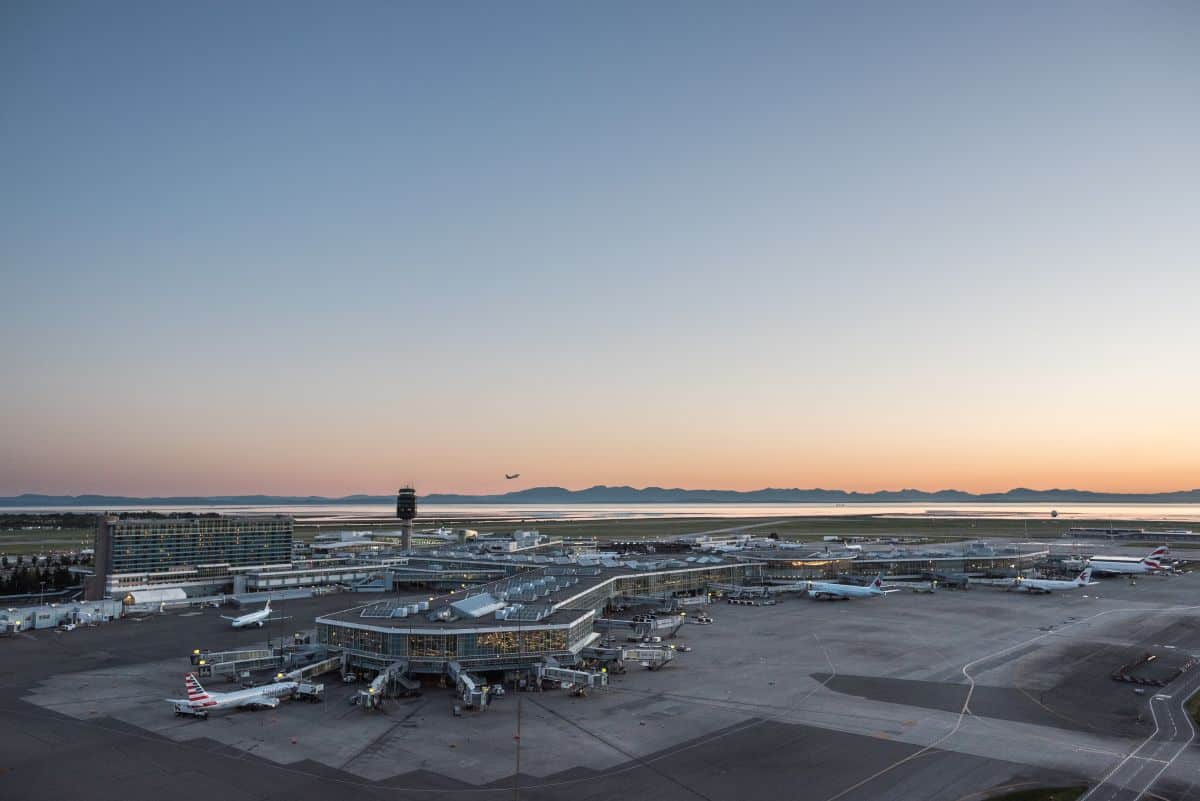
Vancouver International Airport is preparing for a significant expansion in non-stop China connectivity this autumn. The airport is set to handle 32 weekly flights to mainland China in November, compared with 23 weekly services in November 2025. The increase represents almost 40% year on year and will restore eight airlines across nine mainland Chinese routes. YVR-China flights are gaining momentum as Canada and China gradually expand permitted air services, while China’s visa-free access for Canadian passport holders is lowering barriers to travel. For British Columbia, the additional capacity creates a larger gateway for Chinese leisure visitors, group tours, business travellers and visiting friends and relatives. However, passenger volumes remain below pre-pandemic levels, leaving substantial room for further recovery.
Vancouver’s China Network Enters A New Phase
The November schedule marks a meaningful change in Vancouver’s transpacific aviation landscape. It will add nine weekly frequencies compared with November last year, with several airlines increasing capacity on established routes.
The growth also comes after the Canadian and Chinese governments agreed in April 2026 to permit additional direct services. Transport Canada said airlines received permission to increase passenger-combination flights incrementally, alongside greater cargo access and reciprocal access to points in both countries.
For travellers, the significance extends beyond the number of aircraft operating each week. More frequencies can create additional choices of departure days, improve schedule flexibility and potentially support more competitive fares.
Advertisement
Advertisement
YVR’s role is particularly important because Vancouver functions as Canada’s Pacific gateway. The airport’s 2025 annual report recorded 26.9 million passengers, while Asia-Pacific traffic grew 15.6% year on year. By the end of 2025, YVR offered 23 weekly flights to mainland China.
Advertisement
Advertisement
That trajectory provides useful context for the November expansion. The airport is not rebuilding its China network from scratch. Instead, carriers are progressively restoring and expanding capacity as bilateral aviation conditions improve.
Nine Routes Create Wider Traveller Choice
The November schedule will cover nine routes linking Vancouver with major Chinese cities. The network will combine established business centres with important regional gateways.
| Mainland China Destination | Airline | November 2026 Weekly Flights | Previous November | Change |
|---|---|---|---|---|
| Beijing | Air Canada | 7 | 4 | +3 |
| Shanghai | Air Canada | 7 | 7 | No change |
| Beijing | Air China | 5 | 3 | +2 |
| Guangzhou | China Southern | 4 | 2 | +2 |
| Xiamen | Xiamen Airlines | 3 | 2 | +1 |
| Chengdu | Sichuan Airlines | 2 | 2 | No change |
| Shanghai | China Eastern | 2 | 2 | No change |
| Shenzhen | Hainan Airlines | 1 | 1 | No change |
| Qingdao | Beijing Capital Airlines | 1 | New route | +1 |
| Total | Eight airlines | 32 | 23 | +9 |
Air Canada will account for 14 weekly services across Beijing and Shanghai. Its Beijing operation will rise from four weekly flights last November to seven, restoring a daily pattern.
Air China will also expand its Beijing schedule, increasing from three to five weekly flights from September 29. China Southern will double its Guangzhou service to four flights each week from October 25.
Xiamen Airlines will raise its Vancouver-Xiamen schedule from two to three weekly flights from October 29. Meanwhile, Sichuan Airlines, Hainan Airlines and China Eastern will maintain their respective frequencies.
Advertisement
Advertisement
A new element will arrive from October 2, when Beijing Capital Airlines resumes Vancouver service to Qingdao. The airline plans one weekly flight, returning to YVR after previously serving Vancouver before the pandemic.
YVR’s current airline directory confirms the presence of several Chinese carriers serving the airport, including Air China, China Eastern, China Southern, Sichuan Airlines, Xiamen Airlines and Capital Airlines.
Capacity Is Rising But Recovery Remains Incomplete
The headline growth needs careful interpretation. A 39% increase in weekly flights does not mean Chinese visitor numbers will rise by the same percentage.
British Columbia’s inbound Chinese market remains below its pre-pandemic level. Data cited by Business in Vancouver show 22,869 Chinese citizens entered Canada through B.C. entry points in July 2026. That represented a 6.9% decline from July 2025 and a 55.4% shortfall against June 2019.
This gap illustrates the scale of the recovery still ahead. More seats provide the infrastructure for growth, but airlines require sustained passenger demand to maintain those schedules.
Advertisement
Advertisement
Statistics Canada also recorded a modest monthly increase in overseas visitors from China nationally. Seasonally adjusted data showed Chinese visitor arrivals to Canada rising 0.2% from June to July 2026.
That figure is modest, but it offers a useful national indicator. The Canadian market is seeing incremental movement rather than a complete return to earlier travel patterns.
The contrast with pre-pandemic aviation capacity is even more striking. Before 2020, YVR had eight airlines operating a combined 55 weekly non-stop flights to mainland China.
The November 2026 schedule therefore remains well below that earlier benchmark. Yet the increase from 23 to 32 weekly flights signals a substantial step in rebuilding direct connectivity.
Visa Policy Is Supporting The Recovery
Airline capacity is only one side of the equation. Travel policy can also determine whether additional seats convert into actual journeys.
Advertisement
Advertisement
China introduced a significant facilitation measure for Canadian travellers in February 2026. Ordinary Canadian passport holders can enter China without a visa for tourism, business, family and friends visits, exchanges and transit lasting no more than 30 days.
The current policy runs until December 31, 2026, according to the Chinese Embassy in Canada.
That timing is important for autumn travel. Canadian visitors planning China trips during the November expansion can potentially benefit from the visa-free arrangement.
Travellers should still check the precise eligibility requirements before departure. The exemption applies to eligible ordinary passport holders and permitted purposes, while travellers outside those conditions may still require visas.
For B.C. tourism, the policy also works in the opposite direction only indirectly. Chinese nationals travelling to Canada continue to face Canadian entry requirements, including visitor visa requirements where applicable.
Advertisement
Advertisement
Canada’s official immigration guidance lists Chinese citizens among nationalities generally requiring a visitor visa.
This creates an important distinction for tourism businesses. Two-way air connectivity is improving faster than two-way visa liberalisation. That difference can influence how quickly passenger flows recover in each direction.
Group Tours Could Add More Momentum
China’s reinstatement of Canada on its approved-destination list has another potential tourism implication. It enables Chinese group-tour operators to sell Canada packages more readily.
That matters because organised groups can produce concentrated demand for accommodation, attractions, coach transport, restaurants and guided experiences.
Vancouver is also naturally positioned within broader Western Canada itineraries. Visitors can combine the city with Whistler, Victoria, the Rocky Mountains and other British Columbia experiences before continuing through Canada.
Advertisement
Advertisement
The effect therefore extends beyond airport passenger numbers. A rise in direct China capacity can influence hotel occupancy, destination spending, attractions, transport and retail activity across the wider visitor economy.
However, airlines and tourism businesses still need to convert connectivity into sustained demand. Capacity growth is most durable when it corresponds with strong forward bookings and year-round travel interest.
More Seats Could Change Trip Planning
For independent travellers, the expanded schedule creates practical advantages. Daily Air Canada flights to Beijing and Shanghai can make itinerary planning easier than relying on limited weekly departures.
Travellers connecting beyond Vancouver may also gain greater flexibility. More departure options can reduce the need to build an itinerary around a single weekly service.
The route mix also matters. Beijing and Shanghai remain major international gateways, while Guangzhou, Shenzhen, Xiamen, Chengdu and Qingdao provide access to different regional markets.
Advertisement
Advertisement
| Traveller Need | Potential Benefit From More YVR-China Services |
|---|---|
| Leisure travel | More departure choices and itinerary flexibility |
| Visiting friends and relatives | Greater frequency for planned visits |
| Business travel | Easier scheduling around meetings |
| Group tours | More capacity for organised programmes |
| Regional China travel | More direct access beyond Beijing and Shanghai |
| Western Canada itineraries | Easier combination with B.C. and Canadian destinations |
| Air connections | More opportunities to align onward travel |
Travellers should nevertheless compare operating days carefully. Not every destination will have daily service, and schedules can change seasonally.
Checking the airline’s latest timetable and YVR’s official flight information remains essential before booking. YVR provides live departure information and an official airline and destination directory.
Air Canada Also Reveals A Strategic Shift
The expansion of China services comes alongside a contrasting decision at YVR. Air Canada plans to end its non-stop Vancouver-Singapore service in January 2027.
The airline has indicated that the route did not meet the commercial targets required for long-term sustainability. It has also pointed to high aviation fuel costs and the fuel demands associated with ultra-long-haul operations.
The final Vancouver departure is scheduled for January 24, 2027, with the final Singapore-to-Vancouver return following on January 26.
Advertisement
Advertisement
The contrast is revealing. Airlines are not simply adding capacity everywhere. They are reallocating aircraft and resources according to demand, economics, network strategy and operating costs.
For YVR, China is therefore becoming a more significant part of the Asia-Pacific recovery story. Singapore, meanwhile, demonstrates that long-haul connectivity remains commercially sensitive.
YVR’s Asia Network Continues To Expand
China’s recovery is taking place within a broader expansion of YVR’s Asian network. The airport reported that Asia-Pacific traffic increased 15.6% in 2025, reflecting renewed international demand.
YVR also highlighted returning services to Beijing, Guangzhou and Shanghai during 2025. The airport subsequently continued developing its transpacific network through additional capacity and carrier activity.
That wider context matters because travellers do not evaluate China routes in isolation. Vancouver competes and connects within a dense Pacific aviation market that includes Japan, South Korea, Taiwan, Southeast Asia and Australia.
Advertisement
Advertisement
Greater China capacity can therefore strengthen Vancouver’s position as a connecting gateway. It can also give B.C. tourism businesses a larger pool of international visitors arriving through the same airport.
Yet the return to 55 weekly mainland China flights remains distant. YVR’s chief executive Tamara Vrooman previously said the airport would increase China service gradually rather than immediately restore the pre-pandemic level.
That approach now appears visible in the numbers. The November schedule represents a meaningful increase while remaining below the historic peak.
What Travellers Should Watch This Autumn
The most important development for travellers is not simply the headline percentage increase. It is the combination of more frequencies, broader route coverage and easier China entry for eligible Canadians.
Canadian travellers should check whether their itinerary qualifies for the current Chinese visa exemption before departure. They should also verify passport validity, permitted travel purpose and the latest entry rules.
Advertisement
Advertisement
Chinese visitors planning Canada trips should separately review Canadian visa requirements and processing conditions. Canada’s official immigration guidance remains the appropriate reference because airline schedules do not change immigration eligibility.
Travellers should also monitor seasonal timetable adjustments. New services can change operating days, aircraft types or departure times after booking.
For B.C. tourism operators, the November expansion creates a broader opportunity. Hotels, attractions and destination marketers can tailor products around Chinese-language demand, group travel and shoulder-season itineraries.
The strongest benefit may ultimately come from sustained connectivity rather than a single seasonal increase. Airlines need passengers, while tourism businesses need reliable access to international markets throughout the year.
Vancouver-China Links Point Beyond November
The expansion at Vancouver International Airport offers a clear indication of how Canada’s China travel market is evolving in 2026. Thirty-two weekly mainland China flights in November will significantly exceed last year’s 23, while still remaining below the pre-pandemic benchmark of 55.
Advertisement
Advertisement
Government aviation policy, airline network decisions and China’s temporary visa-free policy are moving in the same direction. Together, they create a stronger framework for tourism recovery, although visitor numbers remain well below 2019 levels.
For travellers, the immediate benefit is greater choice between Vancouver and major Chinese cities. For B.C. tourism, the larger question is whether additional seats translate into sustained visitor spending.
That outcome will depend on demand, fares, visa conditions, group-tour activity and continued airline confidence. For now, Vancouver is rebuilding its China gateway one frequency at a time.
Advertisement
