
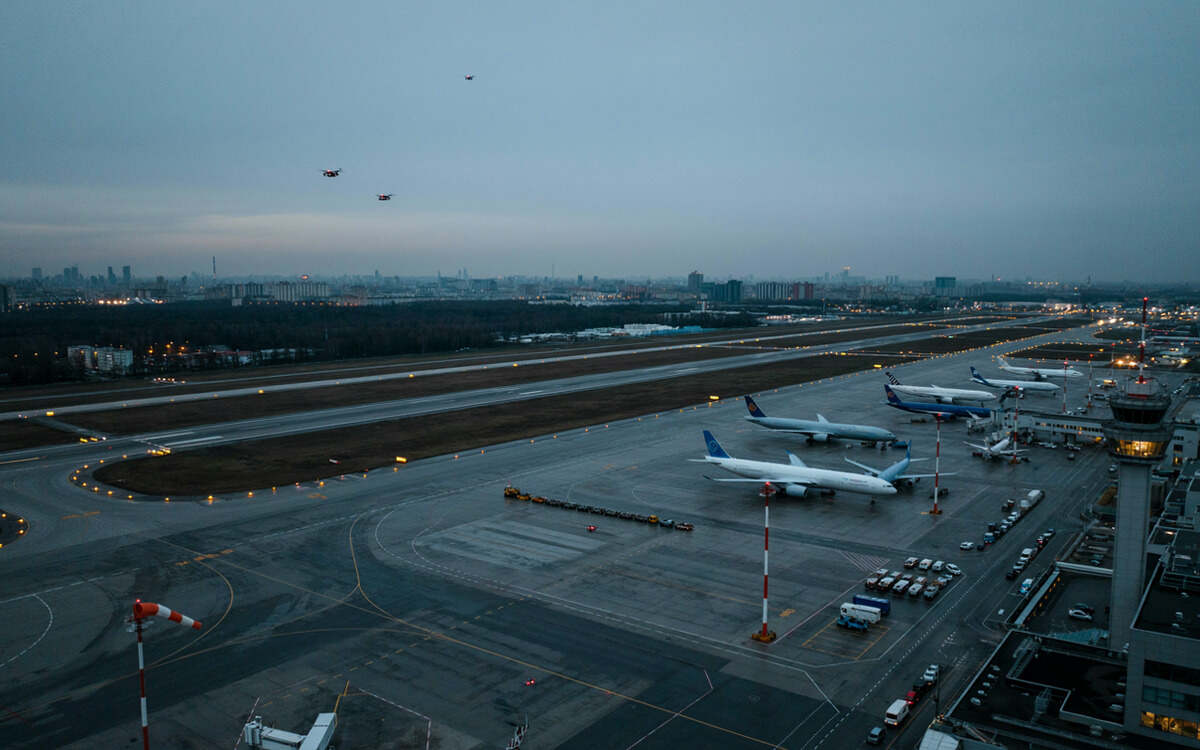
Image generated with Ai
Ukraine formally complained to the International Civil Aviation Organization (ICAO) about the risks posed by Russian airspace. Russian airspace poses risks to civil air navigation due to the several reported disruptions at Moscow airports caused by drone activity. International airlines calculate the risk posed by Russian airspace Sector and alter their operations based on that assessment.
The notification came after Ukrainian authorities raised concerns about the potential impact of long-range drone activity on commercial flight operations in Russia. Ukraine said the warning was aimed at preventing possible incidents involving passenger aircraft and aviation infrastructure, while maintaining that civilian flights are not being targeted.
Advertisement
The move has drawn attention from international airlines that continue to operate through or near Russian airspace, particularly carriers connecting Europe, Asia and the Middle East. While most European and US airlines have avoided Russian airspace since the beginning of the Russia-Ukraine war in 2022, several airlines from other regions continue to use these routes.
Carriers from China, Türkiye, the United Arab Emirates and other Gulf markets still operate flights involving Russian airspace, making aviation safety assessments increasingly important for international operators.
Advertisement
Advertisement
The ICAO notification followed renewed drone activity that caused temporary disruptions at airports serving Moscow on 2 September. Several flight restrictions were introduced as Russian aviation authorities took precautionary measures to manage safety risks.
Flight tracking data showed significant disruption at Moscow’s major airports. Sheremetyevo International Airport recorded dozens of cancelled flights and hundreds of delays, while Vnukovo Airport also experienced cancellations and schedule disruptions.
Authorities temporarily limited aircraft movements at several airports during the drone activity. Operations at some facilities later returned to normal, while others continued managing flights under additional coordination and security measures.
The disruptions also affected international carriers. Turkish airline Pegasus Airlines cancelled several scheduled services between Türkiye and Russia during the night of 1-2 September due to operational reasons linked to the situation. The airline later confirmed that its Russia flights had resumed according to schedule and that arrangements were being made for passengers affected by the cancellations.
Passengers impacted by the cancelled Pegasus services were offered options including rebooking on alternative flights or refunds. Airport authorities reported that multiple arriving and departing Pegasus flights were affected.
Dubai-based flydubai also said it was closely monitoring conditions and adjusting operations when necessary. The airline warned that some flights could face delays or changes in routing as the situation remained unpredictable.
Other major international airlines operating services connected with Russia include Turkish Airlines, Emirates, Qatar Airways and Etihad Airways. These carriers continue to assess operational conditions and security requirements when planning routes.
Russian authorities have rejected concerns over the safety of its civil aviation network. Officials said measures were being strengthened to protect airport operations and maintain flight safety through cooperation between aviation agencies, security forces and defence authorities.
The latest aviation warning comes as Ukraine increases long-range drone operations targeting locations deeper inside Russian territory. Areas around major cities, including Moscow and St Petersburg, have experienced heightened security concerns linked to these activities.
Aviation security specialists have warned that drone and missile activity inside Russia could continue affecting flight operations. Risk assessments indicate that while many incidents are concentrated closer to the Ukrainian border, disruptions further inside Russian territory may continue to create challenges for airlines.
The situation adds another layer of complexity for international aviation operators using Russian airspace. Airlines already face longer flight paths on several Europe-Asia routes because many Western carriers avoid Russian airspace due to restrictions and geopolitical concerns.
Temporary airport closures and flight restrictions have become a recurring response during periods of increased drone activity. Russian aviation authorities have previously limited aircraft movements as precautionary measures to protect passengers and airport infrastructure.
By submitting the issue to ICAO, Ukraine has placed the aviation safety concern before the UN agency responsible for global civil aviation standards. However, decisions regarding individual flight routes, operations and risk management remain the responsibility of airlines, regulators and aviation security teams.
The development highlights the growing challenge facing global aviation as military conflicts increasingly affect civilian air routes. Airlines operating in sensitive regions continue to balance connectivity, passenger demand and safety requirements while adapting to rapidly changing security conditions.
Advertisement
Advertisement
Advertisement













Friday, September 4, 2026

Friday, September 4, 2026

Friday, September 4, 2026

Friday, September 4, 2026

Thursday, September 3, 2026

Wednesday, September 2, 2026

Friday, September 4, 2026

Friday, September 4, 2026


