
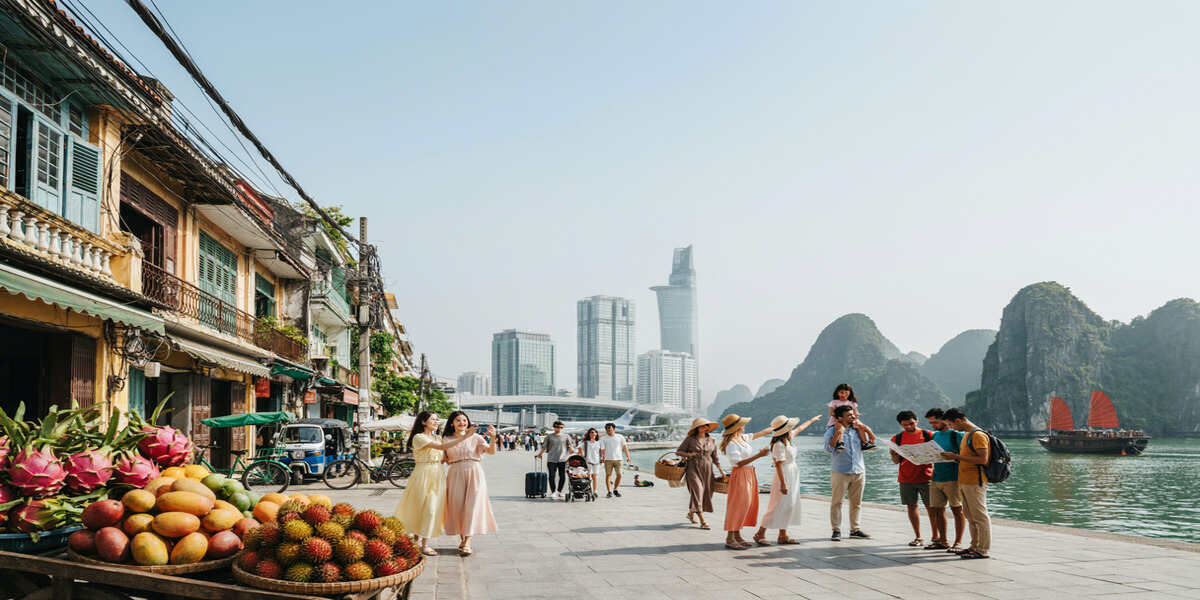
Image generated with Ai
The tourism sector in Vietnam is building momentum on the international front due to tourists from China, South Korea, Russia, India and the Philippines contributing to new demands in the destination. This diverse group of tourists is not only helping the hotel industry, airlines, resorts and other businesses flourish but also contributing to green tourism in Vietnam.
Vietnam tourism is gaining fresh global power as China, South Korea, Russia, India, the Philippines and other key markets send more travellers to the country. Latest official Vietnamese Government data shows that international demand remains strong, while several Asian and long-haul markets are expanding quickly. China is providing the largest visitor volume. South Korea remains a core tourism powerhouse. Russia is delivering exceptional growth. India is becoming a strategic new market. Meanwhile, the Philippines, Cambodia, Singapore, Indonesia and Malaysia are adding strong momentum across Southeast Asia. Together, these markets are helping Vietnam move towards a more valuable, diverse and competitive tourism economy.
Advertisement
China has become the most important international source market for Vietnam by visitor volume. Official Vietnamese Government data shows that Chinese travellers now lead the country’s inbound tourism market, ahead of South Korea.
This matters greatly for destinations across Vietnam. Chinese visitors support hotels, restaurants, attractions, shopping centres, transport businesses and local tour operators. Strong air and land connections also make Vietnam easy to reach from China.
Advertisement
Advertisement
The continued recovery of Chinese outbound travel therefore gives Vietnam a powerful advantage. Vietnam is also strengthening tourism promotion and cooperation aimed at maintaining this market over the long term.
South Korea continues to play a central role in Vietnam’s tourism success.
Korean travellers have built a deep connection with Vietnamese destinations. Coastal cities, resorts, golf courses, restaurants and leisure attractions benefit heavily from Korean demand. Da Nang has become especially well known among South Korean holidaymakers.
The market is valuable because it combines strong visitor volume with direct aviation links and frequent repeat travel.
China may currently lead the source-market ranking, but South Korea remains one of Vietnam’s strongest tourism foundations. Together, the two markets create a powerful base for the country’s international tourism industry.
Russia is creating one of the biggest surprises in Vietnam’s tourism recovery.
Official Government reporting shows an extraordinary rise in Russian arrivals. The market has moved rapidly up Vietnam’s source-market ranking and has become one of the country’s most important suppliers of international tourists.
This growth is especially significant for beach and resort destinations. Russian travellers have traditionally shown strong interest in warm-weather holidays, longer stays and coastal experiences.
The return of stronger aviation links and renewed travel demand is helping destinations such as Nha Trang, Cam Ranh, Phu Quoc and other coastal areas attract more international spending.
India is moving from an emerging market into a serious part of Vietnam’s future tourism strategy.
Indian travellers are increasingly discovering Vietnam for family holidays, luxury escapes, weddings, meetings, corporate events and cultural trips. Better air links have made the country easier to reach, while Vietnam’s beaches, cities, heritage sites and food culture offer a wide range of experiences.
Vietnam’s tourism authorities have identified India as an important growth market alongside other newer sources of international demand.
This gives Vietnam another major opportunity. India can help reduce excessive dependence on traditional Northeast Asian markets while also supporting higher-value tourism products.
Southeast Asia is becoming another major growth pillar.
The Philippines has shown particularly strong expansion among Vietnam’s important regional source markets. Cambodia has also generated powerful growth while remaining a sizeable contributor to inbound tourism.
Singapore, Indonesia and Malaysia are adding further momentum. Thailand also remains part of this broad regional travel network.
This matters because ASEAN travellers can reach Vietnam quickly. Shorter flights, expanding low-cost airline networks and closer regional links make spontaneous holidays and repeat trips easier.
The result is a stronger regional tourism ecosystem that can support Vietnam even when demand changes in other parts of the world.
Vietnam is not depending only on fast-growing markets.
The United States remains an important long-haul source of visitors. American travellers bring valuable demand for culture, heritage, food, city breaks, nature and longer itineraries.
Japan also remains a key Asian market. Vietnam and Japan share strong economic, aviation and cultural links, creating a stable base for tourism exchange.
These mature markets are important because Vietnam’s new tourism strategy is focused increasingly on value rather than simply volume. Travellers who stay longer, explore several destinations and spend across local businesses can generate wider economic benefits.
That goal sits at the heart of Vietnam’s evolving tourism model.
Vietnam’s latest tourism policy signals a major shift.
The Government wants the industry to move away from relying mainly on growing visitor volume. It wants greater spending, better experiences, stronger competitiveness and higher economic value.
Culture will form the foundation of this strategy. Vietnamese food, heritage, traditions, cities, landscapes and local communities will become key parts of the tourism offer.
At the same time, smart technology, digital services, better management and greener development will shape the visitor experience.
The aim is simple. Vietnam wants tourism to become a stronger economic engine while protecting the qualities that make the country attractive.
Digital transformation is becoming central to Vietnam’s tourism ambitions.
The country’s new direction supports stronger tourism databases, smart destinations and digital services. Technology can help travellers plan trips, buy tickets, find attractions and communicate more easily.
It can also help tourism authorities understand visitor behaviour and manage busy destinations more effectively.
Artificial intelligence, connected systems and better tourism data could make journeys smoother while helping businesses offer more personalised services.
For Vietnam, this is not only a technology story. Better digital systems could directly improve destination quality and help the country compete more strongly with other leading Asian tourism markets.
Vietnam now has a broad mix of markets driving its tourism economy.
China supplies enormous scale. South Korea provides deep and established demand. Russia is producing remarkable momentum. India offers strong future potential. The Philippines and Cambodia are accelerating regional growth. The United States and Japan add valuable international demand, while Singapore, Indonesia, Malaysia and Thailand strengthen Vietnam’s ASEAN position.
Vietnam tourism is gaining fresh strength as travellers from China, South Korea, Russia, India and the Philippines drive stronger demand across the country. Their growing presence is helping expand visitor spending, support local businesses and strengthen Vietnam’s position as a rising Asian tourism hub.
The success story of tourism in Vietnam keeps on growing owing to the fact that Vietnam’s expansion in the tourism industry is now supported by a greater number of international source markets. While China and South Korea still account for scale, there are other nations such as Russia, India, the Philippines, and many others providing new impetus to tourism in Vietnam. This new demand allows Vietnam to create a more robust and flexible tourism industry. With increasing investments in terms of connectivity and service delivery, the tourism industry of Vietnam is well poised to succeed.
Advertisement
Tags: China Vietnam Travel, Russia Vietnam tourism growth, South Korea Vietnam tourism, Travel News, Vietnam Tourism
Advertisement
Advertisement













Friday, September 4, 2026

Friday, September 4, 2026

Friday, September 4, 2026
Friday, September 4, 2026

Thursday, September 3, 2026

Wednesday, September 2, 2026
Friday, September 4, 2026

Friday, September 4, 2026


