
Armenia Shifts Tourism Beyond Yerevan as Goris Gains Priority Cluster Role Across Syunik Near Tatev

Published
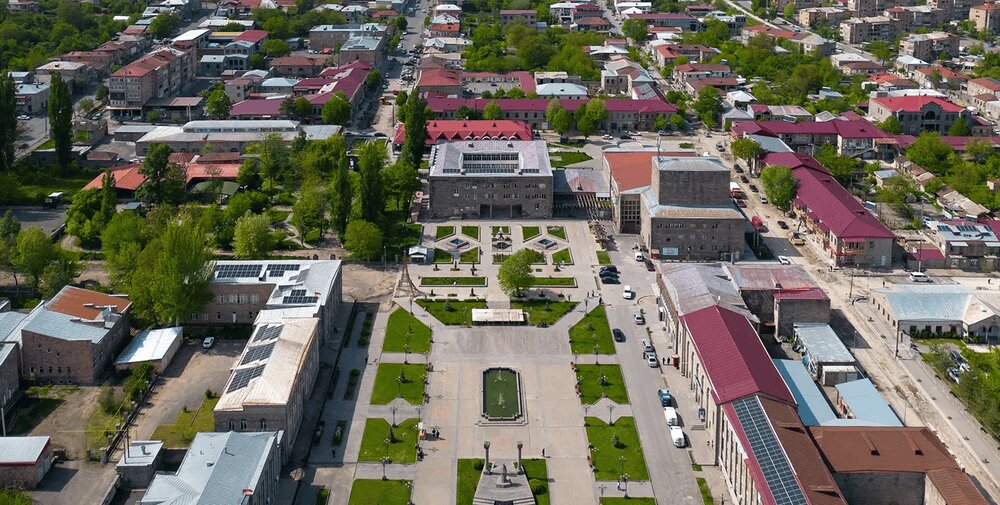
Armenia is creating a potentially important new tourism model in southern Syunik by treating Goris and Tatev as separate formal tourist destinations while placing Goris inside the country’s seven priority tourism investment clusters. Under the 2026–2030 tourism strategy, Goris is due to receive destination planning, tourism-product development, infrastructure intervention and a management framework intended to retain more visitor expenditure outside Yerevan. Fresh procurement activity in August and September 2026 shows that the Cluster Development Plan system is moving from national policy towards implementation.
Armenia Is Separating the Goris Visitor Economy From the Tatev Tourism Brand
A structural change buried within Armenia’s new tourism architecture may prove more consequential for southern tourism than another campaign promoting Tatev Monastery.
Advertisement
Advertisement
According to Armenia’s official legal database, ARLIS, Government Decision No 1945-N declared Goris, Khndzoresk and Hin Khndzoresk as the Goris tourist destination. The same decision separately created the Tatev tourist destination, comprising Tatev, Shinuhayr, Halidzor, Khot, Harzhis, Hin Shinuhayr, Hin Halidzor and Hin Khot. The decision became effective on 4 January 2026.
That legal distinction is central to the new angle.
Advertisement
Advertisement
Tatev remains one of the principal attractions capable of drawing travellers into Syunik. Yet Goris is no longer being treated merely as the urban accommodation point attached to Tatev. The government’s tourism system gives the two areas separate destination identities while the national strategy goes one step further by selecting Goris, but not Tatev, as one of seven priority tourism clusters for the current strategic programme.
For tour operators, destination marketers and accommodation investors, this creates the basis for a different commercial proposition: Goris can increasingly be packaged for its own heritage, caves, walking experiences, urban character and neighbouring settlements, while Tatev remains a complementary attraction within a broader Syunik journey.
Advertisement
Advertisement
How Armenia’s New Southern Tourism Geography Works
| Tourism node | Current official position | Geographic scope or policy role | B2B significance |
|---|---|---|---|
| Goris | Declared tourist destination and one of seven priority clusters | Goris, Khndzoresk and Hin Khndzoresk form the legally declared Goris destination | Can be planned and positioned as a standalone visitor economy rather than only a gateway |
| Tatev | Separately declared tourist destination | Tatev, Shinuhayr, Halidzor, Khot, Harzhis and three historic inhabited areas | Remains a powerful attraction zone but has a distinct legal destination identity |
| Yerevan | Declared tourist destination and national tourism concentration point | Capital and principal accommodation/visitor centre | National strategy specifically seeks to decentralise tourism flows and economic benefits beyond the capital |
| Syunik | Regional framework containing several declared destinations | Includes Goris, Tatev, Sisian and Meghri destination areas | Provides the regional setting in which separate tourism nodes can support multi-stop itineraries |
The legal geography comes directly from the Armenian Government’s destination declaration, while the Yerevan decentralisation objective is stated in the Ministry of Economy’s strategic programme.
Goris Has Become One of Armenia’s Seven Priority Tourism Clusters
The distinction becomes economically important when read alongside Armenia’s 2026–2030 Strategic Plan for Tourism Development, approved through Government Decision No 30-L on 8 January 2026.
Advertisement
Advertisement
According to the Ministry of Economy, Armenia plans to use tourism decentralisation and resource distribution to promote more balanced territorial development, employment and higher living standards. The action programme specifically names Areni, Dilijan, Dvin, Gyumri, Jermuk, Goris and Yeghegis in its destination-cluster programme.
The planned process goes substantially beyond marketing.
For each destination cluster, the programme provides for mapping tourism resources, defining local characteristics, developing branding, creating a roadmap, preparing climate- and disaster-resilient master and zoning plans, drawing up destination-management plans, engaging residents and the private sector, and developing a mechanism for selecting qualified Destination Management Organisations.
This makes Goris an institutional development project as much as a tourism promotion project.
Advertisement
Advertisement
The Armenian Territorial Development Fund’s project documentation goes further. Its TRIP framework states that a new Cluster Development Plan is to be prepared for Goris, alongside Dilijan, Dvin, Jermuk and Yeghegis. Those plans are intended to cover a 10-year planning horizon, including short-, medium- and long-term development priorities, demand assessment, economic analysis, investment selection, management and operation.
That 10-year horizon is particularly significant for the tourism trade because it extends beyond the current 2030 national strategy period. Goris is therefore not simply being assigned a temporary promotional campaign; it is being placed inside a longer destination-development framework.
September 2026 Procurement Activity Makes This a Current Story
The latest evidence that makes the story timely appeared only days before 10 September.
The Armenian Territorial Development Fund published its TRIP-IC-02 procurement on 20 August 2026 seeking an expert to support the development, finalisation, implementation, monitoring and periodic updating of tourism Cluster Development Plans.
Applications closed on 4 September 2026. The assignment provides for an initial 12-week phase followed by support during project implementation through August 2030. As of 10 September, the official procurement page reviewed for this report does not identify a selected expert, so it would be premature to report that the appointment has been completed.
Separately, the World Bank disclosed an updated Armenia Tourism and Regional Infrastructure Project procurement plan on 3 September 2026, reinforcing that the programme remains in active implementation and procurement rather than being a dormant strategy announcement.
Advertisement
Advertisement
The Implementation Timeline Travel Businesses Should Watch
| Date | Official development | Why it matters |
|---|---|---|
| 17 April 2025 | World Bank approves tourism infrastructure project | Establishes international financing and seven priority areas, including Goris |
| 2025 | Armenian Government sets total TRIP cost at €120.5 million | Creates the financing architecture for regional tourism investment |
| 4 January 2026 | New destination declaration becomes effective | Goris and Tatev acquire separate formal tourist-destination boundaries |
| 8 January 2026 | Armenia approves 2026–2030 tourism strategy | Goris enters the seven-destination cluster framework |
| 7 August 2026 | Ministry of Economy reports €120 million investment planned across seven clusters | Confirms continuing implementation focus during 2026 |
| 20 August 2026 | ATDF launches Cluster Development Plan expert procurement | Moves planning architecture towards operational delivery |
| 3 September 2026 | World Bank discloses updated TRIP procurement plan | Provides the freshest institutional implementation signal located for this research |
| 4 September 2026 | ATDF deadline for Cluster Development Plan expert applications | Marks the latest completed procurement milestone |
| 31 August 2030 | Scheduled TRIP completion | Defines the current implementation horizon |
The Armenian Government places the programme’s total cost at €120.5 million, comprising €96.4 million in loan financing and €24.1 million in Armenian government co-financing. The World Bank separately records a current project commitment of US$100.2 million and a closing date of 31 August 2030. These figures use different currencies and institutional accounting descriptions and should not be presented as interchangeable totals.
The Ministry of Economy’s 7 August 2026 update described approximately €120 million of investment across Goris, Areni, Jermuk, Yeghegis, Dvin, Gyumri and Dilijan, targeting wine, wellness, adventure, cultural, educational and ecotourism development.
Goris Tourism Development Targets More Than Accommodation
The official strategic plan identifies a concrete set of tourism-development directions for Goris.
They include renovation of the heritage centre, restoration of houses and façades, work on historical and cultural sites, protection of the cultural environment, creation of a unified brand linking nearby settlements, thematic attractions, hiking trails connecting historical and natural assets, cave-dwelling tourism experiences, a broader hiking network and cleaning of the Vararakn River riverbed.
These measures matter because the older visitor model already gives Goris an advantageous position.
ATDF project material identifies Goris as an established overnight location for domestic and international visitors heading towards southern Armenian attractions including Tatev Monastery and the Wings of Tatev, while also noting the city’s accommodation and restaurant base.
Advertisement
Advertisement
The new policy therefore does not need to create demand for southern Armenia from nothing. Its challenge is to capture more value from demand that already reaches the region.
That distinction changes the commercial question from how to persuade a traveller to visit Tatev to how the industry can give the same traveller enough reasons, bookable products and reliable services to spend more time and money across Goris and its surrounding destination area.
Armenia’s Yerevan Concentration Explains Why Goris Matters
The strongest argument for the policy is visible in Armenia’s own regional accommodation data.
The Ministry of Economy’s strategic plan says tourism remains heavily concentrated in Yerevan and a limited number of recognised attractions. It specifically identifies decentralisation from Yerevan towards the marzes as a national requirement.
Official data reproduced in the strategy show 668,649 inbound tourists staying in hotel-industry establishments in Yerevan during 2023, compared with 15,516 in Syunik.
That means the Yerevan figure was approximately 43 times the Syunik total, based on a calculation from the government’s published numbers. The ratio should be treated as an analytical comparison rather than a separate official government indicator.
Advertisement
Advertisement
The Numbers Behind Armenia’s Regional Tourism Rebalancing
| Indicator | Official baseline | Strategic target or implication |
|---|---|---|
| International tourist visits in 2023 | 2,316,210 | Demonstrated post-pandemic recovery |
| International tourist visits in 2024 | 2,208,179 | 3 million targeted by 2030 |
| Change in international visits during 2024 | -4.7% | Supports need for diversification and higher-value demand |
| Yerevan hotel-establishment inbound tourists in 2023 | 668,649 | Demonstrates concentration in capital |
| Syunik hotel-establishment inbound tourists in 2023 | 15,516 | Shows scale of regional overnight-value gap |
| 2024 travel-item credit | Nearly US$2.5 billion | International tourist expenditure targeted at US$3.8 billion |
| Estimated average expenditure per tourist | Nearly US$837 | Policy seeks higher-value tourism |
| 2030 average daily expenditure objective | At least US$105 | Requires stronger experiences and visitor yield |
| 2030 median stay objective | 12 nights | Regional itinerary diversification is part of the strategy |
| Qualified DMO activity target | 3 in 2026 | Rises to 20 by 2030 |
The tourism strategy reports 2,208,179 tourist visits in 2024, down 4.7 per cent from 2023, and sets a 2030 ambition of three million international tourist visits and US$3.8 billion in annual international visitor expenditure. It also envisages at least US$105 in average daily expenditure and a median stay of 12 nights.
The strategy’s DMO monitoring framework starts from zero qualified DMO activities and targets at least three in 2026, seven in 2027, ten in 2028, 15 in 2029 and 20 in 2030. This relates to the new qualification and management framework and should not be confused with pre-existing local tourism organisations carrying DMO branding.
The Most Important New Tourism Angle Is Local Yield Capture
This is where the Goris story becomes more important than a conventional infrastructure announcement.
Armenia’s policy is increasingly built around visitor yield, length of stay and local economic retention, not solely arrival growth.
The strategy provides for concession models that could allocate part of tourism-site revenues to heritage preservation and community development. It envisages commercial activity including cafés and gift shops around tourism resources and specifically promotes packages combining attractions with local food, wine, crafts and cultural events to encourage longer stays and greater tourist expenditure.
For Syunik, that creates an opportunity to place more transactions between arrival and departure.
Advertisement
Advertisement
Instead of a southern itinerary being dominated by transport to a marquee attraction and a return towards Yerevan, a stronger Goris destination could support accommodation nights, local dining, guiding, cave experiences, hiking, handicraft purchases and secondary attractions.
This is analysis rather than a government forecast: the commercial success of the policy will ultimately depend less on how many physical projects are announced than on whether those components become coherent, bookable and distributable tourism products.
For inbound operators, Goris could therefore emerge as a southern Armenia yield-capture node. The legal separation from Tatev is potentially helpful because it gives the trade two complementary destination products instead of forcing every Syunik experience under one attraction-led identity.
It also reduces the risk that Goris remains invisible in international itinerary design despite hosting travellers overnight.
Infrastructure Could Make Independent Travel Easier
The strategy contains broader measures that could improve the experience of independent travellers if successfully implemented across Armenia’s destination network.
These include tourist signs and travel maps using QR codes and audio guides, better mobile internet and Wi-Fi at visitor sites, tourism information hubs, bicycle rental, improved public transport and English-language presentation of public transport routes. The programme also envisages support for guesthouses, eco-lodges and boutique accommodation.
Advertisement
Advertisement
These are programme actions, not completed Goris facilities, an important distinction for travel sellers.
Likewise, individual Goris interventions remain subject to planning, prioritisation, feasibility, procurement and implementation. The Cluster Development Plan is intended to determine which interventions are investment-ready rather than guaranteeing that every concept listed in strategic material will be built.
That caution is particularly relevant for heritage and cave projects. ATDF consultation documentation notes that work at historical and cultural sites can require extensive archaeological research and that projects too complex for the current implementation period may need to move into future or complementary programmes.
What Travel Agents and Tour Operators Should Do Now
- Treat Goris and Tatev as complementary destinations rather than synonyms. Armenia’s current legal framework formally separates them, creating scope for different products and experiences.
- Do not market planned Goris infrastructure as completed. Several interventions remain within strategy, CDP, feasibility or procurement stages.
- Monitor publication and approval of the Goris Cluster Development Plan. It will be the most useful document for identifying which tourism assets and infrastructure projects move into priority delivery.
- Build flexible Syunik itineraries around existing services first. Add new caves, trails, visitor facilities or transport components only after their operational status is officially confirmed.
- Protect programmes against infrastructure and construction disruption. Heritage rehabilitation and public-realm work can affect access while projects are being delivered.
- Increase local supplier depth. Accommodation, guides, food experiences and community-based services around Goris can reduce dependence on a single Tatev-led excursion.
- Watch Armenia’s new DMO qualification process. Formal destination-management selection will influence marketing coordination, visitor management and future public-private cooperation.
- Avoid assuming every proposed heritage project will proceed under TRIP. Archaeological, environmental, financial and feasibility requirements can alter investment priorities.
- Use Yerevan and Goris as different itinerary functions. Yerevan remains the national gateway and dominant visitor centre, while Goris has growing potential as a southern overnight hub.
- Track official procurement rather than announcement headlines. Procurement awards, approved CDPs and construction tenders will provide stronger evidence of traveller-facing delivery than strategic intentions alone.
Armenia’s Goris Model Could Reshape How International Travellers Explore Syunik
The long-term significance of Armenia’s new system is not that Tatev becomes less important. It is that Tatev no longer has to carry the entire tourism proposition of southern Syunik.
The government’s emerging structure gives Goris its own legal destination identity, priority-cluster status, planning framework and prospective destination-management machinery. At the same time, national policy explicitly seeks to reduce tourism’s concentration in Yerevan, increase international visitor expenditure, extend stays and direct more economic value towards communities.
If those components are successfully translated into reliable infrastructure and commercially bookable products, Goris could become a case study in how Armenia changes an established attraction corridor into a multi-night regional tourism economy.
Advertisement
Advertisement
For the global travel trade, the most important date is therefore not the opening of one new attraction. It is the point at which the Goris Cluster Development Plan moves from procurement and preparation into approved investments, operating tourism products and accountable destination management.
As of 10 September 2026, that transformation is not complete. But Armenia has now established the legal, strategic, financial and procurement architecture needed to begin it. That makes Goris, rather than another generic Armenia tourism-growth statistic, one of the country’s more consequential destination-management stories to watch.
Advertisement
