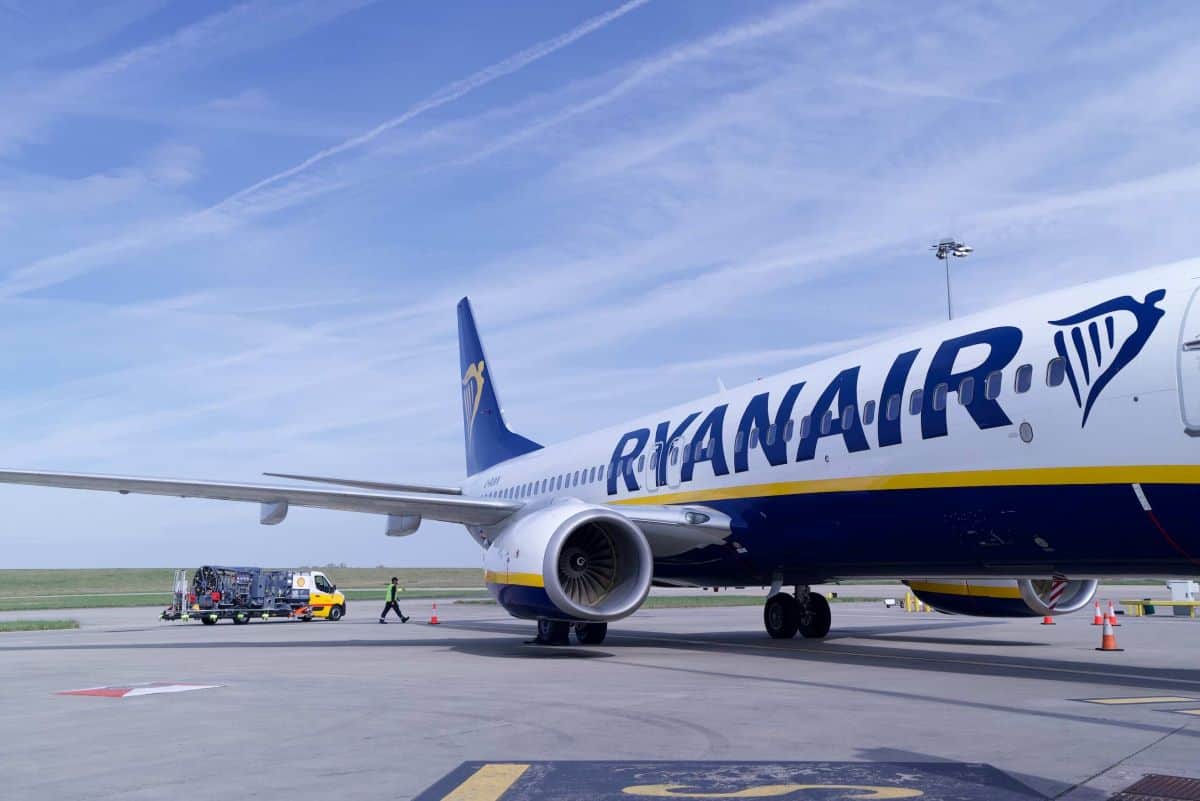
Image generated with Ai
Ryanair Flight FR661 declared an emergency over the Irish Sea while approaching Dublin after a reported onboard medical incident. Ryanair Flight FR661 declared an emergency over the Irish Sea while approaching Dublin, immediately drawing attention to an otherwise routine journey from Birmingham. The Boeing 737-800 transmitted the internationally recognised emergency squawk code 7700 before requesting priority handling from air traffic control. However, despite the alarming declaration, the aircraft landed safely at Dublin Airport without further operational complications. The emergency is believed to have resulted from a passenger medical incident rather than a technical problem. Consequently, the event highlights the importance of well-trained flight crews, rapid coordination with air traffic controllers and established aviation safety procedures that protect travellers every day.
A Ryanair service operating as Flight FR661 declared an in-flight emergency while descending towards Dublin Airport on Sunday morning after departing Birmingham Airport on a scheduled service across the Irish Sea.
Advertisement
The aircraft involved was a Boeing 737-800, registration EI-EBC, which departed Birmingham at approximately 08:37 BST. The journey had progressed normally before the crew reported an emergency during the aircraft’s descent.
While passing through around 8,000 feet over the Irish Sea, the flight crew transmitted squawk code 7700, the internationally recognised transponder code indicating a general emergency requiring immediate attention from air traffic control.
Advertisement
The declaration prompted air traffic controllers to provide priority handling so the aircraft could continue directly to Dublin Airport.
Squawk code 7700 is used worldwide by flight crews whenever an aircraft encounters an emergency requiring immediate assistance or priority handling.
The code does not automatically indicate a mechanical failure. Instead, it alerts air traffic controllers that the aircraft requires operational priority due to an urgent situation. Such emergencies may include:
Once the code is transmitted, controllers coordinate the aircraft’s arrival, clear surrounding air traffic where necessary and ensure emergency services remain prepared if required.
Initial reports indicate the emergency was likely prompted by a medical incident involving a passenger onboard rather than any technical fault affecting the aircraft.
Medical emergencies remain among the most common reasons commercial aircraft declare emergencies. When a passenger suffers a serious illness, suspected cardiac event or another urgent health condition, flight crews may request priority landing so medical professionals can reach the individual as quickly as possible.
Although airlines carry first-aid equipment, automated external defibrillators and emergency medical kits, some situations require immediate hospital treatment after landing.
Neither Ryanair nor airport authorities had released additional medical details at the time of reporting, and passenger privacy is generally protected in such circumstances.
Following the emergency declaration, Flight FR661 continued its approach without interruption and landed safely at Dublin Airport.
Priority handling enabled the aircraft to proceed efficiently through the final stages of arrival. Emergency declarations of this nature are handled routinely within international aviation procedures, allowing emergency responders to remain available should their assistance become necessary.
There were no immediate reports of injuries relating to the aircraft’s operation, and no indication of technical difficulties affecting the Boeing 737-800.
Commercial airlines operate under comprehensive international safety regulations covering medical emergencies during flight.
Cabin crew receive specialist training to recognise medical conditions, administer first aid, operate emergency equipment and communicate with pilots regarding a passenger’s condition.
Pilots may also consult ground-based medical support providers before deciding whether to continue, divert or request priority landing.
The final decision depends on several operational considerations, including:
Because Birmingham and Dublin are separated by a relatively short flight, continuing directly to Dublin with priority handling appears consistent with standard operational procedures.
Events involving squawk code 7700 often attract significant public attention because aircraft tracking services immediately display emergency status. However, aviation experts emphasise that emergency declarations demonstrate the effectiveness of modern safety systems rather than signalling catastrophe.
International aviation procedures are specifically designed to allow pilots to seek assistance quickly whenever unexpected situations arise.
Whether the emergency involves a medical incident, a technical precaution or another operational concern, established coordination between flight crews, air traffic control and airport emergency services helps ensure passengers receive the highest possible level of protection.
The safe arrival of Ryanair Flight FR661 reflects these well-established safety protocols working exactly as intended.
The likely cause of the emergency was a passenger medical incident that required urgent medical attention during the flight. The answer to why the crew declared squawk code 7700 is straightforward: it enabled air traffic control to provide immediate priority handling and prepare emergency support upon arrival. The reason this procedure exists is to protect lives by reducing delays whenever an urgent situation develops in the air. Although emergency declarations can appear alarming on flight-tracking platforms, they frequently represent precautionary measures that allow professional aviation teams to respond quickly, efficiently and safely while maintaining the highest operational standards.
The emergency involving Ryanair Flight FR661 serves as another reminder that commercial aviation’s extensive safety procedures are designed to respond rapidly whenever unexpected situations arise. Although the declaration of squawk code 7700 naturally attracted attention from aircraft tracking platforms and aviation observers, the available information indicates that the incident was linked to a passenger medical emergency rather than any issue affecting the aircraft itself.
From the moment the crew recognised the situation, established international procedures came into effect. Air traffic controllers immediately prioritised the aircraft’s arrival, while airport emergency services stood ready to assist if required. This coordinated response ensured the Boeing 737-800 completed its approach safely and landed at Dublin Airport without reported operational complications.
Medical emergencies remain one of the most frequent reasons commercial aircraft request priority landings. Airlines invest heavily in crew training, onboard medical equipment and operational protocols that enable rapid responses during flights. These measures, combined with close coordination between pilots, controllers and emergency responders, form an essential part of modern aviation safety.
For passengers, an emergency declaration does not necessarily indicate danger to the aircraft itself. In many cases, it reflects precautionary action intended to ensure that anyone requiring urgent medical care receives assistance as quickly as possible after landing.
The safe conclusion of Ryanair Flight FR661 demonstrates how established aviation procedures continue to protect passengers, support flight crews and maintain confidence in commercial air travel. As investigations or official updates emerge, they may provide additional details, but the successful landing already highlights the resilience and effectiveness of international aviation emergency response systems.
Advertisement
Advertisement
Advertisement












Tuesday, September 1, 2026

Tuesday, September 1, 2026

Tuesday, September 1, 2026

Tuesday, September 1, 2026

Tuesday, September 1, 2026

Tuesday, September 1, 2026

Tuesday, September 1, 2026

Tuesday, September 1, 2026



