
Switzerland Keeps Pace With Austria and Others as Avalanche Research Puts Adventure Travel Safety in Focus

Updated
Published
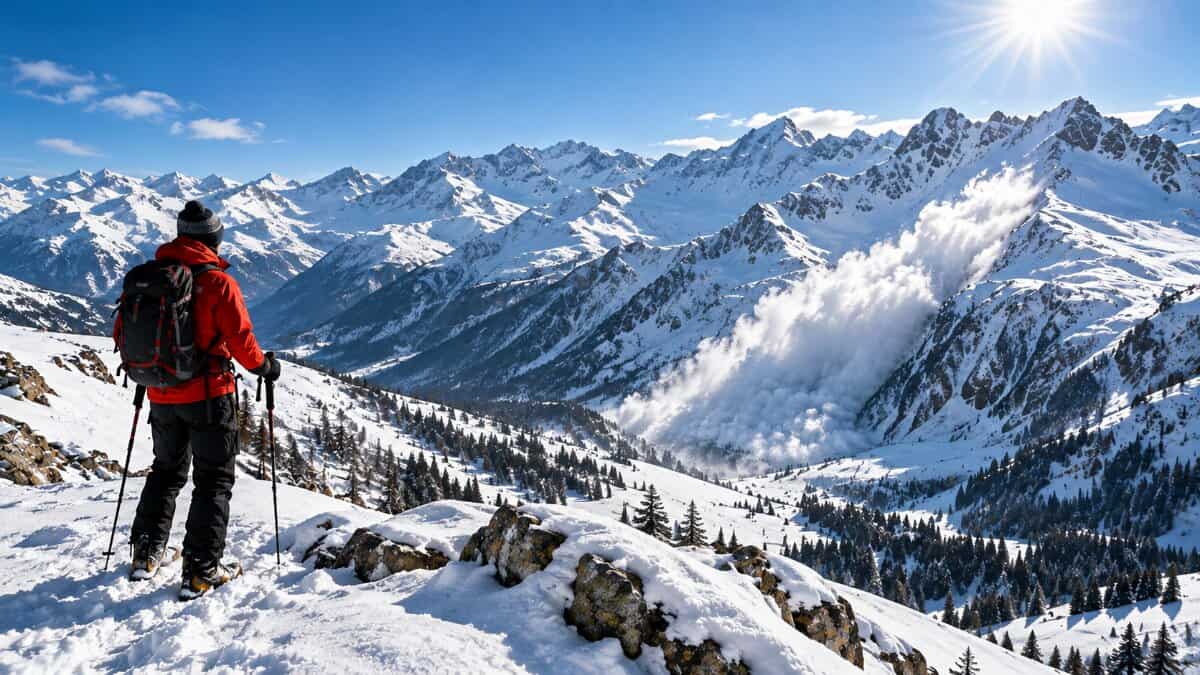
A new phase of Alpine avalanche safety planning is taking shape ahead of winter 2026–27. Austria and Italy are preparing digital tools for 346 local avalanche commissions, while Switzerland is contributing to research on how people understand European warnings. The developments have practical implications for adventure travellers visiting Switzerland, Austria, France, Italy, Germany and Slovenia, where mountain safety depends on regional forecasts, qualified operators and local conditions. The emerging issue is not a six-country emergency, but whether existing warnings and new technology can support safer decisions throughout the Alpine winter.
Austria and Italy Prepare a Major Avalanche Safety Upgrade Before Winter 2026–27
A significant development for Alpine winter adventure tourism emerged in Innsbruck on 26 September 2026, when authorities from Austria’s Tyrol and Italy’s South Tyrol and Trentino regions approved financing for a shared avalanche safety management platform.
According to the Tyrol regional government’s announcement, the system, known as Pro.Lawinen.Report, will become available to all 346 avalanche commissions across the three regions during the 2026–27 winter season. The authorities secured financing for its first five years of operation.
The software has been developed through CAIROS, a project supported by the European Union’s Interreg programme. It combines field observations, hazard assessments, digital documentation and communication between local avalanche specialists and public decision-makers.
Advertisement
Advertisement
Its practical purpose is significant. Avalanche commissions assess conditions that may threaten roads, ski slopes, mountain settlements and other infrastructure. Their assessments help authorities consider measures such as restricting access to exposed areas or closing vulnerable transport links.
The platform operates on mobile devices and can function without an internet connection, an important capability in remote mountain environments where mobile coverage may be unreliable.
Advertisement
Advertisement
Training is scheduled to begin on 20 October 2026, including participation by avalanche commissions in other Austrian federal states. The system has undergone pilot testing, but its planned wider operational introduction remains a development for the forthcoming winter rather than an already completed rollout.
For international adventure travellers, this is an infrastructure and operational safety story. The new platform is intended for avalanche professionals, not as a replacement for the public avalanche bulletin used by skiers, mountaineers and mountain guides.
Advertisement
Advertisement
Switzerland Strengthens Avalanche Research With Advanced Monitoring Technology
Switzerland has also strengthened its scientific infrastructure for studying Alpine avalanche hazards. According to the Swiss Federal Institute for Forest, Snow and Landscape Research (WSL), researchers upgraded the data acquisition system at the Vallée de la Sionne avalanche test site in 2025. The technology uses 185 sensors to measure avalanche behaviour, including snow pressure, movement and velocity.
During its first winter, the upgraded system recorded more than 60 avalanches. It can activate its measurement equipment within two seconds and generate approximately two terabytes of research data per avalanche. These observations help scientists develop and improve models of avalanche dynamics, strengthening the scientific understanding of mountain hazards relevant to Alpine adventure tourism.
Switzerland’s Davos Research Exposes a Critical Gap in Avalanche Warning Understanding
While Austria and Italy develop operational tools for avalanche specialists, Switzerland is contributing to a different aspect of mountain safety: ensuring travellers understand the information they receive.
According to the WSL Institute for Snow and Avalanche Research in Davos, more than 18,000 people participated in a consultation examining proposed improvements to the European avalanche danger scale.
Advertisement
Advertisement
The survey received approximately 9,500 responses in German, 3,500 in Italian and 2,000 each in French and English. Participants also submitted more than 1,000 additional comments.
The initial results identified potentially important misunderstandings. Around 10 per cent of respondents did not recognise that even relatively small avalanches could be fatal. Between 10 and 20 per cent misunderstood wording intended to describe generally safer avalanche conditions, interpreting it as an absence of avalanche risk.
These findings do not establish the knowledge level of all European skiers. Participation was voluntary and the detailed analysis remained under way. Nevertheless, the results highlight a practical communication issue for mountain tourism businesses serving visitors with different languages and experience levels.
A European Decision Could Shape Winter Safety Information Beyond 2026
The European Avalanche Warning Services has scheduled consideration of revised avalanche danger scale materials at an extraordinary General Assembly in October 2026.
Its published programme envisages introducing the revised scale in winter 2027–28, subject to acceptance and completion of the required work.
The proposed development therefore does not constitute a new European avalanche warning system already operating in October 2026. It is an ongoing review of how existing danger information can be communicated more effectively.
Advertisement
Advertisement
This distinction matters to travel companies. Tour operators may need to update safety briefings, digital itineraries, booking information and customer-facing guidance if revised wording is subsequently adopted.
The underlying European classification currently retains five levels, ranging from low to very high. The purpose of improving the language is not to remove the need for professional judgement. It is to make the implications of each level easier for different users to interpret.
Six Alpine Countries Share One Winter Tourism Challenge but Operate Different Warning Systems
Switzerland, Austria, France, Italy, Germany and Slovenia all contain Alpine territory and have established arrangements for forecasting avalanche conditions.
The commonality is geographical and operational. It does not mean the six countries have introduced identical regulations or jointly approved the Austrian–Italian software platform.
Their differences are especially important for international visitors booking multi-destination skiing, freeriding, snowshoeing and mountaineering holidays.
| Country | Official avalanche authority or service | Relevant traveller information | Key operational consideration |
|---|---|---|---|
| Switzerland | WSL-SLF, including White Risk | Official English-language avalanche information, snow observations and seasonal bulletins | Autumn bulletins are event-driven; regular publication generally resumes in November or December |
| Austria | Regional warning services, supported in several states by GeoSphere Austria | Tyrol’s cross-border avalanche.report provides English forecasts and maps | Forecast providers vary by federal state; Pro.Lawinen.Report is for professional commissions |
| France | Météo-France | Mountain forecasts and avalanche risk estimation bulletins for Alpine sectors | The official interface examined is in French; travellers should establish how they will understand the full forecast |
| Italy | AINEVA and regional or provincial services | Regional avalanche bulletins, including multilingual coverage in South Tyrol and Trentino | Travellers crossing different Alpine regions should check the appropriate local forecast |
| Germany | Bavarian Avalanche Warning Service | Regional forecasts covering the Bavarian Alps, including slope orientation, elevation and snowpack conditions | The Bavarian service does not provide an individual safety assessment for every slope |
| Slovenia | Slovenian Environment Agency, ARSO | Avalanche bulletins informed by observations and snow stability assessments | The forecast is seasonal; operators should verify the current bulletin and its available language |
Source: Official SLF, GeoSphere Austria, Météo-France, AINEVA, Bavarian Avalanche Warning Service and ARSO publications. English-language accessibility varies by service and bulletin format; this is not a certification of comprehensive English coverage in every country.
Advertisement
Advertisement
Switzerland and Germany Highlight Why Bulletin Timing Matters
According to SLF’s official publication guidance, Switzerland generally publishes summer and autumn avalanche bulletins only when heavy snowfall warrants them. Regular reporting resumes in November or December.
The absence of an autumn bulletin must therefore never be treated as proof that high mountain terrain is safe. Fresh snow and local weather remain relevant even outside the main forecasting season.
Germany presents another instructive example. The Bavarian Avalanche Warning Service, operated through the Bavarian State Environment Agency, publishes its regular winter forecast at 17:00, covering the following 24 hours.
Its assessments describe avalanche danger by geographical sector, altitude and slope orientation. They are expressly regional forecasts rather than determinations for individual slopes.
For tour leaders planning early-morning departures, this means checking the latest available information, confirming the applicable forecast period and reassessing conditions at the actual destination.
France and Italy Demonstrate the Importance of Regional Information
France’s Météo-France provides avalanche risk estimation bulletins for mountain sectors, including the northern French Alps. Its public-facing service combines danger levels with mountain weather information.
Advertisement
Advertisement
Italy’s AINEVA coordinates information from multiple regional and provincial forecasting services. Its official portal identifies reporting areas including Valle d’Aosta, Piedmont, Lombardy, Veneto, Friuli-Venezia Giulia, Bolzano and Trento.
Together, these arrangements demonstrate why an Alpine itinerary should not rely on one country’s general weather forecast to assess terrain across an international boundary.
The warning language, forecast region and operating season may change as the journey moves between France, Switzerland, Italy or neighbouring territories.
Slovenia Connects Mountain Fieldwork With European Forecasting Standards
According to the Slovenian Environment Agency’s February 2026 report, its snow and avalanche working group uses information from 13 staff members who undertake mountain observations.
Forecasting draws on automatic weather stations, webcams, numerical snow models and direct snowpack measurements. During the winter season, the agency generally prepares avalanche forecasts daily between November and May and sends at least one two-person field team into the high mountains each week.
The agency also confirms that its bulletin structure follows European Avalanche Warning Services standards, including common danger-level criteria and avalanche-problem classifications.
Advertisement
Advertisement
For adventure travellers exploring the Julian Alps, this provides an important official information source. It does not replace the need to assess individual routes, weather changes and the suitability of the activity for the group’s capabilities.
Official Winter 2025–26 Figures Reveal Why Alpine Safety Information Matters
The new digital platform arrives after a winter in which the existing cross-border avalanche information service recorded substantial public use and serious mountain accidents.
According to the Euregio Tirol–South Tyrol–Trentino report, its public avalanche forecasting website received approximately 9.1 million accesses during winter 2025–26, compared with 5.7 million the previous season.
The report also recorded 62 avalanche incidents involving 40 fatalities and 34 injuries within the three-region area.
These are historical figures, not a description of conditions on 9 October 2026. Website accesses are also not equivalent to unique visitors or tourism arrivals.
| Official indicator | Verified figure | Significance for adventure tourism |
|---|---|---|
| Avalanche report accesses, 2023–24 | Approximately 5 million | Earlier reference for public use |
| Avalanche report accesses, 2024–25 | 5.7 million | Shows the scale of existing information demand |
| Avalanche report accesses, 2025–26 | 9.1 million | Record recorded traffic for the regional service |
| Forecast publication days, 2025–26 | 156 | Indicates the duration of the reporting season |
| Recorded avalanche incidents, 2025–26 | 62 | Demonstrates the importance of route-specific safety decisions |
| Fatalities and injuries, 2025–26 | 40 deaths; 34 injuries | Historical consequences within the specified three-region reporting area |
Source: Euregio institutional winter 2025–26 report. The figures cover Tyrol, South Tyrol and Trentino, not all six Alpine countries.
Advertisement
Advertisement
The figures also raise an operational question. High engagement with avalanche information demonstrates substantial use of the reporting service, but it does not establish whether every reader correctly interprets the warnings or changes their activity accordingly.
That is where Switzerland’s communication research and the Austrian–Italian digital preparedness programme become especially relevant.
Understanding Europe’s Five Avalanche Danger Levels Is Essential for Winter Adventure Planning
The current European avalanche danger scale provides a shared classification across participating warning services. However, the consequences vary with snowpack stability, terrain, exposure and human decisions.
| Danger level | Official classification | Practical implication for travellers |
|---|---|---|
| 1 | Low | Avalanches remain possible in isolated, particularly steep terrain |
| 2 | Moderate | Specific steep slopes and terrain features require careful assessment |
| 3 | Considerable | Dangerous conditions affect indicated terrain; triggering can occur with relatively small additional loads |
| 4 | High | Very dangerous conditions occur across many steep slopes |
| 5 | Very high | Extraordinary avalanche conditions can produce numerous very large natural avalanches |
Based on the official European Avalanche Warning Services danger scale. These are general interpretations, not current forecasts or route-specific instructions.
Importantly, an avalanche level is not a universal instruction that every slope within a forecast region is either safe or unsafe. The full bulletin contains information about affected elevations, slope aspects, avalanche problems and expected developments.
Mountain Guide Qualifications and Rescue Cover Create Another Cross-Border Challenge
Safety preparedness extends beyond the forecast itself. Travel companies must also consider the qualifications of guides and the financial consequences of mountain rescue.
Advertisement
Advertisement
According to Slovenia’s official business and professional regulation portal, mountain guiding is a regulated activity. The country’s framework includes professional qualifications, registration requirements and rules governing guiding on mountain terrain, ski tours and glaciers.
Specific exceptions apply to some activities that do not require technical rope protection or securing a winter route. The legal requirements therefore depend on the activity rather than merely whether a company advertises guided hiking or skiing.
For Switzerland and Austria, the UK government’s official travel advice identifies mountain rescue, helicopter evacuation, repatriation and transfers to neighbouring countries for treatment as important insurance considerations.
Austria’s advice additionally warns that off-piste skiing can invalidate some travel insurance policies. A booked guide does not automatically remove exclusions from a traveller’s insurance contract.
The European emergency number 112 operates across the European Union and is also available in Switzerland. However, emergency contact access does not guarantee mobile signal in remote terrain, nor does it automatically establish who pays for evacuation.
The Strategic Opportunity for Adventure Tourism Operators Goes Beyond Better Forecasting
The most consequential development is the growing distinction between sophisticated avalanche forecasting and the traveller’s ability to act on it.
Advertisement
Advertisement
Professional authorities can improve documentation, harmonise observations and communicate closure recommendations more efficiently. However, those improvements do not automatically reach the customer purchasing an off-piste excursion, ski tour or guided mountain holiday.
A travel agent selling a six-country Alpine itinerary faces a complex information environment. Forecast providers differ, publication schedules change seasonally, guide requirements vary and insurance conditions depend on the precise activity.
The commercially relevant response is not to promise risk-free adventure. It is to make safety preparation a visible component of service quality.
For premium guided holidays, this could mean delivering the appropriate official bulletin before departure, explaining the relevant avalanche problems, documenting guide credentials and agreeing alternative routes before guests arrive.
For multi-country itineraries, operators could also create a standardised information record covering forecast sources, guide responsibilities, communications equipment and emergency arrangements.
These measures could reduce avoidable confusion, support more defensible operational decisions and help customers understand why an itinerary may change at short notice.
Advertisement
Advertisement
They remain recommendations arising from the comparison of official systems, not evidence of a new common regulatory obligation across the six countries.
Critical Operational Priorities for Travel Agents and Tour Operators
- Verify forecasts by destination: Use the responsible official regional service for each stage of the itinerary, rather than relying on a general Alps-wide weather outlook.
- Review guide credentials: Confirm qualifications and authorisations appropriate to the actual activity and operating jurisdiction.
- Audit insurance exclusions: Check off-piste skiing, ski touring, mountaineering, search and rescue, helicopter costs and cross-border medical transport.
- Establish route alternatives: Build cancellation, postponement or itinerary-change procedures into the booking process.
- Document customer briefings: Explain avalanche danger levels, terrain limitations, required equipment and the role of professional judgement.
- Prepare emergency communications: Establish local emergency procedures and assess communications limitations in remote mountain areas.
Winter 2026–27 Could Mark an Important Transition in Alpine Adventure Safety Management
The immediate milestone is the planned introduction of Pro.Lawinen.Report to 346 commissions across Austria and Italy, supported by training beginning on 20 October 2026.
Switzerland’s avalanche-language research and the European warning services’ October review create a second development that could influence future traveller information.
France, Germany and Slovenia remain important parts of the wider comparison because their established warning services illustrate how international adventure travel depends on multiple national and regional information systems.
The long-term opportunity for Alpine tourism is greater coordination between forecasting, professional operations and communication with travellers. The potential benefits include clearer customer expectations, stronger risk management and greater confidence in professionally organised mountain holidays.
No common six-country emergency declaration, immediate change to every national avalanche bulletin or proven increase in tourism arrivals has been established by these announcements.
Advertisement
Advertisement
FAQs
1. Have Switzerland, Austria, France, Italy, Germany and Slovenia launched a joint avalanche safety programme?
No. All six participate in the wider European avalanche-warning framework, but the newly approved Pro.Lawinen.Report operational platform specifically concerns Tyrol in Austria and South Tyrol and Trentino in Italy.
2. Will travellers be able to use Pro.Lawinen.Report?
It is designed primarily for avalanche commissions and public decision-makers. Travellers should continue consulting official public-facing avalanche forecasts, including regional services such as White Risk and avalanche.report.
3. Are official avalanche warnings available in English?
English information is confirmed for Switzerland’s SLF service and the seven-language Tyrol–South Tyrol–Trentino avalanche.report. Access to fully translated regional bulletins varies elsewhere. Travellers should check their destination’s actual official product.
4. Does a low avalanche danger level mean off-piste skiing is safe?
No. Level 1 still allows for avalanches in particular terrain. The appropriate decision depends on the complete forecast, local conditions, route characteristics, equipment and the abilities of the group.
5. What should international travellers check before booking a winter adventure?
They should verify the relevant avalanche forecasting service, the qualifications of their guide, activity-specific travel insurance, mountain rescue provisions and the operator’s procedures for changing or cancelling a route when conditions require it.
Advertisement
