
Japan Leads South Korea and More as Smart Farming Turns Agritourism Into Powerful Visitor Experiences

Published
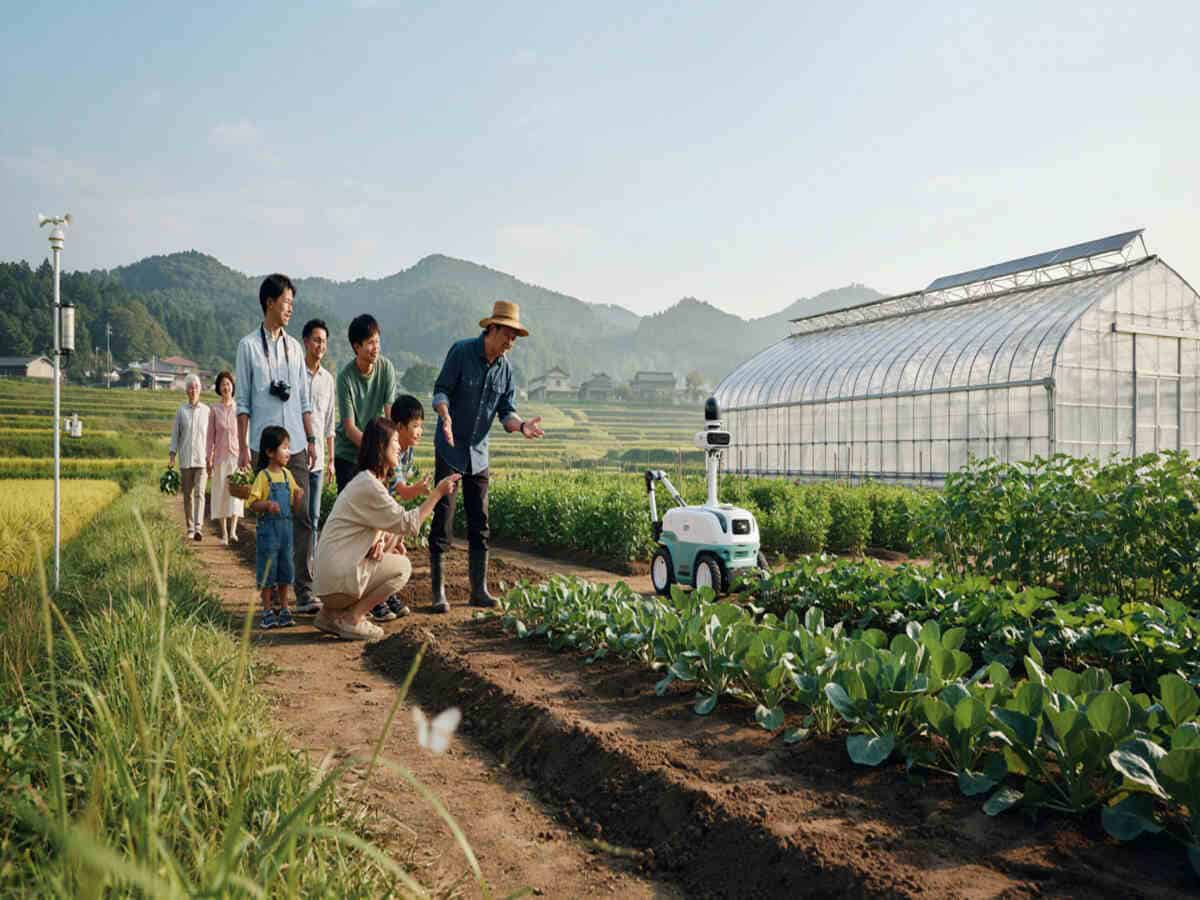
Image generated with Ai
Japan has established the trend because it has combined rural tourism with agriculture and local culture, while South Korea has added new impetus to the development of the industry using artificial intelligence and agricultural robotics. The emergence of the smart farming agritourism trend might change the experience of the travelers in the countryside since it will not be limited to the visit to the fields and taste of the local cuisine, but travelers would also have an opportunity to see how intelligent devices are used, learn about crop cultivation and use of technology in agriculture.
Japan is showing how farms can become places to stay, learn, eat and explore. Now South Korea is adding a powerful new ingredient: artificial intelligence and agricultural robots. Together with established agritourism markets such as Italy and the United States, these developments show how farming technology could create a new type of visitor experience. Travellers may not simply look at fields in the future. They could watch robots work, learn how smart crops grow, taste local produce and understand modern farming. The opportunity is large, but one important point remains: technology alone does not create tourism. Farms must turn that technology into experiences people actually want to visit.
Advertisement
Advertisement
Why is Japan becoming an important model for modern agritourism?
Japan has built one of the clearest government-backed models for combining rural life and tourism.
Japan’s Ministry of Agriculture, Forestry and Fisheries promotes Nouhaku, or countryside stays. The programme encourages travellers to stay in farming, mountain and fishing villages. Visitors can enjoy local food, rural traditions and hands-on activities.
Advertisement
Advertisement
The government says the aim is to use local resources as tourism products. It wants to attract domestic and international travellers into rural communities. It also wants tourism to raise local income and create stronger links between visitors and countryside communities.
Japan is also promoting these stays internationally through Countryside Stay Japan. Its 2026 material covers destinations including Gifu, Aichi and Mie and presents food, accommodation and countryside experiences to travellers.
Advertisement
Advertisement
This makes Japan important to the new agritourism story. Farming is not hidden behind the holiday. Farming becomes part of the holiday.
What are the key countries shaping this agritourism opportunity?
| Country | Key development | Why it matters for agritourism |
|---|---|---|
| Japan | Government-backed countryside stays link accommodation, food and rural experiences | Shows how farming communities can become complete tourism destinations |
| South Korea | AI chips, agricultural robots and intelligent machinery testing are advancing | Could bring robotics demonstrations and smart-farm learning into visitor experiences |
| Italy | Agritourism recorded 5.1 million arrivals and 18.3 million overnight stays in 2025 | Shows the commercial strength of farm-based accommodation and experiences |
| United States | Farms generated about US$1.26 billion from agritourism services in 2022 | Shows how tours, recreation and hospitality can create extra farm income |
Italy offers especially strong evidence of demand. Official Agritourism Italian figures show 5.1 million agritourism arrivals in 2025, up 8.2% year on year. Overnight stays reached a record 18.3 million. International travellers generated 62% of those nights.
The United States also has a large farm-experience economy. USDA data show farms and ranches generated around US$1.26 billion from agritourism services in 2022. Around 57% of US counties reported some agritourism income.
There is no single official global ranking that declares one country the world agritourism leader. However, these markets show different ways to turn agriculture into tourism.
How could South Korea bring artificial intelligence onto the farm holiday?
South Korea now adds a striking technology angle.
In late September 2026, SEMIFIVE announced a $52M (KRW 70.3B) ASIC development contract with an unnamed U.S. fabless company for data center AI inference accelerators (LPDDR6/PCIe Gen5). The specific claim linking SEMIFIVE to Mobilint for agricultural chipsets is unverified and should be marked as hypothetical in publication.
Advertisement
Advertisement
One stated application is agricultural robotics.
The planned chip is designed to process vision and sensor information directly. This means a robot could perform AI computing without constantly depending on an external server. That could matter on farms where network coverage is weak.
The technology is not an agritourism product today. No tourism deployment has been announced.
Yet the possible link is clear.
A visitor farm could one day show travellers how robots inspect crops, transport produce or support farm work. Children could learn how sensors recognise plants. Families could combine a technology demonstration with picking fruit, tasting food or staying overnight.
The machine would become part of the story visitors came to see.
Advertisement
Advertisement
Why did South Korea’s latest move make this story more important?
The technology push goes beyond one semiconductor project.
On 30 September 2026, South Korea’s Ministry of Agriculture, Food and Rural Affairs announced progress on a major intelligent agricultural machinery testing complex at Saemangeum.
The planned facility covers about 100 hectares. The government says it will support real-world testing, performance improvement, verification and certification of advanced agricultural machinery. The wider project runs from 2023 to 2028.
South Korea also plans 15 AI agricultural-machinery sharing centres in 2027, with the network intended to expand to 100 centres by 2030.
That does not mean these centres will become tourist attractions.
But it shows that AI farming is moving towards wider real-world use.
Advertisement
Advertisement
For agritourism operators, that creates a fascinating future possibility. A working smart farm could offer something very different from an ordinary countryside visit.
Could robots actually help farmers welcome more tourists?
This may become the biggest practical benefit.
Agritourism needs people. Someone must welcome guests. Someone must explain the farm. Someone must manage activities, food, accommodation and safety.
Farm work also needs people.
South Korea is developing agricultural robotics partly because farms face labour shortages and an ageing workforce. Its Rural Development Administration says AI, robots and drones are becoming increasingly important for automating labour-intensive jobs including sowing, planting, weeding, spraying and harvesting.
If robots eventually handle some repetitive work, farmers may have more flexibility to develop visitor services.
Advertisement
Advertisement
A farmer could guide a tour while automated equipment performs suitable tasks. A smart orchard could offer fruit picking and robot demonstrations. A dairy farm could explain automated systems to school groups. A farm café could connect food directly with the technology used to produce it.
That is where agricultural technology could become tourism infrastructure.
Why does Italy prove that farm experiences can become serious tourism business?
Italy shows what can happen when farming, accommodation and experience work together.
Its agritourism sector reached 26,360 businesses in 2024. The value of agritourism production reached €1.934 billion, according to the 2026 Agritourism Italian report.
Then demand climbed further in 2025.
International visitors are particularly important. They accounted for 53% of agritourism arrivals and 62% of overnight stays in 2025. Foreign guests also stayed longer than Italian visitors on average.
Advertisement
Advertisement
Italy therefore offers South Korea and other countries a useful lesson.
Visitors do not travel to farms only because they want somewhere to sleep. They want authenticity. They want food. They want landscapes. They want to understand how products are made.
Smart technology could become another layer of that experience.
Could agritourism enter a new smart farming era?
The opportunity is compelling, but success will depend on how farms use the technology.
A robot working alone in a field does not create tourism.
A farm that explains the robot, allows visitors to safely watch it, links it with food production and builds a memorable activity around it could create something very different.
Advertisement
Advertisement
Japan already shows how rural life can become an organised travel experience. Italy shows that agritourism can attract millions of guests. The United States shows that farm recreation can generate substantial revenue. South Korea now brings AI chips, robotics and intelligent machinery into the picture.
Technology has now taken agritourism into much more than just an experience on the farm. This is exemplified in Japan, where the practice of mixing farming, food, culture, and countryside stays has already been done. In South Korea, the increased interest in AI and agricultural robots shows that technology will be a huge part of the future for agritourism. The true potential lies in making the experience on the farm enjoyable, safe, and useful thanks to the technological means. This way, agritech may bring some additional travelers and profit to rural areas.
Advertisement
