
UK and Australia Stand With Other Key Destinations as Singapore Airlines Winter 2026/27 Schedule Unveils Major Expansion

Published
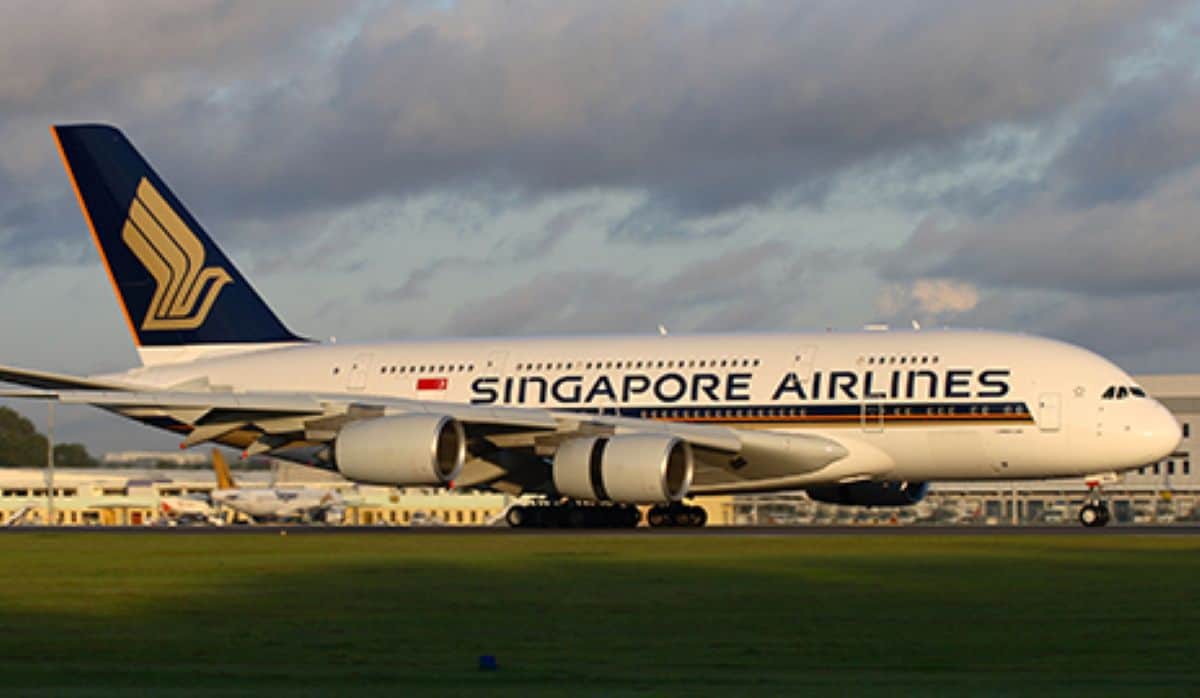
Singapore Airlines has unveiled its winter 2026/27 schedule, adding new connectivity while restoring capacity across major international markets. The programme runs from 25 October 2026 to 27 March 2027, with the network expected to exceed 2,530 passenger flights weekly by March. Madrid returns after more than two decades, while Western Sydney International Airport joins the network from 23 November. Europe receives a substantial capacity boost, with stronger frequencies for London, Manchester, Milan, Munich and Barcelona. Vietnam also gains significant connectivity, reaching 70 weekly flights across Hanoi, Ho Chi Minh City and Da Nang. Meanwhile, Singapore Airlines will trim selected markets, including Colombo, Johannesburg and Bali, showing a more targeted approach to winter capacity planning.
Europe Emerges as the Biggest Winner
The Singapore Airlines winter 2026/27 schedule marks a pronounced recovery in European capacity after deeper seasonal reductions last winter. The carrier is increasing frequencies across several major European gateways while limiting the scale of the traditional January and February cuts.
Singapore Airlines announced the European expansion earlier this year. It linked the additional services to strong demand and improved connectivity through its Singapore hub.
The European network will include 15 destinations from Singapore during the winter season. November schedules indicate about 134 weekly flights across those European markets, according to specialist schedule analysis.
Advertisement
Advertisement
| European Market | Winter 2026/27 Frequency | Key Change |
|---|---|---|
| London Heathrow | 28 weekly | Four daily maintained |
| London Gatwick | Up to 14 weekly | Second daily service |
| Frankfurt | Up to 21 weekly | Third daily flight on most dates |
| Munich | Up to 10 weekly | Three additional weekly services |
| Manchester | 7 weekly | Increased from five |
| Milan | 7 weekly | Increased from four |
| Barcelona | 5 weekly | Restructured with Madrid |
| Madrid | 5 weekly | Returns from 26 October |
| Paris | 11 weekly | Remains a major European gateway |
| Amsterdam | 7 weekly | Daily service |
| Copenhagen | 7 weekly | Daily service |
The most striking development is Madrid. Singapore Airlines will resume service to the Spanish capital on 26 October 2026, restoring a connection that disappeared from its network in 2004.
The service will operate through Barcelona rather than as a nonstop Singapore-Madrid flight. Singapore Airlines will deploy its 253-seat Airbus A350-900 long-haul aircraft on the route.
Advertisement
Advertisement
For travellers, the structure creates a useful new option for reaching Spain through the carrier’s Asian hub. However, passengers should distinguish the Barcelona-Madrid sector from an independently bookable domestic Spanish flight.
London Gains A Stronger Winter Presence
London receives one of the clearest capacity increases in the revised programme. Heathrow retains four daily flights throughout winter, avoiding the seasonal reduction that affected the airport during parts of the previous winter.
Gatwick also gains additional capacity. Singapore Airlines will operate its second Gatwick frequency daily during the winter season, taking combined London services to up to six flights each day.
That combination gives passengers greater flexibility across London’s two principal airports. It also strengthens Singapore’s position as a transfer point for travellers moving between Southeast Asia, Australia and Europe.
The schedule remains seasonal rather than uniform. Gatwick frequencies will fluctuate during January and February, before returning to twice-daily service in March.
| London Airport | Winter 2026/27 | Traveller Significance |
|---|---|---|
| Heathrow | 28 weekly | Four daily flights |
| Gatwick | Up to 14 weekly | Second daily service during key periods |
| Combined | Up to 42 weekly | Up to six daily London flights |
The change also reflects a broader pattern in Singapore Airlines’ network planning. The carrier is not simply adding aircraft across every market. Instead, it is concentrating capacity where demand and connecting opportunities appear strongest.
Advertisement
Advertisement
Australia Gains A New Gateway
Australia becomes another major beneficiary of the winter programme. Singapore Airlines will begin daily flights to Western Sydney International Airport on 23 November 2026.
The service will use the Airbus A350-900 Medium Haul aircraft. Flight SQ201 will depart Singapore at 11.30pm local time and arrive in Western Sydney at 10.20pm. The return SQ202 service will leave at 11.55pm and reach Singapore at 5.05am the following day.
The new airport will operate alongside Sydney Kingsford Smith Airport. This effectively gives Singapore Airlines a two-airport presence in the Sydney metropolitan market.
The development is particularly relevant for travellers heading towards western Sydney and surrounding areas. It can reduce surface travel compared with using Sydney’s established airport, depending on the passenger’s final destination.
Western Sydney International is also designed to provide a new aviation gateway for one of Australia’s fastest-growing urban regions. Singapore Airlines’ entry therefore carries significance beyond the individual route.
| Australian Market | Winter Change | Aircraft or Capacity Detail |
|---|---|---|
| Western Sydney | New daily service | A350-900 Medium Haul |
| Adelaide | 12 weekly | Record frequency |
| Cairns | Daily from 1 December | Boeing 737-8 MAX |
| Brisbane | Four daily overall | One rotation moves to A350 Long Haul |
| Sydney Kingsford Smith | Continues | Combined Sydney capacity strengthened |
Adelaide will rise to 12 weekly flights, while Cairns moves to daily operations from 1 December. Christchurch also reaches a seasonal peak of 12 weekly services.
Advertisement
Advertisement
Auckland presents a different strategy. Singapore Airlines will deploy the Airbus A380 throughout winter alongside a daily Boeing 777-300ER. The larger aircraft help preserve seat capacity despite the absence of the third daily flight operated during parts of the previous winter.
Vietnam Records A Regional Surge
Vietnam stands out as the strongest regional growth story in the winter schedule. Combined services to Hanoi, Ho Chi Minh City and Da Nang will reach 70 weekly flights.
That represents a rise of roughly 43% from 49 weekly flights last winter. The expansion strengthens Singapore’s role as a connecting hub for Southeast Asian leisure and business traffic.
Hanoi will retain 21 weekly flights. Ho Chi Minh City rises to 28 weekly services, while Da Nang reaches 21.
| Vietnam Destination | Winter 2025/26 | Winter 2026/27 | Increase |
|---|---|---|---|
| Hanoi | 21 weekly | 21 weekly | Stable |
| Ho Chi Minh City | 21 weekly | 28 weekly | +7 |
| Da Nang | 14 weekly | 21 weekly | +7 |
| Combined | 56 weekly | 70 weekly | +14 |
The growth also broadens options for travellers using Singapore as a transit point. More frequent flights can create additional combinations for passengers connecting from Australia, India and other Asian markets.
Singapore Airlines’ own operating statistics show why capacity expansion remains central to its strategy. In July 2026, group passenger capacity increased 5.5% year on year, while the group carried 3.7 million passengers.
Advertisement
Advertisement
However, the August figures show that capacity growth requires careful management. SIA’s passenger load factor stood at 84.7%, down from 86.9% a year earlier. Europe recorded an 82.3% load factor in August, compared with 87.4% in August 2025.
That makes the winter European expansion particularly interesting. The carrier is adding capacity despite softer recent utilisation, suggesting that seasonal demand expectations and network connectivity remain important factors.
Changi Remains the Network Engine
Singapore Changi Airport remains the critical foundation behind the expansion. The airport recorded 46.7 million passenger movements during January-August 2026, according to its latest traffic statistics.
That total was broadly comparable with the same period of 2025. It was also 3.7% above the corresponding 2019 level, indicating that passenger activity has moved beyond pre-pandemic benchmarks for the period.
| Changi Indicator | Jan-Aug 2026 | Comparison |
|---|---|---|
| Passenger movements | 46.7 million | +0.3% year on year |
| Passenger movements versus 2019 | — | +3.7% |
| August passenger movements | 6.0 million | +1.5% year on year |
| June passenger movements | 5.81 million | -1.2% year on year |
| July passenger movements | 5.88 million | -1.4% year on year |
The airport’s performance provides important context for Singapore Airlines’ strategy. A strong hub depends on both local demand and connecting passengers.
The airline’s group passenger network covered 136 destinations in 35 countries and territories at the end of August. Singapore Airlines itself served 78 destinations, while Scoot served 84.
Advertisement
Advertisement
The winter programme therefore operates within a broader group network rather than in isolation.
Not Every Market Receives More Flights
The headline expansion should not obscure the reductions elsewhere. Singapore Airlines is simultaneously trimming several markets, demonstrating that the winter plan involves capacity redistribution rather than blanket growth.
Colombo, Johannesburg and Bali are among the markets facing reductions. Bali remains particularly notable because it has historically attracted substantial leisure demand from Singapore.
This contrast is important for travellers. A larger overall network does not automatically mean more convenient flights on every route.
The same principle applies to aircraft. A frequency increase can still produce a modest seat increase if the airline assigns smaller aircraft. Conversely, fewer flights can maintain seat availability when larger aircraft take over.
Singapore Airlines’ winter schedule contains several such equipment changes. Cairns, for example, moves from the A350 to the smaller Boeing 737-8 MAX even as frequency rises to daily.
Advertisement
Advertisement
What Travellers Should Check Before Booking
The revised schedule offers more choice, but travellers should examine the operating details carefully before purchasing tickets.
First, passengers should check whether their flight operates from Heathrow or Gatwick. The two airports are geographically separated, and a connection between them should not be treated like a conventional terminal transfer.
Second, passengers travelling to Madrid should understand the Barcelona routing. The service is structured as Singapore-Barcelona-Madrid rather than a nonstop Singapore-Madrid operation.
Third, aircraft type matters for travellers selecting premium cabins. Singapore Airlines is using different aircraft across the network, including A380s, A350s, Boeing 777-300ERs, Boeing 787-10s and Boeing 737-8 MAX aircraft.
Finally, travellers should recheck schedules close to departure. Airlines can alter aircraft assignments and timings for operational reasons, even after publishing seasonal schedules.
Winter Network Shows A Targeted Recovery
The wider significance of the programme lies in its distribution of capacity. Singapore Airlines is approaching the winter season with a stronger European footprint, a new Australian gateway and an aggressive expansion across Vietnam.
Advertisement
Advertisement
The airline also continues to rebuild its overall scale. By March 2027, the carrier is expected to operate more than 2,530 passenger flights each week, its highest weekly total since the major reductions introduced during the pandemic period.
Yet the recovery remains selective. Europe receives substantial reinforcement, while some Asian, African and Indian Ocean markets face reductions.
That makes the schedule more than a simple capacity increase. It represents a strategic redistribution of aircraft towards markets where Singapore Airlines sees stronger network opportunities.
What The Changes Mean For Travellers
For international travellers, the winter programme should bring more choice through Singapore, particularly on Europe-Australia-Asia itineraries. Madrid’s return adds another European gateway, while Western Sydney gives passengers a second Sydney airport option.
The biggest practical benefit will come from frequency. More daily or weekly services can provide better departure choices and potentially easier connections. However, passengers should compare airport locations, aircraft types and seasonal frequency changes before booking.
Singapore Airlines is also demonstrating how a global carrier can rebuild capacity without restoring every route to previous levels. The winter schedule combines expansion, equipment changes and reductions across different markets.
Advertisement
Advertisement
For travellers, that means the network is becoming broader and more flexible. However, the precise value of each route will depend on the itinerary, travel date and connection required.
The winter 2026/27 programme therefore signals a substantial step in Singapore Airlines’ post-pandemic network recovery. Europe, Australia and Vietnam occupy the centre of the expansion, while selective reductions show continued discipline over aircraft deployment. With Changi handling millions of passengers each month and Singapore Airlines continuing to expand its international reach, the carrier enters the winter season with a more diversified network. For passengers, the key opportunity is greater connectivity, but careful schedule checking remains essential. The strongest gains will come from travellers who can exploit the additional frequencies and new gateways through Singapore.
Advertisement
