

Athens and More Beckon Global Travellers as Oceania and Rivals Expand European Cruise Voyages

Published
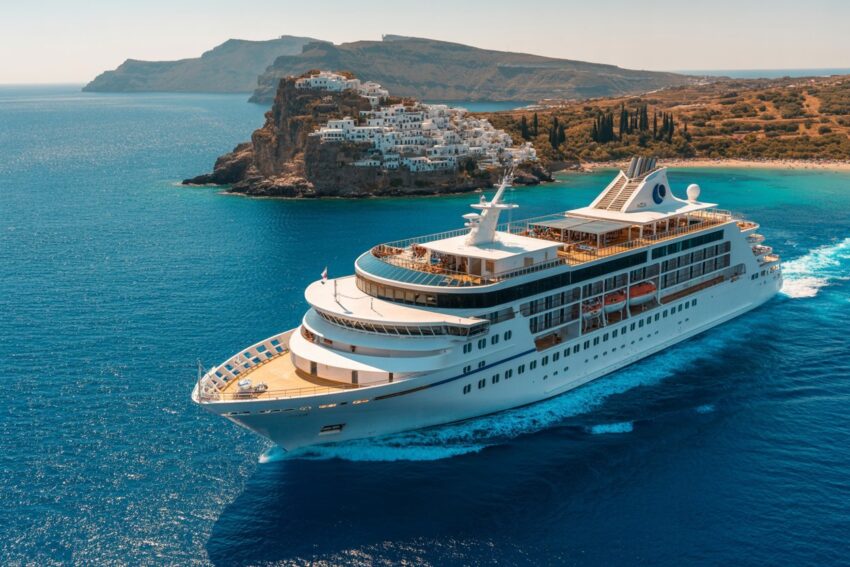 Image generated with Ai
Athens and more European destinations are beckoning global travellers as Oceania and rivals expand European cruise voyages. As a result, Athens, Barcelona, Rome and more are becoming key stops for global travellers seeking richer European cruise experiences. Meanwhile, Oceania is expanding European cruise voyages across the Mediterranean and northern Europe, while rival cruise lines are also adding destination-focused journeys. Therefore, travellers have more choices for discovering Europe by sea. Travel And Tour World explores how Oceania and rivals are reshaping European cruise voyages, from Athens and more historic destinations to scenic northern ports. Read the full story for essential travel insights.
Oceania Cruises Europe 2027-2028: The Detailed Traveller Guide to Routes, Destinations, Statistics and Rival Luxury Voyages
The Oceania Cruises Europe 2027-2028 programme arrives as European tourism continues to operate at historically strong levels. For travellers, the attraction is not simply the number of sailings. The bigger opportunity is the combination of Mediterranean cities, Atlantic ports, Nordic destinations, Icelandic landscapes and smaller European ports within one cruise programme.
Advertisement
Advertisement
Oceania Cruises says its 2027-2028 collection contains more than 230 voyages worldwide. The voyages range from seven to 96 days and cover all seven continents. Its European programme is described as the company’s most extensive European collection to date.
The company also introduces a first-ever winter Mediterranean season aboard Oceania Allura. Those voyages operate between November and March, offering travellers a cooler alternative to traditional peak-season Mediterranean cruising.
Advertisement
Advertisement
For tourists deciding whether to book, the statistics provide useful context. Europe recorded almost 65 million cruise passenger visits to its ports in 2024. That represented about 35% of global cruise passenger visits. European cruise embarkations also approached 10 million in the same year.
Oceania Cruises Europe 2027-2028: What the Programme Actually Covers
Oceania’s European collection stretches across several distinct travel regions.
Advertisement
Advertisement
The Mediterranean remains central, with routes covering Italy, Greece, Spain, France, Turkey and other coastal destinations. Northern Europe adds Britain, Ireland, Scandinavia, Iceland, Greenland and Norway.
The programme also includes smaller and less conventional ports. Milos in Greece and Djupivogur in Iceland are specifically highlighted by Oceania as examples of destinations beyond the traditional European cruise circuit.
Key European destination groups
| Region | Representative destinations | Traveller appeal | Best planning angle |
|---|---|---|---|
| Western Mediterranean | Barcelona, Rome, Florence/Tuscany, French Riviera | Art, food, architecture, history | Combine cruise with pre/post-city stay |
| Eastern Mediterranean | Athens, Istanbul, Greek islands, Turkish coast | Ancient history, islands, cuisine | Choose longer port days |
| Iberia | Lisbon, Porto, Barcelona, Seville area | Food, architecture, culture | Excellent for first-time Europe visitors |
| Northern Europe | Copenhagen, Stockholm, Dublin, British Isles | Design, history, museums | Summer offers longer daylight |
| Iceland | Reykjavik, Djupivogur | Volcanoes, glaciers, landscapes | Allow time for weather-sensitive excursions |
| Norway | Norwegian fjords and coastal ports | Fjords, mountains, waterfalls | Prioritise scenic sailing and nature excursions |
| Adriatic | Croatia, Montenegro and surrounding ports | Historic old towns and coastal scenery | Useful for multi-country itineraries |
Oceania says its European voyages range from the French Riviera to the Turkish coast and from the British Isles towards Greenland and Norway.
Featured Oceania Routes Travellers Should Watch
Several itineraries stand out because they create clear travel themes rather than simply linking ports.
| Voyage | Duration | Ship | Main route | Traveller profile |
|---|---|---|---|---|
| Athens–Barcelona | 12 days | Oceania Allura | Greece to Spain | Culture and Mediterranean travellers |
| Rome–Istanbul | 9 days | Oceania Sirena | Italy, Mediterranean and Turkey | History-focused visitors |
| Copenhagen–Reykjavik | 13 days | Oceania Marina | Scandinavia to Iceland | Nature and Nordic travellers |
| Lisbon–London | 10 days | Oceania Insignia | Portugal to Britain | Food and Atlantic culture |
| Barcelona–Rome | 10 days | Oceania Insignia | Spain, Mediterranean and Italy | Food, art and architecture |
| Athens–Rome | 26 days | Oceania Allura | Greece, Turkey, Spain and North Africa | Long-stay luxury travellers |
| Athens–Barcelona | 10 days | Oceania Aurelia | Greece, Malta, Italy, France and Spain | Festive-season travellers |
The Athens-to-Barcelona winter sailing is particularly notable because Oceania is using the cooler season to reposition Mediterranean cruising as a year-round experience. Its holiday programme also includes a 26-day Athens-to-Rome journey and a 10-day Athens-to-Barcelona festive itinerary.
Travellers should therefore compare itineraries according to the destinations they genuinely want to explore rather than choosing solely by ship or price.
Advertisement
Advertisement
A Destination-by-Destination Travel Plan
Athens
Athens is one of the strongest cultural anchors in the programme.
Travellers should consider allowing at least one full day around the Acropolis, Acropolis Museum and historic central districts. A second day can be used for neighbourhood exploration, food and archaeological sites.
Greece’s tourism performance also demonstrates the destination’s importance. Bank of Greece data show 43.31 million inbound travellers in 2025, up 6.4% from 2024. Travel receipts reached €23.63 billion.
Rome and the Italian coast
Rome works particularly well as a pre-cruise or post-cruise extension.
Travellers can build a three-day land stay around the Colosseum, Vatican Museums, historic centre and local food districts. Cruise passengers arriving through Civitavecchia should allow additional transfer time because the port is outside central Rome.
Italy recorded a record 139.6 million tourist arrivals and 466.2 million tourist nights in accommodation in 2024. International arrivals increased 8.9% from the previous year.
Advertisement
Advertisement
Barcelona
Barcelona is both a destination and an important cruise gateway.
Travellers can combine Gothic Quarter walks, Gaudí architecture, markets and Catalan cuisine with a longer pre-cruise stay.
Spain welcomed 96.8 million international tourists in 2025. That was 3.2% above 2024 and a new national record.
Istanbul
Istanbul offers an unusually strong cultural contrast within a Mediterranean itinerary.
Travellers can build a shore day around the historic peninsula, the Bosphorus and traditional markets. Those staying longer can divide sightseeing between European and Asian sides of the city.
The destination is particularly useful for travellers who want a cruise itinerary with a stronger cross-cultural character.
Advertisement
Advertisement
Lisbon and Porto
Portugal adds an Atlantic dimension to the programme.
Lisbon works well for architecture, viewpoints, food and historic neighbourhoods. Porto offers a different atmosphere, with riverside scenery, traditional architecture and northern Portuguese cuisine.
Travellers should consider extending a Lisbon cruise departure by two nights because flight schedules and port transfers can otherwise compress sightseeing time.
Copenhagen and Stockholm
Northern European sailings demand a different travel strategy.
Summer provides long daylight hours, making walking tours and independent exploration easier. Copenhagen can be organised around Nyhavn, central historic districts and museums. Stockholm works particularly well for travellers interested in maritime history, design and island geography.
Iceland and Norway
The northern itineraries are more nature-focused.
Advertisement
Advertisement
Reykjavik can serve as a base for geothermal experiences and Icelandic landscapes. Djupivogur offers a smaller-scale Icelandic experience.
Norwegian voyages should be approached differently. The scenery itself becomes part of the attraction. Travellers should therefore spend time on deck during scenic sailing rather than treating sea days as simply onboard leisure.
Five-Year Tourism Comparison: The Markets Behind the Routes
A major point for travellers is that destination demand has changed dramatically since the pandemic.
The table below uses official inbound-travel or accommodation-arrival measures available from each national authority. These measures are not perfectly identical, so they should be used for trend comparison rather than direct country ranking.
| Destination | 2021 | 2022 | 2023 | 2024 | 2025 | Main trend |
|---|---|---|---|---|---|---|
| Spain international tourists | 31.2m | 71.7m | 85.2m | 93.8m | 96.8m | Strong five-year recovery |
| Greece inbound travellers* | 14.7m | 27.8m | 36.1m | 40.7m | 43.3m | Sustained recovery |
| Croatia accommodation arrivals | — | — | — | 20.25m | 20.70m | Continued expansion |
| Italy accommodation arrivals | — | — | 134m+ | 139.6m | Latest comparable national annual figure requires separate series | Record levels |
| EU tourism nights | — | — | 2.93bn | 3.0bn+ | 3.1bn | New record in 2025 |
*Greece’s Bank of Greece series excludes some cruise passengers from its inbound-border traveller measure.
Spain’s official FRONTUR series shows the sharpest visible recovery path in the table. International arrivals increased from 31.2 million in 2021 to 71.7 million in 2022, then 85.2 million in 2023, 93.8 million in 2024 and 96.8 million in 2025.
Advertisement
Advertisement
Greece shows an equally significant rebound. Bank of Greece data put inbound travellers at 14.7 million in 2021, 27.84 million in 2022, 36.08 million in 2023, 40.69 million in 2024 and 43.31 million in 2025.
Croatia recorded 20.70 million tourist arrivals in commercial accommodation in 2025, compared with 20.25 million in 2024. Foreign tourists accounted for 17.61 million arrivals in 2025 and 85.61 million nights.
The wider European picture is equally important. Eurostat reported almost 3.1 billion tourist nights in EU accommodation in 2025, including 49.7 million additional nights generated by international guests.
Greece Shows Why Cruise Ports Matter
Greece provides some of the clearest evidence of cruise tourism’s economic significance.
The Bank of Greece recorded 8.18 million cruise passenger visits in 2025, compared with 7.83 million in 2024 and 6.96 million in 2023.
| Greek cruise indicator | 2023 | 2024 | 2025 |
|---|---|---|---|
| Cruise passenger visits | 6.96m | 7.83m | 8.18m |
| Cruise ship arrivals | 5,152 | 5,308 | 5,806 |
| Estimated cruise passengers | — | 5.01m | 5.61m |
| Cruise receipts | — | €1.11bn* | €1.17bn |
| Average port stopovers | 2.0 | 1.6 | 1.5 |
*2024 cruise receipts calculated from the reported 2025 figure and 4.9% annual increase.
Advertisement
Advertisement
Piraeus remained Greece’s leading cruise-receipts port in 2025, accounting for 49.3% of cruise receipts. Corfu followed with 11.9%, while Heraklion represented 7.6%.
For travellers, this reinforces why Greek ports are becoming increasingly important within luxury Mediterranean programmes.
How Oceania Compares With Other Luxury Cruise Lines
Oceania is not alone in developing destination-rich European programmes.
Luxury and premium operators are competing around longer port stays, smaller ships, overnight calls, unusual ports and extended regional voyages.
| Cruise line | 2027-28 European strategy | Example | Distinctive feature |
|---|---|---|---|
| Oceania Cruises | Mediterranean, Northern Europe, Iceland and Nordic routes | Athens–Barcelona, Rome–Istanbul | Culinary and destination focus |
| Regent Seven Seas | Extensive European and Mediterranean network | London–Athens, 82 nights | Long Grand Voyages and included excursions |
| Silversea | Grand Mediterranean and immersive seasonal travel | Lisbon–Lisbon, 60 days | 48 ports across 12 countries |
| Azamara | Destination immersion across Europe | Multiple European sailings | Late nights and overnights |
| Viking | Western European cultural itineraries | London–Barcelona, 19 days | Guided touring and cultural focus |
Regent Seven Seas has announced more than 230 new voyages for its 2027-2028 collection. Its European programme includes a 92-night Grand Arctic Expedition and an 82-night Grand Mediterranean Odyssey from London to Athens.
One Regent 2027 European itinerary, for example, links Venice and Barcelona over 10 nights and includes ports such as Valletta, Palma de Mallorca, Barcelona, Palamós, Cannes, Monte Carlo, Portofino and Livorno before reaching Rome.
Advertisement
Advertisement
Silversea is taking an equally expansive approach. Its 60-day Grand Mediterranean voyage in 2027 runs from Lisbon back to Lisbon and covers 48 ports in 12 countries. The voyage is divided into five sections connecting Lisbon, Rome, Athens, Venice, Monte Carlo and Lisbon.
Azamara’s 2028 European strategy focuses heavily on time ashore. The company says 87% of its 2028 deployment will be spent in port, with more than 360 late nights and overnight stays.
Viking’s 19-day Iconic Western Europe itinerary similarly connects London and Barcelona while covering five countries and 13 guided tours. Its route includes Paris, Bordeaux, Bilbao, Porto, Lisbon, Seville, Tangier, Granada and Mallorca.
What the Competition Means for Travellers
The comparison reveals an important change in luxury cruising.
Cruise companies are increasingly selling access to destinations rather than simply accommodation at sea.
Oceania emphasises culinary experiences and smaller ports. Regent focuses heavily on all-inclusive luxury and extended Grand Voyages. Silversea highlights immersive experiences and multi-country journeys. Azamara puts unusual emphasis on late-night and overnight port stays. Viking combines cruising with structured cultural touring.
Advertisement
Advertisement
This gives travellers more choice.
A food-focused visitor may prefer Oceania. Someone wanting an exceptionally long luxury journey may choose Regent or Silversea. A traveller prioritising evening experiences ashore could consider Azamara. Visitors who prefer guided cultural touring may find Viking particularly attractive.
The Bigger European Cruise Market
The numbers explain why cruise companies are expanding destination variety.
CLIA’s 2024 European report recorded nearly 65 million cruise passenger visits to European ports. Europe generated €31.3 billion in direct cruise-linked spending, while the wider cruise industry supported €64.1 billion in economic output and €28.3 billion in European GDP. The industry supported approximately 445,000 jobs.
The 2025 CLIA Europe Market Report also recorded 8.9 million European source passengers taking ocean cruises worldwide, up 5.3% from 2024. About 45% of European cruise passengers sailed in the Mediterranean, while roughly 31% cruised in non-Mediterranean Europe.
That split is particularly useful for itinerary planning.
Advertisement
Advertisement
The Mediterranean remains the largest single European cruise playground. However, Northern Europe and Atlantic destinations provide strong alternatives for travellers who want cooler weather, scenery and cultural cities.
The Best Traveller Strategy for 2027-2028
Travellers planning an Oceania European cruise should start with the destination map rather than the ship.
Choose Mediterranean itineraries if history, cuisine, beaches and ancient cities are priorities.
Choose Northern Europe if landscapes, architecture, museums and cooler temperatures are more attractive.
Choose winter Mediterranean sailings if avoiding peak summer conditions is important.
Longer voyages are better for travellers who want to combine several regions without repeatedly flying between European cities.
Advertisement
Advertisement
Shorter voyages can work better for first-time cruisers or visitors adding a cruise to a wider European holiday.
The smartest plan is also to add at least one or two hotel nights before embarkation. This creates a buffer against flight disruption and provides extra sightseeing time.
Travellers should also check passport and visa rules for every country on the selected itinerary. Requirements depend on nationality and can change before departure.
Final Travel Outlook
The Oceania Cruises Europe 2027-2028 programme arrives in a European tourism market operating at exceptionally high levels.
Spain reached 96.8 million international visitors in 2025. Greece recorded 43.3 million inbound travellers. Croatia registered more than 20.7 million accommodation arrivals. Across the EU, tourist accommodation recorded almost 3.1 billion nights.
At the same time, European cruise ports handled almost 65 million passenger visits in 2024.
Advertisement
Advertisement
For travellers, the significance is straightforward. Europe is no longer simply a summer cruise destination.
Oceania’s winter Mediterranean programme, Northern European routes and extended destination-rich journeys provide more ways to match a cruise with a specific travel style.
The strongest choice will depend on the experience desired.
Ancient cities favour the Mediterranean. Nordic scenery favours the north. Winter travellers can use the quieter Mediterranean season. Long-haul luxury travellers can combine several regions into one extended voyage.
That flexibility makes the 2027-2028 European cruise season particularly relevant for global travellers seeking a slower, more destination-focused way to experience Europe.
Conclusion
Athens and more European destinations are taking centre stage as Oceania and rival cruise lines expand European cruise voyages. From Athens and Rome to Barcelona, Iceland and Norway, global travellers now have more ways to explore Europe through carefully planned sea journeys. Moreover, the growing range of Mediterranean and Northern European itineraries gives travellers greater flexibility across seasons, destinations and travel styles. Travel And Tour World highlights how these evolving European cruise voyages can help tourists discover iconic cities alongside lesser-known coastal destinations. Ultimately, travellers planning their next European escape can find fresh inspiration by comparing routes, seasons and destinations before booking.
Advertisement
