
Spain Overtakes Greece and Others as Barcelona Claims the Lead Over the Europe and Becomes the Unprecedented Leader of European Cruise Tourism with Record Demand in Tourism, Port Calls and Visitor Arrivals for Six Consecutive Months in 2026

Published
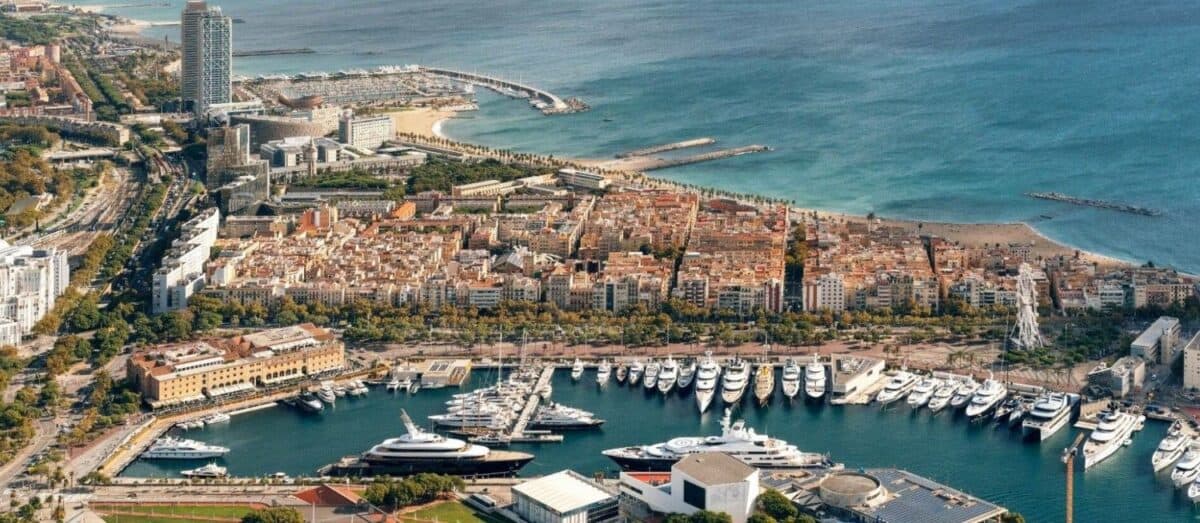
The landscape of European cruise tourism has fundamentally transformed by mid-2026. Spain, anchored by the Port of Barcelona, has officially overtaken historical heavyweights like Greece to claim undisputed leadership in the sector. This is not merely a story of post-pandemic recovery or unchecked growth; it is a strategic realignment driven by Eastern Mediterranean geopolitical tensions, Greece’s strict new sustainability levies, and Barcelona’s masterclass in managing high-value homeporting while capping transient congestion.
The Eastern Mediterranean Bottleneck and the Greek Contraction
To understand Spain’s explosive market dominance in 2026, one must first analyze the deliberate contraction occurring in Greece. In 2025, the Greek cruise sector experienced a historic zenith, processing over 8.4 million passenger visits across more than 6,100 ship calls. While these figures—tracked by the Hellenic Ports Association—represented an all-time high, they also pushed local infrastructure to the absolute breaking point, particularly on marquee islands like Santorini and Mykonos.
Advertisement
Advertisement
In response to mounting domestic pressure and undeniable infrastructural strain, Greek authorities implemented some of the most aggressive anti-overtourism interventions in Mediterranean history. By the summer of 2025, a stringent passenger cap was enforced on Santorini, limiting daily arrivals to 8,000 individuals. This was compounded by the introduction of a peak sustainability levy, charging disembarking passengers 20 euros at the most congested island ports, and 5 euros at all other national ports.
The mathematical fallout of these policies materialized rapidly in 2026. Industry projections and early-year deployment data indicated a national contraction in Greek port calls by nearly 17 percent compared to the previous year, with passenger volumes declining by roughly 9.5 percent. Santorini alone saw its scheduled vessel calls plummet by over 18 percent as major cruise operators began withdrawing or heavily restructuring their Eastern Mediterranean itineraries.
Advertisement
Advertisement
This legislative cooling effect was heavily exacerbated by geopolitical turbulence. Escalating conflicts involving Iran and localized tensions in the Persian Gulf stranded several cruise vessels, prompting all major international cruise lines to view the Eastern Mediterranean and its adjacent waterways as a high-risk operational zone. Consequently, maritime deployment strategists executed a massive, industry-wide pivot toward the perceived stability and robust infrastructure of the Western Mediterranean. Spain, structurally prepared and politically stable, became the primary beneficiary of this maritime exodus.
Barcelona’s Tactical Evolution: Prioritizing Value Over Volume
As vessels rerouted westward, the Port of Barcelona absorbed the demand not by throwing its gates wide open, but by meticulously curating its inbound traffic. During the first half of 2026, passenger movements at the port reached 2.44 million, representing a stable 4.1 percent year-on-year increase. Cruise-specific visitors to the city surpassed one million, growing at a sustainable rate of 3.4 percent.
Advertisement
Advertisement
These figures reveal a highly controlled growth trajectory, dictated by a localized policy of capacity management. Unlike traditional transit ports, Barcelona has strategically positioned itself as the Mediterranean’s premier “homeport”—a hub where passengers begin or conclude their voyages. Homeporting generates a vastly higher economic multiplier for the host city, as travelers typically book local hotels, dine at regional restaurants, and utilize the nearby Josep Tarradellas Barcelona-El Prat airport.
To protect this lucrative economic engine from the pitfalls of transient overtourism, Barcelona implemented decisive structural caps. Authorities concentrated all major cruise activity at the Adossat quay, effectively removing vast passenger ships from the immediate urban center. Furthermore, local taxes on pure transit cruises—where passengers disembark for mere hours without contributing significantly to the local hospitality sector—were raised, creating a financial disincentive for low-yield port calls.
The port’s leadership highlighted that this resilience and ability to maintain positive growth amidst global commercial uncertainty and Strait of Hormuz tensions is entirely due to the diversification of their logistics chains and client base. The port is not merely a tourist gateway; it handled nearly 35.87 million tonnes of overall cargo in the same six-month period, demonstrating an impressive symbiotic relationship between heavy maritime commerce and luxury travel.
The Canary Islands: Spain’s Strategic Release Valve
While Barcelona refined its high-yield homeporting strategy and the Balearic Islands aggressively cut their passenger volumes by over 18 percent through strict maritime traffic restrictions, the overall Spanish cruise sector still required a destination to absorb the massive influx of rerouted global fleets. The Canary Islands emerged as this vital pressure valve, cementing their place as one of Europe’s most critical maritime hubs.
According to mid-year national port data published by Puertos del Estado, the Canary Islands experienced a staggering surge in cruise traffic. Between January and June of 2026, the Port of Las Palmas welcomed over 1.3 million cruise passengers, marking an increase of 9.6 percent, while Santa Cruz de Tenerife processed just over one million arrivals, up 10.2 percent. Combined, the archipelago handled roughly 2.3 million passengers in just six months. Consequently, more than one out of every three cruise passengers arriving in Spain during this period passed through the Canaries.
This explosive growth in the Atlantic archipelago starkly contrasts with the national average. Spain as a whole received 6.38 million cruise passengers in the first half of the year, representing a modest 1.8 percent overall growth. The data indicates a clear internal redistribution of maritime traffic within Spanish borders: high-volume transit routes are increasingly pushed away from the saturated Mediterranean coasts of Palma and Barcelona, finding a welcome reception in the Canary Islands.
Advertisement
Advertisement
Regional leadership in the Canaries has actively embraced this influx. Tourism officials have categorized the surging port calls not as an environmental threat requiring arbitrary caps, but as a crucial opportunity to stimulate related maritime economies, including naval repair, ship provisioning, and tertiary port services. Nevertheless, this rapid expansion has reignited domestic debates regarding resource allocation, as local residents in both island capitals have reported heightened congestion and logistical strain during peak multi-ship docking days.
Infrastructure and Electrification: The Deciding Factor
The underlying reason Spain has been able to accommodate this massive geopolitical shift in maritime tourism without suffering an immediate infrastructural collapse is its relentless investment in port modernization. The Port of Barcelona, in particular, utilized the first half of 2026 to execute several pivotal engineering and ecological milestones.
Chief among these is the advancement of the port’s Onshore Power Supply (OPS) capabilities. New electrical infrastructure contracts were awarded to complete the full electrification of the Adossat wharf. This technology, commonly referred to as “cold ironing,” allows massive cruise liners to shut down their highly polluting diesel engines while docked, plugging directly into the local terrestrial power grid. By heavily subsidizing this infrastructure, Barcelona is proactively neutralizing the primary environmental grievance associated with cruise tourism—air quality degradation—thus securing the industry’s social license to operate within city limits.
Beyond passenger terminals, the broader port logistics reflect a deep commitment to sustainable transition. First-half statistics revealed that 45 percent of all imported vehicles processed through Barcelona were hybrids, plug-in hybrids, or fully electric models, heavily driven by Asian manufacturing imports. Furthermore, compatibility studies with air navigation authorities concluded that planned expansions on future wharves will perfectly integrate with the operations of the nearby international airport, guaranteeing seamless, high-volume intermodal transport for arriving homeport passengers without disrupting regional logistics.
The Broader Spanish Economic Boom
This maritime success does not exist in a vacuum; it is a specialized facet of a nationwide tourism super-cycle. National border movement data confirms that Spain’s broader appeal remains untouchable in 2026. In the month of May alone, the nation received 10.3 million international tourists across all transport modes, representing a nearly 9.5 percent year-on-year increase. Over the first five months of the year, total tourist volume swelled by 5.0 percent.
The cruise sector acts as a powerful economic catalyst within these broader figures. While sea transport accounts for a highly concentrated demographic of arrivals, the cross-pollination of cruise passengers utilizing Spanish aviation, rail networks, and hospitality infrastructure ensures that the financial yield of the cruise sector permeates deep into the terrestrial economy.
Advertisement
Advertisement
Comparative Market Dynamics: Mid-2026
To understand the stark divergence in regional strategies, the following breakdown contrasts the opposing trajectories of the European market leaders based on mid-year data and annual projections.
| Category | Spain (Led by Barcelona & Canaries) | Greece (Led by Piraeus & Aegean Islands) |
| Passenger Volume Trend | Moderate, controlled national growth (+1.8%) | Sharp national contraction (Projected -9.5%) |
| Port Call Projections | Sustained deployment via Canary Island absorption | Significant decline (Projected -16.7%) |
| Policy Mechanisms | Zoned terminal concentration; high-transit taxes | Hard daily passenger caps (e.g., 8,000 in Santorini) |
| Sustainability Fees | Integrated into port fees and regional transit taxes | Peak €20 disembarkation levy at saturated islands |
| Primary Strategic Focus | Maximizing high-yield homeporting (Barcelona) | Rapid crisis management of transit overtourism |
| Geopolitical Exposure | Shielded (Western Med / Atlantic) | Highly exposed (Eastern Med / Red Sea ripple effects) |
The first half of 2026 will be recorded as the moment Spain officially rewrote the rulebook for European cruise tourism. By observing the infrastructural breaking point of its Eastern Mediterranean neighbors and capitalizing on regional instability, Spain engineered a highly sophisticated, multi-tiered maritime economy.
Barcelona’s transition from a volume-obsessed transit stop to a highly regulated, electrified, and premium homeport serves as the blueprint for sustainable urban maritime management. Meanwhile, the strategic utilization of the Canary Islands to capture the overflow of global fleets demonstrates a national logistical coordination that competitors currently lack. As Greece navigates the painful but necessary economic contraction caused by its new sustainability levies and passenger caps, Spain has proven that with the right infrastructure, strict zoning, and an emphasis on ecological modernization, economic dominance and environmental stewardship can successfully coexist on the high seas.
Authentic Citations (As of July 30, 2026)
- **** Vivi Le Canarie (July 28, 2026). Record Cruise Traffic in Las Palmas and Santa Cruz: 2.4 Million Passengers Reopen the Capacity Debate. Details Puertos del Estado H1 2026 Statistics and regional distribution.
- **** Port Technology International (July 28, 2026). Port of Barcelona posts strong H1 2026 container growth. Sources Autoritat Portuària de Barcelona official traffic indicators, passenger growth, and electrification efforts.
- **** Port Technology International (July 28, 2026). Provides additional context on cargo logistics and hybrid vehicle import data for the Port of Barcelona.
- **** Data Portuaria (July 24, 2026). Port of Barcelona Records 3.5% Growth in Cargo Movements in H1 2026. Highlights statements from the Port’s Director General regarding geopolitical resilience.
- **** BSSC (April 8, 2026). Greece sets record for passenger ship visits in 2025 and hopes for a good 2026. Cites Hellenic Ports Association (ELIME) historical data for the 2025 peak.
- **** Greek Trip Planner (May 6, 2026). Greece Cruise Tourism Statistics 2025: Records, the €20 Levy, and a 2026 Correction. Details CLIA 2026 deployment forecasts, the €20 levy, Santorini’s passenger caps, and the geopolitical impact of the Iran conflict.
- **** Instituto Nacional de Estadística – INE (July 2, 2026). Tourist Movement on Borders Survey Frontur. Latest data. Confirms May 2026 and H1 overall tourism growth percentages for Spain.
- **** Instituto Nacional de Estadística – INE (July 2, 2026). Detailed monthly results for international tourist arrivals by entry point, corroborating the 5.0% aggregate rise in Spanish tourism.
Advertisement
