
Akihabara Joins Osaka, Saitama, Yokohama, and Fukuoka as Fandom Rewrites the National Travel Map: How Gen Z Travel Trends Japan and a Six Hundred and Ninety-Seven Percent Sales Explode Disperse Crowds to Hidden Rural Towns

Published
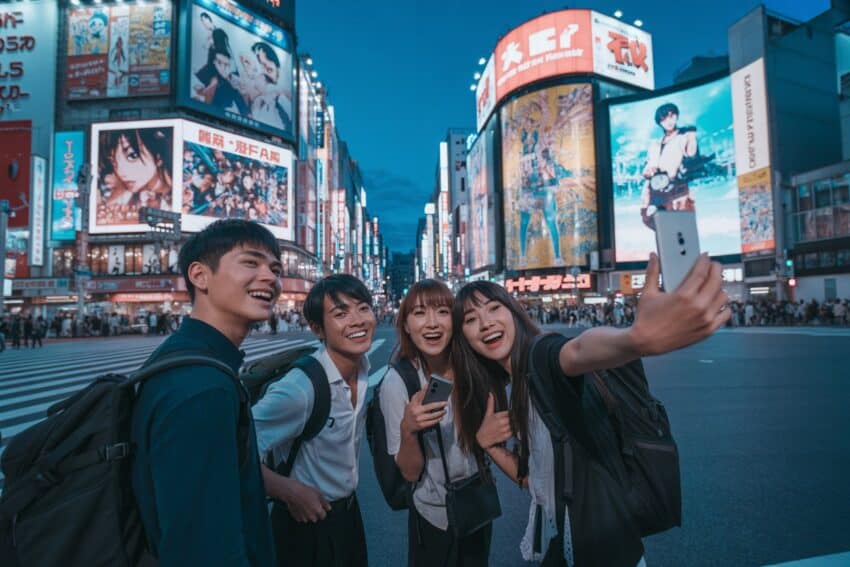
Anime Tourism Japan 2026: the New Engine Powering the Post-Pandemic Regional Renaissance
The global travel landscape has shifted from generic sightseeing to highly personalized, experiential itineraries. This structural shift is nowhere more obvious than in East Asia, where a massive influx of international travelers is setting foot in the country with entirely new motivations. Driven by global streaming accessibility and deep-seated multi-generational fandom, Anime tourism Japan 2026 has firmly established itself as an undeniable macroeconomic powerhouse.
Historically treated as a subcultural curiosity, traveling to see the real-life settings of popular media IPs has graduated into a multi-billion-dollar pillar of the state’s soft power strategy. This cultural phenomenon is sparking an unprecedented Japan travel economy boom, reshaping how airlines, regional municipalities, and hospitality conglomerates map out their financial forecasts. Today, millions of travelers choose their destinations based entirely on the scenes they watched on screen.
Advertisement
Advertisement
Beyond Tokyo: Unveiling the Rise of Akihabara Osaka anime travel hubs
While Tokyo has traditionally captured the lion’s share of international pop-culture travelers, the geographic concentration of fandom is changing fast. The emergence of highly competitive Akihabara Osaka anime travel hubs is expanding the map, giving visitors distinct regional epicenters to anchor their trips. Osaka’s Nipponbashi district (popularly known as Den-Den Town) has emerged as a major powerhouse rivaling Tokyo’s traditional districts, offering massive character cafés, retro arcade complexes, and independent doujinshi markets.
       [ Regional Growth Tracker: Hotel Booking Surge ]

       Odaiba (Summer Event Windows)  ██████████████████ 78%
       Akihabara Central District    ██ 10%
       Osaka Nipponbashi Corridor    ██ 10%
This geographic decentralization is directly influencing local real estate and accommodation markets. Data from major travel booking agencies highlights that the expansion of Akihabara Osaka anime travel hubs has stabilized hotel occupancy rates year-round, eliminating traditional seasonal dips. By spreading the wealth away from just a few blocks in the capital, these newly decentralized Akihabara Osaka anime travel hubs are injecting steady consumer spending directly into Western and Southern Japan’s local retail and transit sectors.
Advertisement
Advertisement
Tracking Gen Z travel trends Japan: The Mobile-First Generation Defining the Market
The demographics driving this massive financial movement are young, tech-savvy, and deeply intentional. Analysts monitoring global Gen Z travel trends Japan point out that these travelers are not looking for passive tour buses; they want hyper-immersive, highly shareable cultural interactions. This generational shift heavily shapes how hospitality brands operate, forcing them to pivot toward experiential offerings like themed fantasy glamping, pop-up concept diners, and high-tech digital interactive installations.
Industry Insight: Over 50% of recent international ticket buyers for major local pop-culture conventions are aged between 25 and 34, showcasing the absolute dominance of younger cohorts in this economic space.
Advertisement
Advertisement
Furthermore, analyzing Gen Z travel trends Japan reveals a unique spending pattern: these travelers are highly willing to skimp on luxurious traditional flights if it means maximizing their budgets for exclusive, location-bound merchandise and event access. This exact spending behavior is the core fuel sustaining the Japan travel economy boom. Because these young demographics rely on social media algorithms rather than old-school travel brochures, regional destinations that went unrecognized a decade ago are suddenly finding themselves trending globally overnight.
The Sacred Journey: How Anime pilgrimage seichi junrei Connects Media to Reality
At the absolute beating heart of this cross-border boom is an evocative cultural custom known locally as Anime pilgrimage seichi junrei (translated literally as “sacred site pilgrimage”). This unique behavior involves tracking down and standing in the exact real-world locations used as backgrounds in hit series and animated films. For the modern traveler, completing a successful route of Anime pilgrimage seichi junrei transforms regular animation into a tangible, shared physical reality.
| Real-World Destination | Iconic Media Tie-In | Local Economic Impact |
| Suga Shrine Steps (Tokyo) | Your Name (Kimi no Na wa) | Upgraded pedestrian signs and surrounding shop revenue. |
| Kamakura-Kōkō-mae Crossing | Slam Dunk | Massive coastal rail ridership and international traffic. |
| Hokuei Town (Tottori) | Detective Conan | Transformed a small agricultural village into a global museum town. |
The sheer dedication required for these journeys shows how Anime pilgrimage seichi junrei completely subverts conventional tourism. Fans are enthusiastically bypassing standard resort destinations to visit quiet residential rail crossings, remote rural shrines, or everyday suburban convenience stores. This highly decentralized foot traffic means that Anime pilgrimage seichi junrei acts as a brilliant organic solution to metropolitan overtourism, successfully distributing foreign capital deep into hidden rural prefectures.
Analyzing the Macroeconomics of the Modern Japan travel economy boom
To truly understand the scope of this phenomenon, one must look closely at the macro-level indicators defining the broader Japan travel economy boom. Foreign visitor spending has recently broken historic records, climbing to an estimated 60 billion USD annually. According to official statistical surveys compiled by the Japan Tourism Agency, the proportion of inbound international tourists who explicitly declare media-related site visits as a primary goal for their journey has spiked to a historic 7.5%.
            [ Inbound Tourism Spending Breakdown ]

            Traditional Sightseeing/Food   ███████████████ 75.0%
            Pop-Culture/Media Pilgrimage   ██ 7.5%
            Business/MICE Conventions      █ 6.2%
            Other Experiential Travel      █ 11.3%
This sustained Japan travel economy boom is additionally supercharged by major seasonal events. For instance, massive conventions like Tokyo’s world-famous AnimeJapan and the bi-annual Comiket gatherings create massive, multi-million-dollar spikes across the entire domestic service economy. During these peak event windows, international ticket sales have posted near-sevenfold increases year-on-year, pushing local hospitality capacities to their absolute limits and showcasing how deeply embedded pop culture is within the national infrastructure.
The Future of Experiential Global Transit: Looking Ahead at Anime tourism Japan 2026
As the market continues to expand and mature, the strategic initiatives surrounding Anime tourism Japan 2026 are becoming much more institutionalized. The domestic Anime Tourism Association—which curates the highly influential, fan-voted list of the top 88 official pilgrimage sites—notes that international ballots now account for nearly half of the total global vote. This deep cross-border engagement proves that Anime tourism Japan 2026 is no longer just an organic domestic hobby; it is a meticulously structured international asset.
Advertisement
Advertisement
Looking forward, the long-term sustainability of Anime tourism Japan 2026 will rely heavily on maintaining a careful balance between hyper-modern technological innovation and protecting local community well-being. By integrating advanced augmented reality smartphone tools directly into historic walking trails, municipalities are giving fans deeper, highly immersive interactive elements without disturbing the everyday lives of local residents. This careful, forward-thinking approach ensures that the country will remain the world’s premier destination for high-impact experiential pop-culture travel for generations to come.
Final Analytical Forecast: The Lasting Footprint of Pop-Culture Mobility
Ultimately, the confluence of shifting generational values and Borderless Media Intellectual Properties has forever changed global travel logistics. The ongoing development of robust Akihabara Osaka anime travel hubs ensures that secondary metropolitan regions will remain financially resilient and globally connected. At the exact same time, watching the unique, tech-driven choices built into Gen Z travel trends Japan provides global hospitality firms with a valuable, forward-looking blueprint for engaging the modern consumer.
As long as fans feel a deep, emotional connection to the animated stories on their screens, the cultural ritual of Anime pilgrimage seichi junrei will continue to drive passionate travelers across oceans. This cultural loyalty translates directly into a reliable, highly resilient financial foundation, guaranteeing that the ongoing Japan travel economy boom will remain an active, major catalyst for the country’s creative and regional corporate development.
Advertisement
