
Tom Cruise Joins David Beckham, Paris Hilton, Leonardo DiCaprio, Justin Bieber and Jamie Foxx as Los Angeles Turns the FIFA World Cup 2026 Opener Into a Global Tourism and Entertainment Phenomenon Drawing Worldwide Visitors to SoFi Stadium—Here Is Why the Travel Industry Is Paying Attention

Published
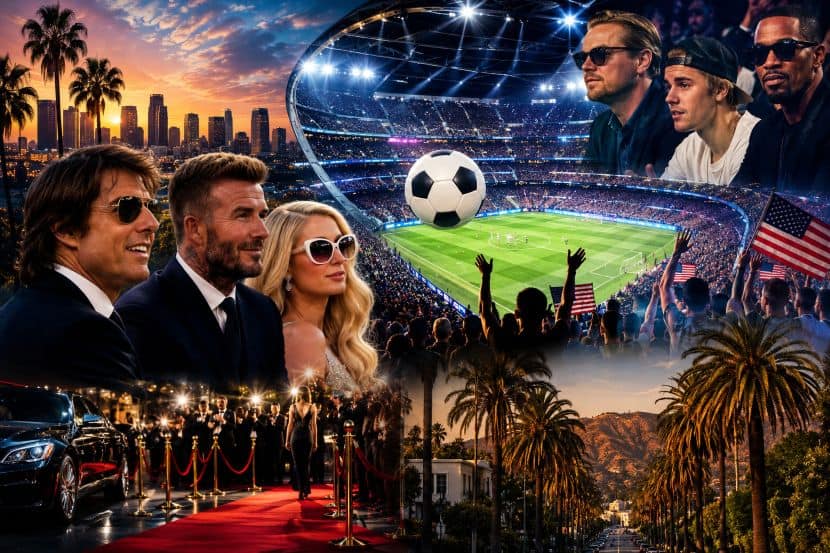
The opening week of the FIFA World Cup 2026 has rapidly evolved into far more than a sporting spectacle, emerging as one of the most influential global tourism and entertainment events of the decade. In Los Angeles, where the United States launched its campaign with a commanding victory over Paraguay at SoFi Stadium, an extraordinary gathering of Hollywood icons, music stars, sports legends, and international celebrities transformed the match into a worldwide cultural moment. Tom Cruise, David Beckham, Paris Hilton, Leonardo DiCaprio, Justin Bieber, Jamie Foxx and Kareem Abdul-Jabbar were among the high-profile figures seen attending the tournament opener, reinforcing the event’s growing appeal beyond traditional football audiences.
For the travel industry, the significance extends well beyond celebrity sightings. The United States, Canada and Mexico, the three host nations of the expanded 48-team tournament, are witnessing heightened visitor flows, increased hotel demand, stronger aviation bookings and unprecedented international media exposure. Simultaneously, FIFA’s strategy of blending elite football with entertainment-driven ceremonies is reshaping how major sporting events attract travellers. From Los Angeles to Mexico City and Toronto, opening-week festivities demonstrated how sports tourism, destination marketing, live entertainment and celebrity culture are increasingly interconnected, creating powerful economic opportunities for host cities while enhancing the global appeal of the largest FIFA World Cup in history.
Celebrity World Cup Tourism Drives Global Attention Towards Los Angeles
The opening fixture between the United States and Paraguay at SoFi Stadium attracted attention far beyond football circles.
Hollywood superstar Tom Cruise and football icon David Beckham emerged among the most discussed attendees. Their appearance was complemented by a broader celebrity presence that included Paris Hilton, Leonardo DiCaprio, Justin Bieber, Jamie Foxx and basketball legend Kareem Abdul-Jabbar.
Advertisement
Advertisement
For tourism boards and destination marketers, such appearances carry significant value. Celebrity attendance amplifies global media coverage, generates social media engagement and increases destination visibility among potential travellers who may not otherwise follow football.
Los Angeles, already one of the world’s most visited urban destinations, received extensive international exposure through television broadcasts, digital platforms and entertainment media coverage associated with the World Cup opener.
Advertisement
Advertisement
Key Celebrities Spotted at the World Cup Opener
| Celebrity | Industry | Significance for Tourism Visibility |
|---|---|---|
| Tom Cruise | Film | Global Hollywood recognition |
| David Beckham | Football | International football ambassador |
| Paris Hilton | Entertainment | Lifestyle and luxury travel influence |
| Leonardo DiCaprio | Film | Worldwide media attraction |
| Justin Bieber | Music | Strong youth audience reach |
| Jamie Foxx | Entertainment | Cross-industry celebrity appeal |
| Kareem Abdul-Jabbar | Sports | American sporting heritage |
How FIFA World Cup 2026 Is Reshaping Sports Tourism
The 2026 edition represents the largest FIFA World Cup ever staged.
Tournament Scale at a Glance
| Category | FIFA World Cup 2026 |
|---|---|
| Host Countries | United States, Canada, Mexico |
| Teams | 48 |
| Matches | 104 |
| Host Cities | 16 |
| Expected International Visitors | Millions across three nations |
| Tournament Duration | Approximately six weeks |
The expansion from 32 to 48 teams has significantly increased travel opportunities throughout North America. More participating nations translate into larger travelling fan bases, increased hotel occupancy rates, expanded airline capacity and stronger tourism revenues across host destinations.
Advertisement
Advertisement
According to FIFA projections released during tournament planning phases, the competition is expected to generate billions of dollars in economic activity across the three host countries through tourism spending, hospitality services, transportation demand and event-related consumption.
From Los Angeles to Mexico City and Toronto, Entertainment Becomes a Tourism Asset
One of the defining characteristics of FIFA World Cup 2026 has been the integration of large-scale entertainment programming alongside football.
Before kickoff in Los Angeles, audiences witnessed performances from Katy Perry, Future, LISA, Anitta and Rema, creating a globally appealing entertainment showcase.
Meanwhile, celebrations in Mexico City featured internationally recognised Latin music performers, while Toronto highlighted Canadian artists to strengthen local cultural representation.
Advertisement
Advertisement
This approach reflects a broader shift in destination marketing.
Rather than promoting matches alone, host cities increasingly package sporting events as complete travel experiences that combine:
- Football
- Live music
- Cultural programming
- Culinary tourism
- Urban exploration
- Entertainment districts
The result is longer visitor stays and higher spending per traveller.
Why Celebrity-Driven Sporting Events Matter for Travel Businesses
The presence of globally recognized celebrities has become an important economic catalyst for host destinations.
Research across major sporting events consistently shows that celebrity engagement contributes to:
| Tourism Impact Area | Potential Benefit |
|---|---|
| International Media Exposure | Increased destination awareness |
| Social Media Reach | Millions of additional impressions |
| Hotel Demand | Higher occupancy rates |
| Event Ticket Demand | Stronger secondary sales |
| Luxury Travel Spending | Increased premium tourism activity |
| Destination Branding | Enhanced global recognition |
For travel companies, airlines, tour operators and hospitality groups, celebrity visibility can significantly influence traveller behaviour.
Advertisement
Advertisement
Destinations associated with major cultural moments often experience stronger post-event tourism demand, particularly among younger travellers seeking experiential journeys.
Celebrity Tourism Effect: How Star Appearances Influence Travel Decisions
The growing influence of celebrity culture is increasingly shaping travel trends, destination branding and tourism demand worldwide. Major international sporting events such as the FIFA World Cup have become powerful platforms where sport, entertainment and tourism converge, creating significant exposure for host destinations. When globally recognised figures including Tom Cruise, David Beckham, Leonardo DiCaprio, Justin Bieber and Paris Hilton attend high-profile matches, their presence extends the event’s reach far beyond traditional sports audiences.
For host cities such as Los Angeles, celebrity attendance delivers substantial tourism value. Images and videos shared across social media platforms, entertainment news outlets and international broadcasts introduce destinations to millions of potential travellers who may not otherwise follow football. As a result, the city becomes associated not only with the sporting spectacle itself but also with glamour, exclusivity and cultural relevance. Tourism experts often describe this phenomenon as the “celebrity halo effect”, where destinations benefit from the visibility and aspirational appeal generated by high-profile visitors.
The FIFA World Cup opener at SoFi Stadium demonstrated this trend on a global scale. Celebrity appearances transformed the match into a broader cultural event, attracting attention from movie fans, music followers, lifestyle audiences and luxury travellers. This heightened visibility contributes to stronger destination awareness, increased visitor interest and greater international media exposure.
Moreover, celebrity-driven tourism can have lasting economic benefits. Hotels, restaurants, entertainment venues and local attractions often gain additional visibility through extensive coverage of celebrity visits. As travellers increasingly seek experiences connected to major cultural moments, destinations that successfully combine sport, entertainment and celebrity appeal are becoming more competitive in the global tourism marketplace. For Los Angeles, the World Cup opener served as both a football showcase and a highly effective international tourism promotion campaign.
When the World Cup Meets Hollywood: Los Angeles Creates a New Blueprint for Global Sports Tourism
The FIFA World Cup 2026 opener in Los Angeles highlighted a distinctive tourism advantage that few host cities can replicate: the convergence of world-class football and the global entertainment industry. While football fans travelled to SoFi Stadium to witness the United States begin its World Cup campaign, the presence of Hollywood stars, music icons and influential public figures elevated the event into a broader cultural phenomenon. The attendance of celebrities such as Tom Cruise, Leonardo DiCaprio, Justin Bieber, Jamie Foxx and David Beckham effectively transformed a sporting fixture into an international lifestyle event, generating media exposure that reached audiences far beyond football supporters.
Advertisement
Advertisement
For Los Angeles, this fusion of sport and entertainment represents a powerful tourism asset. Unlike many traditional sporting destinations, the city offers visitors the opportunity to experience a World Cup match while simultaneously engaging with the glamour associated with Hollywood, Beverly Hills, world-famous entertainment districts and celebrity culture. As a result, the destination appeals not only to sports travellers but also to luxury tourists, film enthusiasts, event-goers and international visitors seeking unique experiences. The World Cup therefore serves as a catalyst for multiple tourism segments, helping Los Angeles position itself as one of the world’s most versatile event destinations.
How Football and Hollywood Combine to Strengthen Tourism Demand
| Tourism Element | Football Contribution | Hollywood Contribution | Combined Tourism Impact |
|---|---|---|---|
| Global Audience Reach | International football fans | Film and entertainment audiences | Wider destination visibility |
| Media Coverage | Sports broadcasters | Entertainment media outlets | Increased global exposure |
| Visitor Demographics | Sports tourists | Luxury and lifestyle travellers | Broader tourism appeal |
| Social Media Engagement | Match-related content | Celebrity-driven content | Higher online engagement |
| Hospitality Demand | Fan travel bookings | VIP and premium tourism | Increased hotel occupancy |
| Destination Branding | Sports destination image | Glamorous global city image | Stronger international reputation |
| Economic Benefits | Matchday spending | Luxury spending and events | Enhanced visitor economy |
This unique blend of football tourism and Hollywood tourism is emerging as one of the defining characteristics of FIFA World Cup 2026, demonstrating how modern sporting events can become powerful engines of destination marketing, international visitor growth and long-term tourism development.
Travel Infrastructure Faces Its Biggest Global Test
While celebrities captured headlines, the tournament also serves as a large-scale test of North America’s travel infrastructure.
The World Cup requires coordination across:
- Airports
- Airlines
- Public transportation systems
- Border agencies
- Hotels
- Tourism authorities
Host cities are managing millions of visitor movements throughout the competition.
Major Gateway Airports Supporting World Cup Tourism
| City | Primary Airport |
|---|---|
| Los Angeles | Los Angeles International Airport (LAX) |
| Mexico City | Mexico City International Airport |
| Toronto | Toronto Pearson International Airport |
| Miami | Miami International Airport |
| New York/New Jersey | Newark Liberty International Airport |
| Dallas | Dallas Fort Worth International Airport |
These gateways are expected to process substantial increases in international passenger volumes throughout the tournament period.
Advertisement
Advertisement
What Travellers Can Learn From the Opening Week
The first week of FIFA World Cup 2026 offers several lessons for sports travellers planning future tournament visits.
Practical Travel Insights for World Cup Visitors
Book Accommodation Early
Major host cities are experiencing elevated demand. Premium properties near stadium districts often sell out months before key fixtures.
Use Public Transport Where Possible
Traffic congestion around major stadiums can significantly increase travel times on match days.
Explore Beyond Match Venues
Cities such as Los Angeles, Mexico City and Toronto offer extensive cultural attractions that complement the football experience.
Monitor Flight Availability
As knockout rounds approach, airline demand may increase substantially on routes serving host destinations.
Los Angeles Emerges as a Global Event Capital
The successful staging of the United States opener further strengthens Los Angeles’ reputation as one of the world’s leading event destinations.
Advertisement
Advertisement
Already preparing for future global sporting events and major international gatherings, the city leveraged the World Cup opener to showcase its hospitality infrastructure, entertainment ecosystem and tourism assets to a worldwide audience.
The combination of elite football, celebrity attendance and globally recognised performers created an event capable of reaching audiences far beyond traditional sports fans.
For tourism stakeholders, this visibility represents a long-term destination marketing opportunity that could continue generating travel interest long after the final whistle of the tournament.
Beyond Football: The New Era of Celebrity World Cup Tourism
The opening week of FIFA World Cup 2026 demonstrated how modern sporting events have evolved into multidimensional travel experiences. The presence of Tom Cruise, David Beckham, Paris Hilton, Leonardo DiCaprio, Justin Bieber and Jamie Foxx helped transform Los Angeles into the focal point of a global cultural conversation, while parallel celebrations in Mexico City and Toronto reinforced the tournament’s continental reach.
As millions of visitors continue travelling across the United States, Canada and Mexico, Celebrity World Cup Tourism is emerging as a defining trend of the competition. The fusion of football, entertainment, destination marketing and international travel is creating new opportunities for host cities, airlines, hotels and tourism businesses. More importantly, it illustrates how the FIFA World Cup has become not only a sporting championship but also one of the world’s most influential tourism platforms.
Advertisement
