
Major Border Changes in 2026 Could Disrupt UK Summer Travel – Preparation Guide

Published
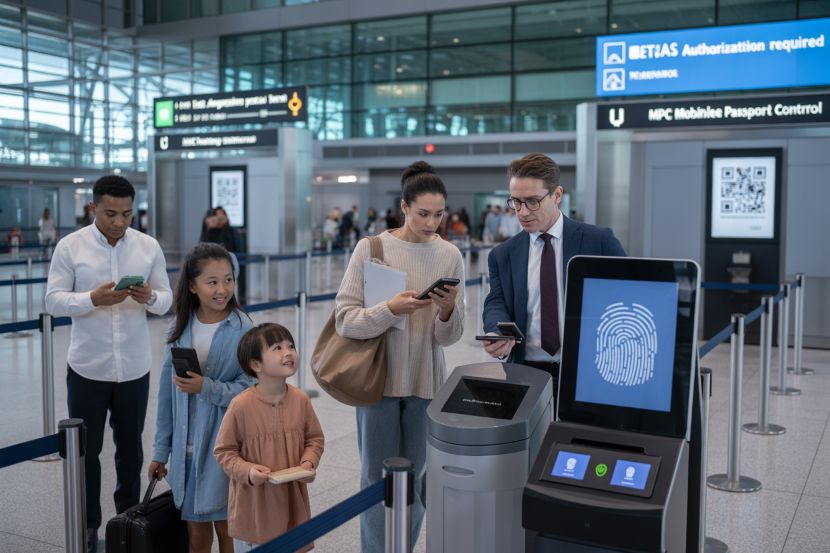 Image generated with Ai
As more than half of British travellers prepare holidays abroad in 2026, experts are urging anyone planning trips to Paris, Barcelona, Rome or beyond to understand a sweeping set of travel rule changes that will affect everything from border checks to passport requirements. Holidaymakers who fail to familiarise themselves with updated rules risk delays at airports and ports, denied boarding or confusion at immigration control. Official guidance from the UK Government and European authorities underlines the need for clear documentation and extra time when travelling next year.
Holiday searches are climbing — with search interest for “summer holiday deals” up sharply — but rising traveller enthusiasm comes amid a landscape of digital authorisations and biometric systems that require readiness long before departure.
Advertisement
Advertisement
Biometric Border Checks Be Part of the New Normal (EES)
One of the most significant changes on the horizon is the implementation of the EU’s Entry/Exit System (EES), a digital border security platform now rolling out across Schengen Area external borders. This system replaces traditional passport stamping with a fully electronic process.
What EES Means for UK Travellers
- UK passport holders will have biometric data recorded on arrival and departure — this includes fingerprints and facial recognition.
- The system launched on 12 October 2025 and is being progressively rolled out, with full implementation expected by April 10, 2026 at all participating borders.
- This affects flights, train (Eurostar) journeys and ferry crossings to countries in the Schengen zone.
Unlike traditional passport stamps, biometric entry records help authorities monitor stay durations and strengthen border security but may require extra time when passing through immigration, especially during peak holiday periods.
Advertisement
Advertisement
Travel tip: Arrive at least 90 minutes before departure for short‑haul departures and 2–3 hours for long‑haul flights to accommodate biometric processing.
ETIAS – Pre‑Travel Authorisation for Europe
Looking ahead, the European Travel Information and Authorisation System (ETIAS) will introduce a new requirement for many UK travellers visiting the Schengen Area.
This is similar to electronic systems like the US ESTA or the Canadian eTA.
Advertisement
Advertisement
Key ETIAS Facts
- Expected to begin operating late 2026 and become mandatory for visa‑free travel to most European countries (excluding Ireland and the UK).
- Requires online application before travel.
- Application fee is €20 (approximately), valid for up to three years or until passport expiry.
- Required for short stays of up to 90 days within a 180‑day period in the Schengen area.
Travellers planning trips later in the year should prepare to apply once ETIAS opens, and avoid unofficial sites that mimic the official application platform.
UK Electronic Travel Authorisation (ETA) for Incoming Visitors
From 25 February 2026, the UK has expanded enforcement of its Electronic Travel Authorisation (ETA) system for non‑visa UK travellers, aimed at enhancing border security.
Many holidaymakers from visa‑free countries, including the USA, Canada, Australia and others, must now hold an ETA before boarding flights or ferries to the UK.
The ETA is not a visa, but it is a mandatory pre‑travel clearance for those eligible, similar in function to the ETIAS system in Europe.
Travel tip: Apply for a UK ETA early — it can take several days to process — and always use the official gov.uk/eta service to avoid unnecessary fees or delays at check‑in.
New Passport Rules for Dual Nationals from February 2026
A significant change effective from 25 February 2026 affects British dual nationals returning to the UK or departing from it. Under new rules:
- Dual citizens must travel with a valid UK passport when entering the UK.
- Alternatively, they may hold a certificate of entitlement stamped in their foreign passport proving right of abode in the UK, though this option is more costly and takes longer to obtain.
The new regulation is part of the government’s implementation of digital border frameworks including ETA and means that travellers who previously used their other nationality passport may now face denied boarding if they lack the correct documentation.
Advertisement
Advertisement
Travel tip: Dual nationals should check passport validity well before departure and consider renewing UK passports to avoid unnecessary travel disruption.
Preparing for US Travel Requires the MPC App
Travellers visiting the United States are also facing changes. Increasingly, passengers will be required to use the Mobile Passport Control (MPC) app to expedite entry into the US. This involves:
- Creating a traveller profile
- Uploading a passport photo
- Answering pre‑arrival questions
- Generating a QR code for scanning at US immigration checkpoints
Though designed to speed up entry, it adds an extra pre‑departure step some may overlook.
Airport Security and Carry‑On Rules Remain Variable
Some airports, notably London Heathrow, have removed the 100 ml liquids restriction due to upgraded scanning technology. However, this relaxation does not apply universally, and returning travellers into other UK or international airports may still be subject to the traditional rule. Travellers carrying essential medication are advised to have prescriptions on hand, as replacements abroad can be both costly and time‑consuming.
Tips for Smooth Travel Planning in 2026
- Check Passport Validity Now: Ensure your passport meets all destination requirements, especially if you hold dual nationality.
- Apply for Relevant Authorisations Early: Secure UK ETA and plan for ETIAS as soon as it becomes available.
- Arrive Early at Ports and Airports: Allow extra time for biometric processing under EES.
- Keep Digital and Printed Documents Handy: Include travel authorisations, ID and itinerary details.
- Use Official Government Sites: For ETA/ETIAS applications, always use authorised platforms.
- Factor Time for Border Control: Expect queues or additional checks, particularly in peak seasons.
Key Points at a Glance
- EU Entry/Exit System (EES) will fully replace passport stamps with biometric checks by April 10, 2026 for UK travellers.
- ETIAS travel authorisation is scheduled to launch late 2026 for visa‑free visits to the Schengen Area.
- UK ETA enforcement expands from February 25, 2026 for visa‑exempt visitors.
- Dual nationals must use UK passports or valid certificates to travel to and from the UK.
- MPC app will be increasingly needed for travel to the United States.
Final Thoughts
Travel in 2026 is set to feel different from previous years, but with timely preparation and awareness of the digital systems now governing international borders, holidaymakers and business travellers can still enjoy memorable trips across Europe and beyond. Understanding these changes ahead of time will make the difference between smooth entry and unnecessary delays or stress — with official government travel advice serving as the best starting point for planning.
Advertisement
