
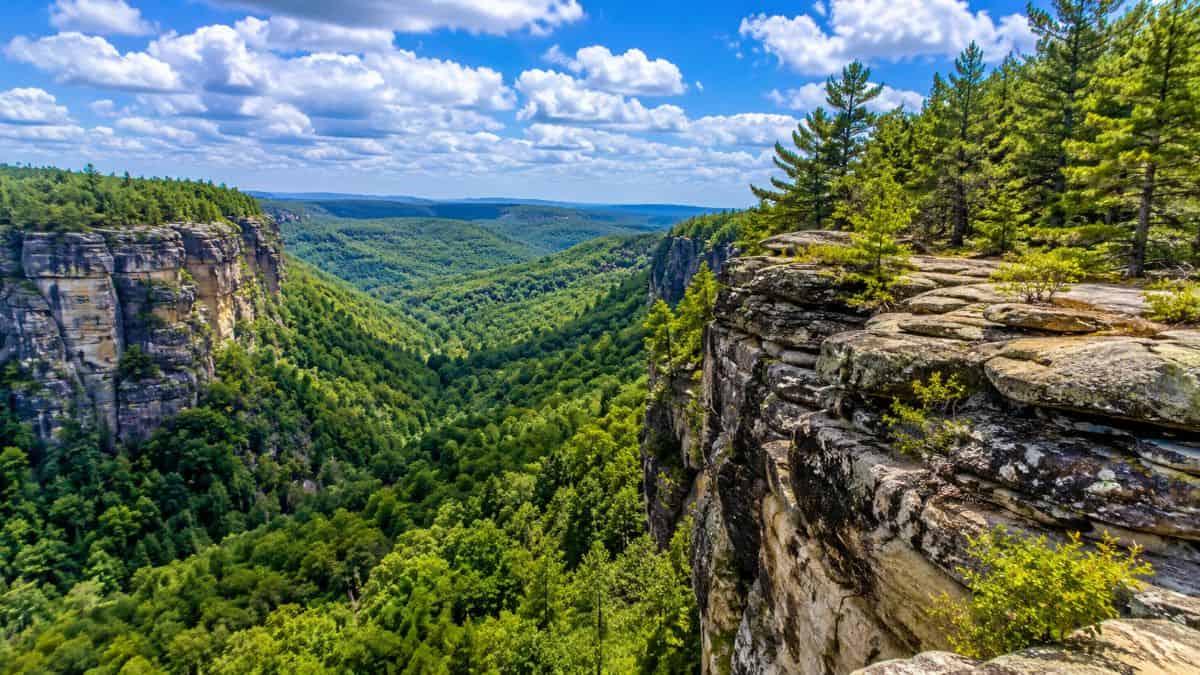
Image generated with Ai
The Cumberland Plateau in Tennessee contains dramatic scenery for travelers away from the more popular mountains in this state, and Pogue Creek Canyon State Natural Area is a prime example. This 3,000+ acre area in Fentress County, outside of Jamestown, contains many sandstone cliffs, gorges, arches, and rockhouses. A hiker can find a variety of ecosystems, and since many don’t visit this area, Pogue Creek has many hiking trails with stunning views and not many hikers.
If a traveler is coming from Knoxville or Louisville, they can make this natural area a nice one-day trip or an attractive stop on a multi-day trip hiking the Cumberland Plateau. Pogue Creek has over 5 miles of natural hiking trails, all of which have either a moderate or strenuous difficulty rating. These trails take visitors through the beautiful canyons and interesting rock formations that this area is known for. Pogue Creek is important for both recreation and conservation of rare plant species in the state of Tennessee.
The defining attraction at Pogue Creek Canyon is its unusual sandstone landscape. Steep walls, exposed rock layers and forest-covered slopes create a setting that can feel more reminiscent of the American Southwest than the southeastern United States.
Two major viewpoints make the canyon especially rewarding for visitors. The Pogue Creek Canyon Overlook Trail leads hikers toward broad views of sandstone bluffs rising above the wooded gorge. The Mesa Top Trail provides another perspective from higher terrain, allowing travelers to look across the canyon and appreciate the scale of the surrounding plateau.
Advertisement
The official management plan describes Pogue Creek as a landscape of rugged canyons, lush forests and meandering streams, with multiple rockhouses and sandstone formations providing scenic viewpoints.
Pogue Creek’s appeal extends beyond its overlooks. The hiking routes reveal natural formations shaped by erosion over long periods, including sandstone arches and substantial rock shelters.
Killdeer Arch is among the area’s recognizable geological features, while rockhouses provide another glimpse into the region’s natural and cultural history. These large overhangs are characteristic of the Cumberland Plateau and demonstrate how the area’s sandstone geology has influenced both ecosystems and human use of the landscape.
The state’s designation documents identify scenic gorges, numerous cliffs, sandstone arches, waterfalls and rockhouses among Pogue Creek’s defining features.
Pogue Creek is particularly attractive to travelers who prefer active sightseeing rather than viewing scenery solely from a roadside stop. Its trails move through forest, along canyon edges and toward geological features, creating opportunities to experience the landscape at different elevations.
Feature Travel Information Location Fentress County, northern Cumberland Plateau Natural area size About 3,000 acres Trail network More than 5 miles within Pogue Creek Trail difficulty Moderate to strenuous Main scenery Canyons, sandstone cliffs, arches and rockhouses Nearby destination Pickett CCC Memorial State Park Wildlife Diverse native species and rare plants Best experience Hiking, photography, nature observation and scenic exploration
The Tennessee Department of Environment and Conservation notes that state natural areas are specifically managed to protect native plants, animals and natural communities. That conservation mission is particularly important at Pogue Creek because of its rare species and distinctive ecological setting.
The scenery is only part of Pogue Creek’s significance. The protected landscape provides habitat for uncommon plants and other wildlife associated with the Cumberland Plateau.
Cumberland sandwort is among the rare species documented within the natural area, while Lucy Braun’s snakeroot is another species of conservation interest. Tennessee’s official documentation identifies these plants as part of the ecological value protected at Pogue Creek.
For travelers, this means hiking through the canyon is also an opportunity to experience an ecosystem that has conservation value far beyond its visual appeal. Visitors should remain on designated routes and avoid disturbing plants, rocks or wildlife.
Pogue Creek can also complement an overnight outdoor itinerary because the surrounding area is recognized for its dark-sky qualities. Nearby Pickett CCC Memorial State Park provides additional hiking opportunities and lodging options, allowing travelers to turn a short canyon visit into a broader Cumberland Plateau escape.
The nearby park and surrounding protected lands are part of a landscape where sandstone formations, forest trails and scenic overlooks form a connected outdoor recreation experience. The official management plan notes that Pickett and Pogue Creek are jointly managed in this broader recreational setting.
Travelers visiting Pogue Creek can pair the natural area with Pickett CCC Memorial State Park, which offers an extensive trail network featuring sandstone bluff lines, rock shelters, natural arches and historic Civilian Conservation Corps structures. The park’s trails range from shorter family-friendly routes to longer hikes for experienced outdoor visitors.
This combination gives visitors a more complete introduction to the Cumberland Plateau, blending geological scenery, forests, wildlife habitat and regional history within a relatively compact travel area.
Pogue Creek is better suited to prepared outdoor travelers than casual sightseeing. The official management plan classifies its trails from moderate to strenuous, and some sections require attention to footing and terrain. Conditions can also change with weather, making appropriate footwear and sufficient water important for visitors.
Facilities are limited compared with conventional state-park attractions, reinforcing the need for preparation before setting out. Travelers should also check current trail and access conditions before visiting, particularly after significant rainfall or severe weather.
The natural area’s appeal comes precisely from its relatively undeveloped character. Instead of crowds, extensive visitor infrastructure and commercial attractions, travelers encounter forest, rock formations, canyon views and a protected ecosystem.
Travelers from Knoxville to Louisville curious about Tennessee’s less explored offerings will appreciate the natural beauty of Pogue Creek Canyon. Dramatic sandstone features, picturesque gorges, arched rock formations, and a variety of uncommon flora and fauna as well as outdoor activities nearby, attract hikers and photographers.
Pogue Creek is not in competition with Tennessee’s most popular mountaineer destinations. Instead, Pogue Creek features Conservation and geology to offer an unfrequented site on the Cumberland Plateau. Because Pogue Creek is near Pickett CCC Memorial State Park, which has even more trails, the area becomes an ideal location for outdoor enthusiasts to explore.
1. Where is Pogue Creek Canyon State Natural Area?
Pogue Creek Canyon State Natural Area is in Fentress County on Tennessee’s Cumberland Plateau, near Jamestown and Pickett CCC Memorial State Park.
2. How large is Pogue Creek Canyon?
The natural area covers approximately 3,000 acres.
3. What can visitors see at Pogue Creek Canyon?
Visitors can encounter sandstone cliffs, canyon views, rockhouses, natural arches, forests, streams and diverse wildlife habitat.
4. Are there hiking trails at Pogue Creek Canyon?
Yes. The natural area has more than five miles of natural-surface trails ranging from moderate to strenuous difficulty.
5. Is Pogue Creek suitable for experienced hikers?
Yes. Several routes are moderate to strenuous, making preparation important for visitors planning longer hikes.
6. What rare species are protected at Pogue Creek?
Cumberland sandwort and Lucy Braun’s snakeroot are among the rare species associated with the protected landscape.
7. Can Pogue Creek be combined with another attraction?
Yes. Nearby Pickett CCC Memorial State Park provides additional trails, scenic formations and overnight recreation opportunities.
8. What makes the geology distinctive?
The area features sandstone cliffs, arches, rockhouses, gorges and other formations shaped by erosion across the Cumberland Plateau.
9. Is Pogue Creek primarily a developed tourist attraction?
No. It is a protected natural area where conservation and low-impact outdoor recreation are central to the visitor experience.
10. Why should travelers visit Pogue Creek Canyon?
It offers a quieter Tennessee escape combining dramatic canyon scenery, challenging hikes, geological formations, wildlife habitat and access to the wider Cumberland Plateau outdoor region.
Advertisement
Advertisement
Advertisement













Friday, September 4, 2026

Friday, September 4, 2026

Friday, September 4, 2026

Friday, September 4, 2026

Thursday, September 3, 2026

Wednesday, September 2, 2026

Friday, September 4, 2026