
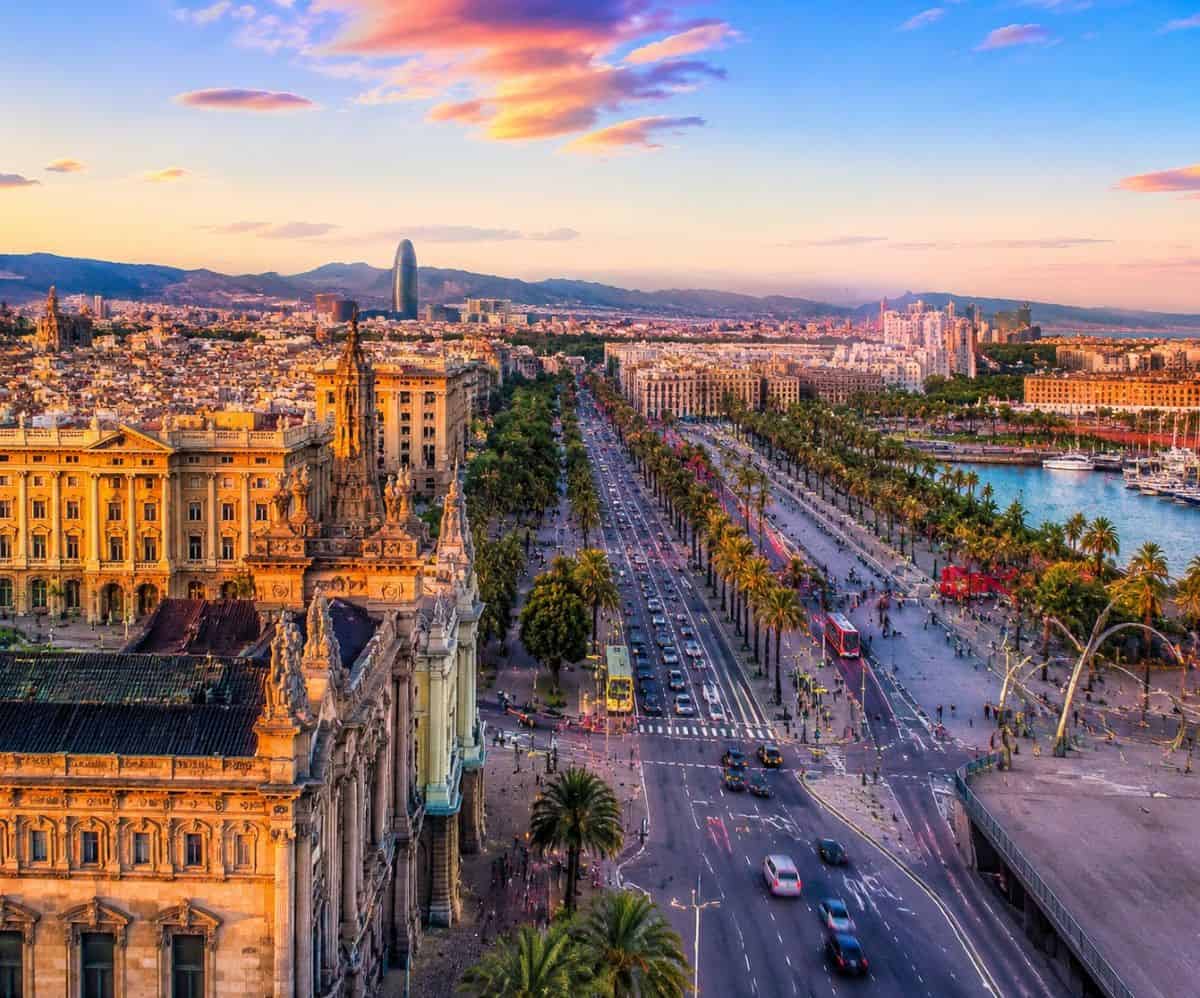
Image generated with Ai
More than ever, people have the ability to experience the history of civilization first hand as certain cities have become overrun with tourism. Barcelona, Rome, and Venice used to accommodate booming populations, but now their communities are void of their former presence. The tours and vacations where explorers once set out to discover new lands have turned into a production line of mass tourism.
In 2025, Europe experienced 793 million international arrivals and 3.1 billion overnight stays, although, approximately 60 percent of these stays concentrated in Spain, Italy, France, and Germany. Even more concerning is that nearly one in every eight international EU visitors concentrated on just two regions in Spain, the Balearic Islands (Mallorca) and the Canary Islands (Tenerife). Spain is experiencing a problem of overtourism which has cost an estimated €2.45 billion annually. Travel should never be stopped. Travel should be a right for all, but the traveling world has to be more evenly distributed.
Advertisement
Understanding the Financial Disparities and Economic Investment Opportunities within the Inland Travel Markets of Spain
In Spain, the financial contrast between heavily visited coastal hubs and quieter interior provinces highlights an immense revenue disparity. The annual expenditure gap between hyper-popular tourist hotspots like Barcelona or Mallorca and less-frequented inland territories reaches approximately €2.45 billion. This stark economic difference underscores how rural communities miss out on substantial financial opportunities, while primary coastal cities and urban destinations endure intense physical, environmental, and social pressures. Closing this massive financial gap requires comprehensive tracking systems, granular visitor movement data, and targeted public investments in alternative regional itineraries, including historic, cultural, and rural network pathways across the country.
Advertisement
Advertisement
Addressing this multi-billion-euro expenditure disparity will significantly transform the operational models of global transportation networks and international travel planners. By actively promoting lesser-known interior zones across Spain and broader Europe, the global travel sector can build a more resilient, year-round tourism ecosystem. Ultimately, while dispersing travelers cannot completely curb the continuous expansion of international tourism volumes, systematically routing visitors into rural heartlands unlocks vital revenue streams, preserves fragile heritage sites, and establishes a far more equitable global travel economy.
Assessing the Strategic Balance Between Geographical Visitor Redistribution and Absolute Growth Capacity across Global Destinations
Efforts to move travelers away from overcrowded urban centers present both notable opportunities and distinct policy challenges for the travel industry. Research reports from the European Parliament’s Committee on Transport and Tourism highlight that dispersing visitors across wider geographical areas does not eliminate the fundamental problem of rising arrival numbers exceeding local carrying capacities. Instead, spreading crowds out can sometimes shift overcrowding issues toward previously quiet, unprepared local communities. However, when framed through the lens of regional economic development, geographical redistribution serves an essential economic purpose for regional growth. Industry leadership must shift success metrics away from sheer arrival numbers toward the long-term economic value, structural balance, and infrastructure support brought to lesser-visited interior destinations.
For global travelers, this evolving management paradigm will fundamentally alter how trips are planned, priced, and experienced worldwide. As popular cities in Spain, Italy, France, and Germany implement stricter destination management strategies, international tourists will encounter higher entry fees, tighter short-term accommodation limits, and strict daily visitor quotas. Conversely, traveling into secondary regions will become far more seamless, offering enhanced regional transit options, curated cultural routes, and richer authentic local experiences. The future global travel landscape will increasingly incentivize exploratory journeys into under-visited landscapes, encouraging worldwide travelers to venture far beyond congested urban centers.
Advertisement
Advertisement
Evaluating the Systemic Challenges of Unbalanced Visitor Concentration across Prominent European Cultural Centers
European destinations face an unprecedented management challenge regarding how global visitor volume is spread across historic territories. In 2025, Europe recorded 793 million international tourists, representing a 4% increase from 2024 and standing 6% higher than 2019 levels. Within the European Union, travelers registered nearly 3.1 billion overnight stays in various lodging facilities. That impressive total reflected a single-year surge of 66.4 million nights. International overnight visits increased by 3.4%, while domestic travel grew by 1.1%. Nevertheless, this massive influx remains overwhelmingly concentrated within a few preferred European nations. Spain, Italy, France, and Germany combined to host 61.7% of all EU overnight stays, while the top five host nations captured 64.7% of all foreign visits.
When analyzing smaller European administrative divisions known as NUTS-3 regions, the spatial imbalance becomes remarkably acute across the continent. Just five prominent destination areas Mallorca, Rome, Barcelona, Tenerife, and Venice, absorbed 12% of all foreign visitor nights spent within the entire 27-member European Union. This means that one out of every eight foreign overnight stays occurred within merely five out of 1,165 total NUTS-3 territories. For the broader international travel industry, such hyper-concentration creates severe operational strains, local infrastructure fatigue, environmental degradation, and rising social discontent in popular host communities. Consequently, modern destination management policies must evolve far beyond simply chasing overall visitor arrival numbers.
Structural Impacts of Housing Market Disparities across High-Density Coastal Destinations
Urban real estate systems face severe challenges due to rapid increases in foreign visitor accommodations. Across major metro centers like Barcelona and Madrid, short-term holiday rental supply expanded significantly, reaching 381,837 registered tourist dwellings across Spain, which provided nearly 1.97 million bed-places. This reduction in long-term housing availability created unprecedented market competition. In coastal and island territories like the Balearic Islands, residential listing applications soared to 100 to 142 applicants per available long-term unit, pricing local residents out of primary urban markets. To address these imbalances, municipal leaders are abandoning voluntary agreements in favor of strict legal limits. Local authorities are using automated registry checks, digital monitoring tools, and license freezes to reduce unpermitted short-term rentals. These regulations protect long-term residential supply, stabilize lease rates, and return residential real estate to local workforces.
Balancing Hospitality Dependence against Long-Term Regional Economic Diversification
International visitor spending serves as a core engine for national output, generating 13.0% of Spain’s total GDP, equivalent to €218.4 billion to €229.3 billion in annual value. However, heavy reliance on hospitality creates economic vulnerabilities, particularly in regions where service-sector growth outpaces broader industry development. In archipelago regions like the Canary Islands, where travel-related activities generate 35% of regional GDP, economic concentration presents systemic risks. Over-reliance on entry-level service positions discourages pursuit of advanced qualifications, limits growth in technology and manufacturing, and leaves regional economies vulnerable to external shocks. Sustainable policy requires using tourism revenues to fund regional technology hubs, specialized education, and sustainable agriculture.
Evaluating Environmental Consumption and Municipal Infrastructure Fatigue in Island Territories
Geographic limits amplify the environmental impact of seasonal visitor rushes. Mediterranean destinations such as Mallorca and Tenerife receive annual tourist volumes equaling six to seven times their resident population, overloading local utility infrastructure during summer months. Daily freshwater consumption, municipal waste processing, and local road networks experience severe stress during peak periods. In response, local governments are introducing dedicated eco-taxes, limiting cruise ship dockings, and restricting motorized vehicle access. These targeted controls preserve fragile island ecosystems while preserving quality of life for resident populations.
Shifting Destination Strategy from High Arrival Volumes to Value-Based Yield Metrics
Modern travel management is shifting focus from raw arrival numbers to maximizing net economic yield per visitor. Although Spain received 96.8 million international visitors, total foreign tourist spending grew at an even faster 6.8% annual rate, reaching €134.7 billion ($156.5 billion). Average individual spending climbed to €198 ($230) per day, proving that destinations can increase economic returns without increasing foot traffic in fragile historic districts. Destination managers are using dynamic pricing, tax incentives for high-value cultural visitors, and premium stay packages to boost total revenues while maintaining strict limits on daily visitor numbers.
Expanding Rural Heritage Networks to Capture Regional Spending Disparities
Rebalancing regional economic gaps depends on guiding heritage-focused travelers toward under-visited interior destinations. Highly publicized landmarks like the Mezquita-Catedral in Córdoba attract over 2.19 million annual visitors, while adjacent interior regions remain largely unexplored by international itineraries. Creating organized cultural itineraries across rural provinces such as regional fortress networks, historic routes, and agricultural heritage tours helps capture a major share of the €2.45 billion annual regional spending gap. These initiatives distribute economic benefits directly to small business owners, preserve historical architecture, and prevent cultural decay across rural communities.
Deploying Digital Mobility Systems and Automated Border Management for Passenger Distribution
Modern international transit relies on integrated digital logistics to guide passenger traffic across regional corridors. As high-speed rail networks expand across Spain, France, and Italy, smart ticketing platforms dynamically adjust fare pricing to encourage travel on less-congested secondary routes. When integrated with biometric customs processing and digital entry systems, transit authorities can safely process higher passenger volumes without bottlenecks at primary international gateways. These digital infrastructure investments make travel into secondary destinations faster and more convenient, supporting regional distribution efforts.
Stabilizing Year-Round Local Economies Through Off-Peak Experiential Tourism Initiatives
Managing seasonal demand swings is critical to establishing stable employment and year-round economic activity. Historically concentrated in summer months, shoulder and off-peak travel spending shows consistent year-over-year growth as global travelers seek quieter, cooler travel windows. Expanding year-round experiential programs including off-season culinary routes, winter cultural festivals, and rural eco-tourism helps hospitality businesses operate continuously. Year-round operations convert seasonal entry-level roles into permanent positions, stabilize municipal tax receipts, and prevent severe economic downturns in coastal and rural communities during off-peak months.
The Final Verdict
Travel isn’t about checking items off a list of things to do, and it never really was. We create absurd demand for time slots to be given access to a hand-drawn map in the Barcelona, Venice or Mallorca islands. This destroys the reasoning behind the trips we take. We tour bypass the interior villages of rural Spain and leave town’s that could be vibrant with travel and tourism. This isn’t going to be fixed by closing doors, or making closed-off tourist attraction areas. We need to begin making new paths. Traveling where others have not been is not avoiding the crowds entirely, but bringing life to a village, and putting a coastal family’s income and a spot on the island that is less populated. Travel should be about the connections made on a slower travel, and not about whose Instagram post is the best.
Advertisement
Tags: Europe, spain, tourism updates, Travel News
Advertisement
Advertisement













Saturday, September 5, 2026

Friday, September 4, 2026

Saturday, September 5, 2026

Saturday, September 5, 2026

Thursday, September 3, 2026

Wednesday, September 2, 2026

Saturday, September 5, 2026

Saturday, September 5, 2026


