
Colombia BTS Tourism Forecasts Put Visitor Spending and Concert Revenue Under Scrutiny

Published
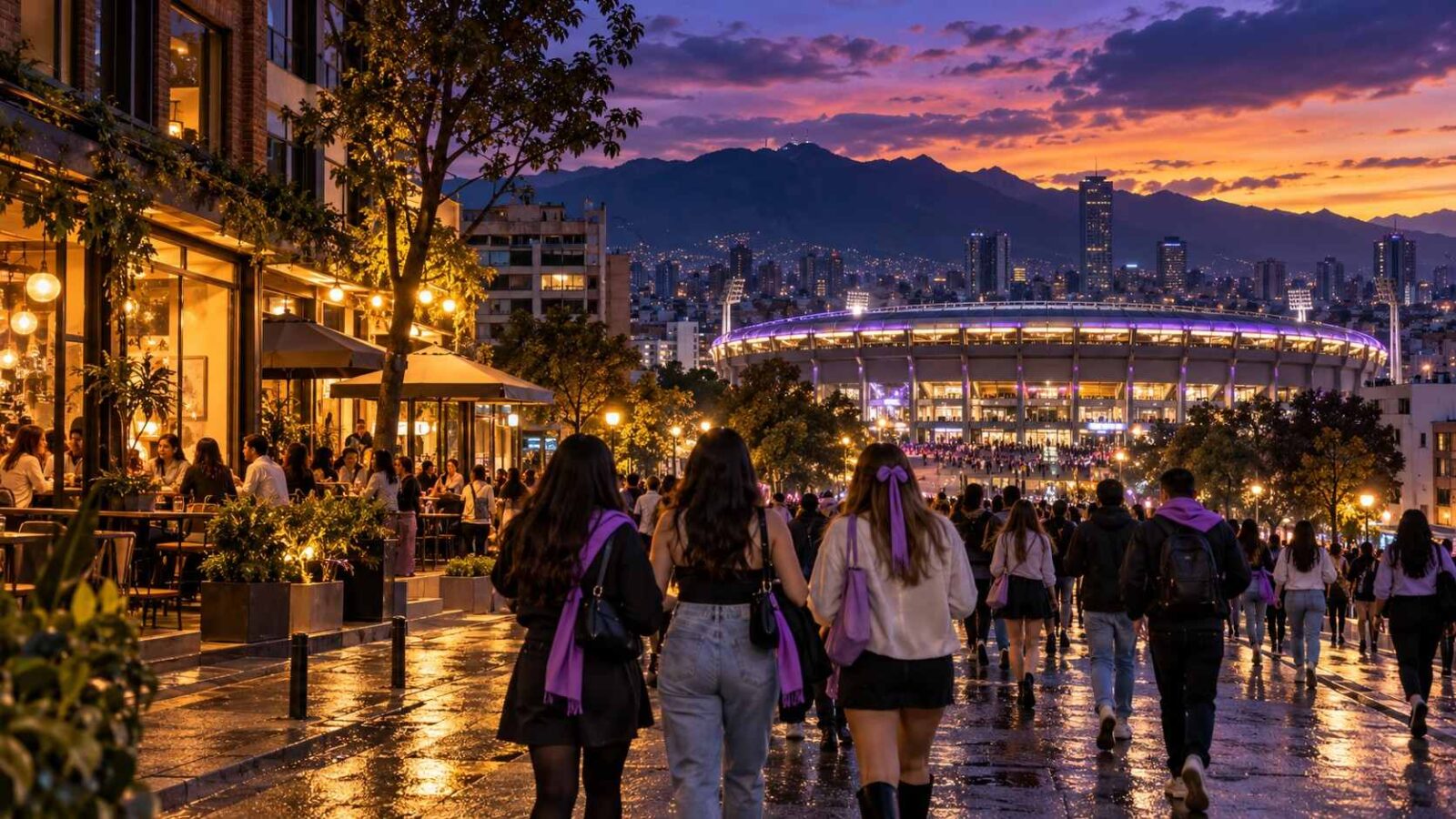
Image generated with Ai
According to the Bogotá Tourism Institute and the Economic Development Secretariat assessment published by Portal Bogotá, Colombia BTS tourism forecasts exceed COP99 billion and reach COP126.054 billion respectively. Ahead of the El Campín concerts on 2 and 3 October 2026, these estimates highlight why attendee spending and ticket revenue need careful interpretation. The figures reflect different assessments, not confirmed earnings or totals that can be added together. For hotels, restaurants, transport operators and travelling fans, the real story lies beneath the headline numbers: what spending is included, who benefits and how the concerts generate business across Bogotá.
Two forecasts tell different economic stories
The Instituto Distrital de Turismo, known as IDT, projects more than COP99 billion in economic activity associated with attendee spending. Its categories include meals, accommodation, local transport and shopping.
Advertisement
Advertisement
The Secretaría Distrital de Desarrollo Económico, or SDDE, publishes a broader COP126.054 billion assessment that explicitly includes projected concert ticket revenue. Neither announcement reports completed transactions after both performances. Instituto Distrital de Turismo
Readers should therefore treat the estimates as separate assessments. Subtracting one from the other would not establish the value of ticket sales or reveal additional tourism income.
Advertisement
Advertisement
What Colombia BTS tourism forecasts actually count
The IDT announcement, dated 29 September 2026, identifies four principal spending categories.
| IDT spending category | Projected amount |
|---|---|
| Food and beverages | COP39.108 billion |
| Accommodation | COP29.384 billion |
| Local transport | COP17.557 billion |
| Shopping and souvenirs | COP12.976 billion |
These categories total COP99.025 billion. Food and drink represent the largest component, placing restaurants and cafés at the centre of the forecast rather than treating hotels as the only beneficiaries. Instituto Distrital de Turismo
Advertisement
Advertisement
However, attendee expenditure is not automatically spending by tourists. Residents can also buy meals, merchandise and transport services, making the identity of the customer important when assessing tourism returns.
Ticket revenue changes the comparison
The SDDE assessment published by Portal Bogotá, dated 2 October, includes COP68.179 billion in projected ticket sales.
It also forecasts COP34.461 billion for accommodation and food, alongside COP3.184 billion in event-related merchandise commerce. These categories differ from those presented by IDT. Bogota.gov.co
That distinction matters commercially. A concert ticket, a restaurant bill and a hotel booking generate different revenue flows, and the releases do not establish how much ultimately remains with independent Bogotá businesses.
Attendance figures need careful handling
SDDE anticipates approximately 90,000 attendances across the two performances. Its forecast includes around 36,000 tourists, with approximately 12,312 arriving from abroad. Bogota.gov.co
IDT describes capacity exceeding 53,000 people per date. Capacity and forecast attendance measure different things, so the figures should not be forced into a single visitor total. Instituto Distrital de Turismo
Advertisement
Advertisement
Repeat attendance creates another reporting issue. Someone visiting both concerts can generate two admissions while making one trip, meaning stadium attendance cannot independently establish unique tourist arrivals.
Flight bookings show demand rather than completed journeys
The Bogotá Tourism Observatory reports a 46.6% increase in inbound flight bookings for 30 September–4 October compared with the equivalent 2025 period. Its published event profile draws on Ticketmaster Colombia and Mabrian data. Observatorio de Turismo de Bogotá
For airlines and airports, this provides a demand signal around the performances. It does not establish that every additional booking belongs to a concertgoer.
Bookings also differ from passengers actually transported. The figures should not be used to claim confirmed airport arrivals, additional aircraft capacity or new airline routes.
Bogotá already has an established events economy
BTS enters an existing market for major performances. A municipal assessment published in May 2026 estimated that five events during 2025 generated approximately COP452.6 billion in economic impact.
The study covered Shakira concerts, Estéreo Picnic, Festival Cordillera, CorreMiTierra and World Cities Day. Depending on the event, non-resident visitors represented between 30% and 48% of attendees. Bogota.gov.co
Advertisement
Advertisement
Broader tourism forecasts provide further context. In March, IDT projected more than 15 million tourists during 2026, representing 4.5% growth over 2025; this remains an annual target rather than a completed result. Bogota.gov.co
Employment promises require the same precision
SDDE projects 5,244 direct and indirect jobs associated with the concerts. The announcement does not establish that these are permanent positions or identify their duration. Bogota.gov.co
For hotels, tour operators and local shops, stronger evidence would include occupied rooms, completed bookings, paid shifts and actual sales. Those measures would clarify how the forecast translates into business.
The releases also provide no basis for attributing new foreign investment, visa reforms or sustainability programmes to the performances. Those claims should remain outside this story.
Transport planning matters to travelling fans
Bogotá has announced a practical response to stadium demand. Its official mobility guidance describes eight special TransMilenio routes operating from 10pm at Campín–UAN and Movistar Arena stations.
Services are directed towards eight portals, including Eldorado, Norte and Américas. Authorities recommend public transport and checking current information through TransMilenio channels. Bogota.gov.co
Advertisement
Advertisement
Travellers should check their onward connection to accommodation before entering the stadium. A route towards a portal does not necessarily provide a direct journey to their hotel.
Traveller FAQs
What are the Bogotá concert dates in local time?
Official city announcements list 2 and 3 October 2026. Travellers should use Colombian local dates when checking tickets and accommodation. Observatorio de Turismo de Bogotá
Are the economic forecasts evidence of higher hotel prices?
No. Neither headline total establishes individual room rates, availability or cancellation conditions.
How should visitors plan their return journey?
Advertisement
Advertisement
Check the announced special routes, the relevant boarding station and the final connection to accommodation. Follow live operational updates before travelling. Bogota.gov.co
The value lies beyond the stadium total
Bogotá has shared predictions about the BTS concerts but those numbers need careful thinking about what they really mean. The money spent by visitors the things people living there buy, the money from tickets and the bigger economic effects should be easy to see in the reports. The official numbers tell a story about how people wanted places to stay, food to eat ways to get around and shops to visit. They don’t yet prove money made jobs that stay forever or investments that last. For people coming to the city the important things right now are the right dates in the local calendar a place to stay that is confirmed and a plan to get back home. For the industry the next important step is to see business done showing how much activity actually went to businesses, in Bogotá after the shows and how that activity was spread out.
Official Sources
- Instituto Distrital de Turismo: Attendee spending forecast.
- Portal Bogotá, reporting SDDE information: Economic impact and ticket revenue forecast.
- Portal Bogotá, reporting TransMilenio information: Concert transport arrangements.
Advertisement
