
Cozumel Along With Guadalajara and More Follows Major Mexican Cities in Facing a Slump in Tourism in 2026

Published
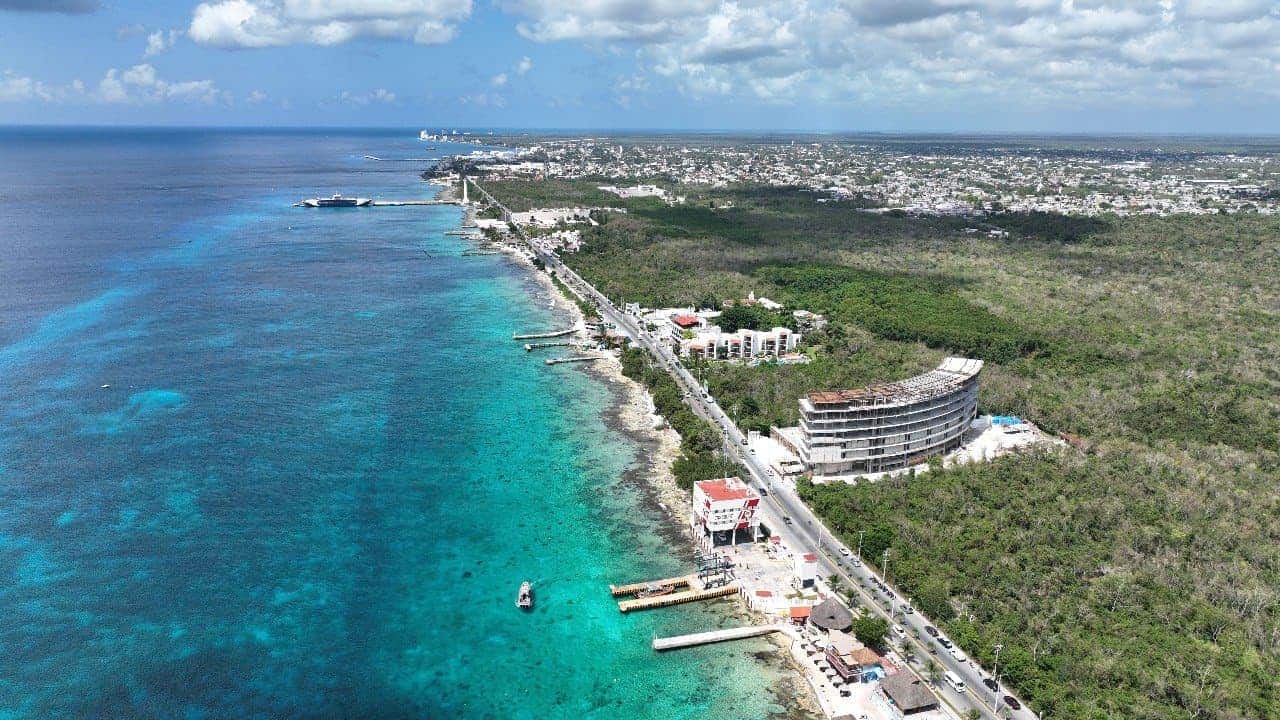
Cozumel along with Guadalajara and more follows major Mexican cities in facing a slump in tourism in 2026, as several key international gateways recorded declining air arrivals due to shifting traveller preferences, changing market competition and pressure on major leisure destinations. While Mexico City showed growth, resort markets including Cancun, Puerto Vallarta, Los Cabos and Tulum experienced notable declines, highlighting an uneven tourism recovery across the country.
Mexico’s 2026 tourism numbers are telling two very different stories.
Advertisement
Advertisement
At the national level, tourism remains large and resilient. International visitor spending continues to support the economy, and millions of travellers are still choosing Mexico for holidays, business trips, cruises and cross-border journeys. But beneath that national strength, several of the country’s best-known international aviation gateways are losing traffic.
International air arrivals through the major airports fell from 13,158,570 between January and July 2025 to 12,408,870 in 2026. That represents a 5.7% decline and approximately 749,700 fewer arrivals.
Advertisement
Advertisement
The weakness is not evenly distributed. Cancun lost more than 332,000 international air arrivals, Puerto Vallarta nearly 243,000, Los Cabos more than 112,000, and Tulum almost 94,000. Cozumel, Guadalajara and Mazatlán also declined.
Mexico City, however, moved in the opposite direction.
Advertisement
Advertisement
That divergence is the important story. Mexico is not simply losing tourists. Travellers appear to be changing where they go, how they enter Mexico and what kind of holiday they choose.
International Air Arrivals by Major Mexican Airport — January to July 2026
| Rank | Destination | 2026 Arrivals | 2025 Arrivals | YoY Change | Absolute Change |
|---|---|---|---|---|---|
| 1 | Cancun | 5,545,370 | 5,878,274 | −5.7% | −332,904 |
| 2 | Mexico City | 2,295,540 | 2,235,778 | +2.7% | +59,762 |
| 3 | Los Cabos | 1,320,220 | 1,432,513 | −7.8% | −112,293 |
| 4 | Puerto Vallarta | 910,468 | 1,153,434 | −21.1% | −242,966 |
| 5 | Guadalajara | 809,298 | 830,258 | −2.5% | −20,960 |
| 6 | Monterrey | 234,311 | 234,634 | −0.1% | −323 |
| 7 | Tulum | 126,747 | 220,669 | −42.6% | −93,922 |
| 8 | Cozumel | 123,307 | 128,518 | −4.1% | −5,211 |
| 9 | Mazatlán | 83,573 | 95,128 | −12.1% | −11,555 |
| — | Other Airports | 960,036 | 949,364 | +1.1% | +10,672 |
| Total | 12,408,870 | 13,158,570 | −5.7% | −749,700 |
Cozumel — A 4.1% Decline Raises Questions About the Value of Overnight Tourism
Cozumel’s international air arrivals slipped from 128,518 to 123,307, leaving the island with 5,211 fewer arrivals and a 4.1% decline. That is not a dramatic collapse, but the composition of Cozumel’s visitor economy makes the movement important. The island has enormous strength in cruise tourism, meaning busy ports can coexist with softer airport traffic. Economically, however, the two visitor types are not interchangeable. An air traveller is more likely to require several hotel nights, restaurant meals, local transport and activities across multiple days. A cruise passenger may spend only several hours ashore. Cozumel therefore needs to watch whether weaker air arrivals become persistent even if overall visitor numbers remain supported by cruise traffic. The issue is less about how many people physically reach the island and more about how much time and money each visitor leaves behind.
Advertisement
Advertisement
Guadalajara — A Small Decline Exposes the Growing Competition for Urban Travellers
Guadalajara’s decline is considerably softer. International air arrivals reached 809,298, down 2.5% from 830,258, leaving the city with approximately 20,960 fewer arrivals. This looks more like stagnation than a serious downturn, but Guadalajara should not ignore it. Unlike Mexico’s resort cities, Guadalajara competes for business travellers, convention delegates, cultural tourists, gastronomic visitors and people using the city as a gateway to wider Jalisco. That diversified demand base should provide resilience. Yet Mexico City increased international arrivals 2.7% during the same period, suggesting urban tourism itself is not necessarily weakening. Guadalajara may therefore be facing a destination-specific competitiveness question rather than simply following a national trend. Maintaining international routes, expanding major events and packaging the city with tequila-country experiences could help transform Guadalajara from a functional gateway into a destination where international travellers deliberately spend additional nights.
Cancun — Losing 332,904 Arrivals Matters More Than the 5.7% Headline Suggests
Cancun’s 5.7% decline may initially appear moderate, but the absolute loss is enormous. International air arrivals dropped from 5,878,274 to 5,545,370, meaning approximately 332,904 fewer travellers entered through the country’s dominant international tourism gateway. Cancun still controls 44.7% of the international air arrivals in this dataset, so its leadership remains overwhelming. But scale cuts both ways. When a destination this large contracts by only a few percentage points, hotels, airport transfers, restaurants, excursions and retail businesses can feel the loss of hundreds of thousands of customers. Cancun also operates in an increasingly competitive Caribbean marketplace. Canadians and Americans can choose the Dominican Republic, Jamaica, Aruba, Curaçao, the Bahamas, Costa Rica and numerous other warm-weather alternatives. Cancun’s challenge is therefore not recognition. Almost everyone knows Cancun. The challenge is maintaining a strong value proposition in a mature destination where travellers have an expanding range of alternatives.
Los Cabos — Fewer Visitors Do Not Automatically Mean a Weaker Tourism Economy
Los Cabos lost approximately 112,293 international air arrivals, with the total declining from 1,432,513 to 1,320,220, a fall of 7.8%. But Los Cabos requires a more nuanced interpretation than a mass-market resort destination. It operates heavily in luxury and premium tourism, where average spending per visitor can matter as much as raw arrival volume. A wealthy traveller booking an upscale resort, golf, dining and private experiences can generate substantially more economic value than several lower-spending visitors. The critical question is therefore whether the 7.8% fall in arrivals has been accompanied by falling hotel rates, occupancy and visitor expenditure. If spending remains resilient, Los Cabos could absorb some volume weakness without suffering an equivalent decline in tourism revenue. If both arrivals and expenditure deteriorate, the picture becomes considerably more serious. Late 2026 should therefore be judged on yield as well as headcount.
Puerto Vallarta — A 21.1% Drop Is Too Large to Dismiss as Normal Volatility
Puerto Vallarta is where the numbers become considerably more concerning. International air arrivals fell from 1,153,434 to 910,468, representing approximately 242,966 fewer travellers and a steep 21.1% contraction. Losing more than one in five international air arrivals within a year cannot easily be dismissed as routine fluctuation. The destination remains attractive, with beaches, restaurants, nightlife, culture and neighbouring Riviera Nayarit broadening its appeal. But international travellers have choices, particularly along Mexico’s Pacific coast. Los Cabos competes at the premium end, while other Mexican and international destinations compete on price, beaches and resort experiences. Puerto Vallarta’s late-2026 challenge is therefore twofold: restore airline demand while protecting tourism value. Heavy discounting could fill hotel rooms but weaken revenue. A healthier recovery would combine stronger air capacity with competitive pricing, distinctive experiences and enough demand to sustain accommodation rates.
Advertisement
Advertisement
Tulum — The 42.6% Collapse Is the Most Serious Warning in the Data
Tulum is the clearest outlier. International air arrivals collapsed from 220,669 to 126,747, a reduction of 93,922 travellers and an extraordinary 42.6% decline. The newness of Tulum’s airport makes year-on-year comparisons unusually volatile because airlines were still establishing routes and schedules during its early operating period. Even with that caveat, losing more than four out of every ten international air arrivals is substantial. Tulum’s difficulty may also expose a broader tourism problem: global popularity does not automatically guarantee repeat demand. Travellers weigh hotel prices, transport, infrastructure, beaches, environmental quality and overall value. Tulum still has extraordinary assets — archaeological heritage, cenotes, Caribbean coastline and a powerful international brand — but rapid development has changed the destination. The late-2026 question is whether the fall represents temporary aviation adjustment or evidence that travellers are reconsidering the value of a Tulum holiday.
Mazatlán — A 12.1% Decline Puts Greater Weight on Domestic Tourism
Mazatlán recorded 83,573 international air arrivals, down from 95,128 in 2025. The decline of 11,555 visitors translates into a substantial 12.1% contraction. The absolute loss is small compared with Cancun or Puerto Vallarta, but Mazatlán operates from a smaller international base, making percentage movements more significant for businesses dependent on overseas travellers. The destination’s strength is that it is not solely an international resort economy. Domestic Mexican tourism provides an important second pillar, while the historic centre, gastronomy, beaches and cultural identity give Mazatlán more than a conventional resort proposition. That domestic base can cushion international weakness, but it should not become an excuse to ignore falling foreign arrivals. International tourists often stay longer and can bring valuable foreign-currency spending. Rebuilding airline connectivity and traveller confidence will therefore be important if Mazatlán wants a balanced recovery rather than increasing dependence on domestic demand.
Monterrey — Flat Arrivals Are More Encouraging Than They Look
Monterrey registered 234,311 international air arrivals, only 323 fewer than the 234,634 recorded a year earlier. Statistically, that is a 0.1% decline; economically, it is essentially flat. In a year when several Mexican beach gateways have suffered double-digit losses, stability is arguably a respectable performance. Monterrey also benefits from a fundamentally different visitor economy. Manufacturing links, corporate travel, meetings, events and cross-border business provide demand that is less dependent on seasonal beach holidays. The city nevertheless has room to capture more leisure spending. Mountain landscapes, gastronomy, cultural attractions and weekend tourism can complement business demand and persuade corporate visitors to extend trips. Monterrey’s challenge is therefore not recovery in the same sense as Puerto Vallarta or Tulum. It is converting a stable international base into growth and extracting more leisure value from travellers already passing through the city.
Mexico City — Growth Shows Travellers Have Not Turned Away From Mexico
Mexico City’s performance is arguably the most revealing number in the entire dataset. International air arrivals increased 2.7%, from 2,235,778 to 2,295,540, adding approximately 59,762 visitors while most major beach gateways contracted. Its share of the market increased from 17% to 18.5%. This matters because it challenges the idea that international travellers are broadly abandoning Mexico. They are not. Instead, demand appears to be moving differently between destinations. Mexico City can attract visitors for gastronomy, museums, heritage, business, sport, nightlife and major events throughout the year. It is less dependent on one season or one tourism product. That diversification provides resilience. The capital’s growth suggests the problem confronting several resort destinations may be more about aviation, pricing, competition and destination-specific value than about Mexico’s overall international reputation.
Four Destinations Account for More Than the Entire Net Decline
The most revealing calculation comes from combining Cancun, Puerto Vallarta, Los Cabos and Tulum.
Together, those four destinations lost approximately 782,085 international air arrivals compared with January–July 2025:
Advertisement
Advertisement
- Cancun: −332,904
- Puerto Vallarta: −242,966
- Los Cabos: −112,293
- Tulum: −93,922
Yet the entire airport market declined by approximately 749,700 arrivals.
That means the losses from these four destinations alone were actually greater than the net national airport decline. Growth in Mexico City and other airports offset part of their weakness.
This is a crucial distinction.
Mexico does not have an evenly distributed international air-tourism downturn. It has a concentrated problem centred heavily on several famous leisure gateways.
That should influence how the industry responds. A generic national advertising campaign may be less useful than understanding the individual competitive challenges confronting Cancun, Puerto Vallarta, Los Cabos and Tulum.
Beach Gateways Are Carrying Most of the Pain
Another pattern runs through the numbers: the largest declines are overwhelmingly concentrated in leisure and beach destinations.
Advertisement
Advertisement
Tulum fell 42.6%. Puerto Vallarta declined 21.1%. Mazatlán dropped 12.1%. Los Cabos contracted 7.8%. Cancun was down 5.7%, and Cozumel fell 4.1%.
Meanwhile, Mexico City increased 2.7%, Monterrey was virtually unchanged at −0.1%, and Guadalajara recorded a comparatively modest −2.5%.
This does not prove one single cause. Beach destinations differ considerably in pricing, airline connectivity, source markets and accommodation models.
But the clustering is difficult to ignore.
Mexico’s coastal resorts compete not only with one another but with the entire Caribbean and Central American leisure market. A traveller considering Cancun may also compare Punta Cana, Jamaica, Aruba, Curaçao or Costa Rica. That makes price, airline schedules and perceived value particularly important.
The Canadian Market Shows How Quickly Caribbean Demand Can Move
Recent Canadian tourism figures provide another useful piece of the puzzle.
Advertisement
Advertisement
Canadian stopover arrivals increased 43.3% to the Cayman Islands, 34.4% to Curaçao, 24.1% to Costa Rica, 23.4% to Grenada, 15.4% to the Bahamas, 12.9% to Aruba and 12.8% to the Dominican Republic in their respective 2026 reporting periods.
Cancun itself remained enormous, attracting more than 1.14 million Canadian visitors, up 10%.
This means the story is not that Canadians have stopped travelling to Mexico. Rather, their options are widening.
A traveller who once automatically selected a familiar Mexican resort may now compare airfares and packages across a much broader Caribbean market.
For Mexico’s resort destinations, that changes the competitive environment. Loyalty and familiarity still matter, but they may no longer be enough to guarantee year-on-year growth.
Air Connectivity Can Change a Destination Faster Than Marketing
Tourism destinations often talk about advertising, branding and social media, but aviation can be far more decisive.
Advertisement
Advertisement
An international traveller cannot book a convenient holiday if the right seat does not exist at the right price.
When airlines reduce frequencies, withdraw routes or redirect capacity, airport arrivals can fall even when interest in the destination remains healthy. Conversely, new routes can produce rapid growth without any fundamental change in the destination itself.
That is especially relevant for Tulum because its airport is still young. Route networks established rapidly after opening can be adjusted just as quickly when airlines assess profitability.
It also matters for Los Cabos, Puerto Vallarta and Cancun because their tourism economies depend heavily on North American air connectivity.
Late-2026 performance should therefore be watched alongside airline schedules. A recovery in seats and frequencies could precede a recovery in visitor numbers.
More Tourists Do Not Always Mean More Tourism Value
There is another reason to avoid treating arrivals as the only measure of success.
Advertisement
Advertisement
A destination can receive fewer tourists and still generate healthy tourism revenue if visitors stay longer or spend more. Conversely, visitor numbers can rise while hotels cut rates and businesses struggle with weaker spending.
Los Cabos illustrates this particularly well because its premium positioning means visitor yield can be exceptionally important.
Cozumel provides another example. Cruise passengers can lift overall visitor totals dramatically, but an overnight air traveller may contribute more to accommodation and restaurant revenue over several days.
The late-2026 question for Mexico should therefore be broader than: How many tourists arrived?
The better questions are: How long did they stay? How much did they spend? What did hotels earn per available room? How much expenditure reached local businesses?
Those measures reveal whether tourism is actually becoming economically stronger.
Advertisement
Advertisement
Mexico’s 5.7% Air Decline Does Not Equal a 5.7% Tourism Collapse
This distinction is essential.
International air arrivals through the airports in the table declined 5.7%, falling by approximately 749,700.
That does not mean Mexico’s entire tourism industry contracted by 5.7%.
Travellers reach Mexico through multiple channels. Border tourism remains important. Cruise passengers contribute another substantial stream. Domestic tourism supports destinations throughout the country. International tourists can also enter through one airport and travel elsewhere.
The airport figures therefore reveal a specific problem: weaker international air traffic through several major gateways.
That problem matters enormously because air travellers are central to Mexico’s resort economy. But describing it as a nationwide tourism collapse would miss the much more interesting story.
Advertisement
Advertisement
Mexico’s tourism economy is becoming increasingly uneven.
Some gateways are losing substantial volumes. Others are stable. Mexico City is gaining.
Late 2026 Will Show Whether This Is a Correction or a Structural Shift
The final months of 2026 will be particularly important because they lead into the high-value winter travel season.
If Cancun, Puerto Vallarta, Los Cabos and Tulum begin recovering as winter airline capacity increases, the January–July decline may ultimately look like a temporary correction.
If weakness continues through the winter booking cycle, the interpretation becomes more serious.
Persistent declines could suggest that travellers are redistributing holidays towards competing destinations, responding to price differences or changing how they perceive value across Mexico’s resort markets.
Advertisement
Advertisement
Tulum deserves especially close attention because a 42.6% decline is too large to treat casually. Puerto Vallarta’s 21.1% contraction also requires monitoring.
Cancun is different. Its 5.7% decline occurs from such an enormous base that it remains dominant, but the loss of more than 332,000 arrivals still has considerable economic implications.
Mexico’s Tourism Challenge Is Becoming More Local Than National
The data ultimately point towards a more complicated conclusion than a simple tourism slump. Mexico City added almost 60,000 international air arrivals, other airports collectively grew 1.1%, and Monterrey remained virtually unchanged. At the same time, some of Mexico’s most recognisable leisure gateways suffered substantial losses. Cancun lost more than 332,000 arrivals, Puerto Vallarta nearly 243,000, Los Cabos over 112,000, and Tulum almost 94,000. This suggests Mexico’s late-2026 challenge is increasingly destination-specific rather than national. Each resort market must examine its own combination of air capacity, accommodation prices, visitor experience, source-market dependence and competition from the Caribbean and Central America. Mexico still possesses enormous tourism strength, but the numbers show that a powerful national brand cannot guarantee growth everywhere. The destinations that restore connectivity, demonstrate value and give travellers compelling reasons to return will be best positioned to turn the current slowdown into a recovery.
Cozumel along with Guadalajara and more follows major Mexican cities in facing a slump in tourism in 2026, as declining international air arrivals at several gateways reflect shifting traveller choices, stronger regional competition and uneven recovery across Mexico’s tourism markets.
In conclusion, Cozumel along with Guadalajara and more follows major Mexican cities in facing a slump in tourism in 2026, as declining international air arrivals reveal growing pressure across several key gateways. While Mexico City recorded growth and some markets remained relatively stable, destinations such as Cancun, Puerto Vallarta, Los Cabos and Tulum experienced notable declines due to shifting traveller preferences, changing air connectivity and stronger competition from alternative destinations. The figures show that Mexico’s tourism challenge is not a nationwide collapse but an uneven market adjustment affecting several major leisure hubs. Future recovery will depend on restoring connectivity, strengthening destination value and encouraging travellers to return.
Advertisement
