
Texas Alongwith California and More US States Spark Fresh Debate with Growing Scrutiny Over Foreign Childbirth Travel

Updated
Published
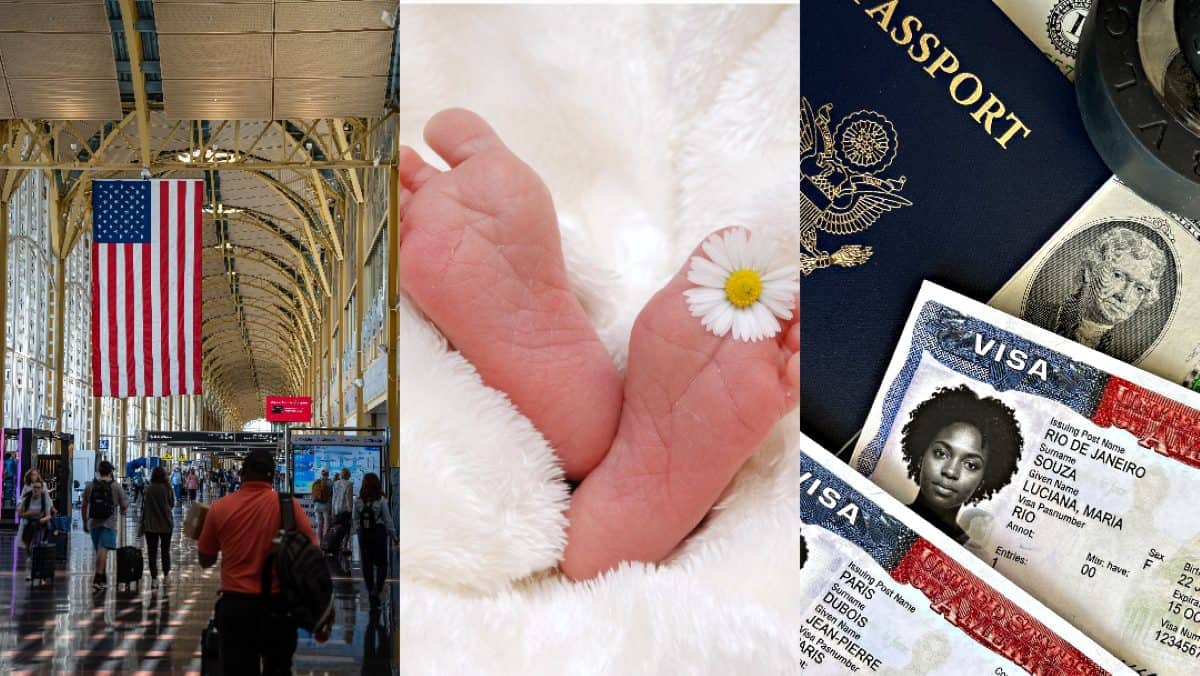
As authorities investigate purported birth tourism networks and the scope of overseas delivery arrangements, Texas, California, and other US states spark a new debate with increased scrutiny over foreign childbirth travel. Texas has recently gained attention due to legal action against a postpartum care facility in the Houston area, and California and other US states are still under examination due to their worldwide ties and healthcare infrastructure. Concerns about citizenship, immigration laws, and organized services for foreign guests are brought to light by the expanding discussion of international birthing tourism. However, officials and scholars point out that it is still impossible to measure birth tourism precisely because there is a lack of national statistics and it is difficult to distinguish between planned birthing travel and legal overseas deliveries.
How significant is birth tourism in the United States according to available data?
Birth tourism represents a small but closely monitored segment of international travel to the United States. Unlike traditional tourism categories such as leisure, business or medical travel, birth tourism is not separately recorded in federal arrival or birth databases. This makes measuring the exact scale challenging.
Available research has produced different estimates depending on methodology. Some government-related figures have placed annual cases at approximately 9,600 births involving mothers with foreign addresses, while independent research has suggested a wider range of 22,000 to 26,000 births annually linked to planned childbirth travel.
These estimates remain debated because a foreign mother giving birth in America does not automatically indicate birth tourism. Thousands of international residents, students, workers and visitors legally give birth in the country every year without travelling specifically to secure citizenship.
Advertisement
Advertisement
The distinction between international childbirth and organised birth tourism is therefore central to understanding the issue.
The practice became more visible after investigations into commercial maternity networks that offered overseas clients packages including accommodation, transportation, translation assistance and postpartum care. These operations were particularly concentrated in regions with strong international connections.
Advertisement
Advertisement
The recent Texas case has brought renewed attention because Paxton’s lawsuit alleges that De’Ai Postpartum Care Center helped more than 1,000 foreign nationals, mainly from China, travel to Texas for childbirth-related purposes.
Why has Texas become a major focus in the latest birth tourism investigation?
Texas has become one of the most discussed states in the birth tourism debate following legal action against a Houston-area postpartum care business.
Advertisement
Advertisement
Texas Attorney General Ken Paxton filed a lawsuit against De’Ai Postpartum Care Center, alleging that the organisation helped foreign nationals enter the United States and give birth so their children could receive US citizenship. According to allegations from Paxton’s office, the centre operated across multiple Houston-area locations, including Houston, Sugar Land, Richmond and Rosenberg.
The lawsuit claimed the organisation assisted more than 1,000 foreign nationals and provided services connected with planned childbirth travel. Paxton’s office also alleged that the company advised pregnant women about visa applications and immigration-related procedures. The allegations remain part of legal proceedings.
Texas has several factors that make it attractive for international visitors seeking medical services:
- Houston is home to one of the world’s largest medical centres.
- The state has major international airports, including Houston’s George Bush Intercontinental Airport.
- Texas has large Asian and Latin American communities.
- Healthcare costs can be lower compared with some major coastal cities.
However, Texas is not the only state connected with birth tourism investigations. Previous cases have involved multiple states where international travel networks and private maternity services developed.
Advertisement
Advertisement
Which US states have recorded the highest visibility of birth tourism activity?
Although there is no official state-by-state ranking, several states repeatedly appear in investigations and policy discussions.
California
California has historically been one of the most recognised birth tourism centres in America.
Southern California became particularly associated with maternity tourism because of:
- Los Angeles International Airport’s extensive international connections.
- Large Chinese-speaking communities.
- Private healthcare facilities.
- International accommodation options.
In 2019, federal authorities investigated and arrested operators linked to Southern California birth tourism businesses accused of running commercial schemes involving foreign clients, particularly from China.
California’s global connectivity continues to make it a major destination for international visitors, including those seeking healthcare services.
Florida
Florida has also been frequently mentioned because of Miami’s role as a gateway between the United States, Latin America and the Caribbean.
Advertisement
Advertisement
The state attracts large numbers of international visitors every year and has:
- Miami International Airport connections across the Americas.
- Extensive private healthcare facilities.
- Large Spanish-speaking communities.
- A strong short-term accommodation market.
Countries from Latin America have historically appeared among visitor groups linked with childbirth travel.
New York and New Jersey
The New York metropolitan region has attracted attention because of:
- International financial and transport links.
- Major hospitals.
- Large immigrant communities.
- Access to multiple international airports.
New Jersey’s proximity to New York City has also made it part of the wider metropolitan healthcare and accommodation network.
Nevada
Nevada has received less attention compared with California, Texas and Florida but has appeared in discussions because Las Vegas is one of the world’s largest tourism destinations.
Its visitor infrastructure, hotels and international connectivity create conditions where temporary international stays are common.
Advertisement
Advertisement
Which countries are most frequently associated with US birth tourism?
Birth tourism involves families from multiple regions, but some countries have appeared more often in investigations and research.
China has been one of the most publicly discussed source countries, particularly because of previous maternity hotel investigations in California and recent allegations in Texas.
Other frequently mentioned regions include:
| Region | Countries often discussed |
|---|---|
| East Asia | China, South Korea |
| Latin America | Brazil, Colombia, Mexico, Argentina |
| Caribbean | Several Caribbean nations |
| Middle East | Some Gulf-region travellers |
| Europe | Smaller numbers from various countries |
The presence of a particular nationality in investigations does not mean most travellers from that country engage in birth tourism. The majority of international visitors travel to the US for ordinary tourism, business, education or family reasons.
Why do families choose the United States for childbirth?
The primary factor discussed in birth tourism research is citizenship.
Under the longstanding interpretation of the Fourteenth Amendment, most people born in the United States receive citizenship at birth. This has made the country attractive to some foreign families seeking future opportunities for their children.
Advertisement
Advertisement
Other motivations may include:
- Access to US education.
- Future travel flexibility.
- Family connections.
- Perceived quality of healthcare.
- Long-term economic opportunities.
However, US authorities distinguish between lawful childbirth by foreign visitors and organised schemes involving fraud or immigration violations.
Giving birth in America as a foreign national is not automatically illegal. Enforcement actions generally focus on allegations involving false visa information, commercial organisations arranging travel specifically for citizenship purposes, or misuse of public resources.
How have US authorities responded to birth tourism networks?
Federal and state authorities have taken several steps to address suspected birth tourism operations.
In 2020, the US State Department changed visitor visa guidance to make it more difficult for applicants whose primary purpose was travelling to the United States to give birth and obtain citizenship for their child.
Previous investigations also examined alleged healthcare fraud connected with birth tourism operations. One Long Island case involved accusations that operators used fraudulent healthcare claims connected with births of children who later received US citizenship.
Advertisement
Advertisement
Texas officials have continued investigations following the Houston case, including scrutiny of additional facilities accused of involvement in alleged schemes.
What does the future of birth tourism tracking look like in America?
The biggest challenge remains data.
Without a dedicated federal category for birth tourism, researchers cannot produce a precise annual figure. Authorities must rely on indirect evidence, including immigration records, foreign addresses on birth certificates, investigations and court cases.
The available evidence shows that birth tourism exists, but its scale remains significantly smaller than overall US international travel and annual births.
The latest Texas lawsuit has highlighted how commercial networks can operate across major international destinations, but it also demonstrates why separating legal international childbirth from alleged immigration fraud remains essential.
As debates around citizenship and immigration continue, policymakers are likely to focus on improving data collection, enforcement mechanisms and oversight of businesses involved in international childbirth services.
Advertisement
