
Mexico is the Main Market for Peru Promoting Amazon Forest

Published
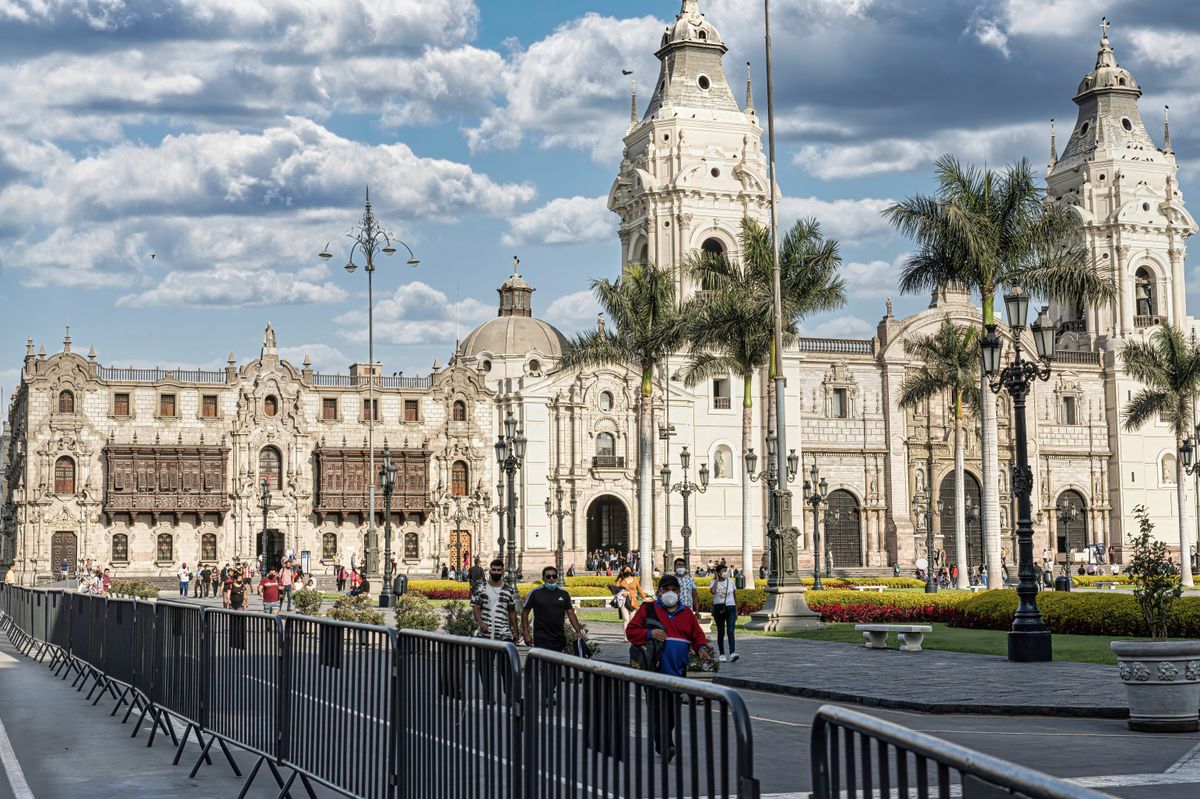
Mexico is becoming the main market for Peru as it promotes its Amazon forest, authentic jungle experiences and community tourism, creating a powerful new opportunity for travellers.
Mexico is emerging as the main market for Peru’s Amazon forest promotion, as the country takes a more experience-led approach to tourism. At IBTM Americas, PROMPERÚ highlighted Peru’s efforts to showcase its jungle alongside its wider cultural and tourism offer.
Advertisement
Advertisement
The strategy goes beyond traditional attractions. Instead, Peru is presenting authentic Amazon experiences, including opportunities connected with jungle communities that benefit from tourism. Meanwhile, Mexico remains a priority market for Peru’s promotional activity, extending beyond Mexico City to other states. As traveller expectations shift towards culture, authenticity and meaningful experiences, Peru is positioning its Amazon forest as an increasingly important part of its international tourism proposition.
Peru is stepping up its efforts to attract more international meetings, conferences and events from North America, with the United States emerging as an important commercial target for the country’s expanding MICE industry.
Advertisement
Advertisement
Speaking exclusively to Travel and Tour World at IBTM Americas 2026, Max Rodriguez, Director of the Commercial Office at PROMPERÚ, highlighted the importance of strengthening business connections across the Americas. He identified Mexico as a major market for Peru and pointed to the US market as an important opportunity for increasing the number of events hosted in the country.
His comments come as Peru’s meetings industry records substantial growth, giving the country’s North American strategy a stronger commercial foundation.
Advertisement
Advertisement
Peru’s MICE Industry Enters a New Growth Phase
Peru’s meetings and events sector is no longer a peripheral part of its international tourism strategy. Recent performance data shows that the country is becoming increasingly competitive in the international congress and convention market.
According to MINCETUR, Peru hosted 93 international and regional congresses in 2025, placing the country eighth among destinations in the Americas. The total represented a 52.5% increase from 2024 and a 111.4% rise compared with 2023.
The figures provide important context for PROMPERÚ’s growing focus on international MICE business. Rather than attempting to build a market from scratch, Peru is seeking to capitalise on an established upward trend and convert greater international interest into future conferences, corporate meetings, incentive programmes and association events.
Lima remains the principal engine of this expansion.
The Peruvian capital hosted 72 international congresses in 2025, a 67.4% increase from the previous year. Lima ranked second in Latin America and third across the Americas in the relevant ICCA rankings, reinforcing its position as the country’s leading meetings destination.
For Peru, the challenge now is to sustain that momentum while expanding its reach among international buyers.
Advertisement
Advertisement
Why the United States Matters to Peru
The United States has long been one of Peru’s most important international tourism source markets. That established relationship gives Peru an existing foundation from which to pursue a larger share of the meetings and events business.
PROMPERÚ’s tourism intelligence data recorded 255,360 international tourist arrivals from the United States during the January-May 2026 period, making the US Peru’s second-largest international source market during that period, behind Chile.
That figure relates to overall international tourism, rather than specifically to MICE arrivals. Nevertheless, it demonstrates the scale and importance of the American market within Peru’s wider tourism economy.
For the events industry, the opportunity is different from conventional leisure tourism. An international meeting can bring delegates, organisers, accompanying travellers and business activity to a destination, while also creating opportunities for participants to extend their trips for leisure.
PROMPERÚ has highlighted the economic value of meetings tourism, noting that meetings travellers can spend substantially more than conventional leisure visitors and may subsequently return to the destination for holidays.
This makes the US particularly relevant: Peru already has strong tourism recognition among American travellers, while its meetings industry is seeking to build deeper relationships with professional buyers and event organisers.
Advertisement
Advertisement
Max Rodriguez Highlights the Importance of Business Connections
Rodriguez’s comments at IBTM Americas offer a direct insight into how PROMPERÚ views the opportunity.
During the exclusive Travel and Tour World interview, he described Mexico as a “big market” for Peru and emphasised the importance of the American market in increasing the number of events in Peru.
He also stressed the value of using IBTM Americas to establish contacts with companies across the Americas.
The remarks are significant because they focus on commercial relationships, rather than simply promoting Peru as a holiday destination.
The meetings industry depends heavily on relationships between destinations, convention bureaux, hotels, destination management companies, event agencies, associations, corporate planners and other specialised buyers. Trade events such as IBTM Americas provide a concentrated environment in which those relationships can be developed.
Rodriguez did not announce a specific number of new US events, identify individual American companies or disclose newly signed contracts during the interview. Therefore, his comments should be understood as an indication of market priorities and business-development efforts rather than as an announcement of confirmed US event growth.
Advertisement
Advertisement
IBTM Americas Becomes an Important Platform
Peru’s participation in IBTM Americas 2026 carries particular significance because PROMPERÚ was selected as the event’s Invited Destination.
The organisation prepared an extensive commercial programme around the event, with plans for 340 business appointments and 500 commercial contacts, alongside an estimated potential business value of approximately US$2.5 million.
PROMPERÚ also brought 13 Peruvian MICE companies to the event and planned destination presentations and meetings with international buyers.
Importantly, the programme included destination breakfasts for invited buyers from North and South American markets.
This supports Rodriguez’s emphasis on contacting companies across the Americas. It also illustrates the way Peru is approaching the market: through direct B2B engagement, rather than relying solely on consumer-facing destination marketing.
For international event organisers, such meetings provide an opportunity to assess Peru’s infrastructure, destinations, suppliers and ability to deliver different types of events.
Advertisement
Advertisement
Mexico Remains a Significant Market
While the US is attracting considerable attention, Rodriguez also specifically described Mexico as a big market for Peru.
That is important because Peru’s Americas strategy is broader than a single-country campaign.
Mexico provides another established regional market with business, tourism and aviation connections to Peru. By engaging with both Mexico and the wider North American market, Peru can diversify the potential sources of international meetings and events.
At the same time, the country’s broader Americas strategy gives PROMPERÚ access to buyers and organisations across multiple markets.
The objective is not simply to increase visitor numbers. It is to develop business opportunities that can result in future events being held in Peru.
PROMPERÚ Is Building a Broader MICE Pipeline
IBTM Americas is only one part of PROMPERÚ’s international MICE strategy.
Advertisement
Advertisement
The organisation reported that its international MICE promotional activities in 2025 generated more than 2,000 commercial meetings, with a potential business value of US$13.3 million.
PROMPERÚ also reported the confirmation of 70 international association events, with an estimated economic impact exceeding US$171 million.
Separately, PERU MICExperience 2025 generated around 1,150 business appointments and an estimated potential economic impact of US$14.5 million.
These figures indicate that Peru is treating meetings tourism as a structured commercial segment with measurable business-development activity.
The strategy is therefore moving beyond destination awareness towards lead generation, buyer engagement and the acquisition of international events.
The Strategy Extends Beyond Lima
Although Lima dominates Peru’s international meetings statistics, the country’s MICE proposition is not limited to the capital.
Advertisement
Advertisement
PROMPERÚ has promoted several destinations for the international meetings market, including Lima, Arequipa, Ica, Loreto and Cusco.
This diversification matters because international event planners do not all require the same destination profile.
Lima offers major urban infrastructure and business connectivity, while other Peruvian destinations can add cultural, historical, nature and incentive-tourism experiences to a meetings programme.
That combination can be particularly valuable for incentive groups and international conferences where organisers want delegates to experience more than a convention venue.
Peru’s ability to combine professional events with leisure experiences is therefore an important part of its international proposition.
US Engagement Already Extends Beyond MICE
PROMPERÚ’s focus on the US market also predates IBTM Americas.
Advertisement
Advertisement
In 2025, the organisation participated in the United States Tour Operators Association (USTOA) Annual Conference & Marketplace. PROMPERÚ reported 37 professional appointments and training for more than 100 North American tour operators during the event.
The organisation also stated that nearly 70% of USTOA members include Peru in their travel programmes.
In 2026, PROMPERÚ continued its North American engagement through initiatives involving buyers from the United States and Canada, including specialised tourism programmes connecting North American travel agents with Peruvian companies.
This demonstrates that the US and Canadian markets are being addressed through several different tourism channels.
The MICE strategy fits into this broader B2B model, but it should not be confused with conventional leisure-tourism promotion.
What Peru Is Offering International Event Planners
Peru’s appeal to international meetings organisers rests on more than conference infrastructure.
Advertisement
Advertisement
The country combines major urban destinations with cultural heritage, gastronomy, nature and incentive-tourism possibilities. Lima can serve as a business and meetings hub, while destinations such as Cusco and other regions can provide additional experiences around an event.
PROMPERÚ has identified sectors including health, science, technology, education and business as areas where Lima can support major international meetings.
This gives Peru an opportunity to target association congresses and professional events where destination relevance is as important as venue capacity.
The country’s expanding international connectivity is another component of the proposition, although the precise suitability of Peru will naturally depend on the origin market, event size, required airlift and programme design.
Peru Targets Mexico and US Markets as Amazon Tourism and MICE Strategy Gains Momentum
Peru is sharpening its tourism strategy across North America, with Mexico emerging as a key promotional market and the United States remaining one of its largest international source markets. At the same time, the country is expanding the way it presents its destinations, placing greater emphasis on Amazon experiences, culture and community-based tourism.
Advertisement
Advertisement
The strategy was highlighted during an exclusive Travel and Tour World interview with Max Rodriguez, Director of the Commercial Office at PROMPERÚ, at IBTM Americas 2026.
| Indent | Market | 2025 international visitors |
|---|---|---|
| 1 | Chile | 1,281,858 |
| 2 | United States | 628,720 |
| 3 | Ecuador | 347,373 |
| 4 | Bolivia | 227,660 |
| 5 | Brazil | 222,186 |
| 6 | Colombia | 193,468 |
| 7 | Spain | — |
| 8 | Argentina | — |
| 9 | Mexico | — |
Mexico Becomes a Key Promotional Market
Rodriguez described Mexico as a major market for Peru and explained that promotional efforts are not limited to Mexico City. Peru is also looking towards other Mexican states to develop broader market connections.
This distinction is important. Mexico is not Peru’s largest overall tourism source market by visitor arrivals. However, PROMPERÚ considers it an important market for tourism promotion and business development.
The focus reflects Peru’s wider effort to reach travellers and industry professionals looking for destinations offering more than conventional sightseeing.
US Market Adds Major Growth Potential
The United States remains particularly important to Peru’s international tourism industry. In 2025, the US supplied 628,720 international visitors, making it Peru’s second-largest individual source market after Chile.
PROMPERÚ’s latest tourism data also continued to place the United States among Peru’s leading international markets in 2026.
Advertisement
Advertisement
Rodriguez separately highlighted the US and wider North American market as an opportunity to increase the number of events in Peru.
That makes the American market significant not only for leisure tourism but also for the country’s growing MICE — meetings, incentives, conferences and exhibitions — sector.
Peru Puts the Amazon Into the Spotlight
At IBTM Americas, Peru presented a broader destination proposition that extends beyond its traditional tourism image.
Rodriguez explained that Peru was showcasing its coast and jungle, alongside distinctive experiences available in these regions.
The Amazon is particularly important because it allows Peru to combine nature, culture and community experiences. Rodriguez also discussed jungle communities that can benefit from tourism, highlighting the connection between visitors and local communities.
This gives Peru an opportunity to promote the Amazon not simply as a natural attraction, but as part of a wider authentic travel experience.
Advertisement
Advertisement
Culture and Gastronomy Strengthen Peru’s Appeal
Peruvian culture was another central element of the presentation.
Rodriguez highlighted gastronomy and cultural experiences, including the presence of a chef connected with a Peruvian restaurant in Mexico City associated with renowned Peruvian chef Gastón Acurio.
The approach reflects a wider shift in traveller expectations identified during the interview. Rodriguez said travellers are increasingly seeking destinations that provide authenticity, culture, emotion and complete experiences.
For Peru, these qualities can help differentiate its tourism proposition across international markets.
MICE Business Becomes a Strategic Priority
PROMPERÚ’s objectives extend beyond conventional tourism promotion.
Rodriguez said the organisation is promoting the Peruvian brand, with particular attention to tourism and MICE tourism, while also supporting trade and investment.
Advertisement
Advertisement
Peru’s MICE sector has been gaining momentum. The country hosted 93 international and regional congresses in 2025, representing a 52.5% increase from 2024, according to MINCETUR.
The growth gives Peru a stronger platform from which to pursue international meeting planners, companies and associations.
Rodriguez said Peru is exploring opportunities to work directly with companies, meeting planners and associations to promote the destination.
Connectivity Remains Critical
Looking ahead, Rodriguez identified connectivity as a major priority.
He said Peru wants to increase connectivity with Mexico and other markets, noting that new airline connections are important if the country wants to expand tourism.
For Peru, stronger air links could support both leisure travel and international events by making the destination more accessible to potential visitors and business-event organisers.
Advertisement
Advertisement
Peru’s Broader North American Opportunity
Peru’s current strategy is therefore not simply about attracting more Mexican or American tourists.
Mexico represents an important promotional market, while the United States provides a much larger existing visitor base and an important opportunity for MICE growth. At the same time, Peru is using the Amazon, coast, gastronomy, ancient cultures and community experiences to broaden its destination proposition.
The result is a more diversified strategy: deepen established North American relationships, attract new event business, promote authentic experiences and improve connectivity.
Rodriguez’s comments at IBTM Americas show that Peru is seeking to turn these priorities into direct commercial relationships. As the country’s MICE industry grows, the US, Mexico and wider American markets are likely to remain important targets for Peru’s next phase of international tourism development.
The Bigger Opportunity for Peru
The figures suggest that Peru is entering an important period for meetings tourism.
A country that recorded 93 international and regional congresses in one year and achieved double-digit growth in its international congress performance has a stronger platform from which to pursue new business.
Advertisement
Advertisement
The United States is particularly relevant because it combines a large established tourism relationship with Peru and a substantial corporate and association ecosystem capable of generating international meetings.
However, Peru’s strategy should be viewed as an Americas-wide commercial push, rather than solely a US campaign.
Rodriguez’s comments reflect precisely that approach. His emphasis on contacting companies across America, alongside his reference to Mexico and the US, points towards a broader effort to strengthen Peru’s business relationships throughout the region.
Peru’s MICE Ambitions Move From Promotion to Conversion
The most significant development is the shift from simply promoting Peru to potential buyers towards actively converting international interest into events.
The country’s recent congress performance, PROMPERÚ’s commercial appointments, confirmed international association events and participation in major industry platforms all point in the same direction.
For American and other North American event planners, Peru is increasingly presenting itself as a destination capable of combining business events with distinctive cultural and leisure experiences.
Advertisement
Advertisement
For Peru, the objective is equally clear: secure more international events, strengthen commercial relationships and use the growing MICE sector to generate wider tourism and economic benefits.
Rodriguez’s exclusive comments to Travel and Tour World at IBTM Americas therefore arrive at a strategically important moment. Peru is not claiming that the US has suddenly become a new tourism market. Instead, the country is seeking to deepen an existing relationship and turn the strength of its American visitor base into greater opportunities within the higher-value international meetings and events segment.
The next stage will be whether the commercial contacts being developed across the Americas translate into more confirmed conferences, corporate meetings, incentives and association events in Peru.
For now, the numbers show that the country’s MICE sector has substantial momentum, while PROMPERÚ’s growing engagement with North American buyers suggests that the United States and its neighbouring markets will remain an important part of Peru’s international events strategy.
The reason behind Peru’s focus on Mexico is clear: the country represents an important market for promoting Peruvian tourism. At the same time, changing traveller expectations are creating demand for authentic destinations, cultural encounters and complete experiences. Therefore, Peru is broadening its message beyond its traditional attractions and bringing the Amazon forest and jungle communities into the spotlight. The answer lies in connecting destination marketing with distinctive experiences. By showcasing the Amazon, its communities, culture and nature, Peru can offer Mexican travellers something different from conventional tourism. Moreover, promoting communities that benefit from tourism gives the strategy an economic and social dimension.
Peru’s decision to make Mexico a main market for promoting its Amazon forest reflects a broader shift in how the country presents itself internationally. Rather than relying only on its best-known attractions, Peru is highlighting the diversity of its destinations and the experiences available across its coast and jungle.
Advertisement
Advertisement
The Amazon forest is particularly valuable because it combines nature, culture and community-based experiences. During the Travel and Tour World interview at IBTM Americas, PROMPERÚ’s Max Rodriguez explained that Peru wants international buyers and travellers to discover experiences beyond the traditional destination image. Mexico remains a key focus, including markets outside Mexico City. At the same time, Peru is looking towards other American markets, including the United States, to expand its events business. This approach gives Peru an opportunity to position its Amazon forest as an authentic tourism experience while strengthening connections with an important international source market.
Image: Pexels
Advertisement
