

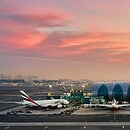
Image generated with Ai
Dubai International Airport free Wi-Fi and sleep pods have become essential amenities for millions of international passengers navigating one of the world’s busiest aviation hubs, reinforcing Dubai’s position as a premier global transit gateway. As international travel continues to rebound and passenger expectations evolve beyond efficient flight connections, travellers increasingly seek airports that deliver reliable digital connectivity alongside comfortable spaces to rest during extended layovers. Dubai International Airport (DXB) has responded by combining complimentary high-speed wireless internet across all passenger terminals with strategically located sleep pod facilities, relaxation zones and premium rest cabins, allowing transit passengers to remain productive, refreshed and connected regardless of the duration of their stopover.
The significance of these facilities extends well beyond convenience. Dubai International Airport handled more than 92 million passengers in 2025, the highest annual traffic in its history, reaffirming its status as one of the world’s busiest international airports. The enormous passenger volume means thousands of travellers experience connecting flights every hour, many facing layovers lasting several hours or even overnight. By offering free airport-wide Wi-Fi alongside bookable sleep pods and rest cabins, DXB strengthens its competitive advantage over rival global hubs while supporting business travellers, families, digital nomads and leisure tourists. As airlines continue expanding long-haul networks through Dubai, these passenger-focused facilities have become a defining feature of the airport’s broader strategy to deliver an efficient, premium and globally recognised transit experience.
International airports are no longer judged solely by runway capacity or airline networks. Today’s passengers increasingly evaluate airports based on how effectively they support productivity, comfort and wellbeing throughout the journey. Reliable internet access has become as essential as baggage services, while dedicated sleeping facilities are rapidly evolving from luxury offerings into expected passenger amenities.
Dubai International Airport has recognised this transformation. Rather than limiting connectivity to premium lounges or paid packages, the airport provides complimentary Wi-Fi coverage throughout its passenger terminals, enabling travellers to browse the internet, access business applications, communicate with family, manage flight changes and stream entertainment while waiting for onward departures.
Advertisement
This development reflects wider changes across the aviation industry. International travellers now carry multiple connected devices, rely on digital boarding passes, conduct remote work during transit and increasingly expect uninterrupted access to cloud-based services. Airports capable of meeting these expectations gain an important competitive advantage, particularly among premium and long-haul passengers.
Industry analysts have repeatedly highlighted that passenger experience has become a decisive factor influencing airport reputation, airline partnerships and transit choice. Comfortable layovers contribute directly to passenger satisfaction, encouraging travellers to choose particular connecting hubs even when alternative routing options exist.
Dubai International Airport continues to strengthen its role within the international aviation network. Positioned strategically between Europe, Asia, Africa and Oceania, the airport serves as a major connecting point for long-haul traffic moving between continents.
According to official airport statistics, DXB recorded 92.3 million passengers during 2025, surpassing previous annual records despite continued operational challenges affecting several regions worldwide. The achievement demonstrates sustained demand for Dubai’s aviation infrastructure while reflecting the continued expansion of international airline networks centred on the emirate.
Advertisement
Advertisement
The airport connects travellers with hundreds of destinations across six continents through a combination of full-service airlines, regional carriers and long-haul operators. This enormous connectivity naturally results in significant numbers of transit passengers spending several hours within the airport before boarding onward flights.
For these passengers, airport facilities increasingly shape the overall travel experience.Dubai International Airport at a Glance Latest Available Information Annual passengers (2025) 92.3 million Passenger terminals 3 Primary international role Global transit hub Geographic reach Europe, Asia, Africa, Americas and Oceania Complimentary Wi-Fi Available throughout passenger terminals Dedicated sleep facilities Available in multiple terminal locations
The combination of passenger volume and extensive international connectivity explains why investment in traveller comfort has become a strategic priority rather than a supplementary service.
Digital connectivity influences almost every stage of today’s travel journey. Boarding passes, immigration documentation, hotel reservations, ride-hailing services, travel insurance, foreign currency management and airline notifications are increasingly managed through smartphones and connected devices.
Providing dependable internet access therefore removes one of the most common sources of stress during international transit.
At Dubai International Airport, passengers can connect to the airport’s complimentary wireless network across public areas without purchasing internet access packages. The service supports activities ranging from checking email and attending virtual meetings to accessing entertainment platforms and communicating through messaging applications.
Business travellers particularly benefit from uninterrupted connectivity between long-haul flights. Instead of treating layovers as unproductive waiting periods, many now continue working remotely from airport seating areas, cafés, airline lounges or designated quiet spaces.
Meanwhile, leisure travellers use the service to research destinations, confirm accommodation bookings, update itineraries and remain connected with relatives across multiple time zones.
The widespread availability of free Wi-Fi also complements Dubai’s ambition to remain one of the world’s most digitally advanced tourism destinations. As governments and tourism authorities increasingly promote seamless visitor experiences, digital infrastructure within airports has become an important extension of that strategy.
Passenger behaviour has changed significantly over the past decade.
Previously, travellers often viewed layovers simply as unavoidable waiting periods between flights. Today, many intentionally select longer connections to rest, complete work, enjoy airport facilities or even explore destination cities when visa policies permit.
This shift has encouraged major international airports to invest heavily in passenger amenities beyond traditional retail and dining offerings.
Dubai International Airport has responded by developing an environment where transit passengers can transform waiting time into productive or restorative time. Complimentary internet access plays an essential role within that broader ecosystem.
Increasing numbers of passengers now arrive carrying laptops, tablets, wearable technology and multiple smartphones. High-quality wireless connectivity allows these devices to function seamlessly throughout the airport without relying on expensive international mobile roaming services.
The result is an airport environment supporting both productivity and relaxation.How Travellers Commonly Use Free Wi-Fi During Transit Benefits Flight updates and airline apps Real-time operational information Digital boarding passes Faster gate access Video meetings Business continuity during travel Messaging applications Contact with family and colleagues Hotel and transport bookings Easier arrival planning Streaming entertainment Improved long-haul comfort Navigation and destination research Better travel preparation
The increasing reliance on digital travel tools means that dependable airport Wi-Fi has evolved into a critical operational service rather than a simple passenger convenience.
Dubai’s broader tourism strategy emphasises convenience, innovation and premium visitor experiences from arrival through departure.
The airport represents the first and last physical interaction many international visitors have with the emirate. Consequently, passenger satisfaction at DXB contributes directly to Dubai’s global tourism reputation.
Free digital connectivity aligns with wider investments across the city, including smart government services, contactless tourism experiences, digital payment ecosystems and advanced transport infrastructure.
For transit passengers who never leave the airport, these facilities nevertheless influence perceptions of Dubai as an efficient global gateway. Positive layover experiences often encourage travellers to consider future stopovers or longer visits to the emirate.
The aviation industry increasingly recognises this relationship. Airports are no longer isolated transport facilities but integral components of national tourism competitiveness, destination branding and airline network development.
As international passenger expectations continue rising, the ability to combine operational efficiency with passenger comfort has become a defining characteristic of leading global aviation hubs.
In this environment, Dubai International Airport free Wi-Fi and sleep pods represent more than individual passenger amenities. Together, they illustrate a broader commitment to making long-haul transit less stressful, more productive and considerably more comfortable for millions of travellers crossing continents through Dubai each year.
While complimentary internet access enables passengers to remain productive throughout their journey, quality rest has become equally important for travellers navigating long-haul itineraries. Extended connections, overnight transits and multiple time-zone crossings often leave passengers searching for a quiet environment where they can recharge before boarding the next flight.
Recognising this need, Dubai International Airport has expanded its dedicated sleep facilities through Sleep ‘n Fly, now operating under the Sleepover brand. Unlike conventional airport hotels that generally require overnight bookings, these facilities are designed specifically for transit passengers seeking short periods of rest. Travellers can reserve accommodation by the hour, making the concept particularly attractive for connections lasting between two and eight hours.
The facilities offer a range of options, including compact sleep pods, private cabins, family units and premium lounge-style rooms. Depending on the chosen location, passengers can also access shower facilities and dedicated relaxation spaces, allowing them to freshen up before continuing long-haul journeys.
Strategically positioning these facilities inside the airport’s secure transit zones reduces the need for passengers to leave the terminal, clear immigration or undergo additional security screening, saving valuable time while improving convenience.Sleep Facility Location Best Suited For Typical Usage Sleepover (formerly Sleep ‘n Fly) Terminal 1 – Concourse D Short international layovers Hourly sleep pods and cabins Sleepover Terminal 3 – Concourse A Emirates transit passengers Private sleep pods Sleepover Terminal 3 – Concourse B Families and business travellers Cabins and relaxation rooms Sleepover Terminal 3 – Concourse C Long connections Flexible hourly bookings
Rather than functioning solely as premium accommodation, these facilities have become practical infrastructure supporting the airport’s role as one of the world’s busiest connecting hubs.
Not every passenger requires the same level of accommodation during transit. The availability of different rest solutions enables travellers to select facilities according to their itinerary, schedule and budget.
Passengers with connections of less than three hours generally benefit most from remaining near their departure gate while taking advantage of complimentary Wi-Fi, cafés and charging stations. Travellers with layovers lasting between four and eight hours frequently choose hourly sleep pods to recover before boarding another long-haul flight.
Those facing overnight connections may find greater value in booking larger sleep cabins or one of the airport’s hotel options, particularly when travelling with children or carrying significant hand luggage.
This flexibility reflects changing passenger expectations. Modern airports increasingly recognise that transit time can become a positive part of the travel experience rather than an inconvenience to be endured.Layover Duration Recommended Option Under 3 hours Free Wi-Fi, cafés, charging stations and gate lounges 3–6 hours Hourly sleep pod with shower where available 6–10 hours Private cabin combined with dining and relaxation Overnight Airport hotel or larger transit cabin
Competition among international aviation hubs extends well beyond route networks and airline partnerships. Passenger experience has emerged as a critical differentiator, particularly as travellers increasingly choose connections based on convenience rather than airfare alone.
Dubai International Airport competes directly with several globally recognised transit hubs, each offering distinctive passenger amenities.
Singapore Changi Airport has earned an international reputation for entertainment attractions, indoor gardens and extensive leisure facilities. Hamad International Airport in Doha combines premium lounges with art installations and wellness-focused passenger services. Istanbul Airport continues investing heavily in digital infrastructure and relaxation spaces, while London Heathrow has expanded premium lounge offerings to accommodate rising international demand.
Dubai’s strength lies in integrating practical amenities with operational efficiency. Rather than focusing solely on destination-style attractions, DXB prioritises facilities that address the immediate needs of transit passengers—fast digital connectivity, convenient rest options, extensive retail choices and efficient transfer processes.Global Transit Airport Free Wi-Fi Dedicated Sleep Facilities Transit Strength Dubai International (DXB) Yes Yes Long-haul connectivity and premium transit Singapore Changi (SIN) Yes Yes Leisure-focused passenger experience Hamad International (DOH) Yes Yes Premium lounges and luxury services Istanbul Airport (IST) Yes Yes Europe–Asia connectivity London Heathrow (LHR) Yes Limited paid options Major transatlantic hub
Although each airport adopts a different strategy, all reflect the aviation industry’s broader movement towards enhancing passenger wellbeing during transit.
The aviation sector has undergone a fundamental transformation over the past decade. Airports are no longer evaluated solely on operational performance, punctuality or infrastructure capacity. Passenger satisfaction now influences airline partnerships, commercial revenues, destination branding and long-term competitiveness.
Long-haul passengers often spend several hours inside airport terminals, making amenities such as reliable internet access, quiet working environments, quality food, comfortable seating and sleep facilities essential components of the overall journey.
This trend has accelerated as hybrid working arrangements enable professionals to remain connected while travelling. Airport terminals increasingly function as temporary workplaces where passengers participate in virtual meetings, respond to clients and complete projects before departure.
At the same time, leisure travellers have become more discerning. Families, solo travellers and older passengers now place greater emphasis on comfort, convenience and wellbeing when selecting connecting itineraries.
By combining complimentary Wi-Fi with flexible rest facilities, Dubai International Airport addresses both evolving business requirements and changing leisure travel expectations.
Passengers planning to use sleep pods should consider reserving in advance, particularly during peak holiday periods when international traffic through Dubai rises significantly. Advance reservations provide greater certainty for travellers with tightly scheduled connections and limited flexibility.
It is equally important to verify the arrival and departure concourses before making a booking. Although the airport’s terminals are well connected, transfer times between gates may vary depending on passenger volumes and security procedures.
Travellers intending to work during transit should carry international charging adapters, portable battery packs and headphones, enabling them to make full use of the airport’s complimentary Wi-Fi and work-friendly seating areas.
Passengers with overnight connections should also confirm airline baggage transfer arrangements to ensure checked luggage is automatically forwarded to the final destination, eliminating unnecessary delays.
These simple preparations can substantially improve the overall transit experience while reducing stress during long international journeys.
The significance of complimentary Wi-Fi and sleep pods extends beyond individual convenience. Together, they contribute to broader economic and tourism objectives by strengthening Dubai’s reputation as a preferred global transit gateway.
Airports increasingly compete for connecting passengers because transit traffic supports airline network expansion, retail spending and destination visibility. A positive airport experience often influences travellers’ perceptions of an entire country, even when they remain within the terminal.
For Dubai, where aviation plays a central role in tourism and international business, investment in passenger-focused infrastructure reinforces wider ambitions to remain among the world’s leading travel destinations.
As international aviation continues to recover and passenger expectations evolve, facilities that once represented premium extras are rapidly becoming essential components of competitive airport operations.
The combination of Dubai International Airport free Wi-Fi and sleep pods demonstrates how modern airports are redefining transit from a period of waiting into an opportunity for productivity, relaxation and comfort. For millions of passengers connecting through DXB every year, these services transform lengthy layovers into a smoother and significantly more enjoyable part of the journey.
1. Does Dubai International Airport (DXB) offer free Wi-Fi to all passengers?
Yes. Dubai International Airport provides complimentary Wi-Fi throughout its passenger terminals, allowing departing, arriving and transit travellers to connect using smartphones, tablets and laptops. The service supports browsing, messaging, email, video streaming and other online activities without requiring a paid internet package.
2. Where can travellers find sleep pods at Dubai International Airport?
Sleep pods are available through Sleepover (formerly Sleep ‘n Fly) at multiple locations inside the airport, including Terminal 1 Concourse D and Terminal 3 Concourses A, B and C. These facilities are located within the secure transit area, making them convenient for connecting passengers.
3. Can sleep pods at DXB be booked by the hour?
Yes. Unlike traditional airport hotels, Sleepover offers flexible hourly bookings, allowing travellers to reserve sleep pods or private cabins for short layovers, extended transit periods or overnight connections.
4. Is Dubai International Airport suitable for long layovers?
Yes. DXB is well equipped for long layovers with free airport-wide Wi-Fi, sleep pods, premium lounges, dining options, duty-free shopping, charging stations, prayer rooms, shower facilities and family-friendly amenities, making it one of the world’s most convenient transit hubs.
5. Should travellers book sleep pods in advance?
Advance booking is recommended, especially during holiday seasons, weekends and peak international travel periods, when demand for sleep pods and private cabins can be significantly higher.
6. Are sleep pods available in every terminal at Dubai International Airport?
Sleepover facilities are available in Terminal 1 and Terminal 3, covering the airport’s busiest international transit areas. Travellers should confirm their arrival and departure terminal before making a reservation.
7. Can business travellers work comfortably during a layover at DXB?
Yes. With complimentary high-speed Wi-Fi, numerous charging points, comfortable seating areas, airport lounges and cafés, DXB provides an ideal environment for business travellers to work remotely between flights.
8. How does Dubai International Airport compare with other major transit airports?
Dubai International Airport ranks among the world’s leading transit hubs alongside Singapore Changi Airport, Hamad International Airport in Doha, Istanbul Airport and London Heathrow. Its combination of extensive international connectivity, complimentary Wi-Fi and dedicated sleep pod facilities makes it particularly attractive for long-haul transit passengers.
9. What other facilities are available for transit passengers at DXB?
In addition to Wi-Fi and sleep pods, travellers can access airport hotels, premium lounges, shower facilities, medical services, children’s play areas, currency exchange, duty-free shopping, restaurants, cafés and extensive charging stations throughout the terminals.
10. Why are free Wi-Fi and sleep pods becoming increasingly important at international airports?
As international travel continues to grow, passengers increasingly expect airports to support both productivity and wellbeing. Complimentary internet access enables travellers to stay connected, while sleep pods provide a comfortable space to rest during long layovers, helping airports enhance passenger satisfaction and strengthen their competitiveness as global transit hubs.
Advertisement
Tags: Airport Layover, Dubai Airport Wi-Fi, dubai airports, dubai international airport, Dubai Sleep Pods
Advertisement
Advertisement













Saturday, September 5, 2026

Saturday, September 5, 2026

Saturday, September 5, 2026

Saturday, September 5, 2026
Saturday, September 5, 2026

Thursday, September 3, 2026

Saturday, September 5, 2026

Saturday, September 5, 2026


