
Flydubai Security Incident Is Now Under Review After Saudi Diversion On The Dubai To Tel Aviv Route

Published
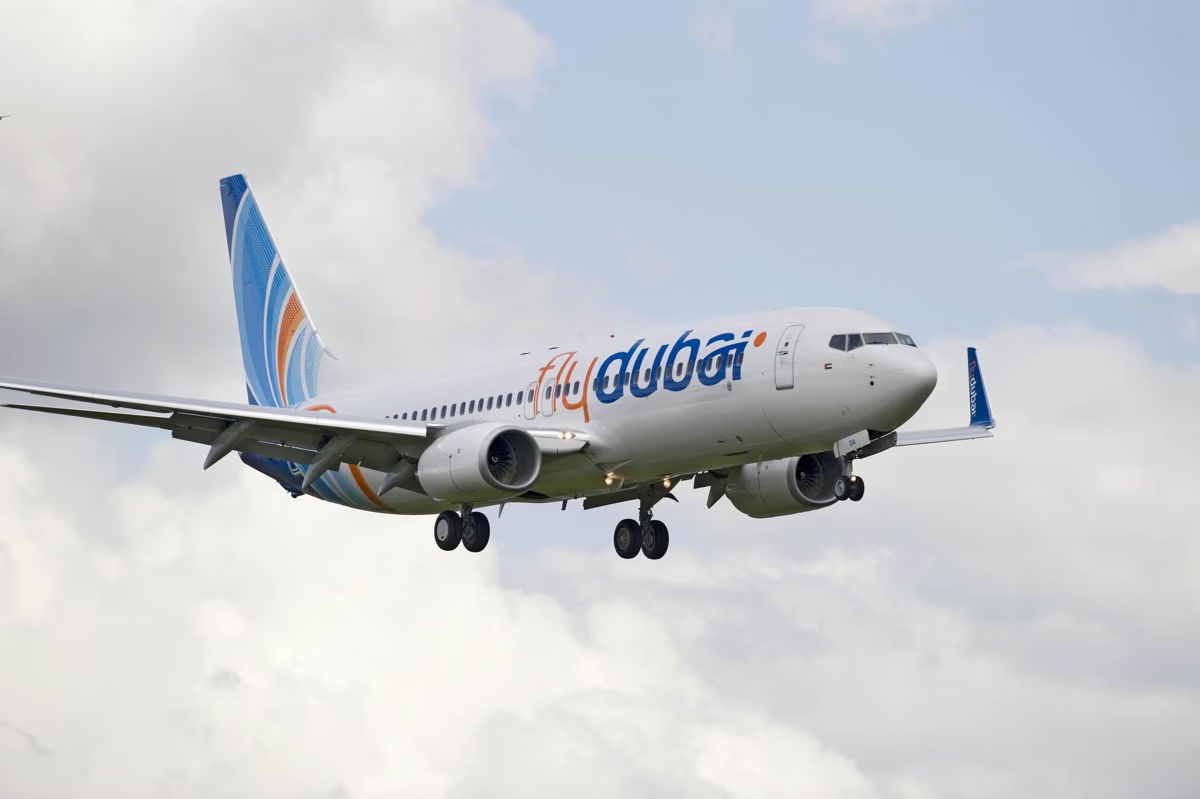
Image generated with Ai
A Security Incident forced flight FZ1073, operating Dubai To Tel Aviv, to make an emergency landing at Tabuk Airport in Saudi Arabia on 30 September 2026. The UAE General Civil Aviation Authority confirmed that emergency services brought the aircraft safely under control, while several injured crew members received hospital treatment. The central development impacts international air travellers, aviation safety regulators, and regional transport providers across the Middle East. The immediate effect for travellers is the diversion of the affected flight, acute operational disruption to connecting itineraries, and ongoing uncertainty regarding subsequent service availability while official investigations proceed without a published deadline.
What the Official Evidence Establishes
This news report focuses primarily on aviation safety, emergency flight operations, and travel planning. The table below provides an editorial breakdown of the subjects covered in official statements and verified travel guidance.
News Component Ratio Table
| News Component | Share of Story | Officially Verified Finding | Relevance to Travellers | Official Source |
| Aviation Safety & Emergency Ops | 50% | Flight diverted to Tabuk following a Security Incident; crew injured and hospitalized. | Identifies the cause of immediate route disruption and emergency landing. | UAE General Civil Aviation Authority Statement |
| Flight Availability & Booking Status | 25% | Flight FZ1073 diverted; subsequent schedules require status verification. | Alerts passengers to check direct airline schedules for Dubai To Tel Aviv departures. | Flydubai Operational Updates |
| Existing Border & Visa Policy | 15% | Standard entry policies apply, including ETA-IL for Israel and visa rules for the UAE. | Prevents confusion regarding border controls following the Saudi Arabia landing. | Israeli Population and Immigration Authority |
| Regional Destination Context | 10% | Dubai welcomed 19.59 million international overnight visitors in 2025. | Provides general market background without measuring incident losses. | Dubai Department of Economy and Tourism |
| Total | 100% | Editorial assessment only; not an official statistical breakdown. | Focused account of safety, travel, and regulatory evidence. | Combined primary official sources. |
The verified evidence establishes an emergency flight diversion, injured crew members, and an active investigation by aviation regulators. It does not establish permanent route closure, new passenger entry restrictions, or measured financial losses to regional tourism. Travellers should understand that while the diversion caused immediate disruption, broader operational decisions depend on official findings.
Current Situation
The situation remains an active regulatory investigation. The UAE General Civil Aviation Authority and Saudi emergency services secured the aircraft and passengers at Tabuk Airport. Medics provided hospital treatment to injured crew members, whose exact numbers and conditions have not been detailed in official updates. Aviation regulators have confirmed that investigative teams are examining the operational and security circumstances surrounding the flight. No formal deadline has been provided for releasing final investigative findings, and travellers must monitor official airline notices for updated flight schedules.
Advertisement
Advertisement
Why the News Matters
This development matters to international travellers because it involves an emergency diversion into a country without standard direct commercial flight connections to the destination airport. For the travel industry, the event underscores the critical role of aviation security protocols and emergency response mechanisms. A Security Incident on a high-profile regional corridor highlights the operational vulnerabilities of tightly scheduled commercial routes. While the event is isolated to a single flight, its broader relevance impacts airline risk assessments, air connectivity agreements, and multi-sector passenger itineraries across international hubs.
Chronology of Events
- 26 November 2020: Flydubai launches scheduled commercial services between Dubai International Airport and Ben Gurion International Airport following a bilateral air transport agreement.
- 30 September 2026 (Flight Operations): Flight FZ1073 departs Dubai bound for Tel Aviv.
- 30 September 2026 (In-Flight Event): An inflight Security Incident occurs, prompting an emergency diversion to Tabuk Airport in northwestern Saudi Arabia.
- 30 September 2026 (Emergency Response): The aircraft lands safely in Tabuk; Saudi authorities secure the vessel and transfer injured crew members to local hospitals for treatment.
- 30 September 2026 (Official Statement): The UAE General Civil Aviation Authority confirms the situation is under control and announces a formal investigation into the event.
Understanding the Context Behind the Development
Immediate Trigger and Flight Safety Protocols
The immediate trigger for the emergency landing was an acute onboard emergency during flight FZ1073. According to official regulatory statements, flight deck and cabin conditions required an immediate redirection to the nearest suitable airfield, resulting in the unscheduled landing at Tabuk Airport.
Advertisement
Advertisement
Historical Connectivity and Regional Transport
Bilateral air agreements established direct commercial aviation links between the UAE and Israel in late 2020. The route serves as a major transit link for business, tourism, and long-haul connections to the Far East and Indian Ocean. Flight FZ1073 originated at Dubai International Airport (DXB) with an intended destination of Ben Gurion International Airport (TLV) in Tel Aviv. During the flight, an emergency forced the aircraft to divert to Tabuk Airport (TUU) in Saudi Arabia. As a result of the incident, the current transport status remains an active investigation, with subsequent flight schedules under official review.
- Immediate Effect: Passengers on flight FZ1073 experienced significant journey delay and rerouting via Saudi Arabia.
- Indirect Impact: Travelers with multi-sector itineraries connecting through Dubai face potential adjustments if flight schedules change.
- Unconfirmed Consequences: The available evidence does not demonstrate widespread travel cancellations or regional tourism declines.
Wider Travel-Industry Analysis
From an industry perspective, emergency diversions into non-destination territories require complex coordination between civil aviation authorities, diplomatic channels, and airline operations. The incident highlights the importance of robust contingency planning for international carriers operating tight regional turnarounds. While the aviation sector regularly manages unscheduled landings, events involving crew injuries necessitate thorough security reviews before standard operational schedules are re-established.
Global Context
Emergency diversions due to inflight safety concerns are managed under international guidelines set by the International Civil Aviation Organization (ICAO). Similar diversions globally require the host country to secure the aircraft, provide necessary medical assistance, and cooperate with the flag state’s aviation safety board. Compared to standard technical diversions, a Security Incident involves multi-agency investigations that temporarily disrupt regular airline scheduling until safety clearances are formally issued.
Practical Information for Travellers
Passengers planning to travel on the Dubai To Tel Aviv connection should maintain active contact with their airline or travel provider. Standard entry requirements remain unchanged: ordinary UAE passport holders require valid ETA-IL approval prior to entering Israel, while eligible Israeli citizens entering the UAE must ensure their passports remain valid for at least six months from arrival. Emergency landings do not create new immigration exemptions or alter baseline visa policies.
Essential Steps for Disrupted Travellers
Travellers holding tickets for upcoming flights on this route, or those managing connecting travel, must verify their bookings before heading to the departure airport.
- Check Direct Airline Notifications: Monitor live flight status using your specific booking reference.
- Review Multi-Leg Sector Bookings: Confirm downstream flights with operating airlines to prevent automatic cancellation of return segments.
- Consult Issuing Travel Agents: Contact travel agencies directly regarding rebooking, credit, or refund options.
- Verify Entry Documentation: Ensure travel authorizations, such as ETA-IL applications, are submitted at least 72 hours prior to revised departure dates.
- Examine Separate Accommodation Terms: Check cancellation and modification policies for local hotels and ground transfers.
Passengers should rely on direct communications from operating airlines rather than assuming generalized schedule changes apply to every departure.
Advertisement
Advertisement
Future Outlook
The next confirmed phase in this development is the publication of formal investigation findings by the UAE General Civil Aviation Authority and investigating partner agencies. No public deadline has been set for releasing the final report. Future operational schedules for the Dubai To Tel Aviv route will be determined by airline assessments following regulatory clearances. Travellers should continue to follow official aviation updates as factual details are confirmed.
Official Investigation Continues Following Regional Flight Diversion
The confirmed diversion of flight FZ1073 to Tabuk Airport highlights the vital importance of civil aviation safety protocols during an active Security Incident. Official statements confirm that authorities secured the aircraft, provided medical care to injured crew members, and initiated a thorough investigation. Current evidence establishes immediate flight disruption without confirming permanent route cancellations or new border restrictions. Travellers should verify specific booking details and follow official updates from aviation regulators as formal findings are released. Accurate travel planning requires distinguishing verified operational facts from speculative assumptions while official reviews remain underway across relevant international agencies.
Advertisement
