
Puerto Rico Joins Mexico, Barbados, Jamaica, Saint Lucia, Bahamas, Dominican Republic and Others as Caribbean Cruise Mega-Expansion Accelerates Through Private Island Networks, Multi-Billion Dollar Port Investments and Record US Traveler Demand Surge

Published
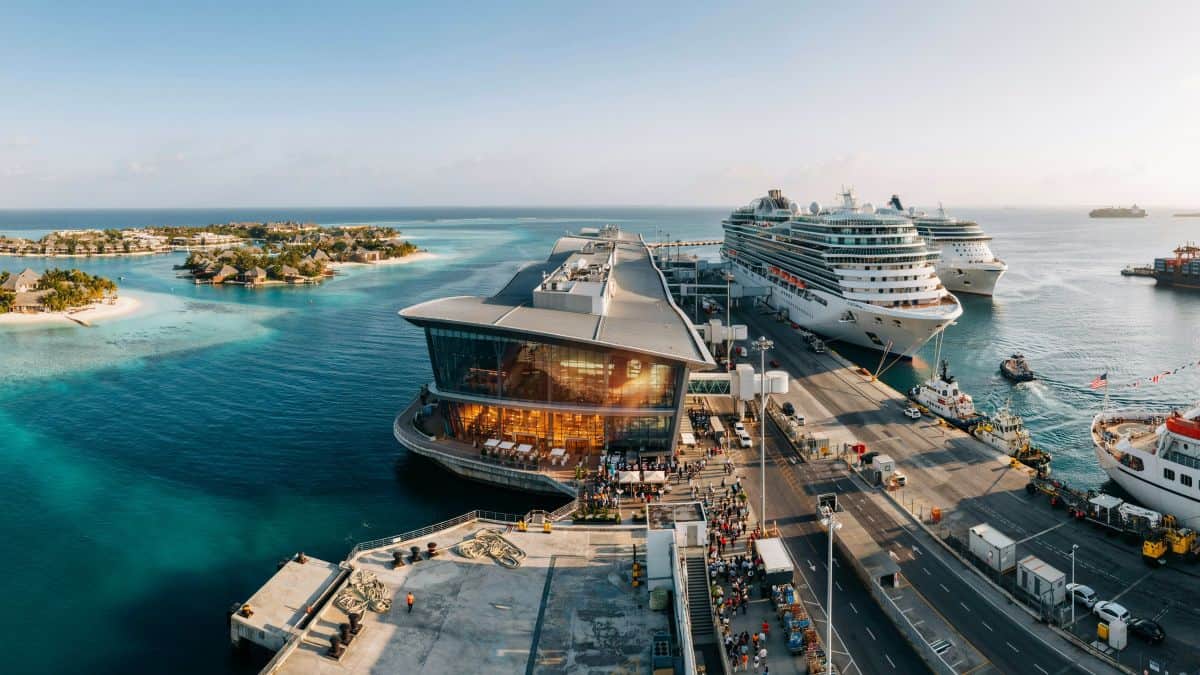
Puerto Rico joins Mexico, Barbados, Jamaica, Saint Lucia, Bahamas, Dominican Republic and others as Caribbean cruise mega-expansion accelerates in 2026, driven by private island networks, multi-billion-dollar port investments, and record US demand reshaping global maritime tourism and routing systems. The Caribbean cruise sector in 2026 is undergoing a large-scale structural shift as Puerto Rico joins Mexico, Barbados, Jamaica, Saint Lucia, Bahamas, Dominican Republic and other key destinations in a rapidly expanding maritime tourism network. Driven by private island cruise ecosystems, multi-billion-dollar port investments, and sustained US traveler demand, the region is evolving into a high-capacity, cruise-controlled tourism system. With over 12 million annual cruise passengers and the Caribbean holding nearly 36% of global cruise capacity, cruise lines are reshaping routes, ownership models, and infrastructure, positioning the region as the dominant hub of global cruise tourism expansion and economic transformation
Caribbean Cruise Expansion Reshapes Global Maritime Tourism in 2026
Caribbean cruise expansion in 2026 continues to redefine global maritime tourism, driven by rising fleet deployment, infrastructure modernization, and the growing dominance of private cruise destinations. According to regional port authority datasets, the Caribbean now handles more than one-third of global cruise capacity, making it the most influential cruise region worldwide. Cruise operators are increasingly restructuring itineraries around short-haul US routes and private island networks. This shift is transforming the Caribbean from a destination cluster into a fully integrated cruise-controlled tourism system supported by high-frequency vessel rotations and advanced port logistics infrastructure.
- Caribbean holds ~36% of global cruise capacity
- Private island networks reshape itinerary design
- Short-haul US routes dominate scheduling
- Port infrastructure modernization accelerating
- Cruise-controlled destination model expanding
| Metric | Data (2026) |
|---|---|
| Global share | ~36% cruise capacity |
| Ships deployed | 200+ seasonal vessels |
| Growth trend | +10% annual capacity |
| Model shift | Controlled destination economy |
Puerto Rico Strengthens San Juan Cruise Gateway Role in Eastern Caribbean Expansion 2026
Puerto Rico’s cruise sector continues to expand in 2026, anchored by the Port of San Juan, which remains a critical entry point for Eastern Caribbean cruise circuits. As a US territory, Puerto Rico benefits from simplified customs procedures that make it a preferred hub for cruise itineraries originating from Florida. According to port authority data, San Juan processes over one million cruise passengers annually, supported by rising deployment of large cruise ships. Infrastructure upgrades focus on terminal modernization, improved docking efficiency, and passenger flow optimization, reinforcing its strategic importance in regional cruise redistribution networks.
- US territorial cruise gateway advantage
- Over 1M cruise passengers annually
- Central hub for Eastern Caribbean routes
- Terminal modernization ongoing
- High-frequency Florida cruise circuits
| Metric | Data (2026) |
|---|---|
| Cruise passengers | ~1.0–1.6M |
| Role | Transit hub |
| Cruise routes | Eastern Caribbean |
| Infrastructure | Terminal upgrades |
Mexico Cozumel Cruise Dominance Drives Western Caribbean Mega Tourism Growth 2026
Mexico remains a dominant force in Caribbean cruise tourism in 2026, led by Cozumel, one of the most visited cruise ports in the world. Port authority statistics indicate multi-million passenger throughput annually, driven by consistent cruise itineraries from US Gulf and Florida ports. Cozumel remains central to Western Caribbean cruise circuits, supported by Costa Maya expansion. High-frequency cruise itineraries from the US ensure sustained demand. Mexico’s cruise infrastructure is closely integrated with multi-destination routes covering Belize, Honduras, and Jamaica.
Advertisement
Advertisement
- Cozumel among top global cruise ports
- Multi-million annual cruise arrivals
- Costa Maya expansion underway
- Key Western Caribbean anchor
- Strong US cruise demand linkage
| Metric | Data (2026) |
|---|---|
| Cruise passengers | ~4M+ (Cozumel scale) |
| Main ports | Cozumel, Costa Maya |
| Cruise region | Western Caribbean |
| Demand driver | US market |
Barbados Cruise Tourism Upgrade Focuses on Premium Caribbean Visitor Experience 2026
Barbados continues to strengthen its cruise tourism model in 2026 by focusing on high-value passenger experiences rather than mass cruise volume. The Bridgetown port receives hundreds of thousands of cruise passengers annually, according to tourism authority data, with ongoing investments in terminal modernization and sustainable port operations. The island is increasingly positioned within Southern Caribbean cruise circuits alongside Saint Lucia and Antigua. Barbados is shifting toward premium tourism economics, emphasizing higher passenger spending through curated shore excursions and upgraded visitor infrastructure rather than expansion of ship volume alone.
- Premium cruise tourism strategy
- Bridgetown port modernization ongoing
- Hundreds of thousands annual arrivals
- Focus on high-spend travelers
- Southern Caribbean integration
| Metric | Data (2026) |
|---|---|
| Cruise arrivals | ~300K+ |
| Strategy | High-value tourism |
| Port | Bridgetown |
| Segment | Premium cruise market |
Jamaica Cruise Infrastructure Expansion Boosts Western Caribbean Tourism Circuit 2026
Jamaica continues to enhance its cruise infrastructure in 2026 through modernization projects at Montego Bay and Falmouth ports. According to national tourism and port authority data, Jamaica receives high six-figure to near-million cruise passenger volumes annually. The country is deeply integrated into Western Caribbean cruise routes connecting Mexico, Cayman Islands, and Central America. Infrastructure upgrades focus on improving passenger handling efficiency, berth expansion, and tourism service delivery. Jamaica remains a core mid-route destination within short-haul cruise circuits driven primarily by US demand.
Advertisement
Advertisement
- Montego Bay and Falmouth key ports
- Western Caribbean cruise integration
- High cruise passenger volumes
- Infrastructure modernization ongoing
- Strong US demand dependency
| Metric | Data (2026) |
|---|---|
| Cruise arrivals | ~800K–1M |
| Ports | Montego Bay, Falmouth |
| Circuit | Western Caribbean |
| Focus | Infrastructure expansion |
Saint Lucia Boutique Cruise Strategy Strengthens Southern Caribbean Luxury Position 2026
Saint Lucia is advancing a boutique cruise tourism model in 2026, prioritizing luxury cruise vessels and small-ship itineraries. Port Castries continues to serve as a strategic stop within Southern Caribbean cruise routes linking Barbados, Saint Vincent, and Grenada. Tourism authority data indicates cruise arrivals in the low hundreds of thousands annually. Infrastructure development is focused on improving passenger experience, sustainable port operations, and coastal management. The country is positioning itself as a high-value destination within segmented cruise markets emphasizing exclusivity and experience quality over volume.
- Boutique cruise tourism focus
- Port Castries key entry point
- Low-hundreds-thousands arrivals
- Luxury cruise integration
- Sustainable tourism development
| Metric | Data (2026) |
|---|---|
| Cruise arrivals | ~200K–400K |
| Strategy | Boutique cruise model |
| Port | Castries |
| Segment | Luxury cruise |
Bahamas Private Island Cruise Economy Leads Global Maritime Tourism Control 2026
The Bahamas remains the global leader in private island cruise tourism in 2026, supported by extensive investments from major cruise operators. Nassau Cruise Port continues to rank among the busiest cruise terminals worldwide, handling millions of passengers annually. Government tourism data indicates total visitor arrivals exceeding ten million, with cruise passengers forming a dominant share. The country hosts multiple cruise-controlled private islands, creating a highly integrated tourism ecosystem. Its cruise model is heavily dependent on short-haul US routes, making it a central node in global cruise logistics and private destination management systems.
Advertisement
Advertisement
- Global leader in private cruise islands
- Nassau among busiest global ports
- Millions of cruise arrivals annually
- Strong US short-haul dependence
- Integrated cruise island ecosystem
| Metric | Data (2026) |
|---|---|
| Cruise passengers | ~6M+ |
| Total visitors | ~12M+ |
| Model | Private island economy |
| Driver | US demand |
Dominican Republic Cruise Infrastructure Boom Creates Eastern Caribbean Logistics Hub 2026
The Dominican Republic is rapidly expanding its cruise infrastructure in 2026, positioning itself as a leading Eastern Caribbean logistics hub. Port developments in Puerto Plata, La Romana, and Samaná have significantly increased capacity for large cruise vessels. According to tourism data, the country records over 11 million total annual visitors, with cruise tourism forming a growing share. The Taino Bay terminal is capable of handling multiple mega-ships simultaneously, significantly increasing passenger throughput. This expansion reflects a national strategy focused on scalability, regional cruise redistribution, and infrastructure-driven tourism growth.
- Rapid cruise infrastructure expansion
- Taino Bay multi-ship capacity
- Over 11M total visitors annually
- Eastern Caribbean logistics role
- High-capacity terminal development
| Metric | Data (2026) |
|---|---|
| Cruise capacity | 3 mega-ships |
| Visitors | ~11.4M |
| Ports | La Romana, Puerto Plata |
| Role | Regional hub |
Private Island Cruise Networks Redefine Destination Ownership Across the Caribbean
Private island cruise networks are reshaping destination ownership structures across the Caribbean in 2026. Major cruise operators increasingly control exclusive islands and beach destinations, allowing them to manage tourism flows, pricing, and passenger experiences directly. This model reduces dependency on public port systems and increases revenue retention within cruise corporations. Investment per private island development is estimated in the hundreds of millions of dollars depending on infrastructure scale and environmental requirements. The Bahamas leads this transformation, with multiple cruise-owned destinations integrated into high-frequency itineraries from the United States.
- Cruise companies operate private islands
- Destination control shifting to corporations
- High capital investment per island
- Bahamas leads private island ecosystem
- Integrated cruise experience model
| Metric | Data (2026) |
|---|---|
| Private islands | 17+ major sites regionally |
| Investment scale | $250M–$600M+ per site |
| Dominant hub | Bahamas |
| Model | Controlled tourism ecosystem |
Multi-Billion Dollar Port Investments Accelerate Caribbean Cruise Infrastructure Growth
Multi-billion dollar port investments are accelerating across the Caribbean in 2026 as governments and private operators expand cruise terminal capacity and modernize infrastructure. Projects in the Dominican Republic, Bahamas, Jamaica, and Mexico are designed to accommodate larger vessels and simultaneous ship docking. These investments focus on passenger flow efficiency, sustainability upgrades, and expansion of berth capacity. In several ports, redevelopment costs exceed hundreds of millions to multi-billion-dollar thresholds depending on scale. The objective is to support rising cruise demand while improving regional competitiveness in global maritime tourism.
- Large-scale port modernization underway
- Multi-billion-dollar regional investments
- Focus on mega-ship compatibility
- Expansion of berth capacity
- Sustainability integration in ports
| Metric | Data (2026) |
|---|---|
| Investment scale | $100M–$2B+ per port |
| Key regions | Dominican Republic, Bahamas, Jamaica, Mexico |
| Focus | Terminal expansion |
| Driver | Cruise capacity demand |
United States Demand Drives Caribbean Cruise Expansion and Route Design Strategy
US demand remains the primary engine driving Caribbean cruise expansion in 2026. A majority of global cruise passengers originate from the US market, particularly Florida, Texas, and northeastern states. Short-duration itineraries of three to seven nights dominate booking patterns, shaping cruise route design and port selection across the Caribbean. This demand concentration has led cruise operators to prioritize proximity-based destinations, private island stops, and high-frequency rotations. As a result, Caribbean port development strategies are increasingly aligned with US consumer behavior and seasonal travel cycles.
Advertisement
Advertisement
- US is primary cruise demand source
- Short cruises dominate market structure
- Florida key departure hub
- Routes designed around proximity logic
- Seasonal demand influences scheduling
| Metric | Data (2026) |
|---|---|
| Demand share | US-led majority |
| Cruise duration | 3–7 nights typical |
| Key hubs | Florida ports |
| Impact | Route optimization |
Rising Cruise Passenger Volumes Strengthen Caribbean Leadership in Global Tourism
Rising cruise passenger volumes in 2026 continue to reinforce the Caribbean’s leadership in global cruise tourism. Aggregated port authority data indicates that the region processes more than 12 million cruise passengers annually across major hubs such as Nassau, Cozumel, San Juan, and La Romana. Demand remains strongly supported by US travelers, who account for the majority of cruise bookings in the region. The combination of short-duration itineraries, expanded fleet capacity, and new terminal investments has strengthened passenger flow stability. This sustained demand ensures the Caribbean remains the global benchmark for cruise tourism intensity.
- ~12M+ annual cruise passengers region-wide
- US travelers dominate demand base
- High-frequency short cruise itineraries
- Major hubs: Nassau, Cozumel, San Juan
- Stable post-pandemic demand growth
| Metric | Data (2026) |
|---|---|
| Cruise passengers | ~12M+ annually |
| Core markets | US-led demand |
| Key ports | Nassau, Cozumel, San Juan |
| Growth driver | Fleet expansion |
Structural Transformation of Caribbean Cruise Economy Reshapes Regional Tourism Model
The Caribbean cruise economy is undergoing a structural transformation in 2026, shifting from traditional port-based tourism to an integrated, cruise-controlled ecosystem. This includes the rise of private destinations, high-capacity terminals, and optimized short-loop itineraries. Governments are increasingly adapting infrastructure policies to align with cruise operator requirements. The result is a hybrid tourism economy where cruise corporations play a dominant role in destination design and revenue distribution. This transformation is reshaping long-term tourism governance, investment priorities, and regional economic dependencies across the Caribbean basin.
- Shift to cruise-controlled ecosystem
- Private destinations dominate model
- Government alignment with operators
- High-capacity infrastructure expansion
- Structural economic dependency rising
| Metric | Data (2026) |
|---|---|
| Model shift | Port → controlled ecosystem |
| Infrastructure | Cruise-led expansion |
| Governance | Public-private alignment |
| Trend | Centralized tourism control |
In conclusion, Puerto Rico alongside Mexico, Barbados, Jamaica, Saint Lucia, Bahamas, Dominican Republic and others is witnessing a Caribbean cruise mega-expansion accelerating through private island networks, multi-billion-dollar port investments and record US traveler demand surge, fundamentally reshaping the region’s maritime tourism landscape. The combined effect of expanding cruise-controlled private island systems, large-scale port modernization, and sustained US-driven passenger growth has transformed the Caribbean into a unified, high-capacity cruise economy. This structural shift is not only increasing passenger volumes and route density but also redefining destination ownership, infrastructure planning, and regional connectivity, firmly establishing the Caribbean as the world’s most dominant cruise tourism powerhouse in 2026.
Advertisement
