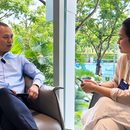
A new pathway into sustainable aviation has been opened by Emirates Engineering through the launch of the Material Futures Studio, a six-week educational programme through which university students will be introduced to aircraft maintenance, material recovery and product design. By the initiative, retired cabin components will be treated as resources that can be transformed rather than waste that must be discarded. Practical industry exposure will be provided to 23 students from Khalifa University, Emirates Aviation University and the University of Sharjah. Through expert mentoring, facility visits and prototype development, the next generation of aviation innovators will be encouraged to explore how reclaimed aircraft materials can be given useful new purposes. Although the programme has been centred on engineering and design, its potential relevance will also be felt across travel, as more responsible aircraft refurbishment practices can support a cleaner and more resource-conscious passenger aviation sector.
Material Futures Studio has been created as an intensive six-week programme through which academic knowledge will be connected with practical aviation experience. Its inaugural edition is being attended by 23 students drawn from Khalifa University, Emirates Aviation University and the University of Sharjah.
The programme is being led by the Upcycling Department at Emirates Engineering. Under the initiative, guidance will be provided by aviation specialists who are experienced in aircraft maintenance, cabin refurbishment, material recovery and product development. Students will be supported as ideas are developed and translated into physical prototypes.
Rather than being presented with sustainability only as a theoretical subject, participants will be shown how discarded aviation materials can be assessed, redesigned and returned to use. A closer understanding of the aviation industry will therefore be developed while technical, creative and problem-solving abilities are strengthened.
Advertisement
Advertisement
At the beginning of the programme, an introduction to Emirates Engineering and its operational facilities was provided. Students were taken through the maintenance hangars, where the scale and complexity of modern aircraft engineering were demonstrated.
A-checks are generally associated with routine aircraft inspections, while more detailed work is conducted during C-checks. By being introduced to these processes, students were given a broader view of how engineering decisions influence airline operations, aircraft availability and passenger journeys.
A connection between technical maintenance and the travel experience could also be recognised. Reliable aircraft operations are supported by careful engineering, while delays and service disruptions can be limited when maintenance programmes are efficiently managed.
A visit to the airline’s upcycling workshop was included in the programme. There, students were shown how materials removed from aircraft interiors are already being recovered and repurposed.
Cabin components can be generated in large quantities when aircraft are refurbished. Seats, fabrics, leather, metal fittings and other interior materials may no longer be required in their original form, even though they can remain suitable for alternative uses. Through upcycling, their working lives can be extended.
During the six-week programme, concepts for new products will be developed from these reclaimed materials. Prototypes will then be created, allowing each idea to be tested in a practical setting.
This approach is expected to encourage students to consider functionality, durability and appearance alongside environmental responsibility. The challenge will not simply be centred on producing decorative objects. Products that demonstrate a convincing second life for aviation materials will be sought.
Throughout the design and development process, mentoring will be provided by Emirates Engineering teams. Technical knowledge will be shared as participants examine the properties and limitations of different aircraft materials.
Assistance will also be offered during the idea-generation and prototype stages. In this way, decisions will be informed by professional aviation experience while space for student creativity will still be retained.
The programme will be concluded with a dedicated showcase. Projects developed by the students will be presented to Emirates Engineering representatives, giving participants an opportunity to explain the reasoning, practical value and sustainability potential behind their designs.
Experience in project presentation will also be gained. Such skills are increasingly valued across aviation, where engineering proposals must often be communicated to operational, commercial, safety and sustainability teams before being adopted.
Material Futures Studio has been positioned within the wider aircraft upcycling programme being implemented by Emirates. That work is connected to the airline’s fleet retrofit project, under which 219 Airbus A380 and Boeing 777 aircraft are being covered.
During aircraft refurbishment, cabin materials are removed as interiors are upgraded. Instead of all suitable components being treated as waste, selected materials are being recovered by Emirates Engineering and turned into handcrafted products.
The retrofit programme has been designed to improve aircraft interiors and elevate the passenger experience. At the same time, opportunities for responsible material management are being created. This connection makes the initiative particularly relevant to travellers because cabin renewal, comfort improvements and waste reduction are being addressed within the same broader project.
Through the studio, new possibilities for these recovered materials may be identified. Ideas created by students could also help demonstrate how aviation engineering can be combined with circular design thinking.
The new educational programme complements Aircrafted by Emirates, through which reclaimed aircraft materials have already been used to produce bags, luggage and accessories. Materials taken from aircraft interiors have been transformed into practical products rather than being immediately discarded.
Through these projects, aviation materials have been given a social and practical purpose after their original role inside an aircraft has ended. The Material Futures Studio will extend that thinking by allowing university students to explore additional applications.
Aviation history can also be preserved through upcycled products. Materials once used aboard passenger aircraft can be transformed into objects that retain a direct connection to global travel and the journeys completed by the fleet.
No immediate change to Emirates schedules, ticket prices, baggage policies or passenger services has been announced through the launch of Material Futures Studio. Its travel significance is instead found in the longer-term relationship between engineering innovation, efficient aircraft refurbishment and responsible aviation growth.
Airlines are required to maintain and modernise aircraft while responding to growing expectations around environmental performance. By increasing the reuse of suitable cabin materials, waste associated with major retrofit programmes can be reduced.
Future travellers may increasingly judge airlines not only by network reach and onboard comfort but also by the way aircraft, catering products, cabin materials and operational resources are managed. Initiatives that connect passenger improvements with material recovery can therefore support a more complete approach to responsible travel.
The programme may also help build the specialist workforce required for that transition. Sustainable aviation will not be delivered through a single technology. Progress will be supported through engineering, maintenance, material science, design and operational improvements.
Through collaboration with Khalifa University, Emirates Aviation University and the University of Sharjah, students are being brought closer to real aviation operations. Such cooperation can help academic programmes remain connected to the practical requirements of the industry.
Young engineers and designers can often be inspired by direct exposure to aircraft, maintenance facilities and technical specialists. By being allowed to work with reclaimed aviation materials, participants will be encouraged to view sustainability as a design opportunity.
The UAE’s position as an international aviation and travel centre may also be reinforced when local students are given access to advanced industry facilities. Skills developed through such programmes could eventually be applied across airlines, airports, maintenance organisations, manufacturing companies and travel technology businesses.
A wider talent pipeline may consequently be supported, helping the aviation sector prepare for future operational and environmental challenges.
Material Futures Studio has been launched at a time when greater attention is being directed towards the full lifecycle of aircraft components. Cabin materials are increasingly being considered beyond their first use, particularly when large fleet refurbishment projects are undertaken.
Through the programme, experimentation will be encouraged in a controlled, professionally mentored environment. Some concepts may remain exploratory, while others could reveal practical opportunities for future upcycling.
The initiative should therefore be understood as both an educational programme and an innovation platform. Students will be given industry experience, Emirates Engineering will be exposed to fresh design perspectives, and retired aircraft materials will be examined for further value.
For the travel sector, the project presents a clear message. Passenger comfort and fleet modernisation do not have to be separated from material responsibility. When engineering expertise, student creativity and aircraft upcycling are connected, more thoughtful approaches to the future of flight can be developed.
[Source:- Emirates Newsroom]
Image Credit:- Emirates
Advertisement
Tags: aircraft parts upcycling, Emirates Engineering, future aviation innovators, Material Futures Studio, sustainable aviation UAE
Advertisement
Advertisement













Saturday, September 5, 2026

Friday, September 4, 2026

Saturday, September 5, 2026

Friday, September 4, 2026

Thursday, September 3, 2026

Wednesday, September 2, 2026
Saturday, September 5, 2026