
UK and Other Countries Power Europe’s Smart Hotel Boom With Autonomous AI and Direct Booking Technology

Published
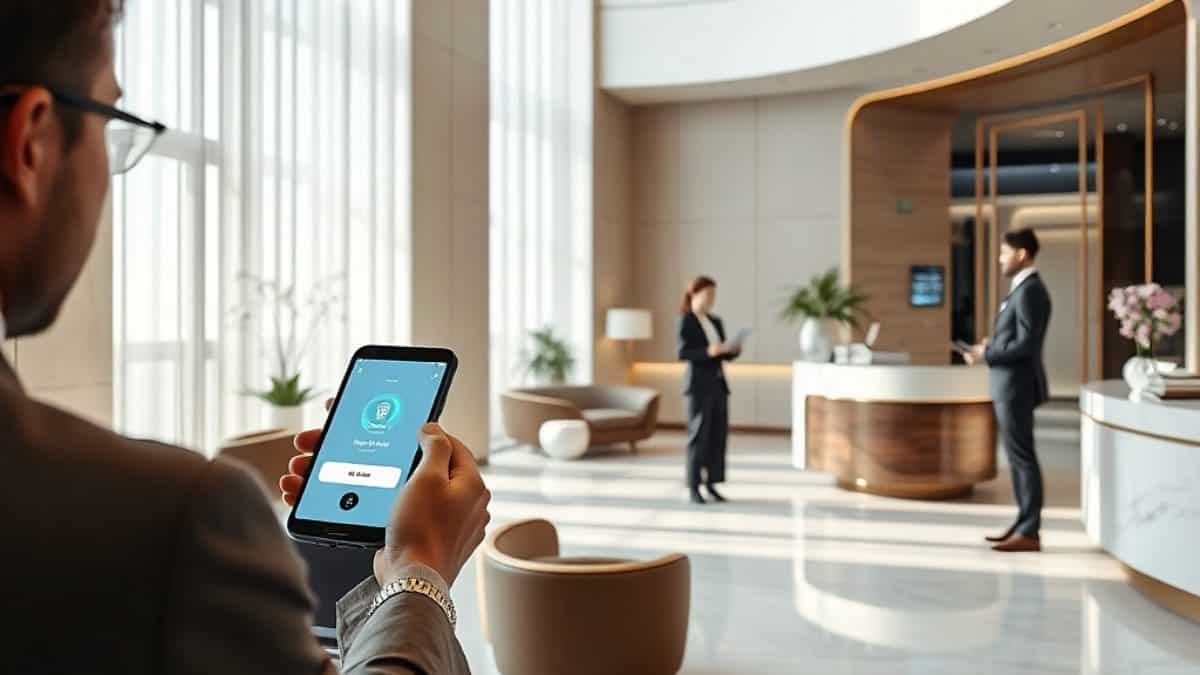
European independent hoteliers are now confronting an urgent operation crisis that is marked by serious labour deficits, rising costs, and OTA domination. For this reason, the use of autonomous AI technology in independent hotels has changed from an experimentation luxury into an absolute business need. Through the substitution of old and cumbersome property management systems with adaptive and sovereign technology platforms, boutique hoteliers avoid night voice booking, perform automated micro-yielding and increase lobby arrival speed. Digital technology architectures reduce administrative friction and thus allow independent accommodation operators in Europe to preserve their special boutique identity while earning back their operating margins from dominating global platforms.
Background and Macroeconomic Pressures Across European Hospitality
The European lodging ecosystem operates within a volatile macroeconomic climate characterised by rising top-line international travel demand alongside acute operational headwinds. Official data published by Eurostat confirms that tourist accommodation establishments across the European Union recorded approximately 1.321 billion overnight stays during the first half of 2026, representing a 1.7% increase compared with the corresponding six-month period of 2025. Significantly, nights spent by international visitors rose by 2.5%, expanding at nearly three times the rate of domestic travel, which grew by only 0.9%. In the second quarter of 2026 alone, accommodation establishments across the European Union registered 849.8 million overnight stays, with traditional Mediterranean and Western European destinations absorbing high concentrations of visitor volume; Italy recorded 148 million nights and Spain logged 142 million nights.
Advertisement
Advertisement
| European Accommodation Metric | H1 2025 Volume | H1 2026 Volume | Year-on-Year Growth |
| Total EU Overnight Stays | 1,299 million | 1,321 million | +1.7% |
| Foreign Visitor Overnight Stays | 629 million | 645 million | +2.5% |
| Domestic Visitor Overnight Stays | 670 million | 676 million | +0.9% |
| Southern European Q2 Volume (Italy & Spain) | 282.5 million | 290.0 million | +2.7% |
However, robust occupancy figures obscure severe structural imbalances that disproportionately penalise independent boutique properties. In its assessment of international tourism competitiveness, the Organisation for Economic Co-operation and Development (OECD), within its report OECD Tourism Trends and Policies 2026, documented that while tourism directly generates 4.0% of gross domestic product and 19.3% of services exports across OECD economies, structural labour shortages and persistent skills mismatches continue to threaten small-to-medium enterprises (SMEs).
Official quarterly employment releases from Eurostat demonstrate that the job vacancy rate across the European accommodation and food service activities sector settled at 2.6% in the euro area and 2.5% across the wider European Union. In the United Kingdom, data from the Office for National Statistics (ONS) demonstrates that 30% of hospitality businesses continue to face acute difficulties filling vacancies compared with historical averages, with labour shortages falling heavily upon customer-facing front-desk roles, reservations desks, and night audit functions.
Advertisement
Advertisement
The Intermediation Squeeze: Platform Dominance and Margin Erosion
The systemic labour deficit coincides with an intensifying commercial reliance on digital intermediaries. According to the seventh edition of the European Hotel Distribution Study, released by the European hospitality federation HOTREC and conducted by Professor Roland Schegg of HES-SO Valais-Wallis across 2,713 properties in 28 European nations, two corporate conglomerates—Booking Holdings and Expedia Group—now capture 85.4% of all online travel agency (OTA) bookings across Europe. Booking Holdings alone holds a 68.8% market share, with Booking.com generating 66.1% of all intermediated online reservations.
European Hotel Room Night Distribution Mix
- Direct In-House Bookings — 51.3%
- Hotel Booking Engines — 12.3%
- Direct Voice Telephony — 16.4%
- Email, In-Person Walk-ins, and Messaging — 22.6%
- Intermediated Distribution — 48.7%
- Global OTAs (Booking Holdings & Expedia Group) — 29.9%
- Represents 85.4% of OTA volume
- Traditional Wholesalers, GDS, and Tour Operators — 18.8%
- Global OTAs (Booking Holdings & Expedia Group) — 29.9%
Although direct booking channels accounted for 51.3% of European room nights, the market share absorbed by OTAs has grown continuously from 19.7% in 2013 to 29.9% in 2025, an expansion of more than ten percentage points over twelve years. For independent European boutique properties operating between 15 and 60 rooms, intermediated commissions ranging between 15% and 25% consume the majority of net operating margins.
Advertisement
Advertisement
Furthermore, commercial friction between hoteliers and digital platforms has intensified. The HOTREC study established that 51% of European hotels experience frequent or occasional rate undercutting by OTAs, which artificially discount rooms by waiving platform commissions without the hotelier’s agreement, while 44% report disruptive multi-sourcing practices that redistribute room inventory without authorization. Addressing these systemic pressures, Marie Audren, Director General of HOTREC, stated officially: “For thousands of hotels, a gatekeeper platform stands directly between the business and its guest. With 85% of OTA bookings going through just two global groups, robust enforcement of the Digital Markets Act is essential to protect competition, expand consumer choice, support innovation and safeguard Europe’s SMEs”.
Regulatory Catalysts: The Digital Markets Act and the EU AI Act
The operational landscape for independent European hotels has been reshaped by regulatory enforcement from Brussels. Under the European Union’s Digital Markets Act (DMA), the European Commission designated Booking Holdings as a core platform gatekeeper. Pursuant to Article 5(3) of the DMA, digital gatekeepers are prohibited from imposing wide or narrow price parity clauses, legally emancipating hoteliers to offer lower room rates, superior booking terms, and exclusive incentives on their direct proprietary channels compared to third-party platforms.
This legal autonomy was reinforced by the Court of Justice of the European Union (CJEU) in its September 2024 judgment (Booking.com BV and Booking.com (Deutschland) GmbH, Case C-264/23), which determined that price parity clauses cannot be classified as ancillary restraints under European competition law, thereby depriving platforms of common legal defenses regarding free-riding. Additionally, Article 6(10) of the DMA obligates gatekeeper platforms to provide accommodation providers with unbundled, continuous, real-time access to transactional and engagement data generated by customers on the platform, furnishing independent operators with actionable commercial intelligence.
Simultaneously, the regulatory implementation of the EU AI Act has established mandatory operational baselines for hospitality automation. Under Article 50 of the legislation, which took effect across EU member states in August 2026, deployers of artificial intelligence systems that interact directly with natural persons—such as customer support chatbots and conversational telephony voice assistants—must ensure that guests are explicitly informed that they are engaging with an automated system. By establishing clear compliance guardrails, this statutory clarity enables independent hotels to deploy sovereign autonomous AI for independent hotels that captures after-hours sales while maintaining full adherence to European transparency and data privacy requirements.
Section 1: The “Ghost Front Desk” and Midnight Revenue Recovery
Independent boutique hotels across Europe encounter severe revenue leakage during off-peak and night hours. Properties operating with 15 to 60 rooms rarely maintain dedicated night auditors or sales staff during late shifts, as the financial overhead of 24-hour reservations teams cannot be justified by property scale. Consequently, between 10:00 PM and 7:00 AM Central European Time, direct telephone inquiries are commonly diverted to standard answering machines, external voicemail services, or night watchmen who lack system clearance or training to execute complex PMS reservations.
The commercial ramifications of unhandled inquiries are substantial. An empirical investigation conducted by Alveni across 13,200 hotel telephone interactions within upscale European properties demonstrated that up to 40% of inbound calls go unanswered during peak arrival hours and overnight operational windows. Furthermore, a secret-shopper diagnostic analyzing 308 inbound calls across 135 luxury and boutique establishments revealed that 92.2% of telephone interactions concluded with zero prospective guest contact details captured by front-office personnel. When an inbound caller encounters an unanswered line or a voicemail prompt, consumer behaviour defaults to rapid channel switching; empirical research shows that prospective guests wait an average of only eight seconds before abandoning a direct phone inquiry to book via an OTA or select an alternative property, forfeiting up to 25% of gross reservation revenue to intermediary commissions.
Advertisement
Advertisement
Deploying conversational machine intelligence directly resolves this vulnerability. Modern after-hours voice concierges utilize advanced neural acoustic models and natural language processing pipelines to answer inbound calls on the initial ring. Communicating naturally in over 30 languages—including French, German, Italian, Spanish, and English—these autonomous agents interpret complex booking parameters, query live room availability within the property management system, and quote real-time direct rates.
Rather than taking passive callback messages, the voice assistant guides the guest through room selection, registers personal preferences, populates the PMS folio, and transmits an encrypted, PSD2-compliant payment authorization link directly to the caller’s smartphone via SMS or instant messaging. By capturing high-intent international and late-night demand at the precise moment of intent, independent properties recover thousands of euros in monthly gross operating revenue while bypassing third-party platform acquisition fees entirely.
Section 2: Micro-Yielding and Intraday Rate Agility
Independent boutique hotels have historically operated at a distinct disadvantage compared to international hotel chains in revenue management sophistication. While multinational hotel groups deploy centralised yield management divisions supported by enterprise predictive software, independent properties have traditionally relied on weekly, bi-weekly, or static seasonal rate sheets. This manual cadence exposes boutique operators to structural revenue loss during volatile trading periods, preventing them from capitalizing on unexpected demand surges or adjusting to sudden market decelerations.
Autonomous revenue management tools address this technical divide by executing automated micro-yielding. Instead of static rate tiers, micro-yielding engines evaluate real-time demand signals and implement continuous intraday price adjustments on an hourly basis. These autonomous pricing algorithms continuously monitor a broad spectrum of external data inputs, including regional flight arrivals, municipal rail delays, weather patterns, hyper-local event ticketing pace, and immediate competitor pricing changes. If an unannounced transit strike suspends regional rail services, or if a major convention experiences an unexpected registration surge, the algorithmic pricing engine dynamically updates room rates to optimize Average Daily Rate (ADR) and Revenue Per Available Room (RevPAR) across all active distribution channels.
| Pricing Management Dimension | Legacy Manual Yielding | Autonomous Intraday Micro-Yielding |
| Frequency of Rate Recalibration | Weekly or monthly static tables | Real-time hourly continuous adjustments |
| External Demand Ingestion | Historical occupancy patterns only | Transit disruptions, events, flight feeds, competitor pace |
| Commission Optimization Strategy | Identical rates across all channels | Dynamic discounting on direct engine under DMA rules |
| Channel Disparity Management | Manual audit of OTA price breaches | Automated detection of OTA commission undercutting |
| Average RevPAR Impact | Baseline standard performance | +8% to +18% net yield improvement |
Moreover, autonomous micro-yielding enables independent hoteliers to protect direct margins within the post-parity regulatory framework. Under the EU Digital Markets Act, hotels can legally undercut OTA pricing across their direct booking engines, proprietary voice systems, and direct digital messaging channels.
The autonomous revenue engine maintains competitive pricing on third-party channels to ensure metasearch discovery, while dynamically displaying preferential rates, complimentary gourmet breakfasts, room upgrades, or tailored cancellation policies to direct bookers. This dynamic pricing strategy systematically protects room profitability against the 51% of third-party platforms that engage in unauthorised commission-waiving and rate undercutting.
Advertisement
Advertisement
Section 3: Re-engineering the Lobby and Accelerating Operational Velocity
The physical reception area of an independent boutique hotel often serves as an administrative bottleneck rather than a personalized guest touchpoint. Under traditional property management frameworks, check-in procedures are encumbered by repetitive administrative steps. Arriving guests, fatigued from international journeys, are forced to wait in queue while front-desk agents remain focused on computer monitors, manually inputting passport data, validating credit card numbers, printing registration cards, and navigating legacy software user interfaces that require 12 to 20 screen clicks per arrival.
Modern cloud-native property management platforms fundamentally redesign arrival workflows by establishing an ergonomic, mobile-first operating environment. By shifting mandatory identity verification, payment tokenisation, and municipal registration to secure pre-arrival mobile interfaces, independent properties compress the average check-in duration from six to eight minutes down to under 90 seconds—a reduction exceeding 50%.
Standard Check-In Workflow
- Traditional Legacy PMS — 6 to 8 Minutes
- Physical lobby queue formation
- Manual transcription of passport and travel documentation
- Physical credit card processing and imprint
- 12 to 20 discrete user interface navigation clicks
- Modern Sovereign Cloud Stack — Under 90 Seconds
- Pre-arrival encrypted digital identity verification
- Automated PSD2 payment tokenisation prior to arrival
- Single-click arrival confirmation via tablet or mobile kiosk
- Instant issuance of encrypted digital key credentials
Through automated digital communications issued 48 hours before check-in, incoming guests complete statutory registration cards, upload identification documents, and pre-authorize payment protocols on their own smartphones. Upon stepping into the boutique lobby, the interaction shifts from an administrative data-entry exercise to an authentic hospitality greeting. Reception staff, untethered from desktop workstations and equipped with lightweight tablets, confirm guest identity with a single tap, distribute room keys or issue mobile credentials, and welcome guests with bespoke amenities.
This velocity dividend also mitigates persistent recruitment and staffing challenges. High employee turnover across European tourism means that independent operators frequently onboard seasonal personnel without comprehensive technical backgrounds.
Legacy on-premise systems regularly require three to six weeks of formal software instruction before a new employee achieves front-desk proficiency. In contrast, cloud-native architectures featuring intuitive consumer-grade interfaces reduce user navigation complexity by 60%, shortening employee onboarding cycles from weeks down to hours. Administrative entry errors and billing reconciliation disputes are curtailed, stabilizing operations during peak arrival surges.
Section 4: Preserving Identity in the Automated Era
A persistent philosophical concern within the European hospitality sector is the apprehension that advanced automation risks degrading authentic boutique character. Independent hoteliers take immense pride in delivering distinctive, highly personalized experiences that reflect their local culture, historic heritage, and aesthetic architecture. Industry observers frequently express caution that automated systems, algorithmic pricing, and digital guest communication might commoditize the boutique guest experience into an impersonal transaction.
Advertisement
Advertisement
However, field evidence demonstrates that the thoughtful implementation of autonomous AI for independent hotels resolves the perceived tension between technology and personalized service. In an unautomated property, front-desk staff routinely spend 40% to 50% of their working hours answering repetitive administrative queries: dispensing Wi-Fi credentials, issuing VAT invoices, reiterating breakfast schedules, and detailing valet parking procedures. This clerical workload isolates staff behind display monitors and leaves them unavailable for authentic guest interaction.
By delegating routine transactional inquiries to autonomous conversational layers across telephony, web portals, and WhatsApp messaging, independent hoteliers liberate their personnel from repetitive administrative tasks.
Staff can focus their time on authentic, high-touch hospitality: conducting personalized property tours, curating bespoke itineraries, arranging private excursions with local artisans, and offering regional culinary tastings upon arrival. Rather than replacing human warmth, autonomous technology provides the operational foundation that enables genuine human engagement to thrive, driving measurable increases in Net Promoter Scores (NPS), positive online sentiment, and long-term customer retention.
Country-Level Operational Breakdowns Across Europe
The deployment of autonomous hospitality software architectures is not uniform; independent properties across different European jurisdictions adapt autonomous technology suites to resolve specific market conditions, statutory obligations, and consumer profiles.
| European Tourism Market | Primary Operational Challenge | Sovereign Tech Stack Application |
| United Kingdom | Post-Brexit recruitment deficits; high National Living Wage | AI voice concierges & WhatsApp layers capture overnight US/Asian direct bookings |
| France & Provence | High seasonality; multilingual communication friction | Native 30+ language voice & messaging assistants manage concierge tasks |
| DACH (DE, AT, CH) | High hourly wages; strict GDPR and EU AI Act compliance | GDPR-compliant sovereign cloud PMS executing automated intraday event yielding |
| Southern Europe (IT, ES) | Extreme summer arrival congestion; historic lobby constraints | Mobile pre-check-in and WhatsApp digital keys eliminate physical queues |
United Kingdom: Country Houses and Regional Estates
In the United Kingdom, independent country house hotels and boutique estates across destinations such as the Cotswolds, the Scottish Highlands, and the Lake District navigate a tight operating environment. Data from the Office for National Statistics demonstrates that 30% of hospitality businesses struggle with persistent recruitment shortages, exacerbated by post-Brexit labour restrictions and statutory increases in the National Living Wage. Concurrently, long-haul inbound tourism from North America and Asia-Pacific has grown robustly, with affluent international visitors seeking traditional heritage properties.
UK boutique operators deploy autonomous voice concierges and automated messaging systems across WhatsApp and SMS to resolve time-zone discrepancies. When prospective guests from North America or East Asia phone during the UK night audit shift, conversational AI systems answer instantly, describe room details and estate amenities, provide clear driving and rail instructions from London, and confirm commission-free direct bookings. This capability captures high-ADR international bookings that historically leaked to global OTAs due to unhandled night calls, preserving vital profit margins against domestic wage and tax increases.
Advertisement
Advertisement
France and Provence: Luxury Heritage and Multilingual Communication
France continues to lead global tourism volumes, with regional destinations like Provence, the Loire Valley, and the Côte d’Azur welcoming millions of multi-national European leisure travellers. Independent châteaux, converted farmhouses, and historic boutique hotels often experience operational friction arising from language barriers across diverse guest demographics, including British, German, Dutch, Italian, and American travellers.
To maintain luxury service standards without employing large, multilingual front-desk teams, French independent properties deploy natural language conversational AI integrated into their central PMS. These multilingual platforms converse fluently in the visitor’s native language, orchestrating personalized concierge services such as regional winery reservations, private transport, and bespoke culinary itineraries. By automating multi-language inquiries and pre-arrival upselling, French operators boost direct ancillary spending while ensuring frictionless guest relations.
DACH Region: Rigorous Data Sovereignty and Automated Yielding
Across Germany, Austria, and Switzerland, the hospitality landscape is shaped by high operational labour costs, strict statutory work-hour limitations, and stringent privacy regulations under GDPR and the EU AI Act. Concurrently, lodging markets in metropolitan business centres like Frankfurt, Munich, and Dusseldorf experience volatile demand cycles driven by trade fairs (Messen), while Alpine destinations navigate fluctuating seasonal ski conditions.
Independent hoteliers across the DACH territory implement sovereign, GDPR-compliant cloud PMS platforms paired with autonomous micro-yielding tools. These systems operate within European cloud infrastructure to ensure that guest identity records and payment tokens comply with statutory data sovereignty rules.
During major industrial trade fairs or early snowfall alerts, autonomous revenue tools evaluate competitor pace and occupancy trends to implement hourly dynamic price adjustments, maximizing RevPAR without manual intervention. By automating revenue management and night-audit processes, DACH hoteliers control wage costs while maintaining compliance with European digital standards.
Southern Europe: High-Density Seasonality and Queue Elimination
In the Mediterranean tourism markets of Italy and Spain, the primary operational challenge centres on extreme seasonal volume concentration. Eurostat regional records show that the Balearic island of Mallorca alone registered 55.3 million overnight stays in 2024, with peak summer months absorbing unprecedented tourist numbers. During afternoon arrival peaks, when flights and high-speed trains arrive concurrently, boutique properties in Florence, Venice, Mallorca, and Seville face severe lobby congestion.
Advertisement
Advertisement
Boutique operators across Southern Europe deploy contactless PMS arrival workflows paired with automated WhatsApp concierges to eradicate physical front-desk queues. Arriving travellers complete statutory identity verification and credit card pre-authorisation on their mobile devices before arrival.
Upon arriving at the property, guests bypass physical reception desks and access their rooms via encrypted digital mobile keys or rapid kiosk terminals. In historic architectural palazzos and boutique villas where physical front-desk expansion is impossible, mobile check-in allows operators to process high guest turnover efficiently while preserving an unhurried, welcoming atmosphere.
Economic Implications and Industry Outlook
The transition toward autonomous hospitality software represents an enduring structural realignment within the European lodging industry. Over the 2026–2028 horizon, competitive divergence will accelerate between accommodation providers that deploy sovereign automation architectures and those relying on legacy manual models.
Hotels that retain on-premise software, static spreadsheets, and unmanaged telephone lines will remain vulnerable to escalating wage inflation, persistent personnel shortages, and heavy distribution commissions. Conversely, independent boutique properties that invest in a sovereign operational stack effectively decouple top-line revenue generation from front-desk staff counts.
By utilizing autonomous voice concierges to capture after-hours international demand, executing real-time micro-yielding to protect direct margins, and compressing lobby arrival times by 50%, independent hoteliers can protect their profit margins.
Furthermore, European regulatory policies will continue to reinforce this operational shift. As the European Commission maintains strict oversight over gatekeeper platforms under the Digital Markets Act and enforces algorithmic transparency under the EU AI Act, the digital distribution market will become more open and competitive. Independent operators that combine agile cloud property management, autonomous conversational intelligence, and dynamic pricing will preserve their commercial independence, protecting their unique local identities while maintaining the technical and commercial agility needed to outperform global hotel networks.
Advertisement
Advertisement
Conclusion
The integration of autonomous AI technology within independent hotels represents a paradigm shift in the economics of accommodation in Europe. Through breaking down old administrative barriers, independent hotels transform any possible friction points into opportunities for revenue generation. Voice-based systems eradicate any chances of reservation cancellations, algorithmic micro-yielding optimizes prices on daily basis, and innovative guest arrival process frees up time for hotel staff to build relationships with guests. Thanks to the competition policy in Europe which breaks down any restrictions by platforms, boutique hotels no longer require large-scale corporate financial strength to succeed.
Advertisement
