Asmita Karmakar Asmita Karmakar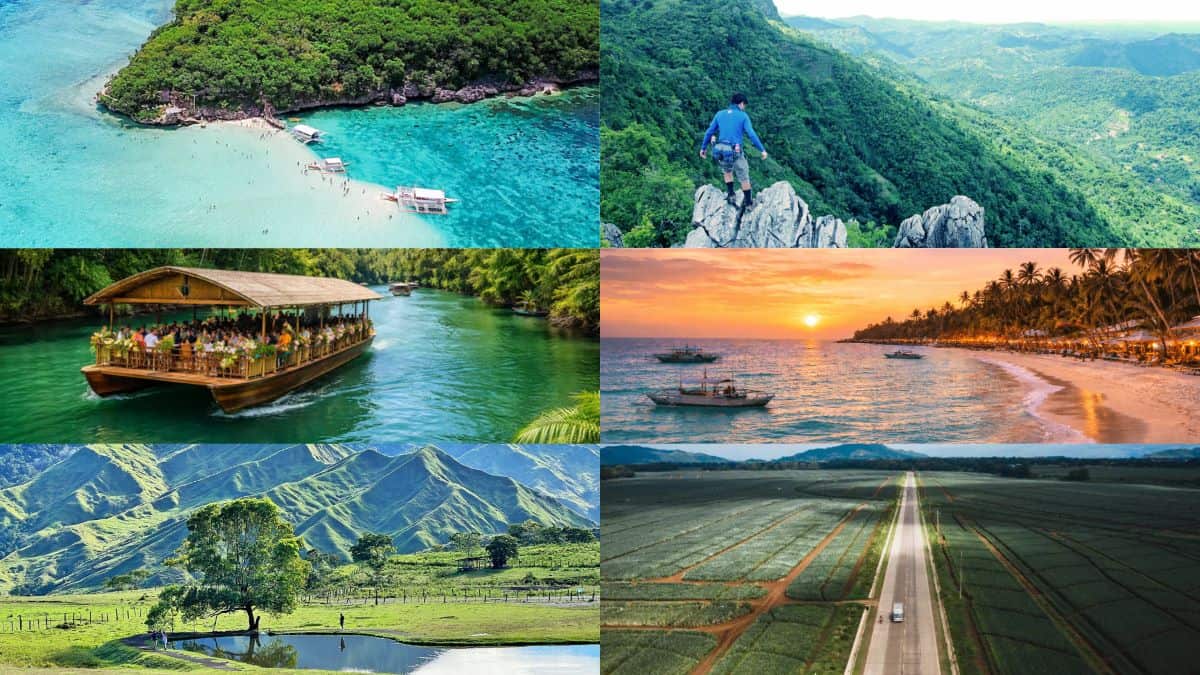
The Philippines is offering travellers a broader way to experience the archipelago by combining the tropical coastlines of Cebu, the river and marine landscapes of Bohol, and the cool agricultural highlands of Northern Mindanao. Instead of organising an entire holiday around one famous beach, visitors can now build varied itineraries covering island adventures, cultural encounters, river journeys, mountain scenery and countryside attractions.
Regional gateways, including Mactan-Cebu International Airport, Bohol-Panglao International Airport and Laguindingan Airport, play an important role in making these journeys possible. Together, they improve access to destinations beyond the traditional tourism centres and help travellers explore several contrasting regions during one Philippine holiday.
Advertisement
The Philippines remains internationally recognised for its beaches, diving sites and island scenery. However, its tourism offering extends much further. Cebu combines marine attractions with heritage sites and mountain adventures. Bohol blends beaches with rivers, wildlife, food traditions and rural landscapes. Northern Mindanao introduces travellers to elevated plateaus, pineapple estates, indigenous culture and outdoor adventure.
This diversity allows visitors to design a journey around experiences rather than a single location. A traveller could begin with snorkelling and coastal relaxation in Cebu, continue to Bohol for a quieter river and beach stay, and finish in Bukidnon among pine-covered mountains and agricultural landscapes.
Advertisement
Advertisement
The Department of Tourism presents Central Visayas as a region where culture and nature come together, while its official Northern Mindanao tourism information highlights a landscape extending from coastal areas to Bukidnon’s elevated interior.
Cebu works naturally as the first stage of a multi-destination itinerary. Its central location, international airport and domestic transport links have long made the province an important gateway to the Visayas and other parts of the country.
Southern Cebu offers one of the province’s most striking coastal experiences at Sumilon Island, located near Oslob. The island is known for clear water, marine scenery and its distinctive sandbar. Official Department of Tourism information describes Sumilon as a 24-hectare island with lush vegetation and attractive coastal environments suitable for visitors seeking beach and marine activities.
Cebu also gives travellers opportunities to move away from the coast. Mt. Manunggal and Mt. Mauyog in Balamban are recognised by the Provincial Government of Cebu as hiking destinations with historical significance. The elevated terrain, rural roads and mountain viewpoints reveal a side of the province that contrasts sharply with its beaches and urban centres.
Advertisement
Advertisement
Visitors can also consider recognised destinations such as Osmeña Peak, Kawasan Falls, Moalboal, Bantayan Island and Camotes. Cebu’s official provincial tourism information positions the destination as a combination of heritage, marine tourism, food, festivals and outdoor adventure rather than merely a transit point.
Mactan-Cebu International Airport strengthens Cebu’s value as an itinerary-building hub. The airport connects the province with domestic and international markets, enabling visitors to enter the Philippines through Cebu instead of automatically beginning every journey in Manila.
The airport’s official Cebu Connects system is designed to simplify connecting travel. Passengers transferring through Cebu can complete immigration, customs and quarantine procedures within a designated transfer area rather than leaving the terminal and restarting the process elsewhere. Travellers should still check minimum connection requirements, baggage arrangements and entry procedures with their airline before departure.
The Mactan-Cebu International Airport Authority identifies the airport as an important Asia-Pacific gateway. Its continued infrastructure development, including the opening of a second parallel runway in 2025, has strengthened the airport’s capacity to support regional aviation and tourism movement.
From Cebu, travellers can continue to nearby Bohol by air or sea. The destination offers a slower rhythm, shaped by countryside drives, river landscapes, beaches, marine environments and small communities.
The Loboc River remains one of Bohol’s most recognisable attractions. Visitors travel along its green waters through tropical vegetation and riverside settlements. The Department of Tourism describes the journey as an opportunity to experience peaceful countryside scenery, local music and Boholano hospitality.
Panglao offers a livelier coastal experience. Alona Beach, a well-known stretch of shoreline on Panglao Island, supports swimming, snorkelling, diving, dining and access to island excursions. The Bohol Provincial Tourism Office also highlights Panglao and Anda as two of the province’s principal beach areas.
Travellers interested in marine nature can explore destinations such as Pamilacan Island, which the Department of Tourism identifies for clear water, marine life, snorkelling, diving and wildlife-viewing experiences. Responsible operators and locally authorised tours should always be prioritised, particularly for activities involving marine animals or sensitive ecosystems.
Bohol’s appeal extends well beyond its shoreline. The island is internationally associated with the Chocolate Hills and the Philippine tarsier, but its tourism identity also includes food traditions, heritage sites, forests, farms and coastal communities.
The Philippine Tarsier and Wildlife Sanctuary provides a protected habitat for the small nocturnal primate native to the Philippines. Visitors must follow strict rules concerning noise, flash photography and physical distance because the animals are highly sensitive.
Bohol also promotes Asin Tibuok, an artisanal salt traditionally produced using knowledge passed through generations. Such experiences give tourism operators opportunities to connect accommodation and sightseeing programmes with local food, craft and community-based enterprises rather than concentrating visitor spending exclusively in beach resorts.
Bohol-Panglao International Airport strengthens access to these attractions. The Civil Aviation Authority of the Philippines has documented domestic and international operations at the airport, including services connecting Bohol with Incheon. Flight routes and frequencies can change, so travellers should verify current schedules directly with airlines before finalising their itinerary.
Northern Mindanao provides the greatest visual contrast within the three-destination journey. Instead of white-sand islands and coastal resorts, travellers encounter broad plateaus, mountain roads, fertile farms and cooler highland environments.
Laguindingan Airport serves as the main air gateway to Northern Mindanao. Official regional tourism information identifies it as an entry point for travellers arriving from major Philippine cities, including Manila, Cebu and Davao. From the airport corridor, visitors can continue by road towards Cagayan de Oro, Iligan, Bukidnon and other parts of Region X.
Bukidnon is especially suitable for travellers seeking nature and outdoor activities. The Department of Tourism highlights Lake Apo, a crater lake surrounded by green hills, as well as the pine-covered setting and adventure attractions of Dahilayan. The province is also home to seven indigenous cultural groups whose traditions form an essential part of Bukidnon’s identity.
Agriculture forms part of the visitor experience in Northern Mindanao. The vast Del Monte Pineapple Plantation extends across areas including Manolo Fortich, Impasug-ong, Sumilao and Libona. Travellers passing through the region can see cultivated fields stretching towards the mountains, creating one of Bukidnon’s most distinctive road-trip landscapes.
Official Department of Tourism Northern Mindanao information identifies opportunities connected with plantation visits, local pineapple products, dining and the Del Monte golf course and clubhouse. However, access to working agricultural or industrial facilities may require permission or advance arrangements.
Bukidnon also supports adventure-based tourism through destinations such as Dahilayan, where visitors can experience ziplines, mountain rides and other outdoor attractions in a cooler upland environment. Lake Apo, Kaamulan-related cultural experiences and scenic highways can extend a Northern Mindanao stay beyond a brief stopover.
The strongest feature of this itinerary is contrast. Cebu introduces beaches, diving, history and mountain hiking. Bohol provides river travel, wildlife, countryside scenery and Panglao’s coastal tourism. Northern Mindanao delivers plateaus, farms, indigenous culture and highland adventure.
Regional airports make it possible to organise these places as connected sections of one journey. However, travellers should allow adequate time for transfers, road journeys and changing weather conditions. Domestic schedules may vary by season, while ferries and outdoor excursions can be affected by sea conditions.
A practical itinerary could allocate three to four nights to Cebu, three nights to Bohol and two to four nights to Northern Mindanao. Longer stays would give visitors greater freedom to explore smaller communities, use accredited local guides and avoid reducing each destination to a hurried checklist.
Encouraging visitors to explore Cebu, Bohol and Northern Mindanao can support a more geographically balanced tourism economy. Multi-stop journeys distribute accommodation spending, restaurant demand, transport bookings and tour activity across several provinces.
They also give travellers a more complete understanding of the Philippines. The country is not defined solely by one famous island or beach. Its tourism strength lies in the relationship between its seas, rivers, farms, highlands, heritage sites and communities.
With Cebu serving as a major regional hub, Bohol providing accessible nature and leisure experiences, and Laguindingan opening the route towards Bukidnon, travellers can experience several distinctive sides of the Philippines in one carefully planned journey.
Advertisement
Advertisement
Advertisement













Saturday, September 5, 2026

Friday, September 4, 2026

Saturday, September 5, 2026

Thursday, September 3, 2026

Wednesday, September 2, 2026

Saturday, September 5, 2026

Saturday, September 5, 2026