
Venezuela Earthquake Death Toll Surges Beyond Five Thousand as Recovery Efforts Intensify, Humanitarian Missions Expand, Travel Disruptions Persist, and Safety Concerns Continue Across Affected Regions: New Report
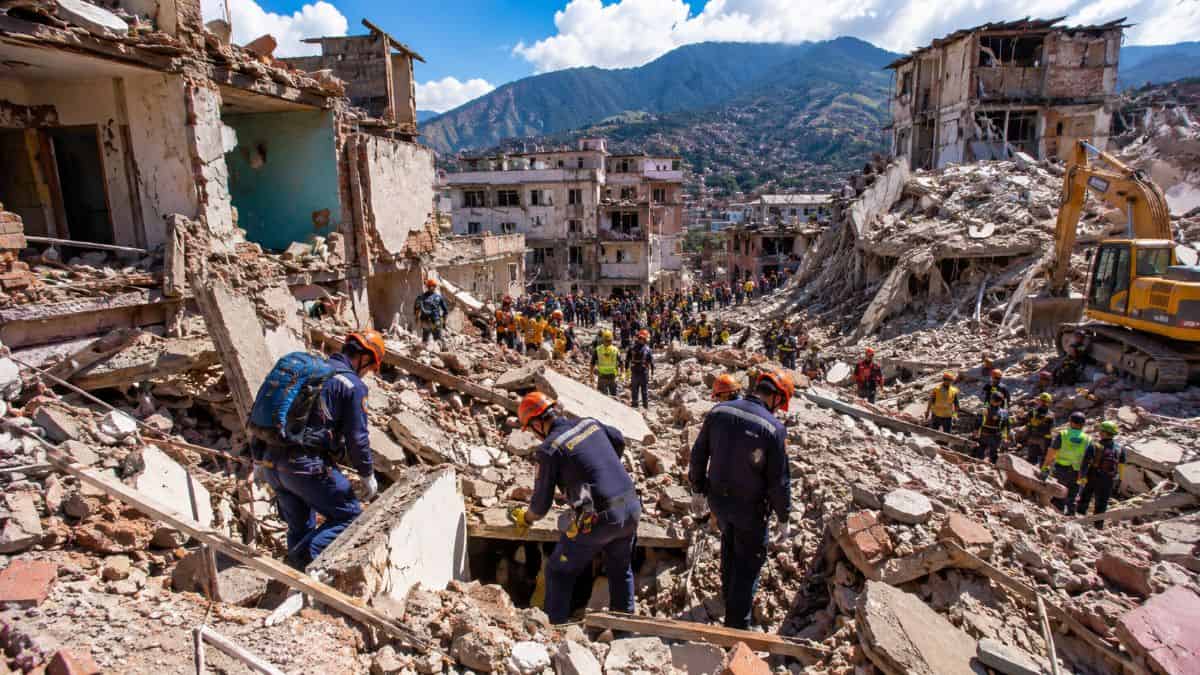
Image generated with Ai
Venezuela is confronting one of the most devastating natural disasters in its recent history as authorities confirmed that the death toll from the twin earthquakes that struck the country in late June has climbed to 5,119. Thousands of families remain displaced while emergency teams continue recovery operations across damaged communities. The increase in fatalities reflects the difficult conditions facing responders as they search collapsed buildings, restore essential infrastructure, and provide urgent medical care to survivors. The disaster has also severely disrupted transportation networks, affecting domestic mobility and limiting access to several regions that remain under emergency management. As reconstruction begins, travel advisories and safety assessments continue to shape movement within affected areas.
The humanitarian response has expanded significantly with international assistance supporting Venezuela’s emergency services through search-and-rescue operations, temporary shelters, healthcare resources, and emergency supplies. Government agencies continue coordinating relief efforts while engineers assess structural damage to roads, bridges, airports, and public facilities. For travelers, businesses, and tourism stakeholders, the disaster highlights the importance of monitoring official advisories before planning any journeys to impacted regions. Recovery is expected to take months, with authorities prioritizing public safety, infrastructure restoration, and community rehabilitation while continuing to account for missing persons.
Advertisement
Advertisement
Venezuela Earthquake Overview
The powerful twin earthquakes struck Venezuela on June 24 within just 40 seconds of each other, registering magnitudes of 7.2 and 7.5. The consecutive seismic events caused widespread destruction across multiple communities, damaging homes, hospitals, schools, government buildings, transportation infrastructure, and utility networks.
Authorities declared a nationwide emergency shortly after the disaster to accelerate rescue operations, mobilize emergency personnel, and coordinate domestic and international assistance.
Advertisement
Advertisement
| Key Information | Details |
|---|---|
| Country | Venezuela |
| Date of Earthquakes | June 24, 2026 |
| Magnitudes | 7.2 and 7.5 |
| Time Between Quakes | Approximately 40 seconds |
| Confirmed Death Toll | 5,119 |
| Injured | 16,740 |
| Survivors Rescued | 6,462 |
| Current Status | Recovery and reconstruction ongoing |
Fatalities Continue to Rise During Recovery Operations
Officials reported that the confirmed death toll increased by another 50 victims over the previous 24 hours, demonstrating the ongoing challenges faced during recovery efforts. Search teams continue inspecting collapsed structures while forensic experts work to identify victims and update official records.
Although rescue operations have transitioned into a broader recovery phase, emergency responders remain active in locations where there is still hope of locating missing individuals. Specialized equipment, engineering assessments, and coordinated emergency management continue supporting these operations.
Advertisement
Advertisement
Medical facilities remain under pressure as thousands of injured residents require continued treatment, rehabilitation, and psychological support following the disaster.
Humanitarian Assistance Expands Across Venezuela
The scale of destruction prompted an international humanitarian response involving multiple countries and relief organizations. Emergency aid has included medical supplies, rescue specialists, temporary shelters, food assistance, water purification systems, and engineering expertise.
Advertisement
Advertisement
| Humanitarian Support | Purpose |
|---|---|
| Search-and-rescue teams | Locate survivors and recover victims |
| Medical assistance | Emergency treatment and hospital support |
| Temporary shelters | Housing displaced residents |
| Food and clean water | Immediate humanitarian relief |
| Engineering experts | Infrastructure safety inspections |
| Emergency logistics | Distribution of relief supplies |
International cooperation continues to play a significant role in supporting Venezuela’s emergency response while local authorities coordinate recovery priorities.
Infrastructure Damage Continues to Affect Domestic Travel
The earthquakes caused severe damage to transportation infrastructure throughout affected regions. Roads remain partially closed in several locations due to landslides, bridge damage, and ongoing repair work.
Authorities continue inspecting airports, railway facilities where applicable, highways, and public transportation systems before restoring full operations. Travel times remain longer in some areas because of detours and infrastructure assessments.
Visitors planning travel within Venezuela are advised to remain informed through official government announcements and local authorities regarding transportation availability and safety conditions.
Advertisement
Advertisement
Impact on Tourism and Visitor Movement
The disaster has created significant challenges for Venezuela’s travel and tourism sector. Several destinations located near affected areas continue focusing on humanitarian recovery rather than visitor activity.
Hotels, tourism operators, transportation providers, and local businesses are evaluating infrastructure conditions before returning to normal operations. Tourism professionals emphasize that traveler safety remains the highest priority during the recovery period.
Destination management authorities are expected to introduce updated safety protocols and operational guidance as rebuilding progresses.
Government Prioritizes Reconstruction
National authorities have placed reconstruction among the country’s highest priorities following the emergency response phase.
Key objectives include restoring transportation links, rebuilding hospitals and schools, repairing utilities, strengthening public infrastructure, and supporting displaced communities through long-term housing initiatives.
Engineers are also expected to review building standards and seismic resilience measures to reduce future disaster risks.
Advertisement
Advertisement
| Reconstruction Priority | Current Focus |
|---|---|
| Housing | Temporary and permanent accommodation |
| Healthcare | Hospital repairs and expanded medical services |
| Transportation | Roads, bridges and public infrastructure |
| Utilities | Electricity, water and communications |
| Community Recovery | Social support and local rebuilding |
Travel Safety Remains Essential
Although relief operations continue making progress, travelers should recognize that conditions remain dynamic across several affected regions.
Transportation disruptions, temporary road closures, damaged public facilities, and restricted access zones may continue for an extended period. Travelers should verify local conditions before departure and maintain flexibility with travel plans.
Emergency preparedness, comprehensive travel insurance, and awareness of local emergency procedures remain important considerations for anyone visiting areas recovering from major natural disasters.
Long-Term Recovery Expected
Recovery from an earthquake of this magnitude requires sustained investment, coordinated planning, and international cooperation. Beyond rebuilding physical infrastructure, authorities face the challenge of restoring livelihoods, reopening businesses, supporting education, and rebuilding community confidence.
Disaster management specialists note that successful recovery depends on resilient infrastructure, effective emergency planning, transparent coordination, and continued humanitarian assistance where needed.
As recovery advances, Venezuela’s focus will remain on protecting affected communities, restoring transportation networks, rebuilding essential services, and strengthening preparedness for future natural disasters.
Advertisement
Advertisement
Frequently Asked Questions
1. What is the latest death toll from the Venezuela earthquakes?
Authorities have confirmed 5,119 fatalities following the twin earthquakes.
2. How many people were injured?
The number of injured has risen to 16,740.
3. When did the earthquakes occur?
The earthquakes struck Venezuela on June 24, 2026.
4. How powerful were the earthquakes?
The two earthquakes measured 7.2 and 7.5 in magnitude.
5. How far apart were the earthquakes?
They occurred approximately 40 seconds apart.
6. How many survivors have been rescued?
Emergency teams have rescued 6,462 survivors.
Advertisement
Advertisement
7. Has international aid been provided?
Yes. Multiple countries and humanitarian organizations have supplied rescue teams, medical assistance, and emergency relief.
8. Is travel affected in Venezuela?
Yes. Infrastructure damage, road closures, and recovery operations continue to affect travel in several regions.
9. What are authorities focusing on now?
The government is prioritizing recovery, infrastructure repairs, humanitarian assistance, and long-term reconstruction.
10. What should travelers consider before visiting Venezuela?
Travelers should monitor official travel advisories, confirm transportation availability, follow local safety guidance, and remain aware of ongoing recovery operations.
Advertisement
