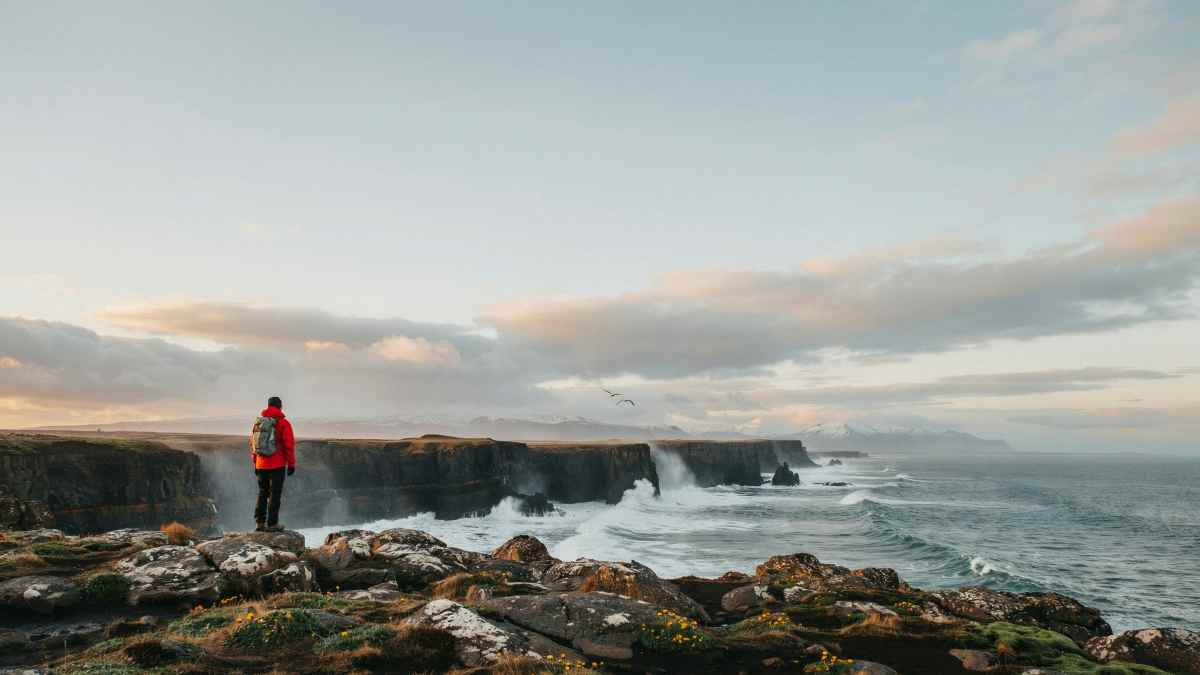
Image generated with Ai
The attraction of Iceland, Reykjavik, the Golden Circle and South Iceland comes from tourists seeking to get away from the summer heat that is hitting the rest of Europe, thus becoming one of the leading “coolcation” destinations of the region. The increase in the international demand for the Nordic cool destinations comes from the summer heat waves in the south of Europe; however, there is much more for visitors to stay for in Iceland.
The summer holiday script is getting a little colder.
Travellers who might traditionally have headed towards Mediterranean beaches are increasingly looking north, with Iceland benefiting from the demand for cooler climates.
Recent travel-industry reporting points to stronger interest in Nordic destinations as repeated heatwaves push some holidaymakers towards Scandinavia and Iceland.
Advertisement
Iceland offers something particularly appealing: cooler summer conditions without sacrificing outdoor experiences.
Visitors can spend the day exploring waterfalls, volcanic landscapes and glaciers, then finish the evening in a geothermal pool.
Reykjavík remains the natural starting point for many Iceland holidays.
The capital combines museums, restaurants, harbour attractions, geothermal swimming pools and cultural events, while its location makes it practical for day trips around the south-west.
Iceland’s pool culture is also gaining international attention. Reykjavík alone has 18 geothermal pools, alongside facilities including Sky Lagoon and other bathing experiences.
The city is also preparing for a particularly event-heavy August, adding another reason for international visitors to time their trips around the month.
And just when travellers thought Iceland’s famous geothermal attractions had already had their moment, another lagoon has entered the chat.
Laugarás Lagoon opened in the Golden Circle region, adding a new geothermal bathing experience to a route already dominated by major attractions such as Þingvellir, Geysir and Gullfoss.
The facility includes geothermal pools and the Ylja restaurant, giving visitors another place to stop during a Golden Circle journey. South Iceland tourism authorities list Laugarás Lagoon among the region’s new tourism services and attractions.
The lagoon currently operates daily, with extended summer opening hours through 15 August.
Iceland’s geothermal tourism offer is expanding beyond the destinations already familiar to international travellers.
The Blue Lagoon remains one of the country’s most recognisable attractions, while Sky Lagoon near Reykjavík provides another premium bathing experience.
Laugarás Lagoon adds another option directly along the Golden Circle corridor, allowing visitors to incorporate a geothermal stop into an itinerary already packed with natural attractions.
The expansion also supports longer stays by creating more experiences around established tourism routes.
Summer is also the main season for exploring Iceland’s Highland roads, commonly known as F-roads.
These routes provide access to remote landscapes that are difficult or impossible to reach during colder months.
However, travellers need to check live conditions before driving. Many F-roads require a suitable four-wheel-drive vehicle, and road conditions can change quickly because of weather, river crossings and terrain.
For visitors seeking adventure tourism, the Highlands can add hiking, volcanic scenery and remote landscapes to a summer itinerary.
The city’s summer events also contribute to the seasonal visitor surge.
Reykjavík Pride has become a major annual cultural event, attracting more than 100,000 guests according to Visit Reykjavík. The celebration has developed into a ten-day programme and remains one of the city’s major summer events.
Culture Night is another major August event, with the 2026 edition scheduled across central Reykjavík.
That combination of nature, geothermal experiences and cultural events gives Iceland a broader summer tourism proposition than a traditional sightseeing holiday.
The latest official statistics show the scale of Iceland’s international tourism recovery.
The Icelandic Tourist Board recorded just under 2.3 million foreign overnight visitors in 2025, with approximately 2.27 million arriving through Keflavík International Airport. That represented 97.6% of the visitor level recorded in 2018, the previous record year.
The current summer season is also receiving exceptional attention because of the total solar eclipse crossing Iceland on 12 August 2026. The Icelandic Tourist Board warned of increased visitor numbers and traffic pressure in affected areas.
Iceland uses the Icelandic króna (ISK). Keflavík International Airport is the country’s main international gateway and handles almost 99% of foreign visitors arriving by air.
Key attractions include Reykjavík, the Golden Circle, Þingvellir National Park, Geysir, Gullfoss, the South Coast, Blue Lagoon, Sky Lagoon and Laugarás Lagoon.
Summer is generally the most accessible period for Highland travel, but visitors should check official road conditions before attempting F-roads.
1. Why is Iceland benefiting from the coolcation trend?
Travellers seeking cooler destinations amid European summer heat are increasingly looking towards Nordic countries, including Iceland.
2. What is Laugarás Lagoon?
It is a geothermal bathing destination in South Iceland along the Golden Circle, with pools and an on-site restaurant.
3. Can visitors drive Iceland’s F-roads in summer?
Some Highland F-roads are open seasonally, but many require 4×4 vehicles. Conditions and openings vary, so travellers should check live road information before driving.
12 August 2026: A total solar eclipse is visible across parts of Iceland, including the Westfjords, West Iceland, Capital Region and Reykjanes Peninsula.
15 August 2026: Laugarás Lagoon’s summer-season opening hours run through this date before its autumn and winter schedule begins.
22 August 2026: Reykjavík Culture Night takes place across the city centre from midday until 10pm.
August 2026: Reykjavík Pride forms part of the city’s major summer cultural calendar.
Icelandic tourism is taking advantage of the summer travel formula that is hard to overlook – cool temperatures, breathtaking scenery, geothermal swimming baths, Highland accessibility during summer and an action-packed cultural program. As tourists continue to head north for relief from hot summers in Europe, places like Reykjavik, Golden Circle and South Iceland are getting a new lease of life. With Laugarás Lagoon bringing in yet another attraction in the geothermal route, “coolcation” in Iceland is becoming a reality.
Advertisement
Advertisement
Advertisement













Saturday, September 5, 2026

Friday, September 4, 2026
Saturday, September 5, 2026
Saturday, September 5, 2026

Thursday, September 3, 2026

Wednesday, September 2, 2026
Saturday, September 5, 2026