
Pensacola Beach and Other Wheelchair-Accessible Vacation Destinations Around the World Where Every Traveller Can Explore More

Published
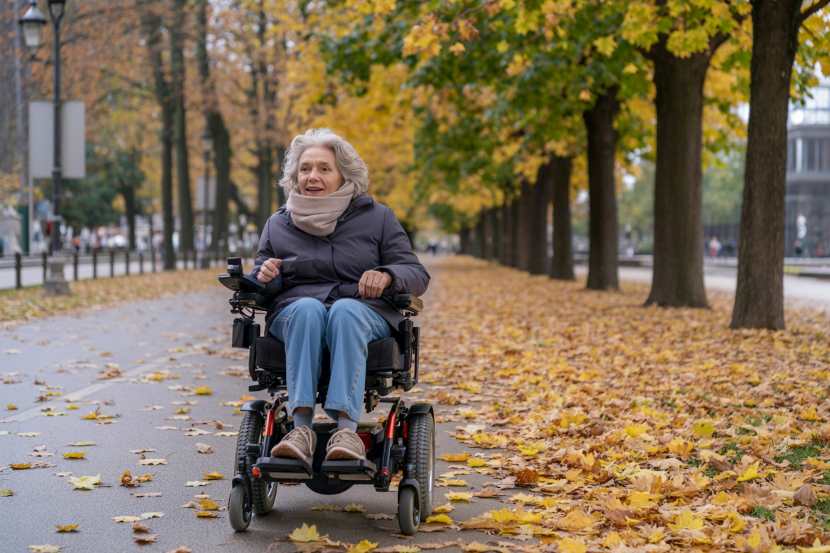 Image generated with Ai
Pensacola Beach and other wheelchair-accessible vacation destinations are opening exciting possibilities for every traveller around the world. Today, wheelchair-accessible vacation destinations help every traveller explore more beaches, cities, culture, nature and unforgettable experiences. Pensacola Beach, other American destinations and wheelchair-accessible vacation destinations around the world show how inclusive tourism continues to grow. Moreover, every traveller can explore more confidently when destinations provide practical accessibility, transportation and visitor facilities. Travel And Tour World explores Pensacola Beach and other wheelchair-accessible vacation destinations where every traveller can explore more. Read the entire story to discover accessible destinations around the world and plan your next inclusive journey.
Wheelchair-Accessible Vacation Destinations: Pensacola Beach, Gatlinburg and Rehoboth Beach Offer More Accessible US Getaways
For travellers seeking greater independence on holiday, accessibility is becoming an important part of destination selection. A recent analysis of 100 US vacation destinations highlights Pensacola Beach, Gatlinburg and Rehoboth Beach among the leading options for wheelchair-accessible travel.
Advertisement
Advertisement
The ranking offers a useful starting point, but official destination information provides a clearer picture of what travellers can actually expect. Accessibility differs between beaches, trails, hotels, transportation networks and attractions. Therefore, visitors should verify individual facilities before booking.
Pensacola Beach Offers Strong Beach Accessibility
Pensacola Beach stands out for travellers seeking a traditional Florida coastal holiday. Official Florida tourism information says the destination has five Mobi-mat paths across five separate beaches. These firm pathways help wheelchairs, strollers and pedestrians cross sandy surfaces more easily.
Advertisement
Advertisement
Casino Beach has two Mobi-mat access points. One is near the Public Safety Building, while another is close to The Dock Bar. The beach is also identified as wheelchair accessible and ADA compliant.
Beach wheelchair rentals provide another option. Visitors can find both manual and motorised chairs through local rental providers. Florida’s accessibility information also identifies Fort Pickens, Johnson Beach, Opal Beach, Casino Beach, Park West North Beach, Quietwater Beach and Baby Beach among accessible coastal locations around Pensacola.
Advertisement
Advertisement
This makes Pensacola particularly appealing for travellers who want to combine seaside relaxation with practical mobility options.
Gatlinburg Connects Accessible Travel With the Smokies
Gatlinburg provides a contrasting experience, placing travellers close to Great Smoky Mountains National Park. The National Park Service says the park can be experienced through accessible facilities, scenic drives, selected trails and adaptive ranger-led programmes.
The park currently has one trail meeting ADA accessibility standards: Sugarlands Valley Nature Trail. The paved loop measures half a mile and runs near Sugarlands Visitor Center.
However, visitors with appropriate mobility equipment have more options. The NPS provides free GRIT Freedom Chairs for selected routes. The programme covers approximately 14 miles of trails, including sections of Gatlinburg Trail, Little River Trail, Oconaluftee River Trail, Deep Creek Trail and Middle Prong Trail.
The chairs are available without charge. Reservations are generally required during the main season, while first-come, first-served availability applies during other periods. Users must meet equipment requirements, including a maximum weight of 250 pounds, and need a companion or volunteer to assist them.
2026 Brings More Adaptive Experiences
Great Smoky Mountains National Park has expanded its adaptive programming for 2026. The season includes ranger-led hiking, biking and fly-fishing activities, plus an overnight backcountry camping experience. Scheduled programmes run from May through October.
Advertisement
Advertisement
Four GRIT Freedom Chairs are also available for visitors to check out free of charge on selected trails. Participants are encouraged to register for adaptive programmes so that equipment and volunteers can be arranged.
Accessible campsites are available at Cades Cove, Elkmont and Smokemont, while visitor centres throughout the park are ADA accessible.
Rehoboth Beach Adds an Accessible Coastal Escape
Rehoboth Beach, Delaware, offers another seaside option. Official Delaware information identifies accessible outdoor facilities in the surrounding area, while the Rehoboth Boardwalk is listed as accessible.
City planning information also documents wheelchair-accessible DART buses serving Rehoboth’s boardwalk and beach. DART First State provides paratransit services for eligible travellers unable to use fixed-route buses.
The city’s beach information also identifies beach wheels and accessible dune crossings, giving travellers practical options for reaching the shoreline.
What Travellers Should Check Before Booking
The three destinations demonstrate why accessible travel requires destination-specific research. Travellers should confirm hotel entrances, bathroom layouts, transportation, beach access, trail conditions and equipment availability before departure.
Advertisement
Advertisement
For mountain trips, surface type, elevation, trail width and grade can significantly affect accessibility. The NPS specifically advises visitors to review trail descriptions, maps and photographs according to their individual needs and equipment.
For international tourists, advance planning is particularly valuable. Pensacola offers accessible beach infrastructure, Gatlinburg provides adaptive access to mountain experiences, and Rehoboth Beach combines seaside attractions with accessible transportation.
Together, these destinations show that wheelchair-accessible travel in the United States can extend well beyond conventional sightseeing. With careful preparation, travellers can experience beaches, boardwalks, forests and mountain landscapes while choosing facilities that better match their individual mobility requirements.
5 More Wheelchair-Accessible Vacation Destinations Around the World
The United States is not the only country expanding accessible tourism. Around the world, major destinations are improving transport, attractions and visitor services for travellers who use wheelchairs or mobility equipment.
For international tourists, accessibility can determine whether a holiday feels independent or complicated. The following five destinations offer particularly useful examples because official tourism and transport authorities provide detailed accessibility information.
| Destination | Major accessibility strength | Useful travel highlights |
|---|---|---|
| Sydney, Australia | Accessible public transport and attractions | Opera House, Harbour Bridge, Bondi Beach |
| Singapore | Wheelchair-accessible MRT and buses | Marina Bay, Sentosa, Gardens by the Bay |
| London, UK | Step-free transport options and accessible attractions | British Museum, Buckingham Palace, Tower Bridge |
| Vienna, Austria | Highly accessible urban transport network | Museums, historic centre, cultural attractions |
| Barcelona, Spain | Accessible metro and adapted travel infrastructure | Gothic Quarter, museums, beaches |
Sydney, Australia: Accessible City Experiences From Harbour to Beach
Sydney is a strong option for travellers who want an accessible combination of urban sightseeing, beaches and harbour experiences. Official Sydney tourism information says visitors of different abilities can enjoy major attractions including the Sydney Opera House, Sydney Harbour and Sydney Harbour Bridge with advance planning. The city’s accessibility offering also extends towards Bondi Beach and other attractions. Sydney’s official tourism guide specifically identifies Bondi Beach, the Opera House, Harbour Bridge, Barangaroo and Sydney Tower Eye among accessible bucket-list experiences. Transport is another important advantage. Transport for NSW lists wheelchair-accessible metro, train, bus, ferry, light-rail and taxi services, although travellers must check individual wheelchair or mobility-scooter requirements before travelling. This creates useful possibilities for an itinerary that moves between central Sydney, the harbour and coastal areas without relying entirely on private vehicles. Visitors can also arrange specialist accessible tours. Australia’s official tourism website highlights wheelchair-accessible tour providers operating in Sydney and surrounding areas. For international visitors, Sydney therefore offers a broad accessible travel experience rather than a single attraction designed around mobility needs.
Advertisement
Advertisement
Singapore: A Compact Destination With Strong Accessible Transport
Singapore is particularly attractive for wheelchair users because its compact urban geography reduces the need for long journeys between major attractions. Singapore’s official tourism information states that all MRT trains and public buses are wheelchair accessible, providing a major advantage for independent visitors. The accessibility extends to major tourism facilities. Sentosa, Singapore’s principal resort island, is officially promoted as a wheelchair-accessible destination, while Gardens by the Bay lists wheelchair accessibility among its visitor facilities. The Singapore Flyer also identifies wheelchair accessibility among its facilities. These options allow visitors to build varied itineraries around gardens, observation experiences, entertainment and waterfront attractions. Singapore’s transport advantage is especially important for travellers who prefer to avoid frequent private transfers. However, visitors should still confirm the accessibility of their accommodation and any particular attraction before arrival. The country’s combination of modern infrastructure, concentrated attractions and accessible public transport makes it one of the easier Asian destinations to plan around mobility requirements.
London, UK: Accessible Transport Meets World-Famous Attractions
London provides an unusually broad selection of accessible sightseeing possibilities because its tourism network includes accessible attractions, accommodation information and public transport guidance. Visit London states that the capital continues to improve accessibility through features such as step-free access, ramps and smoother surfaces. Several major attractions also provide specific assistance. The British Museum, for example, offers lift-assisted access and step-free access across most of the building, alongside accessible toilets and other visitor services. Wheelchair hire is also available at a range of major attractions, including the British Museum, Buckingham Palace, London Zoo, Natural History Museum, Westminster Abbey, Kew Gardens and St Paul’s Cathedral. Public transport adds another important benefit. Visit London reports that wheelchair and mobility-scooter users travel free on buses and trams, subject to the relevant transport requirements. London’s buses have designated wheelchair space and can accommodate wheelchairs up to 70 centimetres wide and 120 centimetres long. Travellers should nevertheless check individual Underground stations because step-free access is not universal across the entire network.
Vienna, Austria: A European Capital Designed With Accessibility in Mind
Vienna offers one of Europe’s strongest examples of accessibility integrated into a major historic city. The Vienna Tourist Board reports that 100% of the city’s subway stations are accessible, subject to structural limitations, while 95% of tram and bus stops are accessible. It also states that 80% of traffic lights have audible signals for people who are blind or have low vision. These figures are particularly significant for visitors who want to explore independently rather than remain close to their accommodation. Vienna also provides dedicated information covering accessible accommodation, transport, sightseeing, parking and visitor assistance. Its accommodation directory allows travellers to search for properties that are fully or partially suitable for wheelchair users. Vienna’s transport infrastructure is complemented by specialist mobility services, including accessible minibuses and wheelchair-accessible coaches. The city is also developing accessible cultural experiences. Its tourism authorities highlight museums and cultural institutions that provide features for visitors with different accessibility requirements. For travellers, Vienna demonstrates that accessibility can be incorporated into a historic European sightseeing holiday without removing the city’s cultural character.
Barcelona, Spain: Accessible Metro Travel for Urban Explorers
Barcelona is another valuable option for travellers looking for an accessible European city break. Barcelona’s public transport operator, TMB, provides specific guidance for wheelchair users travelling on the metro. Its instructions recommend boarding through the second door of the first carriage, identified as an area offering better visibility for wheelchair passengers. This illustrates an important point for accessible tourism: infrastructure alone is not enough. Travellers benefit from clear instructions explaining how to use that infrastructure safely and comfortably. Barcelona’s compact urban attractions also make it possible to combine cultural sightseeing with coastal experiences within a relatively concentrated metropolitan area. Visitors should, however, assess individual routes rather than assume that every historic street, attraction or metro entrance is step-free. Older European districts can contain uneven paving, slopes and restricted pedestrian spaces. The best approach is to plan attraction-by-attraction and confirm current access arrangements before travelling. Barcelona can therefore suit travellers who want architecture, museums, food, waterfront scenery and city culture while keeping accessibility central to the itinerary.
What These Destinations Teach Travellers
These five destinations demonstrate that accessible tourism is not limited to specially designed resorts. Sydney combines beaches and harbour attractions with accessible transport. Singapore uses a highly connected urban system to simplify movement. London pairs extensive sightseeing with dedicated accessibility services. Vienna provides impressive accessibility statistics across its public transport network. Barcelona demonstrates how major European cities can adapt established transport systems for wheelchair users.
For global travellers, the most important lesson is to verify details before departure. Wheelchair dimensions, vehicle requirements, accessible entrances, hotel room configurations, lifts and temporary closures can all affect an itinerary.
Accessible travel works best when transportation, accommodation and attractions are considered together. With that preparation, destinations such as Sydney, Singapore, London, Vienna and Barcelona can offer far more than accessible facilities. They can provide complete holidays built around independence, culture, nature and memorable experiences.
Advertisement
