
BLTM 2026 Ends in New Delhi as Trade Visitors Jump 23% and Tourism Business Gets a Major Boost

Published
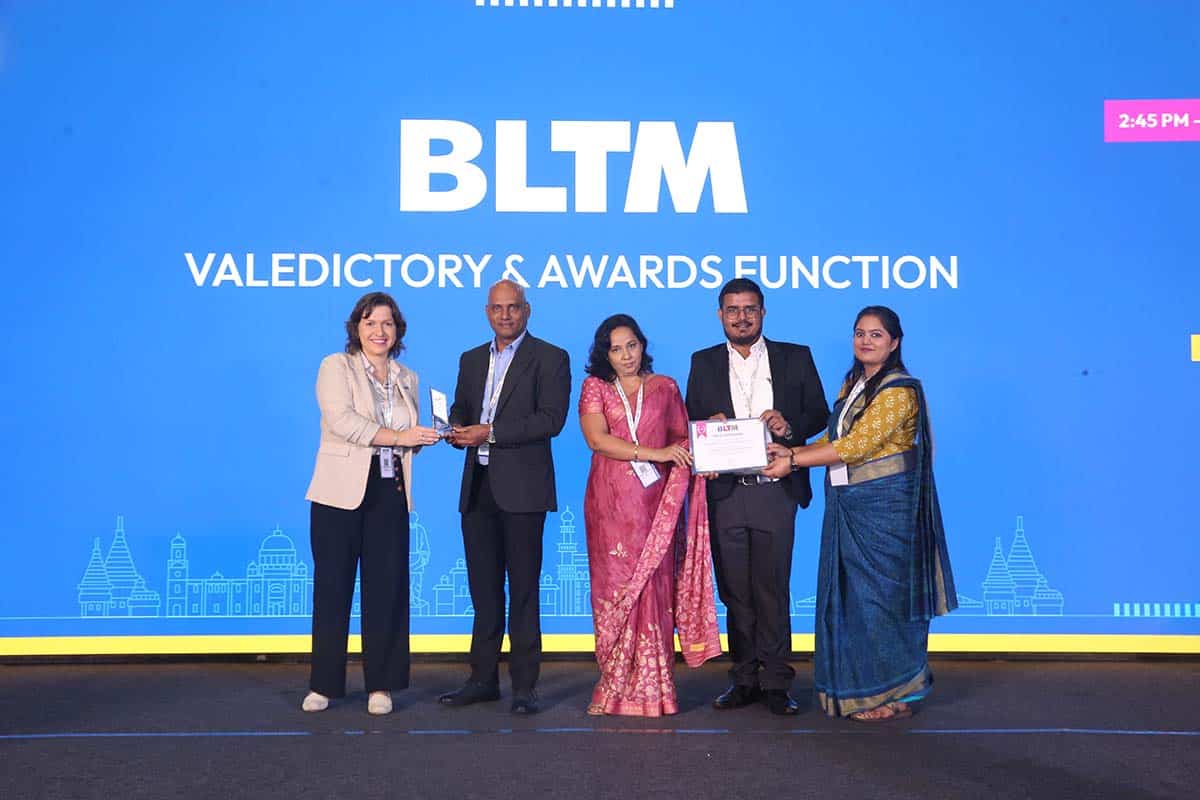
BLTM 2026 ended in New Delhi with a striking rise in trade participation, putting India’s tourism ambitions firmly in focus. The three-day event drew more than 13,000 trade visitors, up 23% from the previous edition. Moreover, BLTM 2026 brought together buyers, exhibitors, tourism boards, hotels, resorts, airlines and travel companies looking for fresh business opportunities. MICE, destination weddings, experiential holidays and rural tourism emerged as key themes.
At the same time, international destinations used the event to reach Indian buyers. Therefore, the New Delhi show offered a clear picture of how India’s travel market is becoming larger, more diverse and increasingly commercially important.
Advertisement
Advertisement
BLTM 2026 has concluded at Yashobhoomi, Dwarka, after three days of intensive business meetings, destination showcases and industry discussions, giving India’s travel trade a significant platform to assess where demand is heading.
The ninth edition of the Business, Leisure Travel and MICE-focused trade show recorded more than 13,000 trade visitors, representing a 23% increase over the previous edition. More than 500 exhibitors and 450 hosted buyers participated during the three-day event.
Advertisement
Advertisement
The figures point to sustained commercial interest in India’s travel economy, particularly across MICE, destination weddings, experiential travel, premium leisure and emerging domestic destinations.
BLTM 2026 Brings India’s Tourism Ambitions Into Focus
The event took place against a backdrop of expanding tourism activity in India. According to the figures shared by the organisers, travel and tourism currently contributes 6.6% of India’s GDP, with its contribution projected to reach 7% by 2030 and 10% by 2047.
Advertisement
Advertisement
That long-term outlook shaped many of the conversations at BLTM 2026.
Rather than focusing only on traditional leisure tourism, exhibitors and buyers explored a broader range of products designed around corporate travel, incentive programmes, business events, weddings, community-led tourism and distinctive local experiences.
The shift matters because Indian travellers are no longer represented by a single demand segment. Corporate groups, wedding parties, affluent leisure travellers, families and experience-seeking domestic tourists are creating different requirements for destinations and suppliers.
BLTM 2026 provided a marketplace for those requirements to meet.
MICE Emerges as a Major Business Opportunity
MICE remained one of the strongest themes across the event.
India’s business-events infrastructure has expanded considerably, while hotels, convention facilities, airports and destination management companies are increasingly positioning themselves to handle larger and more sophisticated events.
Advertisement
Advertisement
At BLTM 2026, Shri Suman Billa, IAS, Additional Secretary & Director General, Ministry of Tourism, highlighted the opportunity while also stressing the importance of responsible growth.
He said India has significant potential in MICE and now has some of the country’s best infrastructure for business events. However, he argued that the bigger challenge is ensuring this growth develops within a responsible framework that benefits people and communities.
His comments underline an important industry issue: growth alone is not enough. Destinations increasingly need to demonstrate how tourism spending reaches local businesses, communities and service providers.
The MICE market is also becoming financially significant. The figures cited at BLTM 2026 indicate that India’s MICE market could increase from USD 49.4 billion in 2024 to USD 103.7 billion by 2030.
Outbound MICE tourism is similarly expected to expand, with the market projected to reach USD 13.4 billion by 2031.
For destinations competing for Indian corporate groups, the implications are substantial.
Advertisement
Advertisement
Destination Weddings and Experiential Travel Add New Demand
Destination weddings were another prominent opportunity at BLTM 2026.
India’s wedding market creates demand for hotels, resorts, airlines, destination management companies, venues, event planners and local suppliers. International destinations are also competing for Indian wedding groups, particularly for premium celebrations requiring extensive accommodation and event infrastructure.
Alongside weddings, experiential travel is changing how destinations market themselves.
Travellers increasingly seek activities rather than simply accommodation. Local food, cultural encounters, nature-based experiences, handicrafts, village stays and community-led activities can help destinations differentiate themselves in an increasingly competitive market.
This trend was visible throughout BLTM 2026, where buyers explored products extending beyond conventional sightseeing.
International Destinations Target Indian Buyers
International participation added another dimension to the event.
Advertisement
Advertisement
Sri Lanka participated as Partner Country, Israel as Feature Country and Saint Petersburg as Focus Destination. Nepal and Thailand were also among the international destinations represented.
Their presence reflects the importance of the Indian outbound market and the growing interest among international tourism suppliers in developing relationships with Indian travel companies.
For overseas destinations, a B2B event such as BLTM provides access not only to leisure travel sellers but also to buyers dealing with corporate travel, incentive groups, weddings and premium holidays.
The business opportunity therefore extends beyond individual travellers.
A destination that can offer reliable group handling, competitive air connectivity, suitable hotels, attractive venues and distinctive experiences can potentially secure multiple categories of Indian demand.
Indian States Showcase More Diverse Tourism Products
The domestic market received substantial attention at BLTM 2026.
Advertisement
Advertisement
Delhi served as Host State, while Odisha and Goa participated as Partner States. West Bengal, Punjab and Tamil Nadu were represented as Feature States.
The participation demonstrates how Indian states are increasingly competing to develop and promote specialised tourism products.
Established destinations can attract visitors through recognised attractions, while smaller destinations can compete by offering culture, nature, cuisine, heritage and local experiences.
That diversification is particularly relevant as domestic tourism expands.
Travel businesses can package lesser-known locations into weekend breaks, longer holidays, corporate retreats, incentive programmes and experiential itineraries. This creates opportunities for destinations that historically received less international or domestic tourism attention.
Rural Tourism Gets a Dedicated Platform
One of the more significant elements of BLTM 2026 was the visibility given to rural tourism.
Advertisement
Advertisement
Initiatives from Madhya Pradesh, Delhi NCR, Himachal Pradesh and Uttarakhand showcased rural homestays and village-based experiences.
Rural tourism can offer a different proposition from conventional destination travel. Instead of concentrating visitor spending in major tourism centres, it can distribute economic activity across smaller communities.
The products highlighted at the event included local culture, traditional cuisine, handicrafts, nature and community-led experiences.
For travellers, such products can create more intimate and distinctive journeys. For communities, they can create additional sources of income when tourism is developed responsibly and supported by appropriate infrastructure, skills and market access.
This aligns with the wider responsible-tourism discussion at BLTM 2026.
Responsible Tourism Takes Centre Stage
The ICRT Indian Subcontinent Responsible Tourism Awards 2026 were also presented during the event by the ICRT India Foundation, with support from the Ministry of Tourism.
Advertisement
Advertisement
The awards recognised initiatives and practices focused on responsible and sustainable tourism.
The ceremony was attended by Shri Suman Billa, IAS, as Chief Guest, while Ms Kanta Singh, Deputy Country Representative, UN Women India, attended as Guest of Honour.
Their participation reinforced the industry’s increasing attention to sustainability, inclusion and community impact.
The issue is becoming particularly important as tourism volumes rise. Destinations need to balance visitor growth with environmental protection, cultural preservation, local participation and long-term economic value.
Technology and AI Become Part of the Travel Conversation
BLTM 2026 also examined the role of artificial intelligence and technology in business events and tourism.
Technology is reshaping how travel businesses identify customers, personalise offers, manage enquiries and develop itineraries. In MICE, digital tools can also support event planning, communication and operational coordination.
Advertisement
Advertisement
However, technology does not remove the need for human relationships.
The strong trade-meeting turnout at BLTM 2026 demonstrates that face-to-face engagement remains commercially relevant. Buyers still need to assess suppliers, destinations and products through direct conversations before committing to business.
That combination of technology and human interaction is likely to remain central to the travel trade.
BLTM 2026 Signals a More Diverse Indian Travel Market
Sanjiv Agarwal, Chairman & CEO, Fairfest Media Limited, said the 23% increase in trade visitor turnout demonstrated growing business appetite across India’s travel and MICE market.
He also pointed to active buyer interest in MICE, destination weddings, experiential travel and new domestic and international destinations.
The message from the event is therefore broader than visitor growth alone.
Advertisement
Advertisement
BLTM 2026 showed an Indian travel industry seeking more destinations, more experiences and more specialised products. Suppliers are competing not simply on price, but on relevance, quality, connectivity and the ability to deliver memorable experiences at scale.
For destinations, this creates both opportunity and pressure.
Those able to understand Indian traveller behaviour, develop commercially viable products and build strong trade partnerships will be better positioned to capture future demand.
What BLTM 2026 Means for India’s Tourism Industry
The conclusion of BLTM 2026 provides a useful snapshot of the direction of India’s tourism market.
The 13,000-plus trade visitor figure, 500-plus exhibitors and 450 hosted buyers demonstrate the scale of commercial engagement at the event. More importantly, the diversity of participants shows that India’s tourism opportunity is spreading across multiple segments.
MICE, destination weddings, premium leisure, experiential tourism and rural travel are becoming increasingly important alongside traditional tourism.
Advertisement
Advertisement
The event also highlighted a second requirement: responsible expansion.
As India works towards its longer-term tourism ambitions, growth will need to generate meaningful benefits for destinations, businesses, workers and local communities.
BLTM 2026 ultimately brought those two priorities together — commercial growth and responsible tourism. Its strong turnout suggests the market is ready for expansion, but the industry’s next challenge will be converting growing interest into sustainable business, better experiences and wider economic participation.
The cause behind BLTM 2026’s strong turnout is India’s rapidly diversifying travel economy and rising demand for specialised tourism products. The answer is stronger B2B engagement between buyers, destinations, hotels, airlines, DMCs and tourism organisations. The reason is straightforward: travellers and corporate groups increasingly want tailored experiences, efficient services and distinctive destinations. MICE and destination weddings create high-value group demand, while experiential and rural tourism open opportunities for smaller destinations and communities. At the same time, international tourism boards recognise India’s growing outbound potential. Therefore, BLTM 2026 reflects a market moving beyond conventional holidays towards broader, commercially valuable and more responsible tourism experiences.
BLTM 2026 closed in New Delhi with a clear message: India’s tourism industry is growing, but its next phase will depend on diversity, partnerships and responsible development. The 13,000+ trade visitors and 23% increase in turnout show stronger appetite for business. Meanwhile, MICE, destination weddings, experiential holidays and rural tourism are opening new routes for growth. International destinations also see India as an increasingly valuable source market, while Indian states are developing products beyond established tourism hubs. Consequently, BLTM 2026 was more than a three-day trade show. It offered a practical view of where demand is moving and how suppliers can respond. The answer lies in stronger B2B connections, better experiences, technology and community participation. Most importantly, sustainable growth must remain central. If the industry can connect rising demand with responsible tourism practices, India can turn its expanding travel economy into broader, longer-term value.
Advertisement
