
Japan’s Land Prices Surge Nearly Three Percent in Powerful Tourism-Driven Real Estate Boom Fuelled by Tokyo, Osaka Redevelopment and Ski Resort Demand Across Regional Growth Hotspots

Published
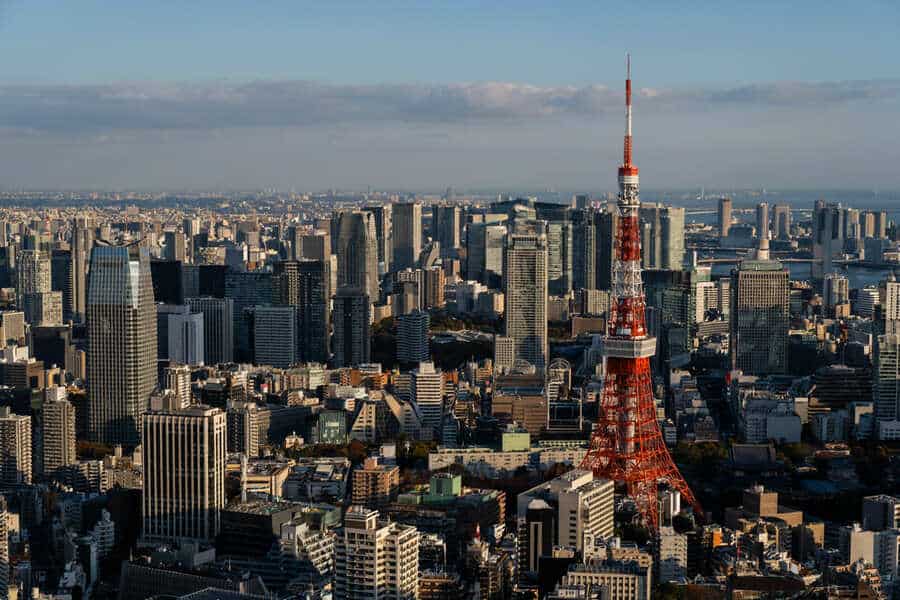
Image generated with Ai
Japan’s land prices surge nearly three percent in 2026, as a powerful tourism-led real estate boom and large-scale redevelopment projects in Tokyo, Osaka, and other key regions reshape the country’s property landscape. The rise is being driven by a sharp rebound in international visitor arrivals, accelerating demand in hospitality and commercial zones, and sustained investment in urban infrastructure upgrades. At the same time, premium ski destinations and cultural tourism hubs are witnessing exceptional land value spikes, reflecting how Japan’s evolving travel economy is directly translating into real estate growth across both metropolitan centres and regional hotspots.
Japan Land Price Surge Accelerates in 2026 as Tourism Boom and Urban Redevelopment Drive Fifth Consecutive Year of Growth, Official Data Reveals Nationwide Real Estate Reshaping Across Prefectures
Japan’s land market continued its powerful upward movement in 2026, reflecting a strong combination of urban redevelopment, tourism expansion, and sustained investor confidence across major regions. Government data released by the National Tax Agency showed that the nationwide average land price rose by 2.9% as of January 1, 2026, marking the fifth straight year of increase and confirming a deep structural shift in Japan’s property landscape.
Advertisement
Advertisement
The rise is not uniform. It is sharply concentrated in cities, tourism corridors, and premium commercial zones. At the same time, several rural and disaster-affected areas continue to lag, creating a widening gap between high-demand and low-demand regions.
Nationwide growth hits fastest pace in over a decade
The 2026 data highlights a key milestone. The average land price increase represents the strongest annual growth since Japan revised its calculation method in 2010. This signals accelerating momentum in land valuation, driven by multiple overlapping forces: inbound tourism recovery, infrastructure redevelopment, and rising demand for central urban property.
Advertisement
Advertisement
Out of 47 prefectures, a total of 36 recorded price increases, confirming that growth is broadly distributed, even if uneven in intensity.
Major urban centres lead Japan’s property boom
Japan’s largest cities remain the core engines of land price growth, supported by commercial expansion, redevelopment projects, and sustained domestic and international demand.
Advertisement
Advertisement
- Tokyo recorded the strongest rise among all prefectures at 9.4%, driven by luxury retail demand, infrastructure upgrades, and high-density redevelopment projects.
- Okinawa saw a 6.6% increase, strongly linked to tourism growth and resort development.
- Osaka registered a 5.1% rise, reflecting steady commercial revitalisation and urban regeneration projects.
These three regions continue to define Japan’s modern real estate economy, with capital flow increasingly concentrated in metropolitan corridors.
Rural regions show limited but stable declines
While most of Japan experienced growth, only eight prefectures saw declines, and the drops were relatively modest compared to urban gains.
Advertisement
Advertisement
- Wakayama recorded the steepest decline at 0.5%.
- Niigata fell by 0.4%.
- Tokushima also declined by 0.4%.
These figures highlight a slow but persistent challenge: population decline and weaker investment interest in rural Japan, even as national land values rise overall.
Sharp spikes in secondary cities and cultural hubs
Beyond major metropolitan centres, several regional capitals and smaller cities posted surprisingly strong gains, reflecting renewed interest in secondary urban markets.
- In Saga City, land prices surged by 17.0%, the highest among prefectural capitals.
- Morioka (Iwate Prefecture) followed with a 13.0% increase.
- Nara posted a 12.6% rise, supported by its cultural tourism appeal.
These cities are increasingly benefiting from decentralised travel flows and growing domestic tourism demand.
Tourism hotspots and ski destinations drive extraordinary growth
Some of the most dramatic increases were recorded in Japan’s tourism-heavy regions, especially ski resorts and international visitor destinations.
Advertisement
Advertisement
- Hakuba Village (Nagano Prefecture) recorded the highest increase nationwide at 32.7%, driven by global ski tourism demand and foreign investment interest.
- Nozawa Village followed closely with a 31.3% rise, supported by similar winter tourism expansion.
- Furano (Hokkaido) saw land values climb 28.0%, boosted by its popularity as a premium snow and nature destination.
These figures underline how tourism is no longer just an economic sector—it is now a major driver of land valuation across regional Japan.
Central Tokyo remains the epicentre of value growth
In the capital, demand continues to surge in both cultural districts and luxury retail zones.
- Asakusa, one of Tokyo’s most visited heritage districts, saw land prices jump 27.5%, fuelled by rising international visitor traffic and commercial redevelopment.
- In Ginza, Japan’s most prestigious retail area, land in front of the Kyukyodo stationery store retained its position as the most expensive location in Japan for the 41st consecutive year, priced at 53.36 million yen per square metre (around $328,000), marking an 11.0% annual increase.
This reinforces Tokyo’s dual identity: a cultural magnet and a global luxury real estate hub.
Disaster-hit regions and recovery challenges persist
Not all regions benefited from the national upward trend. Areas affected by natural disasters continue to struggle with economic recovery and declining land values.
- In Wajima (Ishikawa Prefecture), a shopping street hit by the 2024 earthquake saw the steepest drop, falling 8.6%. The decline reflects weakened commercial activity and ongoing rebuilding challenges.
Meanwhile, parts of Fukushima Prefecture affected by the 2011 nuclear disaster remain excluded from official pricing. These “difficult-to-return zones” continue to be unvalued due to the absence of functional real estate markets.
The latest surge in Japan’s land prices highlights how tourism demand and urban redevelopment are reshaping real estate values nationwide. From Tokyo’s luxury districts to ski resorts in Nagano and Hokkaido, rising visitor flows are driving a broad-based property boom across key growth corridors.
Advertisement
Advertisement
Structural shift reshaping Japan’s land economy
The 2026 data reveals a clear structural transformation in Japan’s land market. Growth is no longer limited to traditional urban centres. Instead, it is expanding into tourism-driven regions, ski resorts, and revitalised secondary cities.
At the same time, rural stagnation and disaster-affected declines continue to create sharp regional contrasts.
Japan’s land economy is therefore entering a new phase—one defined by tourism-led valuation growth, urban redevelopment pressure, and widening geographic inequality in property markets.
Advertisement
