
Armenia Advances Winter Tourism Recovery as Land Release Supports Resort and Wellness Development

Published
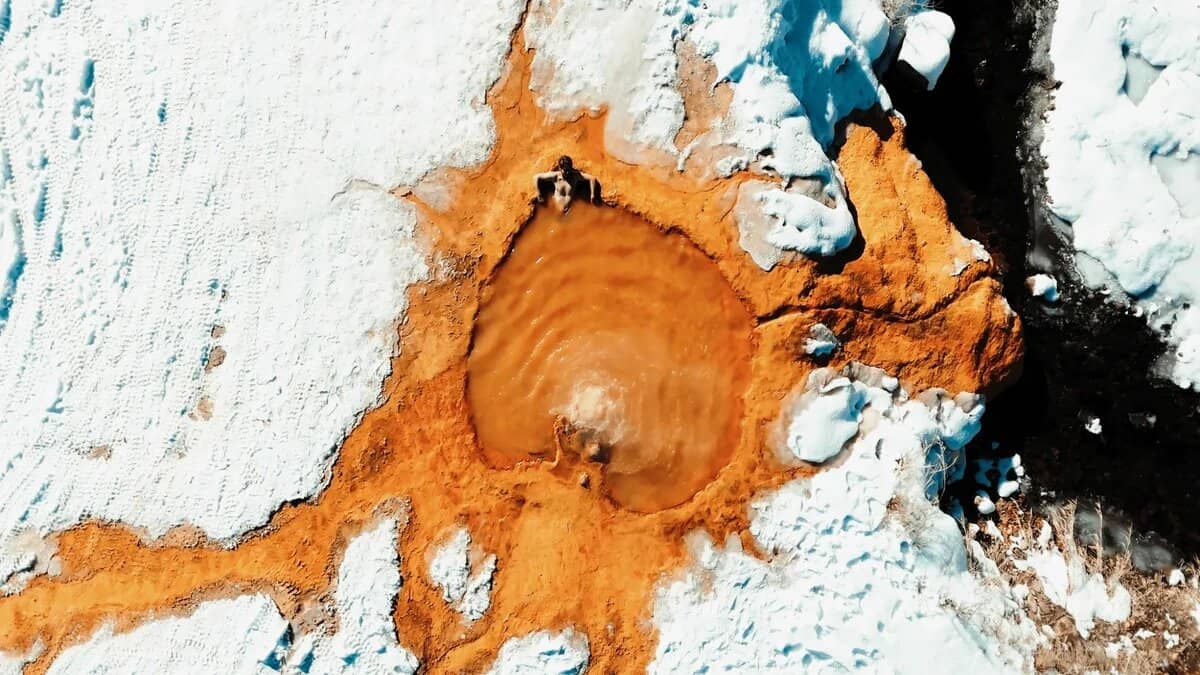
Armenia’s 2026/27 winter tourism season is emerging as the first full-season test of a significantly changed operating environment around Jermuk. The government has expanded the legally defined Jermuk tourist destination to include Jermuk and Gndevaz, while 126,795 square metres of land identified inside Jermuk city as contaminated by explosive ordnance has been released. Around 16,000 visitors used the ropeway during the first six months of 2026. Roads across Armenia were officially passable on 1 October, although documented closures last winter underline the access risk confronting winter packages.
Why Armenia’s 2026/27 winter is different from an ordinary wellness season
The important development is not simply that travellers can visit Jermuk for mineral water, spa stays and snow. Those products are established. The more consequential change is that several pieces of Armenia’s tourism system are now moving simultaneously around the destination.
Advertisement
Advertisement
According to Armenian Government Decision No 1945-N, which became effective on 4 January 2026, the settlements of Jermuk and Gndevaz together constitute the Jermuk tourist destination. The same decision repealed the 2008 measure that had designated the city of Jermuk alone as a tourist destination.
That distinction matters commercially. It changes the statutory geography from a single urban resort to a broader destination footprint. For destination managers, investors and tour operators, the relevant tourism product can consequently be considered across a wider cluster rather than solely around the traditional spa centre.
Advertisement
Advertisement
This winter will therefore provide one of the first opportunities to observe whether the new destination structure can support an integrated visitor economy encompassing accommodation, wellness, outdoor recreation, the ropeway, food services and road-linked tourism businesses.
Land release has materially changed Jermuk’s tourism operating baseline
The second change arrived immediately before the 2026/27 winter planning period.
Advertisement
Advertisement
According to UNDP Armenia, 126,795 square metres inside Jermuk city had been identified as contaminated by explosive ordnance following the 2022 military escalation. By 16 September 2026, all identified contaminated land within the city had been released with UNDP support and work involving Armenia’s Center for Humanitarian Demining and Expertise.
Around 35 per cent of the released area has been incorporated into the community development programme. The uses identified by UNDP include the ski route, ropeway and a café-restaurant. UNDP also reported no accidents or safety-related incidents during use of the released areas.
The tourism significance is substantial because this is not simply a land-management statistic. Part of the land returned to use directly serves the visitor economy.
The Jermuk Ashkharh Centre, which was damaged during the 2022 hostilities, is also operating again and receiving guests, according to the same institutional update. That provides verified evidence of facility recovery without requiring unsupported claims that Jermuk’s entire accommodation sector has reopened.
| Verified Jermuk indicator | Latest official or institutional position | Tourism significance |
|---|---|---|
| Identified contaminated land inside Jermuk city | 126,795 sq m released | Removes a documented constraint affecting parts of the local tourism environment |
| Released land incorporated into community development | Around 35% | Includes ski route, ropeway and café-restaurant uses |
| Ropeway visitors | Around 16,000 in H1 2026 | Provides a current local indicator of returning visitor activity |
| Jermuk Ashkharh Centre | Operating again and receiving guests | Confirms at least one documented tourism facility recovery |
| Wider mine-action situation | Contamination remains an issue elsewhere in Armenia’s border communities | City-specific progress must not be interpreted as a blanket regional safety guarantee |
All Jermuk figures above come from UNDP’s 16 September 2026 update.
Visitor demand is returning but Jermuk still has a crucial capacity-information gap
The 16,000 ropeway users recorded during January to June 2026 are particularly relevant because they provide one of the few recent, destination-specific demand indicators available from an original institutional source. UNDP described that level as a significant increase compared with previous years.
Advertisement
Advertisement
A World Bank project document provides the broader scale. It describes Jermuk as an established medical and wellness destination with more than 40 thermal springs and estimates its annual tourist flow at approximately 200,000 visitors. The document identifies both domestic and international demand.
Those figures should not be treated as interchangeable. The 16,000 figure measures ropeway users during six months. The approximately 200,000 figure is a World Bank planning estimate of wider annual tourist flow. Neither establishes hotel occupancy or spa-treatment utilisation.
That distinction exposes an important issue for the travel trade. The official sources reviewed for this report do not provide a consolidated, up-to-date October 2026 figure for Jermuk’s operational hotel-room inventory, winter beds or daily spa-treatment capacity.
Armenia has nevertheless strengthened the framework for obtaining better supplier data. Government Decision No 136-N took effect on 1 July 2026, establishing an electronic register for tourism-service providers. For hotel businesses, the prescribed information includes the number of rooms and beds at each property.
For tour operators, that makes verified individual-property capacity increasingly important. It would be misleading to convert reopened facilities or increased ropeway traffic into an unsupported assumption that every hotel, sanatorium or wellness service is operating at full pre-disruption capacity.
Mountain-road reliability remains the decisive winter operational variable
As of 1 October 2026, Armenia’s Rescue Service reported that roads throughout the country were passable. That is a positive starting position entering autumn, but it cannot be extrapolated across the snow season.
Advertisement
Advertisement
Official records from the previous winter demonstrate why Jermuk packages require operational flexibility.
| Date | Official Jermuk-area road condition | Implication for winter travel |
|---|---|---|
| 19 January 2026 | Gndevaz–Jermuk closed to all vehicles during a snowstorm; other Jermuk approaches restricted | Complete temporary access disruption is possible |
| 21 January 2026 | Gndevaz–Jermuk restricted to vehicles with trailers | Coach and commercial-vehicle planning may be affected |
| 11 February 2026 | Road leading to Jermuk closed to all vehicle types | Hotels can remain operational while destination access is temporarily interrupted |
| 27 February 2026 | Gndevaz–Jermuk closed to vehicles with trailers | Late-winter itineraries remain exposed to weather-related restrictions |
| 1 October 2026 | Roads reported passable nationwide | Current status is normal, but not predictive of winter conditions |
The statuses come directly from Armenia’s Ministry of Internal Affairs Rescue Service.
This makes road performance one of the clearest metrics for assessing Jermuk’s 2026/27 winter. A destination can have available rooms, functioning spas and recovering demand, but temporary road closure can still disrupt transfers from Yerevan, shorten stays or force itinerary changes.
Armenia’s national tourism strategy gives winter wellness greater economic importance
Jermuk’s winter performance also matters because Armenia’s current tourism strategy explicitly seeks to reduce seasonality.
The government’s 2026–2030 Strategic Plan for Tourism Development calls for year-round tourism products and specifically includes development of tourism products for the non-active season using existing infrastructure. It links this approach to longer stays and higher average daily visitor expenditure.
The strategy also identifies resilience to geopolitical, economic, climate and health risks as an important condition for maintaining tourism activity. That makes Jermuk unusually relevant: the resort combines wellness tourism, winter weather exposure, recent land-release work and regional risk-management considerations in one destination.
Advertisement
Advertisement
| National tourism metric | Official baseline | 2026 target | 2030 target | Relevance to Jermuk |
|---|---|---|---|---|
| Inbound tourist visits | 2.20 million | 2.30 million | 3.00 million | Creates a larger prospective international market |
| Domestic tourist visits | 2,836,749 | 3,120,424 | 4,568,613 | Important potential base for winter and short-break demand |
| Inbound visitor expenditure | US$1.760bn | US$2.001bn | US$3.780bn | Shifts policy attention towards tourism value as well as volume |
| Average daily tourist expenditure | US$51 | US$51 | US$70 | Higher-value wellness products may contribute to the broader spending objective |
| Average extended stay | 5 days | 5 days | 6 days | Multi-day spa programmes could support longer itineraries |
The numerical targets are government monitoring indicators rather than reported 2026 results.
Major tourism infrastructure investment increases the stakes
The destination is also embedded in a larger infrastructure programme.
The World Bank’s active Armenia Tourism and Regional Infrastructure Project carries a total commitment of US$100.2 million, was approved in April 2025 and is scheduled to close in August 2030. Jermuk is one of seven priority tourism clusters.
Project documentation identifies two Jermuk investments already prepared under the preceding Local Economy and Infrastructure Development Project: reconstruction of the Drinking Gallery and adjoining infrastructure, and rehabilitation of the approach road and pathways to Jermuk Waterfall, including bridge and pavement works. The documentation also identifies positioning Jermuk internationally around wellness tourism as part of further cluster development.
The newer project framework goes further by supporting cluster-development planning, climate-resilient infrastructure and destination-management capacity. World Bank documentation also provides for a Jermuk cluster development plan and support for a destination management office.
The deeper B2B story is resilience rather than another spa comeback
For the travel industry, the most useful interpretation is that Jermuk’s next phase should be measured by system reliability rather than publicity alone.
Advertisement
Advertisement
The destination already has recognisable wellness assets. Its more revealing 2026/27 indicators will be whether visitors can reach them consistently, whether hotels and sanatoriums publish verifiable operating capacity, whether ropeway traffic holds through winter, whether released land supports an expanded recreation economy, and whether the Jermuk–Gndevaz destination structure improves coordination beyond individual properties.
This creates a potentially stronger product than conventional sightseeing. Wellness treatments can anchor multi-night stays, while the ropeway, snow activity, mineral-water infrastructure and nearby leisure services can broaden the itinerary. Domestic visitors can provide baseline demand while international operators build higher-value packages.
Yet that opportunity comes with an important commercial constraint. Weather-related access failure can affect an entire short winter itinerary. A conventional urban break may absorb several hours of disruption. A two- or three-night mountain wellness programme has less tolerance.
The 2026/27 season should therefore be watched as a destination-resilience experiment in real market conditions, not merely as evidence that winter tourism has returned.
Safety information requires precise geographical wording
Land release within Jermuk city should not be described as evidence that every surrounding border area is free from explosive-ordnance or security risk.
UNDP itself states that explosive ordnance continues to affect Armenian border communities. Separately, current UK government travel advice advises against travel within five kilometres of Armenia’s eastern border with Azerbaijan.
Advertisement
Advertisement
For publishers and travel sellers, precision matters. The verified claim is that all identified contaminated land within Jermuk city covered by the reported programme has been released. It is not a blanket clearance statement for Vayots Dzor, Armenia’s entire border region or every possible excursion route.
What travel agents and tour operators should do before selling winter Jermuk
- Check Armenia Rescue Service road updates immediately before transfers, particularly during active snowfall, instead of relying on conditions at the time of booking.
- Build transfer flexibility into Yerevan–Jermuk itineraries, avoiding exceptionally tight same-day connections when severe winter weather is forecast.
- Obtain live confirmation from individual hotels and sanatoriums covering operational rooms, spa services, treatment appointments, heating, meal plans and cancellation terms because no consolidated official October 2026 Jermuk capacity figure was located.
- Verify ropeway operations separately from road accessibility, since destination access does not automatically establish that every attraction is operating.
- Distinguish Jermuk city land-release information from broader regional safety conditions and review applicable government travel advisories for the traveller’s nationality.
- Use flexible cancellation and re-accommodation provisions for winter groups, especially where road interruption could affect onward flights or fixed touring programmes.
- Watch the new tourism-service register and destination-management framework, as these can improve supplier transparency and provide better capacity information for future contracting.
Armenia’s winter wellness strategy now faces its most useful real-world test
Jermuk enters the 2026/27 winter from a materially different position than it held only a year earlier. Its legal destination footprint has expanded. Identified contaminated land within the city has been released. Ropeway traffic provides evidence of returning activity. A damaged tourism facility is operating again. A national electronic tourism-provider register is in force. Major tourism-infrastructure investment is active. Armenia’s national strategy simultaneously calls for less seasonality and stronger tourism resilience.
The unanswered question is no longer whether Jermuk possesses a winter wellness product. It clearly does.
The issue to watch from October 2026 onwards is whether destination governance, verified supplier capacity, reliable mountain access and recovering demand can function together throughout an entire winter. If they do, Jermuk can become a practical case study for Armenia’s attempt to turn wellness from a traditional resort asset into a more resilient, year-round tourism economy. If road disruptions or capacity constraints repeatedly interrupt the visitor journey, those weaknesses will identify where the next phase of infrastructure and destination-management investment needs to concentrate.
That is the more consequential tourism story for travel businesses to follow during the 2026/27 season.
Advertisement
