
Namibia and More Countries Transform African Tourism as Climate Resilience Reshapes Travel Demand

Published
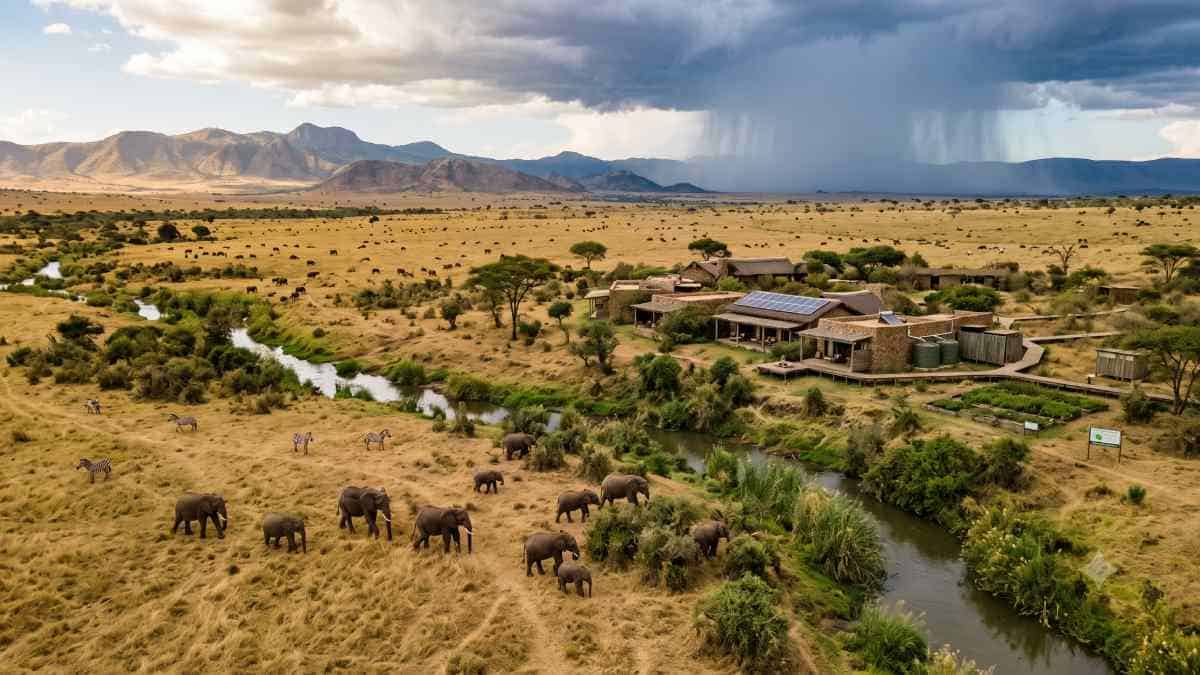
Climate instability around the globe is fast bringing about an institutional change in regional travel patterns, with the resultant structural change being a move towards climate-proof African tourism. Climate instabilities in terms of extreme weather conditions, abnormal monsoon periods, and heat waves have brought about operational challenges for travelers in terms of disruption of traditional air traffic. At the same time, congestion in peak period of historic safaris has resulted in foreign investments moving towards less congested conservatories and efficient interior destinations. The continent-wide transition from drainage systems in Eastern Africa to technologically equipped border controls in Southern Africa clearly proves that commercial success lies in adaptation and efficient municipal planning.
The Structural Climatological Shift Across African Travel Corridors
The international tourism sector is confronting an unprecedented realignment driven by shifting environmental boundaries and infrastructure vulnerabilities. Across continental transit arteries, historic weather baselines are being fundamentally redrawn by intensified meteorological cycles. Inbound leisure and corporate travellers, who once structured itineraries around predictable dry and wet seasons, now navigate erratic monsoon surges, protracted heat domes, and flash flooding that overwhelm municipal utilities and primary transport nodes.
These acute environmental pressures have exposed systemic bottlenecks in high-volume, legacy tourism models. Historically, commercial marketing strategies channelled overwhelming concentrations of arrivals through a narrow selection of primary entry points, creating extreme local resource burdens. When catastrophic weather events strike these concentrated nodes, the resulting ripple effects destabilise regional itineraries, strand long-haul passengers, and inflate operational liability for international travel providers.
Consequently, the continent is witnessing an accelerated divergence in travel patterns. The conventional model of unchecked mass tourism is rapidly yielding to climate-resilient African tourism, an operational and strategic framework that prioritises infrastructure durability, low-density zoning, and adaptive resource stewardship. Discerning inbound cohorts are deliberately bypassing distressed urban centres and saturated wildlife zones in favour of inland secondary hubs and rigorously managed conservancies equipped with independent utility grids and robust emergency planning mechanisms.
Advertisement
Advertisement
Climatological Volatility and Emerging Infrastructure Friction
The physical manifestation of environmental friction is most visible across critical transport interchanges. Major gateways situated in tropical and sub-tropical zones face compounded vulnerabilities where rapid urban expansion has compromised natural drainage basins. Torrential downpours, magnified by alternating El Niño and Indian Ocean Dipole anomalies, regularly generate surface runoff volumes that exceed the design parameters of mid-twentieth-century storm networks.
Simultaneously, inland safari circuits situated in semi-arid and savannah ecosystems are experiencing extended heatwaves where ambient temperatures test the mechanical tolerance of light aircraft engines and off-road transport fleets. Rising average temperatures alter animal migration timelines and dry out critical surface waters, compelling wildlife to disperse outside accessible viewing circuits. These operational challenges, paired with climbing peak-season Average Daily Rates (ADRs) at legacy lodges, have compelled tour operators to re-evaluate traditional transit corridors and embrace destinations engineered to withstand climate shocks.
Advertisement
Advertisement
Comparative Vulnerability: Transatlantic Parallels and Divergences
The operational friction unfolding across African destinations mirrors structural disruptions observed in Caribbean and coastal North American markets, though the institutional response exhibits distinct commercial dynamics. While Atlantic destinations face seasonal hurricane corridors that necessitate blanket operational shutdowns and complex financial hedging, African markets face chronic, multi-seasonal friction that requires decentralisation and adaptive engineering.
| Geographic Market | Primary Climatological Risk Factors | Regulatory and Operational Responses | Structural Destination Realignment |
| Caribbean and US Coastal Baseline | Category 3–5 Atlantic hurricanes; coastal storm surges; seasonal grid collapse | Comprehensive seasonal resort closures; flexible cancellation waivers; elevated insurance covenants | Demand redirection toward inland northern corridors during peak autumn storm seasons |
| Emerging African Corridors | Erratic monsoon shifts; urban flash flooding; severe savannah heat domes; tidal erosion | Capital drainage overhauls; automated border systems; carrying-capacity caps; micro-grid solar deployments | Travel diversion away from congested primary hubs toward high-elevation, arid, and private conservancy ecosystems |
The operational divergence highlights a profound evolution in consumer behaviour and institutional planning. Where Western markets frequently rely on post-disaster insurance payouts and reconstruction cycles, African tourism authorities and private concessionaires are progressively adopting preventative resilience measures, implementing digital controls and green infrastructure to maintain continuous operability.
Pillar 1: Aviation Gateways and Civil Engineering Weather Resilience
International air transport networks serve as the primary lifeline for continental commerce and high-yield travel. However, aviation hub vulnerability has emerged as a critical operational concern for civil aviation authorities, national transport ministries, and intergovernmental bodies. International Civil Aviation Organization (ICAO) and UN Tourism data underline that African passenger traffic has expanded robustly, with revenue passenger-kilometres climbing by 36.6 per cent over post-pandemic baselines and exceeding global recovery averages. Yet this sustained expansion intersects directly with acute climatological challenges at central hub facilities.
To mitigate recurring operational disruptions, continental aviation authorities are pursuing structural civil engineering alongside administrative digitisation. Rather than treating severe weather as an unavoidable anomaly, transport ministries are treating climatological durability as a foundational operational prerequisite.
East African Gateways: Drainage Modernisation at Nairobi and Dar es Salaam
East Africa’s primary aviation conduits, Jomo Kenyatta International Airport (JKIA) in Nairobi and Julius Nyerere International Airport (JNIA) in Dar es Salaam, are actively undergoing structural interventions to safeguard against catastrophic inundation. In Kenya, historical rain events demonstrated the immediate vulnerability of legacy terminals, when severe cloudbursts breached terminal roof infrastructure and flooded apron taxiways. In response, the Kenya Airports Authority (KAA), under the leadership of Managing Director and Chief Executive Officer Moses Wekesa, initiated sweeping capital remediation programmes.
KAA has partnered with Dutch hydraulic engineering specialists Haskoning to pilot automated Early Warning Systems designed to forecast localised hydrological spikes and trigger preventative diversion protocols. The authority executed extensive drainage rehabilitation works across Terminals 1B and 1C in direct coordination with the Kenya National Highways Authority (KeNHA) and the Nairobi City County Government, clearing arterial culverts and installing high-capacity industrial water pumps across low-lying tarmac zones. Furthermore, emergency engineering reviews now incorporate full-load electrical blackout tests to ensure uninterrupted radar, runway lighting, and terminal operations during catastrophic regional power grid collapses caused by severe storms.
Advertisement
Advertisement
In neighbouring Tanzania, the Tanzania Airports Authority (TAA) has systematically expanded stormwater control frameworks across JNIA in Dar es Salaam. Leveraging capital investments from the completion of Terminal 3, TAA engineering divisions have integrated subsoil drainage structures designed to evacuate surface water rapidly during equatorial coastal storm surges. By coordinating with the Vice-President’s Office and national meteorological agencies, Tanzanian civil aviation managers have established multi-agency response teams to mitigate flash flood disruptions, guaranteeing the integrity of long-haul international flight schedules.
Southern Transit Centres: Digital Clearance and Weather Rerouting in South Africa
Further south, Airports Company South Africa (ACSA) operates two of the continent’s busiest air junctions: O.R. Tambo International Airport in Johannesburg and Cape Town International Airport. While South Africa’s southern gateways frequently navigate adverse winter cold fronts, high winds, and severe summer convection thunderstorms that cause runway visibility drops and domestic flight delays, ACSA has coupled structural maintenance with digital process re-engineering to alleviate terminal congestion.
A cornerstone of this administrative resilience is the deployment of digital border clearance technology. The South African Revenue Service (SARS), in collaboration with border and transport agencies, instituted mandatory electronic processing via the Online Traveller Declaration system, enforced across all international transit terminals. By transitioning border documentation from physical paper slips to an integrated web-based architecture, immigration and customs throughput has accelerated dramatically. Arriving long-haul passengers complete secure declarations prior to boarding, permitting automated customs profiling and clearing physical arrival halls rapidly.
This reduction in terminal dwelling times mitigates bottlenecking when severe weather events force aircraft into holding patterns or necessitate compressed arrival windows. Complementing border digitisation, ACSA has enforced stringent out-of-gauge baggage handling regulations at O.R. Tambo to eliminate mechanical belt failures during heavy arrival surges, preserving operational throughput during compressed operational windows.
Multilateral Aviation Standards and Cross-Border Resiliency Frameworks
The systematic fortification of these facilities corresponds directly with macro-policy directives formulated by continental and global governing organisations. The second UN Tourism and ICAO Ministerial Summit culminated in the historic Luanda Ministerial Statement, uniting civil aviation directors and tourism ministers around a unified mandate for resilient, sustainable, and interconnected air travel infrastructure.
Multilateral policy mandates recognise that air connectivity and climate adaptation cannot be isolated into disconnected bureaucratic silos. The African Development Bank and regional economic communities continue to champion harmonised air traffic modernisation alongside the Single African Air Transport Market (SAATM), ensuring that aircraft delayed by localised severe weather anomalies can execute swift rerouting to resilient alternate aerodromes without administrative or sovereign border obstacles.
Advertisement
Advertisement
Pillar 2: Strategic Geographic Diversion to Low-Density Destinations
As principal transit hubs modernise their physical infrastructure, inbound leisure and corporate demand is experiencing an organic geographic decentralisation. Travellers seeking predictable weather profiles, low operational friction, and uncrowded environments are actively diverting expenditure toward secondary inland capitals, arid coastal corridors, and strictly regulated archipelagos. This redistribution demonstrates that municipal efficiency, low-density urban planning, and environmental governance have become decisive factors in international destination selection.
Urban Innovation and Predictable Climates: The Kigali Precedent
Rwanda’s capital, Kigali, has emerged as a premier beneficiary of this continental travel redirection. Geographically insulated by its elevated topography (averaging 1,500 metres above sea level), Kigali enjoys temperate microclimatic conditions that remain sheltered from the severe heatwaves and volatile coastal surges affecting low-lying African metropolises.
Under the strategic oversight of the Rwanda Development Board (RDB), the country has aggressively positioned itself as an elite Meetings, Incentives, Conferences, and Exhibitions (MICE) sanctuary and eco-luxury gateway. Kigali’s stringent municipal urban master plan emphasises comprehensive green zoning, immaculate civil cleanliness, and modernised storm drainage infrastructure designed to evacuate high-altitude tropical precipitation without urban flash flooding.
By marrying municipal resilience with streamlined electronic entry systems, the Rwandan government has captured substantial business and diplomatic travel segments that previously clustered exclusively in larger, weather-strained East African urban centres. This influx directly supports broader conservation frameworks, channelling commercial revenues into high-value mountain gorilla habitats while insulating corporate travellers from urban climate disruption.
Arid Stability: Windhoek and Swakopmund as Year-Round Harbours
In southwestern Africa, the Republic of Namibia provides an exceptional case study in capturing climatologically diverted demand. Governed by a predominantly hyper-arid to semi-arid climate, Namibia offers travellers near-total immunity from disruptive monsoon downpours and humid convective weather systems. The Ministry of Environment, Forestry and Tourism (MEFT), together with the Namibia Tourism Board (NTB), has successfully capitalised on this natural stability to position Windhoek and the coastal enclave of Swakopmund as premier, storm-free gateways.
According to verified statistical releases presented by Environment, Forestry and Tourism Minister Indileni Daniel, Namibia’s tourism sector has staged a vigorous expansion, recording 1,444,174 total foreign arrivals in 2024—a 37.0 per cent surge compared to the preceding year. International tourist arrivals climbed to 1,257,093, representing an extraordinary 78.8 per cent recovery toward historic pre-pandemic benchmarks. Leisure visitors constituted 47.5 per cent of this inbound cohort, boasting an average length of stay of 14 days, with road self-drive itineraries accounting for 77.6 per cent of domestic movement.
Advertisement
Advertisement
| Metric Category | Recorded Performance Indicator (MEFT Official Data) | Operational and Strategic Implication |
| Total Foreign Arrivals (2024) | 1,444,174 total arrivals (+37.0% increase over 2023) | Rapid absorption of long-haul leisure travel seeking arid stability |
| International Tourist Cohort | 1,257,093 tourists (+45.5% annual expansion) | Rebound to 78.8% of historic pre-pandemic high-water marks |
| Itinerary Mode of Transit | 77.6% road self-drive; 19.3% air; 3.1% maritime | High preference for independent overland routes across arid corridors |
| Average Duration of Stay | 14 days maintained across primary overseas segments | Deep economic penetration across regional communal conservancies |
| Sector Employment Growth | 57,000+ new jobs generated over a rolling five-year cycle | Demonstrates commercial durability of low-density nature tourism |
Namibia’s institutional strength lies in its sprawling conservation network. The state has gazetted over 50 registered communal conservancies covering more than 11.8 million hectares, securing vast wildlife corridors that empower indigenous communities through direct commercial joint ventures. Swakopmund and the broader Erongo coastal belt blend German colonial architecture with hyper-arid desert exploration, capturing European and North American travellers seeking uncrowded, climate-stable wilderness. Supported by a landmark N$1-billion sustainable conservation finance agreement secured by the national government, Namibia guarantees both infrastructure security and ecological preservation across its vast desert networks.
Coastal Re-engineering: Managing Storm Surges in Stone Town and Zanzibar
The semi-autonomous archipelago of Zanzibar presents a sharply contrasting operational landscape, where island authorities must actively confront marine climate hazards to protect high-yield coastal tourism. Tourism represents an indispensable economic engine for Zanzibar, accounting for nearly 30 per cent of gross domestic product and supporting over 1.6 million direct and indirect jobs across the wider Tanzanian economy. However, the historic capital of Stone Town, a designated UNESCO World Heritage Site, faces rising sea levels, high-energy tidal surges, and intensifying seasonal wind anomalies that batter antique coral-stone seawalls and disrupt historical dhow excursion operations.
To safeguard this blue economy, the Revolutionary Government of Zanzibar, operating through the Zanzibar Commission for Tourism (ZCT), has implemented proactive coastal engineering and policy interventions. The government has orchestrated structural restorations of Stone Town’s maritime perimeter, installing wave-dissipating breakwaters and reinforcing historic promenades against tidal scouring.
Simultaneously, maritime logistics have been re-engineered: traditional dhow excursions and inter-island marine transfers are now tightly integrated with digital meteorological feeds to avert passenger risks during severe weather events. In collaboration with the United Nations Development Programme (UNDP), Zanzibar introduced elevated tourist tariffs across Marine Conservation Areas, backed by a unified digital payment gateway. These restructured fees directly capitalise local marine reserve conservation, fortify climate-resilient coral reefs, and ensure that maritime excursions operate within defined, low-density carrying capacities.
Pillar 3: Transitioning to Low-Carbon and Regenerative Safaris
The operational pivot unfolding across African tourism reaches its zenith in the wilderness interior. The legacy safari format—characterised by high-density vehicular circulations, multiple high-speed regional flight transfers between far-flung camps, and intense utility footprints—is being systematically dismantled. In its place, affluent international cohorts and conservation authorities are institutionalising regenerative safaris, a low-carbon travel philosophy centred on extended single-ecosystem stays, off-grid solar operations, and deep community equity models.
By restructuring the commercial mechanics of wildlife viewing, destination managers ensure that natural habitats are not consumed by the very footfall intended to sustain them.
Advertisement
Advertisement
Southern Basins: Solar-Powered and Water-Focused Corridors in Maun and Livingstone
The iconic water basins of Southern Africa—the Okavango Delta in Botswana and the Zambezi River corridor in Zambia—stand as global benchmarks for the execution of high-value low-volume tourism. In Botswana, the municipal hub of Maun serves as the logistical command centre for one of the most rigorously preserved wildernesses on earth. Under statutory regulations established by the Botswana Tourism Organisation (BTO) under the Tourism Act, all commercial hospitality enterprises must submit to biennial star gradings and adhere to strict ecological certification mandates.
Botswana’s state-enforced scarcity framework mandates that nearly 40 per cent of national territory remain designated under national park and wildlife management conservation status. Macroeconomic assessments confirm that this High-Value, Low-Volume (HVLV) model accounts for 10.2 to 12.1 per cent of national GDP, injecting approximately $630 million USD in foreign exchange reserves annually and sustaining over 100,000 domestic jobs without exposing fragile wetland ecosystems to the degradation of mass footfall.
In concessions surrounding Maun, such as the community-managed NG32 reserve, safari operators have replaced carbon-intensive logistics with solar-hybrid generation, on-site biological wastewater purification systems, and silent electric game-drive conversions. By substituting combustion engine game runs with traditional non-motorised mokoro canoe journeys and guided walking safaris, concessionaires eliminate environmental noise, limit soil erosion, and dramatically compress per-guest carbon footprints.
Further east along the Zambezi River, the Zambian tourism capital of Livingstone is undergoing an identical operational transition. The Zambia Tourism Agency (ZTA) has partnered with private conservation trusts to diversify product offerings beyond conventional Victoria Falls excursions. High-end wilderness lodges, including newly commissioned developments such as Shearzone Safaris’ Nzovu Rundu, operate almost entirely on independent solar photovoltaic arrays, deploying low-draft electric riverboats to conduct silent river safaris.
By opening community tourism resource hubs in Livingstone, Zambian authorities have tied conservation fees directly to local chiefdoms, proving that climate-resilient wilderness stewardship provides dependable economic stability even during severe regional drought cycles.
Managing Density: Carrying Capacities and Smart Traffic Flow in Arusha and Serengeti
While Southern Africa preserves scarcity through statutory concession caps, East Africa’s pre-eminent safari corridor—centred around Arusha and the Serengeti National Park—has taken aggressive direct regulatory steps to reverse extreme vehicular overcrowding. The global notoriety of the Great Wildebeest Migration across the Mara River historically attracted unsustainable flotillas of four-wheel-drive safari vehicles, triggering severe dust pollution, bank erosion, and perilous interference with wildlife movements.
Advertisement
Advertisement
At an emergency industry forum convened in Arusha, Tanzania National Parks (TANAPA) Deputy Conservation Commissioner Massana Mwishawa announced an uncompromising operational crackdown. TANAPA has formally collaborated with engineering software specialists Trinnex and CDM Smith to design and install a comprehensive, digital park traffic management solution spanning the Serengeti biosphere. This smart traffic platform utilizes automated tracking, algorithmic entry permits, and designated viewing corridors to enforce rigid carrying capacities across vulnerable river crossing points.
The technical architecture enforces four successive control gates: algorithmic entry quotas at main park gates, real-time GPS telemetry on registered tour vehicles, automated density threshold caps along designated Mara River crossing banks, and dynamic traffic diversions to prevent vehicular soil compaction.
The system actively penalises infractions. TANAPA established strict precedent by levying multi-year bans against tour drivers and commercial companies that breached viewing distances or obstructed migratory herds, sending an unmistakable market signal that ecological disruption will no longer be tolerated. Concurrently, the Tanzania Association of Tour Operators (TATO) is working alongside TANAPA to channel high-spending visitors into private community conservancies outside traditional national park boundaries, successfully distributing vehicle density while generating sovereign revenue streams during off-peak seasonal windows.
Community Concessions and the Economics of Scarcity
The transition toward regenerative safaris fundamentally alters safari lodging economics. In historic high-volume parks, excessive bed supply fostered intense price competition during low seasons, followed by unsustainable vehicle congestion during peak months. Conversely, the private conservancy framework operated across Botswana, Namibia, and northern Tanzania rests upon legally protected scarcity.
By legally capping commercial bed densities—often restricting developments to no more than 12 to 16 luxury tented pavilions per hundreds of square kilometres—operators command ADRs exceeding $1,500 to $2,500 per guest night while insulating guests from traffic congestion. Crucially, substantial portions of these revenues bypass distant national treasuries to flow directly into local communal trusts, funding local health infrastructure, anti-poaching ranger units, and drought-resilient agricultural schemes. Scarcity engineering has converted wildlife preservation into a tangible commercial asset for indigenous populations, anchoring long-term habitat security.
Macroeconomic Implications and Policy Directives for Sustainable Tourism
The macro-level realignment of continental travel flows carries profound implications for fiscal policy, foreign exchange generation, and public infrastructure prioritisation. Tourism accounts for a substantial share of African export revenue and service-sector employment, acting as an indispensable financial catalyst across emerging economies. According to UN Tourism, total global tourism receipts and international passenger transport reached a record $2.0 trillion USD in 2024, with international tourist arrivals surging across the African region. UN Tourism Executive Director Natalia Bayona and Secretary-General Zurab Pololikashvili have reiterated that African tourism investment is undergoing a generational shift toward sustainable development, institutional innovation, and climate adaptation.
Advertisement
Advertisement
| Jurisdictional Node | Strategic Policy and Regulatory Instrument | Lead Public Agency | Core Macroeconomic and Conservation Impact |
| Nairobi, Kenya | JKIA Hydrological Early Warning System; Drainage Modernisation | Kenya Airports Authority (KAA) | Elimination of flight cancellations; operational continuity during extreme El Niño precipitation |
| Johannesburg and Cape Town, South Africa | Mandatory Online Traveller Declarations (Enforced July 2026) | South African Revenue Service (SARS) | Elimination of physical border queuing; rapid passenger throughput amid convective weather |
| Windhoek and Swakopmund, Namibia | National Spatial Tourism Masterplan; Communal Conservancies | Ministry of Environment, Forestry and Tourism (MEFT) | Diversification into arid travel; 1.44M foreign arrivals; 57,000 new sector jobs created |
| Stone Town, Zanzibar (Tanzania) | Marine Conservation Area Digital Tariffs; Seawall Engineering | Zanzibar Commission for Tourism (ZCT) and UNDP | Direct capitalisation of coral reef restoration; sustainable funding for coastal defence |
| Maun and Okavango, Botswana | Compulsory Star Grading; High-Value Low-Volume Zoning | Botswana Tourism Organisation (BTO) | Generates $630M USD forex; limits ecological footprints across fragile riverine biomes |
| Arusha and Serengeti, Tanzania | Digital Traffic Management System; Strict Driver Regulations | Tanzania National Parks (TANAPA) | Algorithmic vehicle regulation at migration crossings; soil compaction alleviation |
Capital Realignment and Inbound Foreign Direct Investment
Historically, Foreign Direct Investment (FDI) into African hospitality focused heavily on sprawling coastal beach properties and high-density urban transit hotels. However, institutional finance institutions, including the World Bank Group, the African Development Bank, and bilateral climate funds, are actively redirecting capital allocations. International investors increasingly demand environmental, social, and governance (ESG) traceability before committing capital to long-term hospitality assets. Lodges lacking independent renewable energy arrays, greywater treatment mechanisms, and authentic communal equity partnerships face punitive lending rates or outright uninsurability.
Conversely, destinations that demonstrate transparent regulatory frameworks and institutional stability are capturing outsized shares of international capital. Botswana’s creditworthiness and clear environmental protections, Rwanda’s automated commercial registration and zero-tolerance anti-corruption enforcement, and Namibia’s landmark N$1-billion conservation finance transactions have proven that legal certainty attracts premier international investment. Capital is migrating away from climate-exposed, unmanaged urban belts toward legally ringfenced wilderness concessions and high-tech urban centres.
Future Outlook: Institutional Modernisation Across the Continent
The trajectory of continental travel over the coming decade will be governed by the speed of institutional modernisation and infrastructure integration. As extreme climatological events grow in frequency, destinations can no longer rely purely on natural scenic assets or historic brand equity. The African Continental Free Trade Area (AfCFTA) and the continued expansion of the Single African Air Transport Market provide the macro-policy foundations to dismantle regional trade barriers, liberalise aviation access, and harmonise environmental standards.
National governments that succeed in harmonising digital border clearance, investing aggressively in climate-hardened municipal infrastructure, and implementing enforceable carrying capacities across natural sanctuaries will capture the most lucrative, resilient segments of global travel demand. The structural shift toward climate-resilient African tourism represents far more than an operational adjustment; it marks a comprehensive evolution in how emerging economies preserve their natural heritage, protect essential transport corridors, and cultivate enduring commercial value on a rapidly transforming planet.
Climate resilience in tourism across the continent reveals that environmental tourism in Africa has gone beyond a mere dream to become a business necessity. With climatic conditions making apparent the weaknesses in older infrastructure and crowded parks, the regions are obtaining competitive advantages through modern technology, digitized border controls, and lower density zoning of their ecological zones. The international travelers have now opted out of crowded paths and have chosen to engage in conservation trips that conserve their fragile environments while ensuring their efficiency. Eventually, sovereign nations that adapt to the climate and invest in infrastructure will be the benchmark for premium tourism in Africa.
Advertisement
