
Caracas Airport Reopening Restores Global Flights After Venezuela’s Historic Earthquake Shutdown

Published
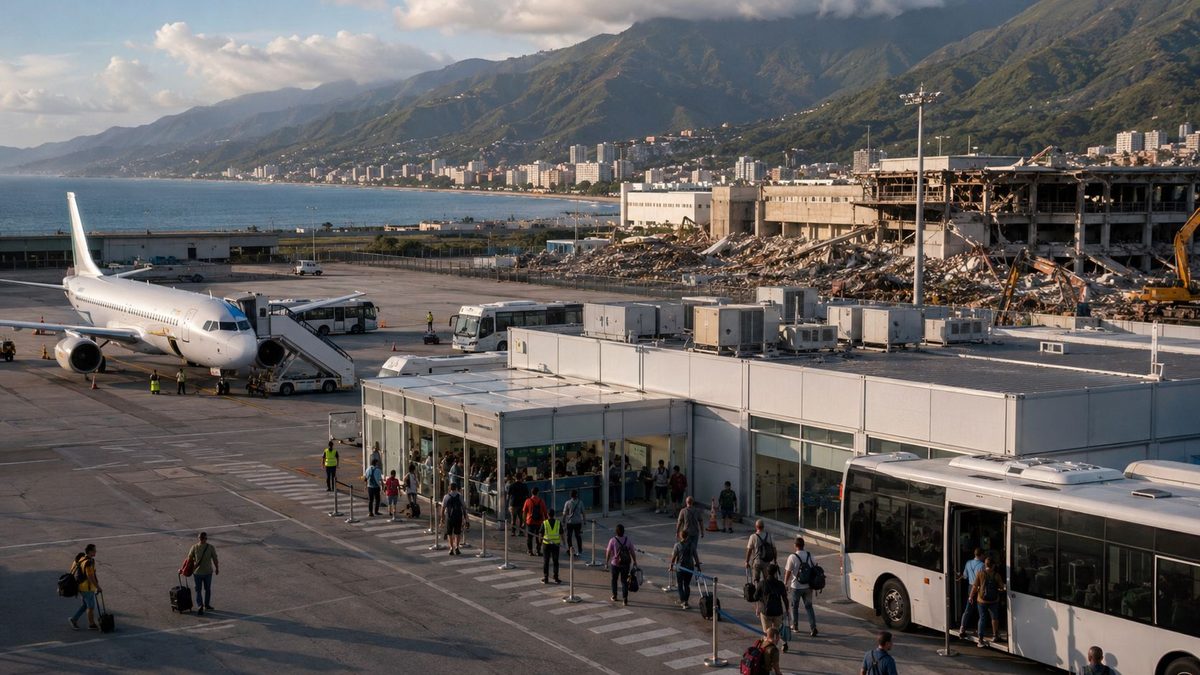
Image generated with Ai
Venezuela has reopened its main international gateway more than 9 weeks after two powerful earthquakes caused disruptions. Simón Bolívar International Airport in Maiquetía has restarted limited commercial operations using a temporary passenger facility built while permanent infrastructure is being restored. The earthquakes, of magnitudes 7.2 and 7.5, on 24 June caused extensive damage to infrastructure across northern Venezuela. The reopening restores direct international access to Caracas after airlines diverted traffic to other gateways. The temporary facility measures some 10,000 square meters and can handle some 2,168 passengers per day. The initial services will include international connections to Panama and Madrid, as well as domestic operations. But the airport is nowhere near normal capacity. Travellers should therefore be prepared for temporary procedures, reduced schedules and extra time requirements.
Caracas Airport Reopening Signals A Controlled Recovery
The return of commercial aviation represents a significant milestone for Venezuela’s transport network. Simón Bolívar International Airport sits in Maiquetía, in coastal La Guaira state, around 20 kilometres north of the Caracas metropolitan area.
Advertisement
Advertisement
Its geographical position makes the airport far more than a local transport facility. It provides the principal international air link for the capital and supports business travel, tourism, cargo movements and connections with Latin American and European markets.
That role became particularly visible when the airport closed following the June earthquake sequence. The two earthquakes struck within less than a minute of each other, with the larger event measuring 7.5 according to the US Geological Survey. The Japan Association for Earthquake Engineering also records the two events at 7.2 and 7.5 magnitude.
Advertisement
Advertisement
The earthquakes caused severe damage across Caracas, La Guaira and surrounding areas. Satellite analysis later showed significant ground displacement around La Guaira and nearby locations, highlighting the scale of the geological disturbance.
Advertisement
Advertisement
The airport itself sustained serious damage, forcing authorities to suspend normal passenger operations. International travellers consequently faced longer journeys through alternative Venezuelan gateways while the main airport remained unavailable.
The reopening now restores a direct air route into the capital region. Nevertheless, it represents a phased return rather than a full restoration of normal airport operations.
Temporary Terminal Changes The Passenger Experience
Authorities have used a temporary operating model instead of waiting for the entire airport complex to be reconstructed. The approach allows essential passenger services to resume while engineers continue work on damaged permanent facilities.
A modular terminal has been established within the airport’s former parking area. According to the reopening report, the facility covers approximately 10,000 square metres and provides check-in facilities, waiting areas, medical assistance and passenger services.
The temporary complex can process approximately 2,168 travellers daily. That figure is substantially below the level associated with a fully functioning international gateway, so airlines cannot immediately restore their former schedules.
Advertisement
Advertisement
The physical journey through the airport has also changed. Passengers are transferred between the temporary terminal and aircraft using buses across the airfield rather than relying entirely on conventional passenger boarding infrastructure.
For travellers, that means the airport experience will feel different from the pre-earthquake operation. Queues, transfers and processing times may vary as staff and airlines adapt to the temporary arrangement.
The arrangement also provides an important operational advantage. Airport authorities can keep passenger movements away from areas where reconstruction activity continues.
| Recovery Measure | Current Arrangement | What It Means For Travellers |
|---|---|---|
| Passenger facility | Temporary modular terminal | Different check-in and waiting environment |
| Terminal footprint | About 10,000 sq m | Smaller than a fully restored complex |
| Daily throughput | About 2,168 passengers | Limited flight and passenger capacity |
| Aircraft access | Airfield shuttle buses | Additional transfer stage before boarding |
| Permanent infrastructure | Reconstruction continuing | Further operational changes remain possible |
| Reopening model | Phased | Schedules should not be treated as fully restored |
International Airlines Begin Rebuilding The Network
The first international services provide an early indication of how Venezuela’s aviation network will rebuild. Copa Airlines has restored the Caracas–Panama City connection, providing access to one of Latin America’s most important connecting hubs.
Copa’s current booking system continues to display Caracas–Panama City services, making the route particularly relevant for travellers seeking onward connections across the Americas.
Advertisement
Advertisement
Air Europa has also been identified among the returning international operators, restoring an important link with Madrid. The European connection matters for both leisure travellers and Venezuela’s business and diaspora markets.
Additional carriers are expected to increase services as airport capacity expands. However, travellers should distinguish between planned restoration and flights that have actually entered airline schedules.
That distinction is especially important during an airport recovery. Airlines may alter frequencies according to infrastructure availability, aircraft rotations, crew requirements and passenger demand.
For travel companies, the reopening therefore creates an opportunity but also requires closer schedule management. Corporate travel departments should verify operating times directly with carriers before issuing final itineraries.
Capacity Will Return In Several Stages
Airport recovery rarely happens in a single step after a major natural disaster. Runways, taxiways, aprons, terminals, navigation systems and passenger facilities must all meet operational and safety requirements before capacity can increase.
Advertisement
Advertisement
The Caracas recovery is following that principle. Initial operations remain deliberately limited while additional infrastructure undergoes assessment and rehabilitation.
The reported recovery pathway points towards a gradual increase in throughput rather than an immediate return to pre-earthquake schedules. Officials have indicated an ambition to restore operations towards 60 per cent of capacity by early 2027.
| Recovery Stage | Indicative Operating Level | Priority |
|---|---|---|
| Initial reopening | About 25% | Essential domestic and international connectivity |
| Intermediate recovery | About 40% | Expanded infrastructure and airline schedules |
| Longer-term target | About 60% | Broader passenger and flight restoration |
| Full restoration | Dependent on reconstruction | Return towards conventional airport operations |
These figures should be viewed as recovery benchmarks rather than guaranteed airline capacity. Actual flight availability will depend on certification, airline decisions and the readiness of individual airport facilities.
The cautious approach should reassure travellers. A slower reopening allows authorities to expand operations without compromising the safety standards expected from a major international airport.
What Travellers Should Expect Now
Travellers using the airport should plan for a more time-consuming journey than before the earthquake. Temporary passenger facilities, bus transfers and restricted processing capacity can create additional friction during peak periods.
Advertisement
Advertisement
International passengers should therefore arrive well ahead of scheduled departure. Around four hours before an international flight provides a sensible planning margin during this transitional period, particularly for unfamiliar travellers.
Passengers should also check the operating airline rather than relying exclusively on third-party booking information. Flight numbers, departure times and baggage conditions can change when airlines operate through a restricted airport.
Travellers who were previously rerouted through Valencia or Barcelona should pay particular attention to rebooking details. A replacement ticket may carry different baggage conditions or connection arrangements.
Essential items should remain in cabin baggage. Passports, travel documents, medication, chargers and other necessities should not be placed in checked luggage while the airport works through an evolving operating environment.
Ground transportation requires similar planning. Maiquetía lies on the coastal route connecting the airport with Caracas, so passengers travelling onwards into the capital should arrange dependable transport before arrival.
Advertisement
Advertisement
The airport’s reopening also does not guarantee that every surrounding road or urban service has returned to normal. La Guaira was among the areas heavily affected by the earthquake sequence, and satellite observations recorded substantial ground movement in the region.
Caracas Airport Reopening Brings Tourism A New Lifeline
The aviation recovery matters because the airport supports a much wider tourism ecosystem. Airlines bring visitors into the country, but their passengers also generate demand for hotels, restaurants, ground transport, meetings, attractions and destination services.
The impact is particularly important for La Guaira. The coastal state suffered significant earthquake damage and remains central to the airport’s operating environment.
Restoring aviation therefore provides more than passenger convenience. It creates a mechanism through which business activity and tourism can gradually reconnect with international markets.
However, tourism recovery will not happen automatically. Visitors need functioning accommodation, dependable road transport, accessible attractions and clear information about conditions beyond the airport.
Advertisement
Advertisement
Travel advisers should consequently assess the complete itinerary rather than treating the airport’s reopening as evidence that every part of the destination has fully recovered.
The first phase is likely to favour travellers with established reasons for visiting Venezuela. Business passengers, visiting friends and relatives, essential travellers and experienced regional visitors may return before discretionary leisure demand gathers momentum.
That pattern could change as flight frequencies increase and confidence improves.
Alternative Airports Exposed A Network Weakness
The closure also demonstrated the importance of alternative aviation gateways in a crisis. During the disruption, passengers and airlines relied on airports including Valencia and Barcelona to maintain air connectivity.
Those airports provided valuable redundancy. Yet neither could reproduce Maiquetía’s convenience for travellers whose final destination was Caracas.
Advertisement
Advertisement
The experience created significant additional surface-transport requirements. Passengers could still reach Venezuela by air, but their journeys became longer and more complicated.
| Travel Factor | Maiquetía | Alternative Gateway During Closure |
|---|---|---|
| Access to Caracas | Direct regional gateway | Longer onward ground journey |
| International connectivity | Primary international role | More limited network |
| Passenger convenience | High under normal conditions | Reduced during disruption |
| Crisis value | Essential national gateway | Important contingency capacity |
| Current role | Primary recovery focus | Potential backup network |
The episode offers a wider lesson for travel management companies. Crisis planning should include alternative airports, ground transport, flexible ticketing and realistic connection buffers.
For airlines, it also reinforces the value of maintaining network flexibility. A major airport closure can quickly transfer pressure onto secondary gateways that were never designed to absorb the same passenger volume.
Earthquake Damage Still Shapes The Recovery
The aviation disruption cannot be separated from the scale of the earthquake disaster. The two earthquakes were among the most powerful to affect Venezuela in more than a century.
USGS-linked data place the first event at magnitude 7.2 and the subsequent earthquake at 7.5. The events occurred in rapid succession, producing severe shaking across a broad area.
Advertisement
Advertisement
The Pan American Health Organization reported that approximately 3.9 million people were exposed to severe shaking during the earthquake sequence. Its initial situation report identified La Guaira, Caracas and several other states among the affected areas.
NASA later used satellite radar data to map ground displacement around Caracas and La Guaira. The imagery offered an independent picture of the physical changes caused by the earthquakes.
This background explains why airport recovery requires more than repairing visible damage. Structural integrity, navigation equipment, passenger buildings and airfield infrastructure must all be assessed before additional capacity can return.
The reopening is therefore an engineering and operational milestone as much as a commercial one.
Airlines Face A Gradual Commercial Rebuild
For carriers, the return to Maiquetía creates opportunities but also operational constraints. Airlines must match their schedules with the airport’s available capacity while maintaining aircraft and crew rotations.
Advertisement
Advertisement
Copa’s Panama connection is especially significant because Panama City provides onward connectivity throughout the Americas. The route can therefore restore a broader network without requiring every destination to return simultaneously.
Madrid services provide a similar role for Europe. However, network restoration will depend on demand and airport capacity as much as on airline willingness.
The gradual approach also reduces the risk of overwhelming a temporary passenger facility. A sudden return of the previous flight schedule could place pressure on check-in areas, security processes, baggage handling and aircraft movements.
For this reason, incremental growth is commercially logical. It allows airlines and airport operators to identify bottlenecks before adding substantial frequencies.
Practical Advice For International Passengers
Passengers should treat every journey through Maiquetía as a transitional operation. The airport is open, but the passenger process is still evolving and may differ considerably from the pre-earthquake experience.
Advertisement
Advertisement
Checking the flight directly with the operating airline should be the first step. Travellers should then confirm baggage allowances, terminal instructions and any changes to connection times before leaving for the airport.
Early arrival remains advisable, especially for international departures. Passengers should also keep essential medication, identification and electronic devices in cabin baggage.
Ground transfers should be booked through reputable providers. Travellers heading from Maiquetía towards Caracas should allow additional time for road conditions and possible delays.
Those with tight onward connections should reconsider their schedules. A generous connection window is more valuable while the airport operates with constrained capacity.
Finally, travellers should monitor official airport and airline updates close to departure. Recovery schedules can change as additional infrastructure receives clearance.
Advertisement
Advertisement
A Critical Gateway Returns To Service
The reopening of Simón Bolívar International Airport gives Venezuela an essential transport link after an extraordinary period of disruption. The temporary terminal provides a practical bridge between emergency closure and permanent reconstruction.
For travellers, the most important development is straightforward. Direct international access to the Caracas region has returned, but the airport is not yet operating as it did before the earthquakes.
That distinction should guide travel planning over the coming months. Passengers should expect additional processing time, limited schedules and a boarding experience shaped by temporary infrastructure.
For airlines and tourism businesses, however, the reopening creates a foundation for recovery. More reliable international connectivity can gradually restore business travel, visiting-friends-and-relatives traffic and leisure demand.
The wider recovery will depend on infrastructure, traveller confidence and the steady return of airline capacity. The airport’s return is therefore best understood as the beginning of Venezuela’s aviation recovery, not its final chapter.
Advertisement
Advertisement
Key Recovery Data For Travellers
| Indicator | Current Detail |
|---|---|
| Airport | Simón Bolívar International Airport |
| IATA code | CCS |
| Location | Maiquetía, La Guaira |
| Earthquake date | 24 June 2026 |
| Earthquake magnitudes | 7.2 and 7.5 |
| Closure period | Nearly ten weeks |
| Temporary facility | About 10,000 sq m |
| Reported initial throughput | About 2,168 passengers daily |
| Boarding arrangement | Airfield shuttle buses |
| Initial international markets | Panama and Madrid |
| Recovery approach | Phased reopening |
| Longer-term operating ambition | About 60% of capacity |
| Main traveller advice | Allow extra time and reconfirm schedules |
Official Information And Verification
For aviation information, travellers should consult Venezuela’s Instituto Nacional de Aeronáutica Civil (INAC) and the operating airline before departure. Airline schedules should take precedence over older travel information because capacity is still being restored.
The earthquake magnitude and timing have been independently corroborated by USGS-linked scientific records and earthquake-monitoring organisations.
The airport reopening, temporary terminal capacity and initial flight operations are supported by current reporting from Associated Press.
FAQs
1. Is Caracas Airport open after the Venezuela earthquakes?
Yes. Simón Bolívar International Airport in Maiquetía has partially resumed commercial operations after nearly ten weeks of closure. However, travellers should expect restricted capacity and temporary passenger facilities while reconstruction continues.
2. Which airlines are currently returning to Caracas Airport?
Initial international services include Copa Airlines to Panama City and Air Europa to Madrid. Other carriers are expected to restore or increase services as airport infrastructure and operating capacity gradually recover.
Advertisement
Advertisement
3. What should travellers expect at Caracas Airport now?
Passengers should expect a temporary modular terminal and airfield shuttle-bus transfers between the passenger facility and aircraft. Processing may take longer than usual, so international travellers should allow substantial extra time before departure.
4. How much passenger traffic can the temporary Caracas terminal handle?
The temporary complex reportedly covers approximately 10,000 square metres and can process around 2,168 passengers daily during the initial recovery phase. Capacity is expected to increase progressively as permanent airport facilities return to service.
5. Should travellers change their plans when flying through Caracas?
Travellers can use the reopened airport, but they should confirm flight schedules directly with their airline before travelling. Extra time for check-in, possible operational changes and onward ground transportation is advisable while the airport remains in phased recovery.
Advertisement
