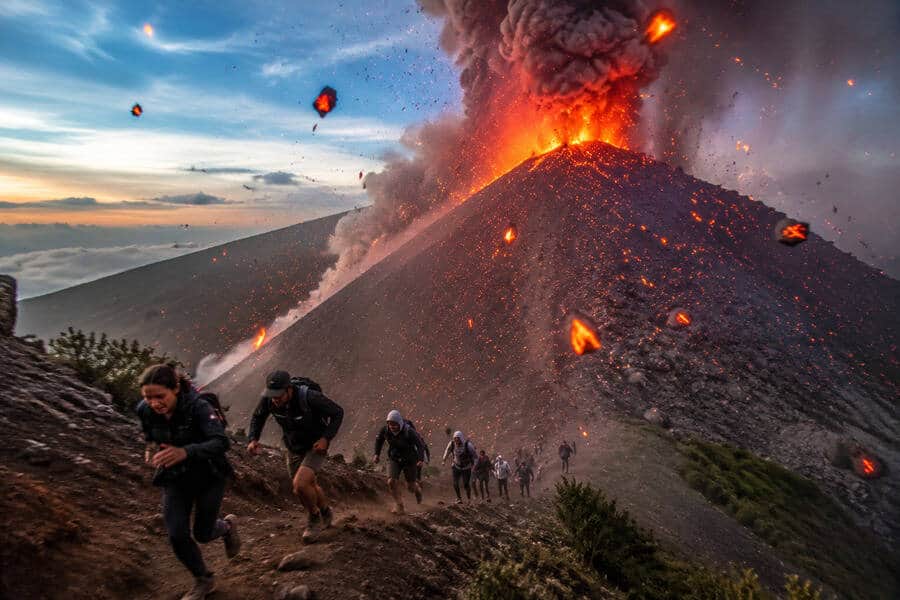
Image generated with Ai
A sudden volcanic eruption in Guatemala transformed a routine hiking experience into a dangerous escape scenario after Volcán de Fuego unexpectedly released bursts of ash and burning rock fragments onto its slopes. Visitors on the mountain were forced into a rapid descent as glowing debris rained down across established trails, turning a popular trekking route into a high-risk evacuation zone within moments.
The eruption unfolded with little warning, sending incandescent volcanic material scattering across exposed sections of the mountain. Visual footage circulating online shows hikers moving quickly along narrow ridgelines while incandescent fragments strike nearby terrain, highlighting the volatile nature of one of Central America’s most active volcanoes.
The eruption occurred on Volcán de Fuego, situated roughly 43 kilometres southwest of Guatemala City, a peak widely recognised for frequent explosive activity. While the volcano routinely produces short bursts of ash and gas every 15 to 20 minutes, occasional stronger events escalate rapidly and create immediate hazards for anyone in proximity.
During this incident, intensified volcanic pressure ejected molten fragments that descended along upper slopes, disrupting visibility and forcing individuals on the mountain to retreat without delay. The movement of superheated debris across hiking paths left minimal reaction time, underscoring the unpredictable nature of active stratovolcano environments.
Advertisement
Advertisement
Initial signs of activity began with typical ash discharge, but conditions quickly escalated into a more dangerous phase involving ballistic rock ejection. These fragments, propelled by internal volcanic pressure, descended at high speed across the terrain, landing unpredictably along hiking corridors.
Video recordings show rapid movement away from the eruption zone as glowing material impacts surrounding ground surfaces. In several instances, hikers attempted to shield themselves using backpacks and natural terrain cover while continuing downhill movement. The combination of steep gradients and unstable footing added further complexity to the evacuation effort.
Among those exposed to the eruption, accounts describe dangerously close encounters with falling volcanic material. One individual reported that a burning fragment passed extremely close overhead before striking nearby ground, illustrating the limited margin of safety during such events.
Other moments captured during the incident include improvised responses to sudden hazards, including attempts to cool landed fragments and assist animals caught in the evacuation path. The chaotic environment reflected how rapidly volcanic landscapes can shift from scenic exploration zones to immediate danger areas.
Advertisement
Advertisement
Witnesses described a sudden shift from observation to emergency movement as the eruption intensified. The initial reaction involved confusion, followed quickly by coordinated downward movement along steep volcanic trails. The noise of ongoing eruptions, combined with falling debris, contributed to heightened urgency throughout the evacuation.
Despite the intensity of the situation, most individuals were able to descend without reported major injuries. The emotional impact, however, remained significant, with accounts emphasising shock, fear and disbelief at the speed of the eruption’s escalation.
Volcán de Fuego is one of the most continuously active volcanoes in the region, known for frequent eruptive cycles that range from minor ash emissions to severe explosive events. Its geological structure allows for rapid pressure build-up, often resulting in sudden bursts of activity.
A major eruption in recent years caused widespread destruction in surrounding communities, producing pyroclastic flows that travelled at high speed and left lasting impact on nearby settlements. This history places the volcano among the most closely monitored natural hazards in Central America.
The latest incident has reignited discussions about safety protocols in volcanic tourism zones. While controlled access to volcanic slopes remains a major attraction for adventure travellers, the unpredictability of eruptive behaviour presents inherent risks.
Authorities typically monitor seismic activity and restrict access during elevated alert levels. However, sudden transitions from low-level emissions to explosive activity remain a challenge in real-time risk management, particularly in open hiking environments where evacuation routes may be limited.
Events like this reinforce the importance of situational awareness, guide supervision and strict adherence to exclusion zones around active volcanic systems. Rapid escalation patterns, such as those observed on Volcán de Fuego, highlight how quickly conditions can shift from stable to hazardous.
As volcanic tourism continues to expand globally, the balance between accessibility and safety remains a central concern. This eruption serves as a reminder that even short hiking excursions in geologically active regions can carry significant risk when natural systems become unstable.
Advertisement
Tags: guatemala, Travel News, volcanic eruption
Advertisement
Advertisement













Friday, September 4, 2026

Friday, September 4, 2026

Saturday, September 5, 2026

Friday, September 4, 2026

Thursday, September 3, 2026

Wednesday, September 2, 2026

Friday, September 4, 2026