
Mississippi and More US States Struggling of Skyward Hotel Cost as 63% Expect Their Spending to Increase in 2026 Compared with 2025

Published
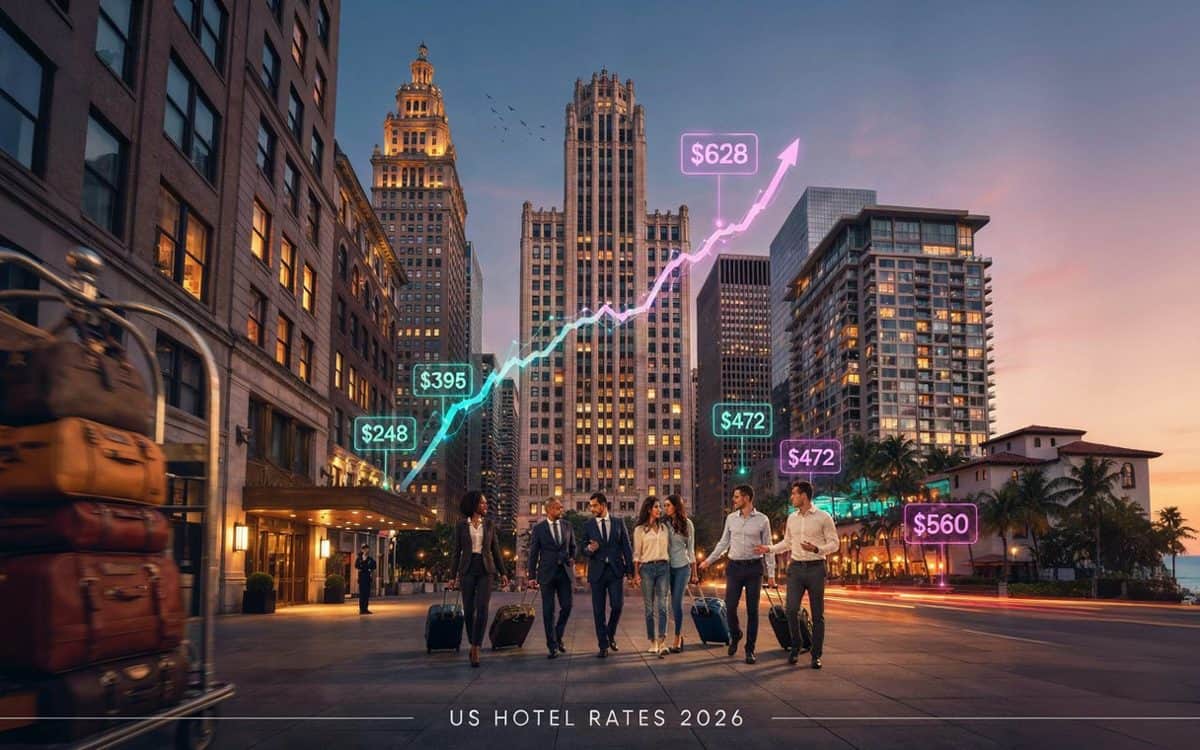
Mississippi and more US states face skyward hotel costs as 63% expect spending to increase in 2026 compared with 2025, putting fresh pressure on travel budgets and tourism demand.
Mississippi and more US states are confronting skyward hotel costs as travel prices continue to reshape corporate budgets in 2026. Meanwhile, 63% of travel managers expect their hotel spending to increase compared with 2025. This signals a clear shift across the US hotel market. Higher room rates, stronger demand and rising operating expenses are pushing costs upwards. However, booking growth remains less pronounced than spending growth. As a result, businesses face tougher accommodation decisions, while travellers and tourism operators watch prices closely. Moreover, major destinations are experiencing different levels of pressure, making the US hotel market increasingly uneven and unpredictable for travel.
Advertisement
Advertisement
US hotel market enters a more expensive 2026
The US hotel industry is entering 2026 with a mixed but generally positive outlook, as stronger travel demand, major international events and rising operating expenses combine to influence room prices, hotel revenue and visitor spending across the country. The American Hotel & Lodging Association’s 2026 State of the Industry Report, based on Tourism Economics data, projects US hotel guest spending at $804.64 billion in 2026, up 1.7% from 2025, while the wider hotel sector continues to face significant cost pressures.
The national picture is particularly important for travel and tourism because higher spending does not automatically mean that every hotel is charging more for every room, with occupancy, visitor volumes, major events, supply and international demand all influencing individual markets. The latest CoStar data provides evidence of stronger pricing momentum in 2026, with US hotel average daily rate reaching $173.76 in June, up 6.7% year on year, while RevPAR increased 8.4%, helped substantially by World Cup-related demand.
Advertisement
Advertisement
US Hotel Costs Rise in 2026 as Corporate Travel Spending Outpaces Booking Growth
Corporate hotel spending is rising faster than booking volumes in 2026, as higher room rates, dynamic pricing and new hotel distribution technology reshape business travel and the wider tourism market.
Hotel spending rises despite fewer booking increases
The latest Business Travel News 2026 Hotel Survey shows that corporate travel managers are preparing to spend more on hotels this year, although the increase does not necessarily mean companies are booking significantly more rooms. BTN surveyed 231 corporate travel buyers and found that 63% expect full-year 2026 hotel spending to rise from 2025, while only 53% expect booking volumes to increase and 27% anticipate volumes remaining flat.
Advertisement
Advertisement
The figures underline a significant development for the travel industry because rising accommodation costs are becoming a larger part of corporate budgets, even as business travel activity continues to recover. For tourism, the trend also demonstrates that stronger demand can support hotel revenues without producing an equivalent increase in the number of room nights purchased by corporate travellers.
Hotel rates become a major travel concern
Hotel pricing has moved above earlier expectations in the United States, with CoStar and Tourism Economics’ latest hotel forecast projecting 3.1% year-on-year growth in average daily rates in 2026. The same forecast expects US hotel RevPAR to increase 4.4%, supported by stronger leisure and business travel, although room rates remain the primary driver of the revenue improvement.
This creates a complicated environment for travel managers, who must balance corporate travel requirements against higher accommodation budgets, while tourism businesses benefit from stronger demand and greater pricing power. The situation is particularly important in destinations affected by major events, where increased visitor demand can place additional pressure on hotel availability and rates.
Dynamic pricing changes corporate hotel negotiations
Another major issue is the growing use of dynamic hotel rates, which allow negotiated discounts to move with a property’s publicly available price rather than remaining at a fixed level throughout a contract. BTN’s survey found that corporate buyers continue to regard dynamic pricing as a challenge, particularly when companies provide hotels with substantial room-night volumes but cannot secure predictable fixed rates.
The Global Business Travel Association’s hotel research also found that 49% of travel managers reported having more dynamic rates in their programmes than a year earlier, while 25% said they had fewer static negotiated rates. This shift could make corporate travel budgets more difficult to forecast, although businesses with significant travel volumes continue to have leverage during hotel negotiations.
Direct hotel connections could transform travel
Technology is emerging as another important force in hotel procurement, with major hotel groups exploring direct connections with travel management companies and corporate booking platforms. Hilton’s direct integration with Navan provides real-time access to Hilton rates and availability through its central reservation system, while Marriott is also examining direct technical relationships with corporate travel partners.
Advertisement
Advertisement
Such integrations could reduce distribution costs, improve rate accuracy and make hotel content easier to manage across corporate booking systems. Over time, travel buyers could increasingly negotiate broader packages combining corporate rates, discounts, loyalty benefits, room selection and flexible services rather than focusing exclusively on the cheapest available room.
What this means for tourism and business travel
The changing hotel market points towards a more technology-driven future for travel and tourism, where pricing, distribution, data and traveller experience become increasingly interconnected. While higher rates remain a challenge for corporate buyers, stronger business and leisure demand, improved technology and direct distribution could create opportunities for hotels and travel companies to deliver more efficient and personalised services.
State-by-state US hotel spending outlook
The following table ranks the 50 US states by projected 2025-to-2026 growth in hotel guest spending, using Tourism Economics data published by AHLA; this is the most consistent nationwide state-level indicator available, but it should not be interpreted as a direct statewide ADR forecast.
| Indent | US State | 2026 hotel guest-spending change |
|---|---|---|
| 1 | Mississippi | +5.1% |
| 2 | Rhode Island | +4.7% |
| 3 | Connecticut | +4.3% |
| 4 | Delaware | +3.8% |
| 5 | Maine | +3.8% |
| 6 | New York | +3.6% |
| 7 | Alaska | +3.3% |
| 8 | New Hampshire | +3.2% |
| 9 | Indiana | +3.1% |
| 10 | Virginia | +3.1% |
| 11 | Alabama | +2.2% |
| 12 | Arkansas | +3.0% |
| 13 | Colorado | +3.0% |
| 14 | Massachusetts | +3.0% |
| 15 | North Dakota | +3.0% |
| 16 | Oklahoma | +3.0% |
| 17 | Wyoming | +3.0% |
| 18 | Illinois | +2.9% |
| 19 | Oregon | +2.9% |
| 20 | Texas | +2.9% |
| 21 | Ohio | +2.8% |
| 22 | Montana | +2.7% |
| 23 | Missouri | +2.6% |
| 24 | Utah | +2.4% |
| 25 | Washington | +2.4% |
| 26 | Michigan | +2.3% |
| 27 | Nebraska | +2.3% |
| 28 | Kansas | +2.1% |
| 29 | Kentucky | +2.1% |
| 30 | South Carolina | +2.1% |
| 31 | South Dakota | +2.1% |
| 32 | North Carolina | +2.0% |
| 33 | Minnesota | +1.9% |
| 34 | Vermont | +1.9% |
| 35 | New Mexico | +1.8% |
| 36 | California | +1.5% |
| 37 | Idaho | +1.5% |
| 38 | New Jersey | +1.5% |
| 39 | Tennessee | +1.5% |
| 40 | Iowa | +1.4% |
| 41 | Georgia | +1.3% |
| 42 | Pennsylvania | +1.0% |
| 43 | West Virginia | +1.0% |
| 44 | Wisconsin | +1.0% |
| 45 | Arizona | +0.7% |
| 46 | Hawaii | +0.7% |
| 47 | Maryland | +0.8% |
| 48 | Florida | -0.1% |
| 49 | Nevada | -1.1% |
| 50 | Louisiana | -2.7% |
Source: Tourism Economics, published in the AHLA 2026 State of the Industry Report. The national forecast is +1.7%, while the state figures represent projected hotel guest-spending growth rather than a direct room-rate measurement.
Mississippi leads the state rankings
Mississippi stands out as the fastest-growing state in the nationwide hotel guest-spending forecast, with a projected 5.1% increase, followed by Rhode Island at 4.7% and Connecticut at 4.3%, demonstrating that the strongest tourism and hospitality momentum is not restricted to the largest traditional visitor destinations. These results can reflect changing visitor patterns, domestic travel, regional events, economic conditions and recovery effects, meaning travellers and tourism businesses should avoid assuming that the most expensive states will always record the fastest spending growth.
Delaware and Maine are next at 3.8%, while New York records 3.6%, Alaska 3.3% and New Hampshire 3.2%, creating a broad group of states where hotel-related visitor spending is expected to expand at a rate above the national 1.7% projection. The trend is significant for travel because stronger hotel spending can support restaurants, retail businesses, attractions, transport operators and other tourism services that depend on overnight visitors.
Advertisement
Advertisement
New York remains a major hotel pressure point
New York is particularly important because its 3.6% projected increase in hotel guest spending coincides with a major hotel market where room rates are forecast to rise considerably, with American Express Global Business Travel projecting a 4.0% increase in New York hotel prices in 2026. New York also remains a major business travel and meetings destination, while AHLA identifies the city as one of the US markets where limited supply and regulatory changes could influence hotel performance.
The combination of tourism demand, business travel, major events and constrained hotel development can create upward pressure on accommodation costs even when the broader state-level spending forecast looks moderate. For travellers, this means the headline national hotel-price trend does not necessarily tell the whole story, because destination-specific demand can produce considerably higher increases during peak travel periods.
California and Illinois show why city data matters
California’s projected hotel guest-spending growth is comparatively modest at 1.5%, yet several of its major hotel markets are experiencing stronger price movements, demonstrating why state averages can conceal significant differences between individual tourism destinations. San Francisco recorded a 12.4% increase in average room rate during January-April 2026, reaching $273.28, while Los Angeles rose 3.9%, San Diego increased 4.7% and Anaheim climbed 6.1% during the same period.
Illinois provides another example because its statewide guest-spending growth is projected at 2.9%, while Chicago has a separate 2026 hotel-price forecast of 4.2%, according to American Express Global Business Travel. This distinction matters for tourism reporting because a traveller visiting Chicago can encounter a materially different hotel-price environment from the statewide average, particularly during major events and periods of concentrated demand.
Florida and Nevada deliver a more complicated picture
Florida’s projected hotel guest-spending change is -0.1%, while Nevada is forecast at -1.1%, despite both states containing some of America’s most internationally recognised tourism destinations. This apparent contradiction shows why hotel prices, hotel spending and visitor demand must be treated as separate indicators, because a market can experience expensive rooms while total guest spending remains weak due to changes in visitor volumes, occupancy, length of stay or other travel behaviour.
Current market data reinforces that complexity, with Miami-Dade recording an 11.2% increase in average room rate to $304.81 during January-April 2026, while Las Vegas increased 3.9% to $214.69. Miami’s strong performance has been influenced by major event demand, illustrating how international tourism, business travel and event calendars can rapidly change hotel pricing even when statewide spending forecasts appear subdued.
Advertisement
Advertisement
Louisiana records the weakest spending outlook
Louisiana sits at the bottom of the state ranking, with hotel guest spending projected to decline 2.7% in 2026, while New Orleans has also experienced a significant fall in room rates. Data for January-April 2026 shows the New Orleans average room rate at $186.73, down 13.2% from $215.24 a year earlier, providing a clear example of how state and city hotel markets can face downward pressure even during a period of generally rising national hotel costs.
The weakness is important for tourism because lower room prices can sometimes represent an opportunity for visitors, but they can also signal softer demand or changes in the competitive landscape. Hotels and destination management organisations therefore need to consider occupancy, room supply, visitor origin and length of stay alongside pricing when assessing whether tourism conditions are genuinely improving.
Major events are reshaping hotel prices
The FIFA World Cup is one of the most important factors behind the unusual hotel-price movements seen across the US in 2026, with host destinations experiencing concentrated periods of demand that can increase occupancy, ADR and RevPAR. CoStar reported that the June 2026 US hotel market recorded its strongest year-on-year ADR and RevPAR gains since March 2023, with San Francisco/San Mateo recording a 21.7% increase in ADR and Miami recording a 23.2% increase.
The effect is not limited to the host cities themselves because major events can influence regional travel, air connectivity, short-term accommodation demand and surrounding tourism markets. AHLA also expects major events including FIFA World Cup matches and America250 celebrations to contribute to US hotel guest-spending growth in 2026, underlining the continuing relationship between events, travel demand and hotel performance.
Why hotel prices are rising
Hotels are dealing with more than demand-related pressures, as labour, insurance, utilities, compliance requirements, construction expenses and tariffs are also increasing operating costs. AHLA reports that hotel operating expenses have risen sharply and notes that higher costs are forcing operators to consider higher prices, reduced services, deferred investment or other strategies to protect profitability.
These structural pressures are important for tourism because hotels cannot absorb every additional expense indefinitely, particularly when occupancy remains uneven across markets. At the same time, stronger travel demand gives hotels greater pricing power in destinations where supply is constrained, creating a market in which travellers can see significantly different prices depending on location and timing.
Advertisement
Advertisement
Corporate travel adds another layer
Corporate travel is also contributing to the changing hotel environment, with companies increasingly reporting that hotel expenditure is rising faster than booking volumes. Business Travel News’ 2026 Hotel Survey found that 63% of travel managers and procurement executives expected hotel spending to increase during 2026, while only 53% expected booking volume to increase, suggesting that higher room prices are absorbing part of the additional corporate travel budget.
This matters beyond business travel because corporate and leisure tourism compete for hotel inventory in many major destinations, particularly during conferences, sporting events and peak visitor periods. When business travellers, tourists and event attendees compete for the same rooms, hotels can adjust prices quickly, making travel planning and corporate procurement increasingly dependent on timing and market intelligence.
The states travellers should watch
For travellers looking for destinations where hotel costs could remain elevated, New York, Illinois, California, Florida, Nevada and Tennessee deserve particular attention because their major cities have recorded or are forecast to experience notable rate movements. American Express Global Business Travel forecasts 2026 hotel-price increases of 4.2% in Chicago, 4.0% in New York and San Francisco, 3.6% in Nashville, 3.0% in Miami and Las Vegas, 3.0% in Phoenix and Washington, DC, and 2.9% in Atlanta.
For tourism businesses, meanwhile, the fastest-growing state spending markets such as Mississippi, Rhode Island, Connecticut, Delaware and Maine may represent opportunities to capture additional accommodation demand. The data suggests that the US travel economy is becoming more geographically diverse, with growth emerging across smaller states while traditional tourism giants continue to experience highly uneven market conditions.
A changing US travel and tourism landscape
The 2026 hotel market ultimately tells a story of uneven growth rather than one nationwide price surge, because national ADR, state-level guest spending and individual city hotel rates are moving at different speeds. The national industry remains resilient, but AHLA says domestic travel continues to be a major demand driver while international inbound travel has remained below pre-pandemic levels, creating a complicated environment for hotels and tourism operators.
For travellers, the practical lesson is to compare destinations, booking periods and hotel markets rather than relying on a national average, because the difference between cities can be substantial. For the wider travel and tourism industry, the 2026 data points towards continued demand, stronger event-driven pricing and greater pressure on hotels to balance affordability, profitability and the changing expectations of travellers.
Advertisement
Advertisement
Anup Kumar Keshan, Editor-in-Chief, Travel And Tour World, said, “The changing hotel market demonstrates the resilience of global travel and tourism while also highlighting how quickly the business travel ecosystem is evolving. Higher room rates are certainly putting pressure on corporate budgets, but the industry’s investment in technology, direct distribution and smarter procurement can create significant opportunities for greater efficiency. As hotels and travel management companies develop stronger digital connections, businesses can potentially receive better transparency, flexibility and value. The future of travel will increasingly depend not simply on selling more rooms, but on creating a more connected, efficient and traveller-focused experience across the entire tourism ecosystem.”
The main cause is higher hotel pricing, supported by stronger demand, major events and increasing hotel operating expenses. The answer is that US businesses are spending more even when their hotel booking volumes do not rise at the same pace. The reason is straightforward: expensive rooms are absorbing a larger share of corporate travel budgets. Furthermore, dynamic pricing is making negotiated accommodation costs harder to predict. Mississippi leads the state hotel guest-spending growth forecast, while several major tourism markets are also recording notable room-rate increases. Therefore, the 2026 travel market shows that stronger hotel revenue does not necessarily mean significantly higher booking volumes.
Mississippi and more US states are entering a challenging 2026 hotel environment, where skyward costs are increasingly influencing corporate travel and tourism decisions. The key finding is that 63% of surveyed travel managers expect their hotel spending to increase compared with 2025, while only 53% anticipate higher booking volumes. Consequently, companies may pay substantially more without significantly expanding the number of rooms they book. Meanwhile, Mississippi, Rhode Island and Connecticut lead projected hotel guest-spending growth, highlighting strong activity beyond America’s traditional tourism powerhouses. However, Florida, Nevada and Louisiana show weaker spending projections, proving that the US market is far from uniform. Rising rates, dynamic pricing, operating expenses and major events will continue shaping hotel economics. Ultimately, travellers and businesses will need to watch destination-specific prices closely, while tourism companies can benefit from resilient demand and evolving opportunities across America’s diverse hotel markets in 2026.
Credit: BTN
Frequently Asked Questions
Why are companies spending more on hotels in 2026?
Higher hotel room rates are the principal reason corporate accommodation spending is increasing faster than booking volumes.
Are corporate hotel bookings increasing?
Some corporate hotel demand is increasing, but the growth in booking volumes is weaker than the growth in spending, according to BTN’s 2026 survey.
Advertisement
Advertisement
What is dynamic hotel pricing?
Dynamic pricing links a negotiated corporate discount to a hotel’s changing public rate, meaning the final room price can fluctuate with market conditions.
How could direct hotel connections affect travel?
Direct connections between hotels, TMCs and corporate booking platforms could reduce distribution costs, improve availability and allow businesses to negotiate broader hotel packages.
What does the trend mean for tourism?
The development points towards a more digitally connected tourism industry in which hotel pricing, distribution, corporate procurement and traveller benefits increasingly work together.
Advertisement
