

US Travel Shake-Up: New Airport Security Rules Challenge TSA PreCheck Benefits in 2026

Published
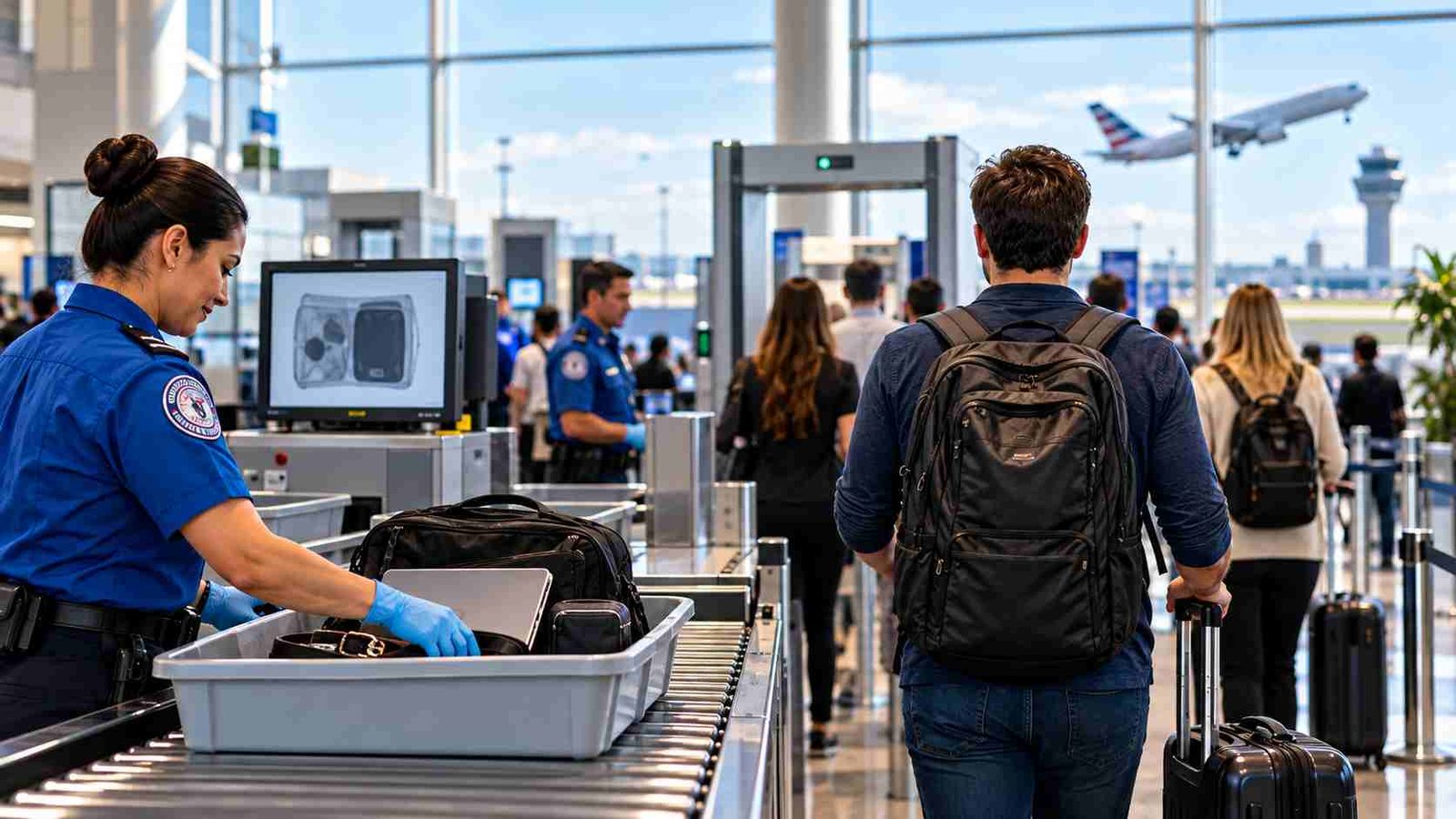
The change in the security and travel procedures in US airports is extremely drastic when considering the introduction of new screening policies by TSA, which calls into question the dominance of the current TSA PreCheck program. As of July 2025, taking off the shoes becomes obsolete for most of the travelers and raises some concerns as to the efficiency of the paid fast screening program. The introduction of biometric identification and touchless scanning technologies also impacts the traveler experience in the airport environment. Based on the data provided in the official report issued by TSA in June 2025, there are over 10,000 complaints from passengers regarding the lack of PreCheck symbols on their tickets. In spite of the complexity of the procedure at the American airports, nowadays, the focus of the attention is switched to the comfort and convenience of the process.
America’s Airport Security Debate Has Shifted from Queue Length to Passenger Reliability
For years, TSA PreCheck built its reputation around one straightforward promise: eligible travellers could experience a simpler airport security process.
Advertisement
Advertisement
Membership offered access to expedited screening procedures, allowing passengers to keep certain belongings inside their bags and avoid several routine preparation requirements.
However, the nature of airport convenience is changing.
Advertisement
Advertisement
The Transportation Security Administration is modernising identity verification, introducing new screening technology and developing airport processes intended to reduce inconvenience.
These developments create an important question for the American travel industry.
Advertisement
Advertisement
If standard airport security continues improving, what additional advantages must a paid trusted-traveller programme deliver?
The answer increasingly involves consistency.
Passengers want their membership benefits to work when they reach the airport. They want to understand which screening procedures apply and whether their boarding passes correctly identify them as eligible.
Those expectations have significant implications for airlines, security authorities and airport operators.
The most revealing government evidence concerns not just how quickly PreCheck passengers clear security, but whether enrolled travellers successfully access the benefits they expect.
Official TSA Data Reveals an Overlooked Problem with PreCheck Boarding Passes
A Transportation Security Administration report covering June 2025 provides a different perspective on the performance of expedited airport screening.
Advertisement
Advertisement
During that month, TSA screened approximately 79.7 million passengers at airport checkpoints across the United States.
Of those, approximately 27 million travelled through TSA PreCheck lanes.
Meanwhile, TSA received 12,178 complaints categorised as TSA PreCheck-related.
The striking discovery was the nature of those complaints.
According to the agency, 86.3%, representing 10,507 complaints, concerned passengers not receiving TSA PreCheck on their boarding passes.
TSA reported that it could research and resolve 37% of those complaints, equivalent to 3,887 cases.
Advertisement
Advertisement
That provides a more distinctive angle on the programme’s challenges.
A traveller may have completed enrolment, passed the required background checks and received a Known Traveler Number. Yet difficulties with reservation information or eligibility recognition can still prevent the expected indicator from appearing.
Without the correct designation on the boarding pass, the traveller may not receive the expedited screening experience anticipated.
These figures should not be misinterpreted as meaning that 86.3% of all TSA PreCheck passengers encountered problems. The percentage refers specifically to complaints in the agency’s PreCheck complaint category.
Nevertheless, the findings identify a measurable area where customer experience can improve.
For regular travellers, administrative reliability can be as valuable as shorter queues.
Advertisement
Advertisement
US Government Screening Figures Reveal the Scale of the Challenge
Official TSA figures provide insight into how large the airport security system has become and why small procedural problems matter.
| Government-reported measure | Verified figure | Significance |
|---|---|---|
| Passengers screened during June 2025 | 79.7 million | Shows the scale of airport screening |
| Passengers screened through TSA PreCheck lanes | 27 million | Demonstrates substantial use of expedited screening |
| Overall complaints received | 17,213 | Provides a customer-experience measure |
| Complaints classified as PreCheck-related | 12,178 | Highlights service concerns |
| PreCheck complaints concerning missing boarding-pass status | 10,507 | Identifies a major reported problem |
| Share of PreCheck complaints concerning missing status | 86.3% | Reveals the concentration of complaints |
| Relevant complaints researched and resolved | 3,887 | Shows recorded resolution activity |
Source: TSA Contact Center Traveler Complaints Report, June 2025. The figures concern that specific month and are not presented as October 2026 operational totals.
The agency’s figures suggest that screening efficiency cannot be assessed exclusively through checkpoint waiting times.
A comprehensive performance assessment must include whether passengers can use the screening products and processes for which they qualify.
This distinction becomes increasingly relevant as the aviation industry introduces additional digital identity systems.
The Shoes-On Revolution Is Changing What Travellers Receive for Free
The most visible change in American airport security occurred on 8 July 2025.
Advertisement
Advertisement
The Department of Homeland Security announced that travellers passing through domestic TSA checkpoints would generally be allowed to keep their shoes on.
Previously, avoiding routine shoe removal was one of TSA PreCheck’s most recognisable advantages.
The policy change extended that convenience to ordinary passengers without requiring them to purchase membership.
The decision does not prevent security officers from requesting additional screening where necessary. However, it represents an important change in the standard passenger experience.
For the travel industry, the significance extends beyond footwear.
Every requirement removed from routine screening can reduce preparation and repacking, potentially making checkpoint movement simpler.
Advertisement
Advertisement
The reform also changes how travellers should compare paid and standard screening.
TSA PreCheck still offers additional conveniences, including generally allowing laptops, compliant liquids, belts and light jackets to remain in place during screening, subject to operational instructions.
Nevertheless, one of its familiar selling points is no longer exclusive.
That creates a commercial and operational challenge: the programme’s future appeal must increasingly depend on differentiated services and dependable access, rather than procedures that standard passengers have already gained.
Biometric Technology Could Become TSA PreCheck’s Next Major Competitive Advantage
The Transportation Security Administration is moving towards an airport environment where identity verification may become faster and less dependent on physical travel documents.
One important development is TSA PreCheck Touchless ID.
Advertisement
Advertisement
The system allows qualifying passengers to verify their identities using facial recognition technology at participating airport checkpoints.
According to official TSA guidance, travellers must hold active TSA PreCheck membership, maintain a profile with a participating airline, possess a valid passport and opt into the service.
Eligible travellers also need to provide their Known Traveler Number and passport information through the participating airline’s processes.
Rather than routinely presenting identification to a security officer, participating passengers can use dedicated Touchless ID facilities.
The government describes the system as a way to streamline identity verification and improve the screening experience.
The implications are significant.
Advertisement
Advertisement
Traditional expedited security programmes concentrate on reducing the time passengers spend waiting for screening.
Touchless identity verification introduces another opportunity: making individual checkpoint transactions more efficient.
However, its availability depends on participating airlines, airports and checkpoints. It should not be interpreted as a nationwide service at every TSA location.
From Detroit to Atlanta, Airport Innovation Is Moving Beyond Faster Queues
TSA’s official capital investment planning documents show that biometric screening innovation has developed over several years.
The agency began piloting its Touchless Identity Solution at Detroit Metropolitan Airport in March 2021.
In November 2021, the pilot expanded to a baggage-drop application at Hartsfield–Jackson Atlanta International Airport.
Advertisement
Advertisement
By May 2022, the technology had also been introduced into an Atlanta checkpoint pilot.
The government’s longer-term vision involves reducing the number of documents and repetitive identity checks travellers encounter between arriving at an airport and boarding an aircraft.
TSA has also investigated automated electronic gates, digital identity credentials and modernised identification systems.
These projects demonstrate a wider industry transition towards technology-supported passenger processing.
The practical outcome will depend on implementation.
A biometric system may offer convenience, but its real value must be evaluated against accuracy, accessibility, privacy protections and actual operational performance.
Advertisement
Advertisement
For passengers, participation in relevant facial recognition programmes is voluntary under the applicable TSA arrangements.
REAL ID Enforcement Adds Another Important Layer to Airport Travel Planning
Expedited screening membership does not eliminate identification requirements.
The REAL ID enforcement deadline took effect on 7 May 2025.
Since that date, passengers aged 18 and above have generally needed REAL ID-compliant state identification or another acceptable document when travelling through domestic TSA airport checkpoints.
US passports, passport cards and certain trusted-traveller cards are among the accepted alternatives.
The requirement also applies to TSA PreCheck members.
Advertisement
Advertisement
Passengers who arrive without an acceptable document may be directed through additional identity-verification procedures.
If their identity cannot be established, they may be refused access to the security checkpoint.
This distinction is particularly important because travellers sometimes treat expedited security enrolment as a substitute for other travel formalities.
It is not.
A passenger may have an active TSA PreCheck membership but still encounter problems if identification requirements are not satisfied.
For airlines and airports, clearer communication about identification requirements can help prevent avoidable checkpoint disruption.
Advertisement
Advertisement
For travellers, checking documents before departure remains more important than relying exclusively on expedited-screening status.
Why Families Are Becoming a Bigger Priority in America’s Airport Security Plans
Another government initiative indicates that convenient airport security is no longer being developed solely around individual trusted travellers.
In July 2025, the Department of Homeland Security announced its Families on the Fly campaign.
The initiative seeks to improve airport screening for families through more suitable procedures and dedicated arrangements at participating airports.
In September 2025, TSA announced the introduction of the initiative at Salt Lake City International Airport in Utah.
This development matters because families frequently face different security challenges from passengers travelling alone.
Advertisement
Advertisement
Parents may need to manage children, hand luggage, feeding supplies and pushchairs while moving through checkpoints.
Simplifying those arrangements can improve the journey even when total screening times remain similar.
The initiative also signals that the government is pursuing passenger-specific screening improvements outside the traditional TSA PreCheck model.
TSA PreCheck retains family-related benefits. Children aged 17 and under may accompany an enrolled adult through expedited screening under the applicable rules when their boarding passes display the required indicator.
However, eligibility conditions remain important, especially for older children travelling separately.
The wider direction is clear: US airport security improvements increasingly recognise that different travellers require different kinds of assistance.
Advertisement
Advertisement
What These Government Reforms Mean for TSA PreCheck Members in 2026
Comparison based on official TSA, DHS and CBP guidance.
| Airport security feature | Standard screening | TSA PreCheck |
|---|---|---|
| Keeping shoes on | Generally permitted since July 2025 | Generally permitted |
| Keeping laptops in bags | Depends on screening equipment and officer instructions | Generally permitted |
| Keeping compliant liquids in bags | Depends on checkpoint procedures | Generally permitted |
| Dedicated expedited lanes | Not included | Available at participating checkpoints |
| REAL ID requirements | Apply | Apply |
| Touchless ID service | Not automatically included | Available to qualifying members at participating locations |
| Additional security checks | Possible | Possible |
| Young children travelling with an adult | Standard family screening rules | Eligible children may accompany enrolled adults under TSA rules |
| Membership payment | Not required | Required for direct enrolment |
| Guaranteed screening time | No | No |
The table demonstrates why the value of TSA PreCheck should be assessed against current security procedures rather than historical benefits.
The programme continues to offer meaningful conveniences, but standard screening has also evolved.
For frequent flyers, the combination of dedicated lanes, simplified baggage procedures and eligible access to identity technology may justify enrolment.
For occasional travellers, the value calculation may be different.
The most practical approach is to review participating airports, airlines and membership benefits before paying for expedited screening.
Advertisement
Advertisement
Global Entry Creates Another Option for International Travellers
American airport security improvements also influence passengers arriving from overseas.
Global Entry, administered by US Customs and Border Protection, provides expedited arrival processing for eligible, pre-approved travellers entering the United States.
Approved members also qualify for TSA PreCheck benefits when the relevant requirements are met.
CBP confirms that Global Entry membership costs $120 for five years.
Applications involve background screening and an approval process that generally includes an interview.
Advertisement
Advertisement
This gives international travellers an alternative to applying exclusively for TSA PreCheck.
A passenger frequently travelling between London and New York, for example, may benefit from services that address both arrival procedures and departing airport security.
However, eligibility for Global Entry differs by nationality and applicable bilateral arrangements.
Indian citizens are among the foreign nationals who may apply under country-specific procedures.
CBP confirms that approved Indian Global Entry members can receive TSA PreCheck benefits on eligible domestic journeys within the United States.
They must enter their membership number in the airline reservation and satisfy the applicable documentation requirements.
Advertisement
Advertisement
For international passengers, the best programme therefore depends on travel patterns, eligibility and the types of airport procedures they most frequently encounter.
What Others Are Missing: Better Security Technology Does Not Automatically Mean Shorter Airport Journeys
A significant weakness in many airport travel comparisons is the assumption that improvements at one stage of the journey translate directly into shorter overall travel times.
Airport security represents only one element of the departure process.
Travellers may still need to check in, deposit luggage, clear security, reach the departure gate and complete airline boarding procedures.
A faster security lane cannot remove every other time requirement.
Government screening innovations should therefore be assessed according to the part of the journey they actually improve.
Advertisement
Advertisement
Biometric identity verification may reduce document-handling requirements.
Modernised screening equipment may simplify baggage inspection.
Dedicated family arrangements may make checkpoint preparation easier.
TSA PreCheck may provide faster access to screening facilities.
These benefits can be meaningful without guaranteeing that passengers can safely arrive substantially later.
This distinction is particularly relevant at large airports where the distance between checkpoints and departure gates can vary considerably.
Advertisement
Advertisement
Travellers should continue following airline-recommended arrival times and allow extra time for unexpected delays.
Travel Analytics: The Government Data Points to a Bigger Customer-Experience Challenge
The June 2025 TSA complaint report provides a valuable starting point for understanding how airport security performance should be measured.
Approximately 27 million passengers used TSA PreCheck lanes during the reporting month, while the agency recorded more than 10,000 PreCheck-related complaints involving missing boarding-pass indicators.
The figures do not establish how often passengers failed to receive their benefits across all journeys.
Complaint records cannot be treated as a complete count of affected travellers, and the available figures do not identify every underlying cause.
Nevertheless, the concentration of complaints suggests that successful eligibility recognition is an important area for further investigation.
Advertisement
Advertisement
A more comprehensive airport performance framework would monitor several indicators simultaneously.
These would include average checkpoint waiting times, peak-period delays, correct boarding-pass recognition, availability of expedited lanes, identity-verification reliability and passenger satisfaction.
It would also examine how performance differs between airports and airline systems.
For the tourism industry, these measurements could be more useful than a single nationwide estimate of how many minutes expedited screening saves.
The reason is simple.
Travellers do not experience airport security as an isolated statistical average.
Advertisement
Advertisement
They experience it as part of a complete journey where uncertainty can affect their overall satisfaction.
Editorial Perspective: TSA PreCheck Must Evolve as Ordinary Airport Screening Gets Better
The central story in American airport security is not whether TSA PreCheck saves a particular number of minutes.
It is how the government is changing the screening experience for all passengers while developing additional services for qualifying travellers.
The removal of routine shoe screening represents one improvement to standard procedures.
Touchless identity technology offers another potential advancement for eligible PreCheck members.
Family-focused initiatives demonstrate that convenience can be improved through more targeted checkpoint arrangements.
Advertisement
Advertisement
Meanwhile, official complaint data identifies the importance of ensuring passengers receive the screening privileges for which they qualify.
Taken together, these developments support a new interpretation of the TSA PreCheck debate.
The programme’s value should increasingly be measured through reliability, ease of use and the reduction of unnecessary screening procedures.
Faster queues remain relevant, but they cannot be the only performance measure.
For airlines, accurate reservation data and passenger information are also important.
For airports, technology investments need to produce tangible operational improvements.
Advertisement
Advertisement
For TSA, the challenge is to maintain effective security while making airport screening more predictable.
And for travellers, the decision to enrol should reflect genuine journey requirements rather than expectations formed under older airport screening rules.
Conclusion: The Future of US Airport Security Is About Reliability, Not Just Speed
The modification of the USA airport security system will be an unprecedented step in the process of the American travel industry development in 2026. The new security technologies will be implemented by the Transportation Security Administration along with new identity verification methods and procedures, and thus, features making the program unique for the passengers will become different. For instance, people will not need to take off their shoes during the process of screening, and, therefore, the distinctions between regular and expedited screening services will become less noticeable. However, based on the statistical data provided by the Transportation Security Administration, it is vital to make sure that all the passengers having the opportunity to join the TSA PreCheck program will really use it. From the above-explained examples, it can be concluded that efficient airports should be both fast and comfortable.
Advertisement
